shipping-crate
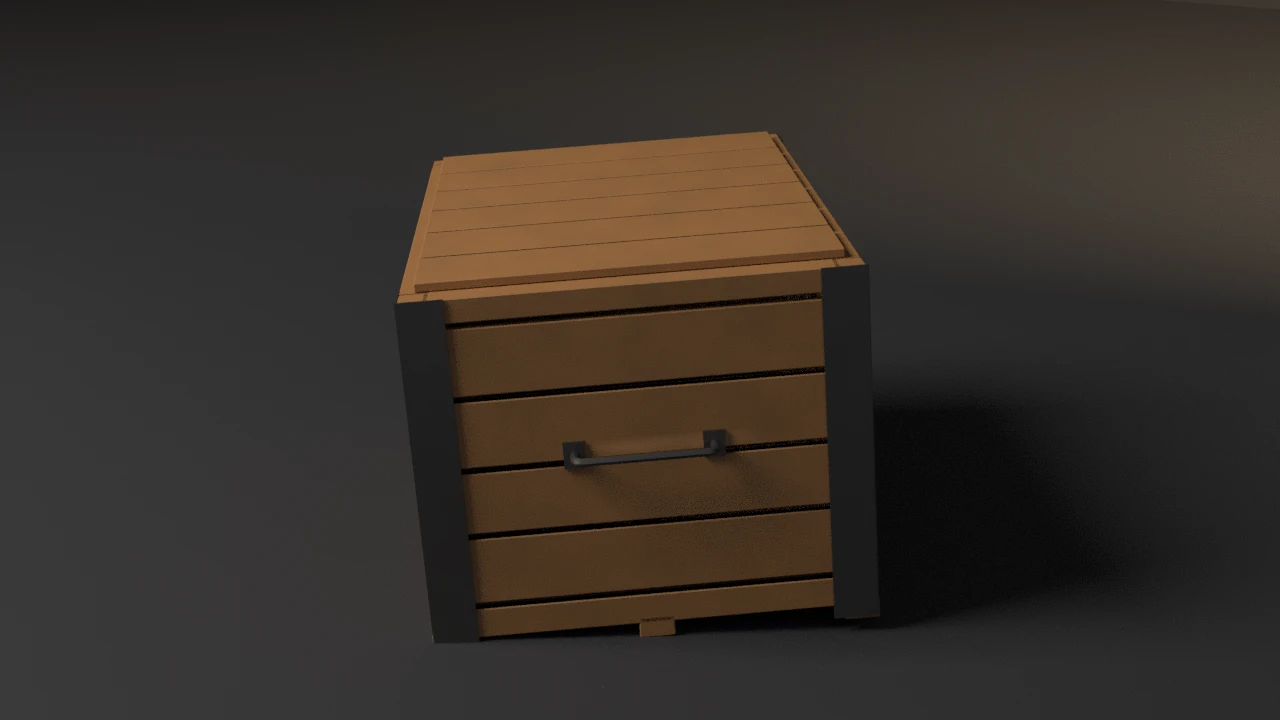
A procedural shipping crate through UVs, bake, LOD, collider, and Unity glTF, asserting recomputed budgets rather than an API contract.
A procedural pile of burlap grain sacks — settled onto flat bases, pressed into one another, gathered under twine ties with pleated crowns — carried through UVs, bake, LOD, compound collider, and Unity glTF, asserting recomputed budgets rather than an API contract.
Rendered headless by the showcase piece itself — click to zoom.
category Village
blender --background --python showcase/grain-sacks/grain_sacks.py --
A pile of three burlap grain sacks. Two stand, one lies slumped in front of them, and each is gathered at the neck under a two-turn twine tie with a pleated crown above it. The sacks have settled onto flat bases and press into each other where they lean. A showcase piece, not an example — it witnesses no API contract. It asserts that generated geometry meets declared asset budgets, recomputed from the finished mesh.
| Shipped content | Used for |
|---|---|
skills/mesh-editing-and-bmesh | lofted, pleated sack bodies and laid twine in one bmesh |
skills/procedural-materials-and-shaders | hessian weave and stripes on the cloth's own coordinates (a second UV layer), per-sack tone |
skills/bake-high-to-low | Cycles tangent-space normal bake, high onto low |
skills/engine-export-presets | Unity glTF (export_yup=True) |
skills/depsgraph-and-evaluated-data | evaluated triangle counts for the LOD ratios |
snippets/decimate_to_budget.py | LOD1 / LOD2 COLLAPSE chain |
snippets/convex_hull_collider.py | one hull per sack, merged into a compound |
snippets/lod_chain.py | LOD naming and ratio pattern |
examples/mesh-hygiene-audit | hygiene combinatorics (copied, not imported) |
A sack full of grain settles. Its contents slump into the bottom and it rests on a flat patch of cloth pressed against the floor. An egg-bottomed sack still touches the floor at its lowest vertex, so the grounded-zmin gate and the per-sack support gate both pass it, but it reads as a balloon rocking on a point. The piece sums, per sack, the area of the faces that lie flat on the floor (every vertex at z = 0) and asserts each is at least 0.012 m².
--round-bottom is the falsifier built for exactly this. It sinks each sack by the same amount and folds the same height, but squashes the base linearly instead of flattening it, so every sack keeps its height, its footprint and its single lowest point on the floor. Every other budget passes. Only the patch sees it: 0 m² on all three.
SINK = 60 mm into the floor, and everything under SETTLE_C = 30 mm is folded back up by g(u) = ((u + 1) / 2)², clamped to 0 below u = −1. The fold is C1 at its top and exactly flat where the grain presses the floor. The squashed height goes outward from the sack's own axis (SPREAD), so the base bulges the way a filled sack does.PRESS = 12 mm. This uses bisection on the real meshes, so the press is exact whatever the lumps and pleats do where the two meet.TIE_BITE. The turn follows the pleats instead of standing proud of the valleys and sinking into the crests.Declared in the script as named constants, recomputed from the generated mesh. Measured values are from Blender 5.2.1; every one is byte-identical on 4.5.11 and 5.1.2.
| Budget | Band | Measured | ||
|---|---|---|---|---|
| Base triangles | 8000–9300 | 8640 | ||
| LOD1 ratio | 0.32–0.62 | 0.5000 | ||
| LOD2 ratio | 0.10–0.35 | 0.2199 | ||
| Material slots | exactly 2, distinct | 2 | ||
| Cloth faces | ≥ 2600 | 3264 | ||
| Twine faces | ≥ 900 | 1152 | ||
| UV bounds | inside 0..1 | (0.0133, 0.0133)–(0.9867, 0.9867) | ||
| UV AABB overlap | ≤ 1e-5 | 0.000000 | ||
| Outer AABB | 0.914 × 0.905 × 0.636 m ± 0.020 | 0.9139 × 0.9054 × 0.6360 | ||
| Collider triangles | ≤ 450 | 376 (three hulls) | ||
| Normal bake | {'FINISHED'} with image data | {'FINISHED'}, has_data=True | ||
| glTF export | file written, non-empty | ~280 kB | ||
| Hygiene | all zero | loose 0/0, non-manifold 0, zero-area 0, doubles 0, n-gons 0, coplanar cross-shell pairs 0 | ||
| Grounded AABB | \ | zmin\ | ≤ 1e-4 | 0.00000 |
| Named supports | 3 sacks, each zmin ≤ 1e-3 | 3 at 0.00000 | ||
| Tie in the waist | host under the tie ≥ 8 mm narrower than 40 mm either side, per sack | 14.25 / 15.04 / 13.11 mm | ||
| Tie seat | 6 turns, deepest twine vertex inside the cloth 1.0–6.0 mm | 3.57–5.21 mm | ||
| Press between sacks | each sack's deepest vertex inside another 6–20 mm | 11.96 / 12.00 / 12.00 mm | ||
| Contact patch | each sack ≥ 0.012 m² flat on the floor | 0.0352 / 0.0988 / 0.1168 m² | ||
| Settled belly | widest station ≤ 0.42 of the body from its base | 0.251 / 0.280 / 0.316 |
Real-world size: the tall sack stands 0.64 m and is 0.47 m across the belly — a 50 kg grain sack. The outer AABB is the three sacks themselves, with no appendage above or beside them, so the AABB gate already holds the bodies to their stated size.
ClothCo: metres round the sack from its front, and metres up it. The weave follows the cloth whichever way up the sack lies. A 6 mm period aliased into moiré at hero distance, so the period is 12 mm with a soft bump.Every convention in showcase/README.md, and whether it applies here.
| Convention | Applies | How |
|---|---|---|
| Deterministic, budgets declared, assertions recompute | yes | no RNG at all; every value above is read off the mesh |
| Falsifier fails the budget it targets | yes | table below, proven on all three binaries |
| Hygiene incl. cross-shell coplanar | yes | exit 15. A twine face parallel to the cloth it hugs, one column over, first shared its plane (2 pairs); the turns now sit a quarter step off the body's columns |
| Named supports | yes | every sack grounded (--float-sack) |
| Wrappers follow the host's profile | yes | the tie is built on the host's own pleated section |
| Band hooped, never flush / seat conformance | yes | tie bite banded (--loose-tie) |
| One connected assembly / carried parts bite | yes | sacks press a banded depth into one another (--part-sacks) |
| A vessel has a base and a belly | yes | settled belly low (--high-belly) and the contact patch (--round-bottom) |
| Plumb and real-world size | partly | a slumped sack is not plumb by design; size is held by the AABB, which is the bodies themselves |
| Shading is part of the model | yes | cloth and twine smooth-shaded: nothing on a sack is faceted in life |
| One substance, one slot | yes | burlap, twine |
| Rope is laid, not piped | yes | three-lobed 6-vertex twine section, turned per ring |
| Two identical sections stacked share planes | yes | the two tie turns are half a step apart |
| Identical parts read as CG | yes | each sack has its own height, width, depth, pleat phase, tone and stripe |
| Sort bmesh operator inputs | n/a | no bevel or other set-fed operator is run |
| Edge treatment: no right angles | n/a | no boxes; every surface is lofted cloth or twine |
| Bake texels per UV cell | n/a | nine UV islands, one per shell, each a ninth of the sheet |
| Level on the stage; stage 60 m | yes | turned about Z only; 60 m floor and wall |
| Keep a falsifier's envelope still | yes | worst deltas: --high-belly −16.2 mm Y, --part-sacks +15.5 mm Y, against 20 mm |
| Timber, iron, masonry, scatter, fixtures, roofs, rings | no | the piece has none of these |
Each breaks one pipeline stage so a named budget fails. All nine were run on 4.5.11, 5.1.2 and 5.2.1 and exited the same declared code on all three.
| Flag | Target budget | Breaks | Exit |
|---|---|---|---|
--skip-decimate | LOD1 ratio | drops the DECIMATE modifiers, LOD1 ratio goes to 1.0000 | 9 |
--stray-vert | mesh hygiene | adds one loose vertex inside the pile | 15 |
--lift-z | grounded zmin | lifts the whole mesh 50 mm | 16 |
--float-sack | named supports | floats the lying sack 12 mm; the standing ones still ground the AABB | 16 |
--slip-tie | tie in the waist | slides every tie 50 mm up onto the crown, still seated on it; margin −13.4 to −44.6 mm | 17 |
--loose-tie | tie seat | sizes each turn 6 mm wider; shallowest turn −1.67 mm | 18 |
--part-sacks | press between sacks | stops the lying sack 4 mm short of the one it leans on | 18 |
--round-bottom | contact patch | squashes the bases round instead of flat; 0 m² on all three | 19 |
--high-belly | settled belly | moves the widest station up to 0.52 of the body, same widths; 0.535–0.586 | 19 |
File-local and sequential. 9 is a valid check code. 1 is the FATAL wrapper — a crash, never a named check.
| Code | Meaning |
|---|---|
| 0 | Success |
| 1 | Uncaught exception (FATAL wrapper) |
| 2 | argparse / usage |
| 3 | Mesh did not build, or has no UV layer |
| 4 | Base triangle count outside band |
| 5 | Material slots, or a material's face floor |
| 6 | UVs outside 0..1 |
| 7 | UV AABB overlap above tolerance |
| 8 | Outer AABB off declared size |
| 9 | LOD1 or LOD2 ratio outside band (--skip-decimate) |
| 10 | Framing gate (examples/gallery_framing.py, render path only) |
| 11 | Collider triangles above ceiling |
| 12 | Normal bake failed or produced no image data |
| 13 | glTF export missing or empty |
| 14 | --output produced no file |
| 15 | Mesh hygiene (--stray-vert) |
| 16 | Grounded zmin, or a sack floating (--lift-z, --float-sack) |
| 17 | A tie not in its neck's waist (--slip-tie) |
| 18 | Tie seat, or press between sacks (--loose-tie, --part-sacks) |
| 19 | Contact patch or settled belly (--round-bottom, --high-belly) |
# Budget check, no render. ~1.9 s on 4.5, ~1.7 s on 5.1, ~2.1 s on 5.2.
blender --background --python grain_sacks.py --

# Falsifier: the sacks stop settling onto flat bases. Must exit 19.
blender --background --python grain_sacks.py -- --round-bottom

# Falsifier: every tie rides up onto its crown. Must exit 17.
blender --background --python grain_sacks.py -- --slip-tie

# Render the gallery still (EEVEE; --engine cycles on a GPU-less host).
blender --background --python grain_sacks.py -- --output sacks.webp
Smoke runs the check-only path. It does not pass --output or any falsifier.
| Value | 4.5.11 | 5.1.2 | 5.2.1 |
|---|---|---|---|
| Base triangles | 8640 | 8640 | 8640 |
| LOD1 / LOD2 tris | 4320 / 1900 | same | same |
| Face counts (cloth / twine) | 3264 / 1152 | same | same |
| Outer AABB | 0.9139 × 0.9054 × 0.6360 | same | same |
| Collider tris | 376 | 376 | 376 |
| Contact patches (m²) | 0.0352 / 0.0988 / 0.1168 | same | same |
| glTF bytes | identical | identical | identical |
| Check wall-clock | ~1.9 s | ~1.7 s | ~2.1 s |
DECIMATE COLLAPSE is the usual cross-version suspect. Here it produces identical LOD counts on all three binaries; the gate is still a ratio band, not an exact count.
"""Game-ready grain sacks — a showcase piece, not an example. Asserts budget conformance of a procedural pile of three burlap grain sacks: two standing, one lying slumped against them, each gathered at the neck under a two-turn twine tie. Carried through UVs, two materials (burlap, twine), a high-to-low normal bake, an LOD chain, a compound convex collider, and a Unity glTF export. The budget that matters here is the one a sack can fail invisibly: a sack full of grain settles, so it rests on a flat contact patch, not on a point. An egg-bottomed sack still touches the floor, so the grounded zmin gate passes it; only the patch area, summed from the faces that lie flat on the floor, knows the difference. Budgets are declared below and recomputed from the generated result. They are not API-contract witnesses. Each falsifier violates one named budget: ``--skip-decimate`` the LOD-ratio band, ``--stray-vert`` mesh hygiene, ``--lift-z`` grounded zmin, ``--float-sack`` the named supports, ``--slip-tie`` the tie-at-waist fit, ``--loose-tie`` the tie seat, ``--part-sacks`` the press between sacks, ``--round-bottom`` the contact patch, ``--high-belly`` the settled belly. No randomness: every lump, pleat and tone is a closed-form term of the sack's own parameters. DECIMATE COLLAPSE triangle counts are not byte-identical across Blender versions — the LOD gate is a ratio band. blender --background --python grain_sacks.py -- blender --background --python grain_sacks.py -- --round-bottom blender --background --python grain_sacks.py -- --output sacks.png """ import argparse import math import os import sys import tempfile import traceback import bmesh import bpy from mathutils import Matrix, Vector from mathutils.bvhtree import BVHTree from mathutils.kdtree import KDTree _REPO = os.path.abspath( os.path.join(os.path.dirname(os.path.abspath(__file__)), os.pardir, os.pardir) ) sys.path.insert(0, os.path.join(_REPO, "examples")) sys.dont_write_bytecode = True import gallery_framing # noqa: E402 # Three sacks: two stood up, one laid down in front. Heights are the # unsettled body length; W is the belly half-width, D the depth ratio of # the flattened sack section (two sewn panels, not a tube). SACKS = ( {"name": "A", "at": (-0.24, 0.10), "yaw": 16.0, "H": 0.80, "W": 0.235, "D": 0.70, "lying": False, "stripe": 1, "front": 0.75, "phase": 0.0, "tone": 0.56}, {"name": "B", "at": (0.30, 0.16), "yaw": -28.0, "H": 0.68, "W": 0.250, "D": 0.74, "lying": False, "stripe": 0, "front": 0.75, "phase": 0.9, "tone": 0.44}, {"name": "C", "at": (0.04, -0.52), "yaw": 72.0, "H": 0.82, "W": 0.235, "D": 0.66, "lying": True, "stripe": 2, "front": 0.25, "phase": 2.1, "tone": 0.50}, ) # Order in which sacks are slid into contact: each one presses the sack # named here, along the line between their starting centres. PRESS_INTO = {"B": "A", "C": "A"} SEG = 32 # Body profile: (height fraction, radius fraction). Round bottom, belly # low where the grain settles, a shoulder, the gathered neck under the # tie, and the pleated crown above it closing to a pole. PROFILE = ( (0.000, 0.00), (0.020, 0.52), (0.060, 0.80), (0.140, 0.96), (0.260, 1.00), (0.400, 0.97), (0.520, 0.88), (0.610, 0.68), (0.680, 0.36), (0.720, 0.19), (0.750, 0.21), (0.800, 0.33), (0.840, 0.30), (0.870, 0.00), ) # --high-belly: same widths, the widest ring moved up to 0.52 of the body. HIGH_BELLY_PROFILE = ( (0.000, 0.00), (0.020, 0.50), (0.060, 0.72), (0.140, 0.82), (0.260, 0.90), (0.400, 0.97), (0.520, 1.00), (0.610, 0.78), (0.680, 0.36), (0.720, 0.19), (0.750, 0.21), (0.800, 0.33), (0.840, 0.30), (0.870, 0.00), ) BODY_RINGS = 30 NECK_T = 0.720 # Pleats gather where the tie cinches: none on the belly, deep on the # crown, shallow under the tie itself so the tie has a round seat. PLEATS = 11 PLEAT_SHOULDER = 0.09 PLEAT_TIE = 0.025 PLEAT_CROWN = 0.20 LUMP = 0.035 # Twine tie: two turns hooped onto the neck, the second half a vertex # step round from the first so the two are not one section stacked. TIE_R = 0.0065 TIE_PIPE = 6 TIE_LOBE = 0.12 TIE_BITE = 0.003 TIE_PITCH = 0.012 LOOSE_TIE_BITE = -0.003 SLIP_TIE = 0.050 # Settling: the body is sunk SINK below the floor and everything under # SETTLE_C is folded up onto it, flat where the grain presses, and pushed # outward so the squashed base bulges. SINK = 0.060 SETTLE_C = 0.030 SPREAD = 0.55 LYING_SQUASH = 0.84 # Sacks press into each other by this much, found by sliding each one in # along the line between centres until its deepest vertex inside the # other reaches it. PRESS = 0.012 PART_GAP = -0.004 BBOX_TOL = 0.020 OUTER_SIZE = (0.914, 0.905, 0.636) BASE_TRIS_MIN = 8000 BASE_TRIS_MAX = 9300 LOD1_RATIO_MIN = 0.32 LOD1_RATIO_MAX = 0.62 LOD2_RATIO_MIN = 0.10 LOD2_RATIO_MAX = 0.35 LOD1_TARGET = 0.50 LOD2_TARGET = 0.22 MATERIAL_COUNT = 2 CLOTH_FACES_MIN = 2600 TWINE_FACES_MIN = 900 UV_EPS = 1e-4 UV_OVERLAP_MAX = 1e-5 COLLIDER_TRIS_MAX = 450 COLLIDER_STRIDE = 3 BAKE_RES = 256 CAGE_EXTRUSION = 0.01 ZMIN_EPS = 1e-4 DOUBLES_EPS = 1e-5 AREA_EPS = 1e-10 COPLANAR_NORMAL_EPS = 1e-4 COPLANAR_PLANE_EPS = 1e-4 COPLANAR_CENTRE_MAX = 0.05 LIFT_Z = 0.05 FLOAT_SACK = 0.012 SUPPORT_Z_MAX = 1e-3 # Tie at the waist: the host under the tie is narrower than the host # WAIST_PROBE above and below it, by at least WAIST_MARGIN. A tie that is # not in a waist slides off. WAIST_PROBE = 0.040 WAIST_BAND = 0.012 WAIST_MARGIN = 0.008 # Tie seat: deepest twine vertex inside the cloth, per turn. TIE_SEAT_MIN = 0.0010 TIE_SEAT_MAX = 0.0060 # Press: each slid sack's deepest vertex inside the sack it leans on. PRESS_MIN = 0.006 PRESS_MAX = 0.020 # Contact patch: flat-on-floor area under each sack. PATCH_MIN = 0.012 # Settled belly: the widest station in the lower part of the body. BELLY_MAX = 0.42 CLOTH_IDX = 0 # Weave period on the cloth. 6 mm aliased into moire at hero distance. WEAVE = 0.012 TWINE_IDX = 1 def eevee_engine_id(): """EEVEE id: 'BLENDER_EEVEE' on 5.0+, 'BLENDER_EEVEE_NEXT' on 4.2-4.5.""" return "BLENDER_EEVEE" if bpy.app.version >= (5, 0, 0) else "BLENDER_EEVEE_NEXT" def fail(msg, code): print(f"FAIL[{code}]: {msg}", file=sys.stderr) return code def triangle_count(mesh): mesh.calc_loop_triangles() return len(mesh.loop_triangles) def evaluated_triangle_count(obj): deps = bpy.context.evaluated_depsgraph_get() ev = obj.evaluated_get(deps) mesh = ev.to_mesh() try: mesh.calc_loop_triangles() return len(mesh.loop_triangles) finally: ev.to_mesh_clear() # --- profile ---------------------------------------------------------------- def pchip(knots, t): """Monotone cubic (Fritsch-Carlson) through ``knots`` at ``t``. Smooth through the knots without the overshoot a Catmull-Rom spline puts into the neck, which would pinch the cloth below the tie. """ xs = [k[0] for k in knots] ys = [k[1] for k in knots] n = len(xs) h = [xs[i + 1] - xs[i] for i in range(n - 1)] d = [(ys[i + 1] - ys[i]) / h[i] for i in range(n - 1)] m = [0.0] * n m[0], m[-1] = d[0], d[-1] for i in range(1, n - 1): if d[i - 1] * d[i] <= 0.0: m[i] = 0.0 else: w1 = 2.0 * h[i] + h[i - 1] w2 = h[i] + 2.0 * h[i - 1] m[i] = (w1 + w2) / (w1 / d[i - 1] + w2 / d[i]) t = min(max(t, xs[0]), xs[-1]) i = min(n - 2, max(0, next((j for j in range(n - 1) if t <= xs[j + 1]), n - 2))) s = (t - xs[i]) / h[i] h00 = (1 + 2 * s) * (1 - s) ** 2 h10 = s * (1 - s) ** 2 h01 = s * s * (3 - 2 * s) h11 = s * s * (s - 1) return h00 * ys[i] + h10 * h[i] * m[i] + h01 * ys[i + 1] + h11 * h[i] * m[i + 1] def pleat_amp(t): """Pleat depth along the body: nothing on the belly, gathered at the neck.""" if t < 0.52: return 0.0 if t < 0.68: return PLEAT_SHOULDER * (t - 0.52) / 0.16 if t < NECK_T: return PLEAT_SHOULDER + (PLEAT_TIE - PLEAT_SHOULDER) * (t - 0.68) / (NECK_T - 0.68) if t < 0.78: return PLEAT_TIE + (PLEAT_CROWN - PLEAT_TIE) * (t - NECK_T) / (0.78 - NECK_T) return PLEAT_CROWN def section_point(sack, prof, t, a): """Body surface at height fraction ``t`` and section angle ``a``, local frame.""" f = pchip(prof, t) ratio = sack["D"] + (1.0 - sack["D"]) * (1.0 - min(1.0, f)) m = 1.0 + pleat_amp(t) * math.cos(PLEATS * a + sack["phase"]) # Grain lumps: low-order, closed-form, fading out toward the neck. m += LUMP * max(0.0, 1.0 - t / 0.6) * math.cos(2.0 * a + 3.0 * t + sack["phase"]) r = sack["W"] * f * m return Vector((r * math.cos(a), r * ratio * math.sin(a), t * sack["H"])) # --- parts ------------------------------------------------------------------ class Part: """Loose geometry for one shell: verts, faces, per-corner UVs, metadata.""" def __init__(self, kind, sack, mat): self.kind = kind self.sack = sack self.mat = mat self.verts = [] self.faces = [] self.uvs = [] self.cloth = [] def add(self, co): self.verts.append(Vector(co)) return len(self.verts) - 1 def grid_faces(part, rings, s_vals, n, poles=None, closed=False): """Quads between consecutive rings (and pole fans), with strip UVs. ``poles`` maps 'start'/'end' to (vertex index, s) for a fan to a pole; the pole's UV sits half a column over, so every fan triangle has its own UV rectangle and nothing overlaps. """ m = len(rings) spans = m if closed else m - 1 for k in range(spans): a, b = rings[k], rings[(k + 1) % m] s0, s1 = s_vals[k], s_vals[k + 1] for i in range(n): j = (i + 1) % n part.faces.append((a[i], a[j], b[j], b[i])) part.uvs.append(((s0, i / n), (s0, (i + 1) / n), (s1, (i + 1) / n), (s1, i / n))) for key, ring, s_ring in (("start", rings[0], s_vals[0]), ("end", rings[-1], s_vals[m - 1])): if not poles or key not in poles: continue pole, s_pole = poles[key] for i in range(n): j = (i + 1) % n # Wound outward: the base fan runs the other way round from the crown's. if key == "start": part.faces.append((pole, ring[j], ring[i])) part.uvs.append(((s_pole, (i + 0.5) / n), (s_ring, (i + 1) / n), (s_ring, i / n))) else: part.faces.append((pole, ring[i], ring[j])) part.uvs.append(((s_pole, (i + 0.5) / n), (s_ring, i / n), (s_ring, (i + 1) / n))) def body_part(sack, prof): """The sack body: a lofted, pleated, lumpy bag closed at both poles.""" part = Part("body", sack["name"], CLOTH_IDX) top = prof[-1][0] ts = [0.012 + (top - 0.024) * k / (BODY_RINGS - 1) for k in range(BODY_RINGS)] ts += [NECK_T + d * TIE_PITCH / sack["H"] for d in (-0.5, 0.0, 0.5)] ts = sorted(set(round(t, 6) for t in ts)) rings = [] for t in ts: rings.append([part.add(section_point(sack, prof, t, 2.0 * math.pi * i / SEG)) for i in range(SEG)]) bottom = part.add((0.0, 0.0, 0.0)) crown = part.add((0.0, 0.0, top * sack["H"])) s = [t * sack["H"] for t in ts] grid_faces(part, rings, s, SEG, poles={"start": (bottom, 0.0), "end": (crown, top * sack["H"])}) # Cloth coordinates for the weave and stripes: metres round the sack # and metres up it, read by the shader so the weave follows the cloth # whatever way up the sack lies. # Round the sack is measured from its front (the broad face a viewer # sees: -Y stood up, +Y laid down), so stripes centre on it. circ = 2.0 * math.pi * sack["W"] * (1.0 + sack["D"]) / 2.0 def around(v): return ((v - sack["front"] + 0.5) % 1.0 - 0.5) * circ part.cloth = [] for corner_uvs in part.uvs: vs = [v for _u, v in corner_uvs] # A face straddling the back seam keeps its corners on one side. ref = around(vs[0]) row = [] for u, v in corner_uvs: a = around(v) if abs(a - ref) > 0.5 * circ: a += circ if a < ref else -circ row.append((a, u)) part.cloth.append(tuple(row)) return part def ring_offsets(t, side, r, n, lobe, idx, angle0=0.0): """Section offsets for ring ``idx``: a lobed circle, turned per ring.""" s = side - t * side.dot(t) s.normalize() up = t.cross(s) out = [] for k in range(n): a = 2.0 * math.pi * k / n + angle0 rr = r * (1.0 + lobe * math.cos(3.0 * a - 2.0 * math.pi * 3.0 * idx / n)) out.append(s * (rr * math.cos(a)) + up * (rr * math.sin(a))) return out def tie_part(sack, prof, t_station, bite, angle0): """One twine turn hooped onto the neck at ``t_station``. The centreline follows the host's own section at that station — every body vertex of that ring, pushed out along its radial by the twine radius less the bite — so the turn hugs the pleats rather than a circle that stands proud of the valleys and sinks into the crests. """ part = Part("tie", sack["name"], TWINE_IDX) pts = [] for i in range(SEG): p = section_point(sack, prof, t_station, 2.0 * math.pi * i / SEG) radial = Vector((p.x, p.y, 0.0)) pts.append(p + radial.normalized() * (TIE_R - bite)) m = len(pts) tans = [(pts[(i + 1) % m] - pts[(i - 1) % m]).normalized() for i in range(m)] side = Vector((0.0, 0.0, 1.0)) rings = [] for i, (p, t) in enumerate(zip(pts, tans)): rings.append([part.add(p + o) for o in ring_offsets( t, side, TIE_R, TIE_PIPE, TIE_LOBE, i, angle0)]) s = [0.0] for i in range(1, m + 1): s.append(s[-1] + (pts[i % m] - pts[i - 1]).length) grid_faces(part, rings, s, TIE_PIPE, closed=True) part.cloth = [tuple((0.0, 0.0) for _ in uv) for uv in part.uvs] return part def orient(parts, sack): """Stand or lay the sack, turn it by its yaw; returns its axis in world.""" rot = Matrix.Identity(3) if sack["lying"]: # Lay it on its flat side: the section's narrow axis becomes Z. rot = Matrix.Rotation(math.radians(90.0), 3, "X") @ rot squash = Matrix.Diagonal((1.0, 1.0, LYING_SQUASH)) rot = squash @ rot rot = Matrix.Rotation(math.radians(sack["yaw"]), 3, "Z") @ rot for part in parts: part.verts = [rot @ v for v in part.verts] axis = (rot @ Vector((0.0, 0.0, 1.0))).normalized() return axis def settle(parts, axis, round_bottom=False): """Sink the sack SINK into the floor and fold everything under SETTLE_C up. Below SETTLE_C the height is remapped by g(u) = ((u + 1) / 2)^2 on u = z / SETTLE_C, clamped to 0 below u = -1: C1 at the fold, and exactly flat where the grain presses the floor. The squashed height goes outward, away from the sack's axis, so the base bulges. ``round_bottom`` is the falsifier: the same sink and the same fold height, but a linear squash that keeps the base round, touching the floor at one point. """ zmin = min(v.z for p in parts for v in p.verts) shift = -zmin - SINK centre = sum((v for v in parts[0].verts), Vector()) / len(parts[0].verts) for part in parts: out = [] for v in part.verts: z = v.z + shift if z >= SETTLE_C: out.append(Vector((v.x, v.y, z))) continue if round_bottom: z2 = (z + SINK) * SETTLE_C / (SETTLE_C + SINK) out.append(Vector((v.x, v.y, z2))) continue u = z / SETTLE_C z2 = 0.0 if u <= -1.0 else SETTLE_C * ((u + 1.0) / 2.0) ** 2 w = Vector((v.x, v.y, z)) - centre w = w - axis * w.dot(axis) w.z = 0.0 if w.length > 1e-9: w.normalize() out.append(Vector((v.x, v.y, z2)) + w * (SPREAD * (z2 - z))) part.verts = out def translate(parts, d): for part in parts: part.verts = [v + d for v in part.verts] def body_tree(part): return BVHTree.FromPolygons(part.verts, part.faces) def inside_depth(tree, pts): """Deepest point of ``pts`` inside ``tree``'s surface; negative is a gap.""" best = -99.0 for p in pts: loc, nrm, _i, dist = tree.find_nearest(p) if loc is None: continue d = dist if (p - loc).dot(nrm) < 0.0 else -dist best = max(best, d) return best def slide_into(moving, fixed, target): """Slide ``moving`` along the line to ``fixed`` until it presses ``target``. Bisection on the offset, measuring the deepest vertex of the moving body inside the fixed one after each move. The press is then exact whatever the lumps and pleats do where the two meet. """ body_m, body_f = moving[0], fixed[0] cm = sum(body_m.verts, Vector()) / len(body_m.verts) cf = sum(body_f.verts, Vector()) / len(body_f.verts) d = Vector((cf.x - cm.x, cf.y - cm.y, 0.0)).normalized() tree = body_tree(body_f) base = [v.copy() for v in body_m.verts] def depth(off): pts = [v + d * off for v in base] return inside_depth(tree, pts) lo, hi = -0.40, 0.60 for _ in range(40): mid = 0.5 * (lo + hi) if depth(mid) > target: hi = mid else: lo = mid translate(moving, d * (0.5 * (lo + hi))) def build_parts( slip_tie=False, loose_tie=False, part_sacks=False, round_bottom=False, high_belly=False, float_sack=False, ): """Every shell of the pile, placed, settled and pressed together.""" bite = LOOSE_TIE_BITE if loose_tie else TIE_BITE prof = HIGH_BELLY_PROFILE if high_belly else PROFILE groups = {} axes = {} for sack in SACKS: parts = [body_part(sack, prof)] t0 = NECK_T + (SLIP_TIE / sack["H"] if slip_tie else 0.0) for k, dt in enumerate((-0.5, 0.5)): # A quarter step off the body's columns, and each turn half a # step off the other: a twine face parallel to the cloth face it # hugs, one column over, shared its plane. parts.append(tie_part(sack, prof, t0 + dt * TIE_PITCH / sack["H"], bite, (0.5 + k) * math.pi / TIE_PIPE)) axis = orient(parts, sack) settle(parts, axis, round_bottom=round_bottom) body = parts[0] c = sum(body.verts, Vector()) / len(body.verts) translate(parts, Vector((sack["at"][0] - c.x, sack["at"][1] - c.y, 0.0))) groups[sack["name"]] = parts axes[sack["name"]] = axis for name, onto in PRESS_INTO.items(): target = PART_GAP if (part_sacks and name == "C") else PRESS slide_into(groups[name], groups[onto], target) if float_sack: translate(groups["C"], Vector((0.0, 0.0, FLOAT_SACK))) return groups, axes def pack_uvs(bm, islands, margin=0.08): """One grid cell per UV island; each island normalised into its cell.""" uv = bm.loops.layers.uv.active cols = max(1, math.ceil(math.sqrt(len(islands)))) rows = max(1, math.ceil(len(islands) / cols)) cell_w, cell_h = 1.0 / cols, 1.0 / rows pad_u, pad_v = margin * cell_w * 0.5, margin * cell_h * 0.5 for idx, faces in enumerate(islands): coords = [c for f in faces for c in (loop[uv].uv.copy() for loop in f.loops)] minx = min(c.x for c in coords) maxx = max(c.x for c in coords) miny = min(c.y for c in coords) maxy = max(c.y for c in coords) dx, dy = max(maxx - minx, 1e-8), max(maxy - miny, 1e-8) ou = (idx % cols) * cell_w + pad_u ov = (idx // cols) * cell_h + pad_v for f in faces: for loop in f.loops: c = loop[uv].uv loop[uv].uv = (ou + (c.x - minx) / dx * (cell_w - 2 * pad_u), ov + (c.y - miny) / dy * (cell_h - 2 * pad_v)) def build_sacks_mesh(name, stray_vert=False, **flags): groups, _axes = build_parts(**flags) bm = bmesh.new() try: uv = bm.loops.layers.uv.new("UVMap") cloth = bm.loops.layers.uv.new("ClothCo") islands = [] for sack in SACKS: for part in groups[sack["name"]]: vs = [bm.verts.new(v) for v in part.verts] faces = [] for f, uvs, cls in zip(part.faces, part.uvs, part.cloth): face = bm.faces.new([vs[i] for i in f]) face.material_index = part.mat face.smooth = True for loop, u, c in zip(face.loops, uvs, cls): loop[uv].uv = u loop[cloth].uv = c faces.append(face) islands.append(faces) bmesh.ops.recalc_face_normals(bm, faces=list(bm.faces)) pack_uvs(bm, islands) if stray_vert: bm.verts.new((0.0, 0.0, 0.3)) me = bpy.data.meshes.new(name) bm.to_mesh(me) me.update() finally: bm.free() uvl = me.uv_layers.get("UVMap") if uvl is not None: me.uv_layers.active = uvl paint_sacks(me) obj = bpy.data.objects.new(name, me) bpy.context.collection.objects.link(obj) return obj def paint_sacks(me): """``SackTone`` and ``Stripe`` face attributes from each sack's parameters.""" tone = [0.5] * len(me.polygons) stripe = [0.0] * len(me.polygons) owner = {} # Each body takes the parameters of the sack placed nearest its centre; # a tie keeps the neutral values, which the twine shader ignores. for g in shells(me): if len(g) <= 400: continue c = sum((me.vertices[i].co for i in g), Vector()) / len(g) sack = min(SACKS, key=lambda s: (s["at"][0] - c.x) ** 2 + (s["at"][1] - c.y) ** 2) for i in g: owner[i] = (sack["tone"], float(sack["stripe"])) for p in me.polygons: t, s = owner.get(p.vertices[0], (0.5, 0.0)) tone[p.index] = t stripe[p.index] = s a = me.attributes.new("SackTone", "FLOAT", "FACE") a.data.foreach_set("value", tone) b = me.attributes.new("Stripe", "FLOAT", "FACE") b.data.foreach_set("value", stripe) # --- surface ---------------------------------------------------------------- def _sock(sockets, identifier): return next(sk for sk in sockets if sk.identifier == identifier) def burlap_material(name): """Hessian: a weave on the cloth's own coordinates, stripes, dust at the base.""" mat = bpy.data.materials.new(name) mat.use_nodes = True nt = mat.node_tree bsdf = nt.nodes["Principled BSDF"] co = nt.nodes.new("ShaderNodeUVMap") co.uv_map = "ClothCo" sep = nt.nodes.new("ShaderNodeSeparateXYZ") nt.links.new(co.outputs["UV"], sep.inputs["Vector"]) # Weave: two perpendicular sine gratings on the cloth coordinates. weave = [] for axis in ("X", "Y"): mul = nt.nodes.new("ShaderNodeMath") mul.operation = "MULTIPLY" mul.inputs[1].default_value = 2.0 * math.pi / WEAVE nt.links.new(sep.outputs[axis], mul.inputs[0]) sn = nt.nodes.new("ShaderNodeMath") sn.operation = "SINE" nt.links.new(mul.outputs["Value"], sn.inputs[0]) weave.append(sn) prod = nt.nodes.new("ShaderNodeMath") prod.operation = "MULTIPLY" nt.links.new(weave[0].outputs["Value"], prod.inputs[0]) nt.links.new(weave[1].outputs["Value"], prod.inputs[1]) wv = nt.nodes.new("ShaderNodeMapRange") wv.inputs["From Min"].default_value = -1.0 wv.inputs["To Min"].default_value = 0.90 wv.inputs["To Max"].default_value = 1.04 nt.links.new(prod.outputs["Value"], wv.inputs["Value"]) # Fibre mottling in object space. tc = nt.nodes.new("ShaderNodeTexCoord") noise = nt.nodes.new("ShaderNodeTexNoise") noise.inputs["Scale"].default_value = 9.0 noise.inputs["Detail"].default_value = 6.0 nt.links.new(tc.outputs["Object"], noise.inputs["Vector"]) ramp = nt.nodes.new("ShaderNodeValToRGB") ramp.color_ramp.elements[0].position = 0.30 ramp.color_ramp.elements[0].color = (0.30, 0.22, 0.13, 1.0) ramp.color_ramp.elements[1].position = 0.75 ramp.color_ramp.elements[1].color = (0.52, 0.41, 0.26, 1.0) nt.links.new(noise.outputs["Fac"], ramp.inputs["Fac"]) # Stripes down the front: Stripe 1 is one broad blue band, 2 is three # thin red ones, 0 is plain. Centred on the cloth's front (u = 1/4 turn). stripe = nt.nodes.new("ShaderNodeAttribute") stripe.attribute_type = "GEOMETRY" stripe.attribute_name = "Stripe" circ_u = nt.nodes.new("ShaderNodeMath") circ_u.operation = "PINGPONG" circ_u.inputs[1].default_value = 0.09 shifted = nt.nodes.new("ShaderNodeMath") shifted.operation = "SUBTRACT" shifted.inputs[1].default_value = 0.0 nt.links.new(sep.outputs["X"], shifted.inputs[0]) absu = nt.nodes.new("ShaderNodeMath") absu.operation = "ABSOLUTE" nt.links.new(shifted.outputs["Value"], absu.inputs[0]) nt.links.new(absu.outputs["Value"], circ_u.inputs[0]) broad = nt.nodes.new("ShaderNodeMath") broad.operation = "LESS_THAN" broad.inputs[1].default_value = 0.028 nt.links.new(absu.outputs["Value"], broad.inputs[0]) thin = nt.nodes.new("ShaderNodeMath") thin.operation = "LESS_THAN" thin.inputs[1].default_value = 0.010 rep = nt.nodes.new("ShaderNodeMath") rep.operation = "PINGPONG" rep.inputs[1].default_value = 0.025 nt.links.new(absu.outputs["Value"], rep.inputs[0]) nt.links.new(rep.outputs["Value"], thin.inputs[0]) within = nt.nodes.new("ShaderNodeMath") within.operation = "LESS_THAN" within.inputs[1].default_value = 0.07 nt.links.new(absu.outputs["Value"], within.inputs[0]) thin_m = nt.nodes.new("ShaderNodeMath") thin_m.operation = "MULTIPLY" nt.links.new(thin.outputs["Value"], thin_m.inputs[0]) nt.links.new(within.outputs["Value"], thin_m.inputs[1]) is1 = nt.nodes.new("ShaderNodeMath") is1.operation = "COMPARE" is1.inputs[1].default_value = 1.0 is1.inputs[2].default_value = 0.1 nt.links.new(stripe.outputs["Fac"], is1.inputs[0]) is2 = nt.nodes.new("ShaderNodeMath") is2.operation = "COMPARE" is2.inputs[1].default_value = 2.0 is2.inputs[2].default_value = 0.1 nt.links.new(stripe.outputs["Fac"], is2.inputs[0]) m1 = nt.nodes.new("ShaderNodeMath") m1.operation = "MULTIPLY" nt.links.new(is1.outputs["Value"], m1.inputs[0]) nt.links.new(broad.outputs["Value"], m1.inputs[1]) m2 = nt.nodes.new("ShaderNodeMath") m2.operation = "MULTIPLY" nt.links.new(is2.outputs["Value"], m2.inputs[0]) nt.links.new(thin_m.outputs["Value"], m2.inputs[1]) # Stripes stop short of the neck and of the settled base. band_lo = nt.nodes.new("ShaderNodeMath") band_lo.operation = "GREATER_THAN" band_lo.inputs[1].default_value = 0.10 nt.links.new(sep.outputs["Y"], band_lo.inputs[0]) band_hi = nt.nodes.new("ShaderNodeMath") band_hi.operation = "LESS_THAN" band_hi.inputs[1].default_value = 0.44 nt.links.new(sep.outputs["Y"], band_hi.inputs[0]) band = nt.nodes.new("ShaderNodeMath") band.operation = "MULTIPLY" nt.links.new(band_lo.outputs["Value"], band.inputs[0]) nt.links.new(band_hi.outputs["Value"], band.inputs[1]) col1 = nt.nodes.new("ShaderNodeMix") col1.data_type = "RGBA" nt.links.new(ramp.outputs["Color"], _sock(col1.inputs, "A_Color")) _sock(col1.inputs, "B_Color").default_value = (0.07, 0.12, 0.26, 1.0) f1 = nt.nodes.new("ShaderNodeMath") f1.operation = "MULTIPLY" nt.links.new(m1.outputs["Value"], f1.inputs[0]) nt.links.new(band.outputs["Value"], f1.inputs[1]) nt.links.new(f1.outputs["Value"], _sock(col1.inputs, "Factor_Float")) col2 = nt.nodes.new("ShaderNodeMix") col2.data_type = "RGBA" nt.links.new(_sock(col1.outputs, "Result_Color"), _sock(col2.inputs, "A_Color")) _sock(col2.inputs, "B_Color").default_value = (0.30, 0.06, 0.04, 1.0) f2 = nt.nodes.new("ShaderNodeMath") f2.operation = "MULTIPLY" nt.links.new(m2.outputs["Value"], f2.inputs[0]) nt.links.new(band.outputs["Value"], f2.inputs[1]) nt.links.new(f2.outputs["Value"], _sock(col2.inputs, "Factor_Float")) # Per-sack tone and the weave. tone = nt.nodes.new("ShaderNodeAttribute") tone.attribute_type = "GEOMETRY" tone.attribute_name = "SackTone" gain = nt.nodes.new("ShaderNodeMath") gain.operation = "MULTIPLY_ADD" gain.inputs[1].default_value = 0.8 gain.inputs[2].default_value = 0.6 nt.links.new(tone.outputs["Fac"], gain.inputs[0]) g2 = nt.nodes.new("ShaderNodeMath") g2.operation = "MULTIPLY" nt.links.new(gain.outputs["Value"], g2.inputs[0]) nt.links.new(wv.outputs["Result"], g2.inputs[1]) mix = nt.nodes.new("ShaderNodeMix") mix.data_type = "RGBA" mix.blend_type = "MULTIPLY" _sock(mix.inputs, "Factor_Float").default_value = 1.0 nt.links.new(_sock(col2.outputs, "Result_Color"), _sock(mix.inputs, "A_Color")) nt.links.new(g2.outputs["Value"], _sock(mix.inputs, "B_Color")) nt.links.new(_sock(mix.outputs, "Result_Color"), bsdf.inputs["Base Color"]) bsdf.inputs["Roughness"].default_value = 0.92 bmp = nt.nodes.new("ShaderNodeBump") bmp.inputs["Strength"].default_value = 0.15 bmp.inputs["Distance"].default_value = 0.0015 nt.links.new(prod.outputs["Value"], bmp.inputs["Height"]) nt.links.new(bmp.outputs["Normal"], bsdf.inputs["Normal"]) return mat def twine_material(name): """Sisal twine: paler and yellower than the hessian, matte.""" mat = bpy.data.materials.new(name) mat.use_nodes = True nt = mat.node_tree bsdf = nt.nodes["Principled BSDF"] tc = nt.nodes.new("ShaderNodeTexCoord") noise = nt.nodes.new("ShaderNodeTexNoise") noise.inputs["Scale"].default_value = 120.0 noise.inputs["Detail"].default_value = 6.0 nt.links.new(tc.outputs["Object"], noise.inputs["Vector"]) ramp = nt.nodes.new("ShaderNodeValToRGB") ramp.color_ramp.elements[0].color = (0.40, 0.33, 0.18, 1.0) ramp.color_ramp.elements[1].color = (0.70, 0.60, 0.38, 1.0) nt.links.new(noise.outputs["Fac"], ramp.inputs["Fac"]) nt.links.new(ramp.outputs["Color"], bsdf.inputs["Base Color"]) bsdf.inputs["Roughness"].default_value = 0.85 return mat def sack_materials(): return burlap_material("SackBurlap"), twine_material("SackTwine") def assign_slots(obj, cloth, twine): mats = obj.data.materials for i, mat in enumerate((cloth, twine)): if i < len(mats): mats[i] = mat else: mats.append(mat) # --- measurement ------------------------------------------------------------ def world_bbox(obj): corners = [obj.matrix_world @ Vector(c) for c in obj.bound_box] xs = [c.x for c in corners] ys = [c.y for c in corners] zs = [c.z for c in corners] return (min(xs), min(ys), min(zs), max(xs), max(ys), max(zs)) def uv_stats(mesh): uv = mesh.uv_layers.get("UVMap") if uv is None: return 0.0, 0.0, 1.0, 1.0, 0.0, 0 data = uv.data us = [loop.uv[0] for loop in data] vs = [loop.uv[1] for loop in data] aabbs = [] for poly in mesh.polygons: pu = [data[i].uv[0] for i in poly.loop_indices] pv = [data[i].uv[1] for i in poly.loop_indices] aabbs.append((min(pu), min(pv), max(pu), max(pv))) span = max(1e-6, max(a[2] - a[0] for a in aabbs), max(a[3] - a[1] for a in aabbs)) buckets = {} for i, a in enumerate(aabbs): for c in range(int(a[0] // span), int(a[2] // span) + 1): for r in range(int(a[1] // span), int(a[3] // span) + 1): buckets.setdefault((c, r), []).append(i) overlap = 0.0 seen = set() for members in buckets.values(): for ii in range(len(members)): for jj in range(ii + 1, len(members)): i, j = members[ii], members[jj] key = (i, j) if i < j else (j, i) if key in seen: continue seen.add(key) a, b = aabbs[i], aabbs[j] overlap += max(0.0, min(a[2], b[2]) - max(a[0], b[0])) * max( 0.0, min(a[3], b[3]) - max(a[1], b[1])) return min(us), min(vs), max(us), max(vs), overlap, len(aabbs) def face_area(me, poly): idxs = poly.vertices v0 = me.vertices[idxs[0]].co area = 0.0 for i in range(1, len(idxs) - 1): area += (me.vertices[idxs[i]].co - v0).cross(me.vertices[idxs[i + 1]].co - v0).length * 0.5 return area def hygiene_audit(me): ngons = sum(1 for p in me.polygons if len(p.vertices) > 4) zero_area = sum(1 for p in me.polygons if face_area(me, p) <= AREA_EPS) bm = bmesh.new() try: bm.from_mesh(me) loose_v = sum(1 for v in bm.verts if len(v.link_edges) == 0) loose_e = sum(1 for e in bm.edges if len(e.link_faces) == 0) nonman = sum(1 for e in bm.edges if not e.is_manifold) ret = bmesh.ops.find_doubles(bm, verts=list(bm.verts), dist=DOUBLES_EPS) doubles = len(ret.get("targetmap") or {}) finally: bm.free() return {"ngons": ngons, "loose_v": loose_v, "loose_e": loose_e, "nonman": nonman, "zero_area": zero_area, "doubles": doubles} def shells(me): neighbors = [[] for _ in range(len(me.vertices))] for edge in me.edges: a, b = edge.vertices neighbors[a].append(b) neighbors[b].append(a) seen = [False] * len(me.vertices) groups = [] for start in range(len(me.vertices)): if seen[start]: continue seen[start] = True stack = [start] group = [] while stack: cur = stack.pop() group.append(cur) for nxt in neighbors[cur]: if not seen[nxt]: seen[nxt] = True stack.append(nxt) groups.append(group) return groups def zfight_pairs(me): """Coplanar face pairs from *different shells* (copied from showcase/grindstone). Every sack lays a flat patch on the floor, so the budget is what keeps two sacks' patches from meeting on one plane side by side. """ owner = {} for si, g in enumerate(shells(me)): for vi in g: owner[vi] = si faces = [(p.normal.copy(), p.center.copy(), owner.get(p.vertices[0], -1)) for p in me.polygons] kd = KDTree(len(faces)) for i, (_n, c, _s) in enumerate(faces): kd.insert(c, i) kd.balance() hits = 0 for i, (ni, ci, si) in enumerate(faces): for _co, j, _d in kd.find_range(ci, COPLANAR_CENTRE_MAX): if j <= i: continue nj, cj, sj = faces[j] if si == sj: continue if abs(abs(ni.dot(nj)) - 1.0) > COPLANAR_NORMAL_EPS: continue if abs(ni.dot(cj - ci)) > COPLANAR_PLANE_EPS: continue hits += 1 return hits def shell_tree(me, group): member = set(group) polys = [list(p.vertices) for p in me.polygons if p.vertices[0] in member] remap = {v: k for k, v in enumerate(group)} return BVHTree.FromPolygons( [me.vertices[i].co.copy() for i in group], [[remap[i] for i in p] for p in polys], ) def _long_axis(pts): c = sum(pts, Vector()) / len(pts) cov = [[0.0] * 3 for _ in range(3)] for p in pts: d = p - c for i in range(3): for j in range(3): cov[i][j] += d[i] * d[j] v = Vector((0.3, 0.2, 1.0)) for _ in range(60): w = Vector([sum(cov[i][j] * v[j] for j in range(3)) for i in range(3)]) if w.length < 1e-12: break v = w.normalized() return c, v def classify(me): """Bodies are the big cloth shells; each tie turn joins its nearest body.""" mats = {} for p in me.polygons: for i in p.vertices: mats.setdefault(i, p.material_index) bodies, ties, other = [], [], [] for g in shells(me): pts = [me.vertices[i].co.copy() for i in g] rec = {"g": g, "pts": pts, "c": sum(pts, Vector()) / len(pts)} m = mats.get(g[0], -1) if m == CLOTH_IDX and len(g) > 400: bodies.append(rec) elif m == TWINE_IDX: ties.append(rec) else: other.append(rec) for t in ties: t["body"] = min(range(len(bodies)), key=lambda k: min((p - t["c"]).length for p in bodies[k]["pts"])) return bodies, ties, other def sack_audit(me): """Supports, tie waist and seat, press, contact patch and belly, per sack.""" bodies, ties, other = classify(me) trees = [shell_tree(me, b["g"]) for b in bodies] out = {"n_body": len(bodies), "n_tie": len(ties), "n_other": len(other)} out["support_worst"] = max((min(p.z for p in b["pts"]) for b in bodies), default=99.0) # Contact patch: faces lying flat on the floor under each body. patch = [] for b in bodies: member = set(b["g"]) area = 0.0 for p in me.polygons: if p.vertices[0] in member and all(me.vertices[i].co.z <= 1e-6 for i in p.vertices): area += face_area(me, p) patch.append(area) out["patch"] = [round(a, 5) for a in patch] out["patch_min"] = min(patch, default=0.0) # Each body's axis, oriented from its base to its tie. waist, belly = [], [] for k, b in enumerate(bodies): c, axis = _long_axis(b["pts"]) own = [t for t in ties if t["body"] == k] if not own: waist.append(-99.0) continue tc = sum((t["c"] for t in own), Vector()) / len(own) if (tc - c).dot(axis) < 0.0: axis = -axis proj = [(p - c).dot(axis) for p in b["pts"]] lo, hi = min(proj), max(proj) bins = {} for p, s in zip(b["pts"], proj): r = ((p - c) - axis * s).length bins.setdefault(round(s / 0.004), []).append(r) stations = sorted((key * 0.004, sum(v) / len(v)) for key, v in bins.items() if len(v) >= 8) widest = max(stations, key=lambda x: x[1]) belly.append((widest[0] - lo) / (hi - lo)) # Waist: host radius at the tie's station against the host radius # WAIST_PROBE along the axis either side of it. st = (tc - c).dot(axis) def radius_at(s0): rs = [((p - c) - axis * s).length for p, s in zip(b["pts"], proj) if abs(s - s0) <= WAIST_BAND] return sum(rs) / len(rs) if rs else 0.0 waist.append(min(radius_at(st - WAIST_PROBE), radius_at(st + WAIST_PROBE)) - radius_at(st)) out["waist"] = [round(x, 5) for x in waist] out["waist_min"] = min(waist, default=-99.0) out["belly_max"] = max(belly, default=99.0) out["belly"] = [round(x, 3) for x in belly] # Tie seat: deepest twine vertex inside its body, per turn. seats = [inside_depth(trees[t["body"]], t["pts"]) for t in ties] out["tie_min"] = min(seats, default=-99.0) out["tie_max"] = max(seats, default=99.0) # Press: each body's deepest vertex inside any other body. press = [] for k, b in enumerate(bodies): best = max((inside_depth(trees[j], b["pts"]) for j in range(len(bodies)) if j != k), default=-99.0) press.append(best) out["press"] = [round(x, 5) for x in press] out["press_min"] = min(press, default=-99.0) out["press_max"] = max(press, default=99.0) return out def make_lod(obj, name, ratio, skip_decimate): mesh = obj.data.copy() lod = bpy.data.objects.new(name, mesh) lod.matrix_world = obj.matrix_world.copy() bpy.context.scene.collection.objects.link(lod) if not skip_decimate and 0.0 < ratio < 1.0: mod = lod.modifiers.new("DecimateBudget", "DECIMATE") mod.decimate_type = "COLLAPSE" mod.ratio = ratio return lod def hull_collider(obj, name): """Compound collider: one convex hull per sack body, every third ring, fourth column. One hull over the pile would fill the wedge between the lying sack and the standing ones; a hull per sack keeps it. Striding the rings keeps each hull's triangle count down without leaving the silhouette. """ me = obj.data bodies, _ties, _other = classify(me) mesh = bpy.data.meshes.new(name) bm = bmesh.new() try: for b in bodies: # Body vertices in build order are ring after ring of SEG, so # stride rings and columns alike. order = sorted(b["g"]) pts = [me.vertices[v].co.copy() for k, v in enumerate(order) if (k // SEG) % COLLIDER_STRIDE == 0 and (k % SEG) % 4 == 0] tmp = bmesh.new() try: vs = [tmp.verts.new(p) for p in pts] bmesh.ops.convex_hull(tmp, input=vs) # Only the hull's own vertices: interior points have no face. remap = {} for f in tmp.faces: for v in f.verts: if v not in remap: remap[v] = bm.verts.new(v.co) bm.faces.new([remap[v] for v in f.verts]) finally: tmp.free() bm.to_mesh(mesh) mesh.update() finally: bm.free() col = bpy.data.objects.new(name, mesh) bpy.context.collection.objects.link(col) return col def setup_bake_image(obj, target_mat, size): img = bpy.data.images.new("SackNrm", size, size, alpha=True, float_buffer=False) img.colorspace_settings.name = "Non-Color" nodes = target_mat.node_tree.nodes tex = nodes.new("ShaderNodeTexImage") tex.image = img nodes.active = tex tex.select = True obj.active_material_index = CLOTH_IDX return img, tex def bake_normal(high, low): scene = bpy.context.scene scene.render.engine = "CYCLES" scene.cycles.device = "CPU" scene.cycles.samples = 1 scene.cycles.use_denoising = False for ob in bpy.context.view_layer.objects: ob.select_set(False) high.select_set(True) low.select_set(True) bpy.context.view_layer.objects.active = low return bpy.ops.object.bake( type="NORMAL", use_selected_to_active=True, cage_extrusion=CAGE_EXTRUSION, use_cage=False, normal_space="TANGENT", margin=4, margin_type="ADJACENT_FACES", use_clear=True, target="IMAGE_TEXTURES", uv_layer="UVMap", ) def export_unity(path, objects): for ob in bpy.context.view_layer.objects: ob.select_set(False) for ob in objects: ob.select_set(True) bpy.context.view_layer.objects.active = objects[0] bpy.ops.export_scene.gltf( filepath=path, use_selection=True, export_yup=True, export_apply=True, export_draco_mesh_compression_enable=False, export_animations=False, ) def check(skip_decimate, lift_z=False, stray_vert=False, **flags): bpy.ops.wm.read_factory_settings(use_empty=True) nothing = (None,) * 5 low = build_sacks_mesh("SacksLow", stray_vert=stray_vert, **flags) high = build_sacks_mesh("SacksHigh", **flags) cloth, twine = sack_materials() assign_slots(low, cloth, twine) assign_slots(high, cloth, twine) if lift_z: for v in low.data.vertices: v.co.z += LIFT_Z low.data.update() bpy.context.view_layer.update() if len(low.data.polygons) < 6 or low.data.uv_layers.get("UVMap") is None: return (fail("sack mesh did not build, or has no UV layer", 3),) + nothing base_tris = triangle_count(low.data) mats = [s for s in low.data.materials if s is not None] nmat, distinct = len(mats), len({id(s) for s in mats}) idx_counts = {} for poly in low.data.polygons: idx_counts[poly.material_index] = idx_counts.get(poly.material_index, 0) + 1 u0, v0, u1, v1, overlap, nfaces = uv_stats(low.data) bb = world_bbox(low) size_x, size_y, size_z = bb[3] - bb[0], bb[4] - bb[1], bb[5] - bb[2] img, tex = setup_bake_image(low, cloth, BAKE_RES) bake_result = bake_normal(high, low) lod1 = make_lod(low, "SacksLOD1", LOD1_TARGET, skip_decimate) lod2 = make_lod(low, "SacksLOD2", LOD2_TARGET, skip_decimate) bpy.context.view_layer.update() lod1_tris = evaluated_triangle_count(lod1) lod2_tris = evaluated_triangle_count(lod2) r1 = lod1_tris / base_tris if base_tris else 0.0 r2 = lod2_tris / base_tris if base_tris else 0.0 collider = hull_collider(high, "SacksCollider") col_tris = triangle_count(collider.data) export_path = os.path.join(tempfile.gettempdir(), f"bdt_grain_sacks_{os.getpid()}.glb") if os.path.exists(export_path): os.remove(export_path) export_unity(export_path, [low, collider]) export_size = os.path.getsize(export_path) if os.path.isfile(export_path) else 0 # Blender points TMPDIR at its own temp preference, which on a portable # build is the working directory, so the export must not outlive this. if os.path.isfile(export_path): os.remove(export_path) hyg = hygiene_audit(low.data) zf = zfight_pairs(low.data) sa = sack_audit(low.data) print(f"blender={tuple(bpy.app.version)} skip_decimate={skip_decimate}") print(f"measured mat_index_counts={dict(sorted(idx_counts.items()))}") print(f"measured base_tris={base_tris} lod1_tris={lod1_tris} " f"lod2_tris={lod2_tris} r1={r1:.4f} r2={r2:.4f}") print(f"measured nmat={nmat} uv=({u0:.4f},{v0:.4f})-({u1:.4f},{v1:.4f}) " f"overlap={overlap:.6f} nfaces={nfaces}") print(f"measured bbox=({size_x:.4f},{size_y:.4f},{size_z:.4f}) " f"outer={OUTER_SIZE} zmin={bb[2]:.5f}") print(f"measured collider_tris={col_tris} bake={bake_result} " f"bake_has_data={img.has_data} export_bytes={export_size}") print(f"measured hygiene loose_v={hyg['loose_v']} loose_e={hyg['loose_e']} " f"nonman={hyg['nonman']} zero_area={hyg['zero_area']} " f"doubles={hyg['doubles']} ngons={hyg['ngons']} zfight={zf}") print(f"measured sacks bodies={sa['n_body']} ties={sa['n_tie']} other={sa['n_other']} " f"support_worst={sa['support_worst']:.5f} waist={sa['waist']} " f"tie=({sa['tie_min']:.5f},{sa['tie_max']:.5f}) press={sa['press']} " f"patch={sa['patch']} belly={sa['belly']}") if not (BASE_TRIS_MIN <= base_tris <= BASE_TRIS_MAX): return (fail(f"base tris {base_tris} not in [{BASE_TRIS_MIN}, {BASE_TRIS_MAX}]", 4),) + nothing if nmat != MATERIAL_COUNT or distinct != MATERIAL_COUNT: return (fail(f"material slots {nmat} distinct {distinct} != {MATERIAL_COUNT}", 5),) + nothing if idx_counts.get(CLOTH_IDX, 0) < CLOTH_FACES_MIN: return (fail(f"cloth faces {idx_counts.get(CLOTH_IDX, 0)} < {CLOTH_FACES_MIN}", 5),) + nothing if idx_counts.get(TWINE_IDX, 0) < TWINE_FACES_MIN: return (fail(f"twine faces {idx_counts.get(TWINE_IDX, 0)} < {TWINE_FACES_MIN}", 5),) + nothing if u0 < -UV_EPS or v0 < -UV_EPS or u1 > 1.0 + UV_EPS or v1 > 1.0 + UV_EPS: return (fail(f"UVs outside 0..1: ({u0:.4f},{v0:.4f})-({u1:.4f},{v1:.4f})", 6),) + nothing if overlap > UV_OVERLAP_MAX: return (fail(f"UV AABB overlap {overlap:.6f} > {UV_OVERLAP_MAX}", 7),) + nothing if (abs(size_x - OUTER_SIZE[0]) > BBOX_TOL or abs(size_y - OUTER_SIZE[1]) > BBOX_TOL or abs(size_z - OUTER_SIZE[2]) > BBOX_TOL): return (fail(f"bbox ({size_x:.4f},{size_y:.4f},{size_z:.4f}) off outer {OUTER_SIZE}", 8),) + nothing if not (LOD1_RATIO_MIN <= r1 <= LOD1_RATIO_MAX): return (fail(f"LOD1 ratio {r1:.4f} not in [{LOD1_RATIO_MIN}, {LOD1_RATIO_MAX}] " "(--skip-decimate is the designed fail)", 9),) + nothing if not (LOD2_RATIO_MIN <= r2 <= LOD2_RATIO_MAX): return (fail(f"LOD2 ratio {r2:.4f} not in [{LOD2_RATIO_MIN}, {LOD2_RATIO_MAX}]", 9),) + nothing if col_tris > COLLIDER_TRIS_MAX: return (fail(f"collider tris {col_tris} > {COLLIDER_TRIS_MAX}", 11),) + nothing if bake_result != {"FINISHED"} or not img.has_data: return (fail(f"bake failed result={bake_result} has_data={img.has_data}", 12),) + nothing if export_size <= 0: return (fail("export file missing or empty", 13),) + nothing if (hyg["loose_v"] or hyg["loose_e"] or hyg["nonman"] or hyg["zero_area"] or hyg["doubles"] or hyg["ngons"] or zf): return (fail(f"hygiene {hyg} zfight={zf} (--stray-vert is the designed fail)", 15),) + nothing if abs(bb[2]) > ZMIN_EPS: return (fail(f"zmin {bb[2]:.6f} not within {ZMIN_EPS} of 0 " "(--lift-z is the designed fail)", 16),) + nothing if sa["n_body"] != len(SACKS) or sa["support_worst"] > SUPPORT_Z_MAX: return (fail(f"supports: {sa['n_body']} of {len(SACKS)} sacks, worst base z=" f"{sa['support_worst']:.5f} > {SUPPORT_Z_MAX} " "(--float-sack is the designed fail)", 16),) + nothing if sa["n_tie"] != 2 * len(SACKS) or sa["waist_min"] < WAIST_MARGIN: return (fail(f"ties: {sa['n_tie']} turns; host under the tie narrower than " f"{WAIST_PROBE} m either side by {sa['waist']}, need >= {WAIST_MARGIN} " "(--slip-tie is the designed fail)", 17),) + nothing if sa["tie_min"] < TIE_SEAT_MIN or sa["tie_max"] > TIE_SEAT_MAX: return (fail(f"tie seat ({sa['tie_min']:.5f}, {sa['tie_max']:.5f}) outside " f"[{TIE_SEAT_MIN}, {TIE_SEAT_MAX}] (--loose-tie is the designed fail)", 18),) + nothing if sa["press_min"] < PRESS_MIN or sa["press_max"] > PRESS_MAX: return (fail(f"press between sacks {sa['press']} outside [{PRESS_MIN}, {PRESS_MAX}] " "(--part-sacks is the designed fail)", 18),) + nothing if sa["patch_min"] < PATCH_MIN: return (fail(f"contact patch {sa['patch']} m^2, smallest < {PATCH_MIN} " "(--round-bottom is the designed fail)", 19),) + nothing if sa["belly_max"] > BELLY_MAX: return (fail(f"widest station at {sa['belly']} of the body > {BELLY_MAX} " "(--high-belly is the designed fail)", 19),) + nothing return 0, low, high, cloth, tex, collider def wire_normal(mat, tex): """Baked normal map under the weave bump.""" nt = mat.node_tree nrm = nt.nodes.new("ShaderNodeNormalMap") nt.links.new(tex.outputs["Color"], nrm.inputs["Color"]) bump = next(n for n in nt.nodes if n.bl_idname == "ShaderNodeBump") nt.links.new(nrm.outputs["Normal"], bump.inputs["Normal"]) def render_still(low, cloth, tex, path, engine): scene = bpy.context.scene wire_normal(cloth, tex) for ob in list(scene.objects): if ob.type == "MESH" and ob != low: ob.hide_render = True ob.hide_viewport = True # Level on the floor: turned about Z only. low.rotation_euler.z = math.radians(-10.0) floor_me = bpy.data.meshes.new("Floor") bm = bmesh.new() try: bmesh.ops.create_grid(bm, x_segments=1, y_segments=1, size=60.0) bm.to_mesh(floor_me) finally: bm.free() fmat = bpy.data.materials.new("Floor") fmat.use_nodes = True fb = fmat.node_tree.nodes["Principled BSDF"] fb.inputs["Base Color"].default_value = (0.03, 0.032, 0.037, 1.0) fb.inputs["Roughness"].default_value = 0.7 floor_me.materials.append(fmat) floor = bpy.data.objects.new("Floor", floor_me) scene.collection.objects.link(floor) wall = bpy.data.objects.new("Wall", floor_me.copy()) wall.location = (0.0, 8.5, 0.0) wall.rotation_euler = (math.radians(90), 0.0, 0.0) scene.collection.objects.link(wall) world = bpy.data.worlds.new("World") world.use_nodes = True world.node_tree.nodes["Background"].inputs["Color"].default_value = (0.02, 0.021, 0.025, 1.0) scene.world = world def light(name, loc, energy, size, col, rot): ld = bpy.data.lights.new(name, "AREA") ld.energy = energy ld.size = size ld.color = col ob = bpy.data.objects.new(name, ld) ob.location = loc ob.rotation_euler = tuple(math.radians(a) for a in rot) scene.collection.objects.link(ob) light("Key", (-3.2, -4.2, 4.8), 480.0, 4.0, (1.0, 0.95, 0.88), (46, 0, -38)) light("Fill", (4.2, -3.2, 2.2), 60.0, 8.0, (0.74, 0.84, 1.0), (66, 0, 52)) light("Rim", (-2.0, 3.4, 2.8), 260.0, 3.0, (0.62, 0.78, 1.0), (-60, 0, 200)) light("Wedge", (1.4, 3.8, 2.0), 520.0, 5.0, (1.0, 0.70, 0.38), (-94, 0, 194)) cam_data = bpy.data.cameras.new("Cam") cam_data.lens = 50.0 cam = bpy.data.objects.new("Cam", cam_data) cam.location = (1.22, -2.30, 1.18) scene.collection.objects.link(cam) aim = bpy.data.objects.new("Aim", None) aim.location = (0.02, -0.08, 0.30) scene.collection.objects.link(aim) con = cam.constraints.new("TRACK_TO") con.target = aim con.track_axis = "TRACK_NEGATIVE_Z" con.up_axis = "UP_Y" scene.camera = cam scene.render.engine = "CYCLES" if engine == "cycles" else eevee_engine_id() if engine == "cycles": scene.cycles.samples = 32 scene.cycles.device = "CPU" else: try: scene.eevee.taa_render_samples = 64 except AttributeError: pass scene.render.resolution_x = 1280 scene.render.resolution_y = 720 scene.render.image_settings.file_format = "WEBP" if path.lower().endswith(".webp") else "PNG" if path.lower().endswith(".webp"): scene.render.image_settings.quality = 90 scene.render.filepath = path scene.view_settings.view_transform = "Standard" fcode = gallery_framing.check_framing(scene, cam, hero=[low], elements=[low], stage=[floor, wall]) if fcode: return fcode bpy.ops.render.render(write_still=True) if not (os.path.exists(path) and os.path.getsize(path) > 0): return fail("render produced no file", 14) return 0 def main(): argv = sys.argv[sys.argv.index("--") + 1:] if "--" in sys.argv else [] p = argparse.ArgumentParser() p.add_argument("--output", default=None) p.add_argument("--engine", default="eevee", choices=("eevee", "cycles")) p.add_argument("--skip-decimate", action="store_true") p.add_argument("--stray-vert", action="store_true") p.add_argument("--lift-z", action="store_true") p.add_argument("--float-sack", action="store_true") p.add_argument("--slip-tie", action="store_true") p.add_argument("--loose-tie", action="store_true") p.add_argument("--part-sacks", action="store_true") p.add_argument("--round-bottom", action="store_true") p.add_argument("--high-belly", action="store_true") args = p.parse_args(argv) code, low, _high, cloth, tex, _col = check( args.skip_decimate, lift_z=args.lift_z, stray_vert=args.stray_vert, float_sack=args.float_sack, slip_tie=args.slip_tie, loose_tie=args.loose_tie, part_sacks=args.part_sacks, round_bottom=args.round_bottom, high_belly=args.high_belly, ) if code: return code if args.output: rcode = render_still(low, cloth, tex, os.path.abspath(args.output), args.engine) if rcode: return rcode print(f"rendered still {args.output}") print("grain-sacks OK") return 0 if __name__ == "__main__": try: sys.exit(main()) except Exception as e: traceback.print_exc() print(f"FATAL: {e}", file=sys.stderr) sys.exit(1)
A procedural shipping crate through UVs, bake, LOD, collider, and Unity glTF, asserting recomputed budgets rather than an API contract.
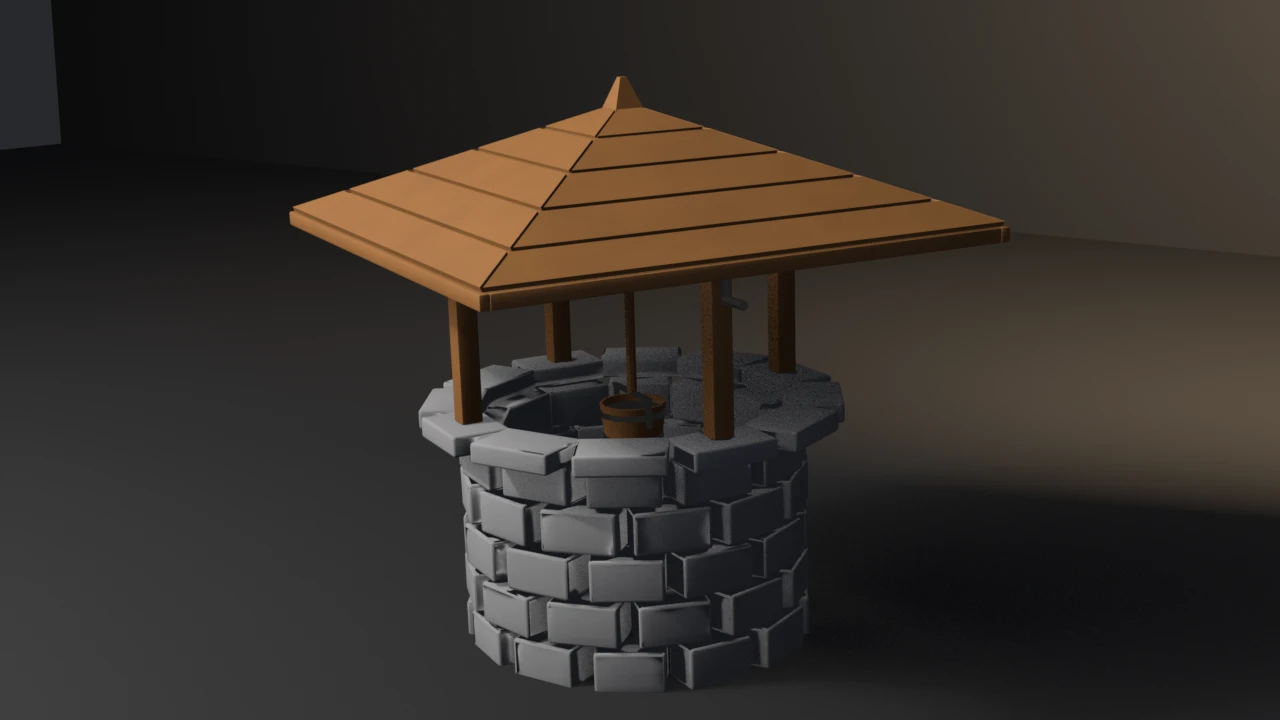
A procedural stone well through UVs, bake, LOD, collider, and Unity glTF, asserting recomputed budgets rather than an API contract.
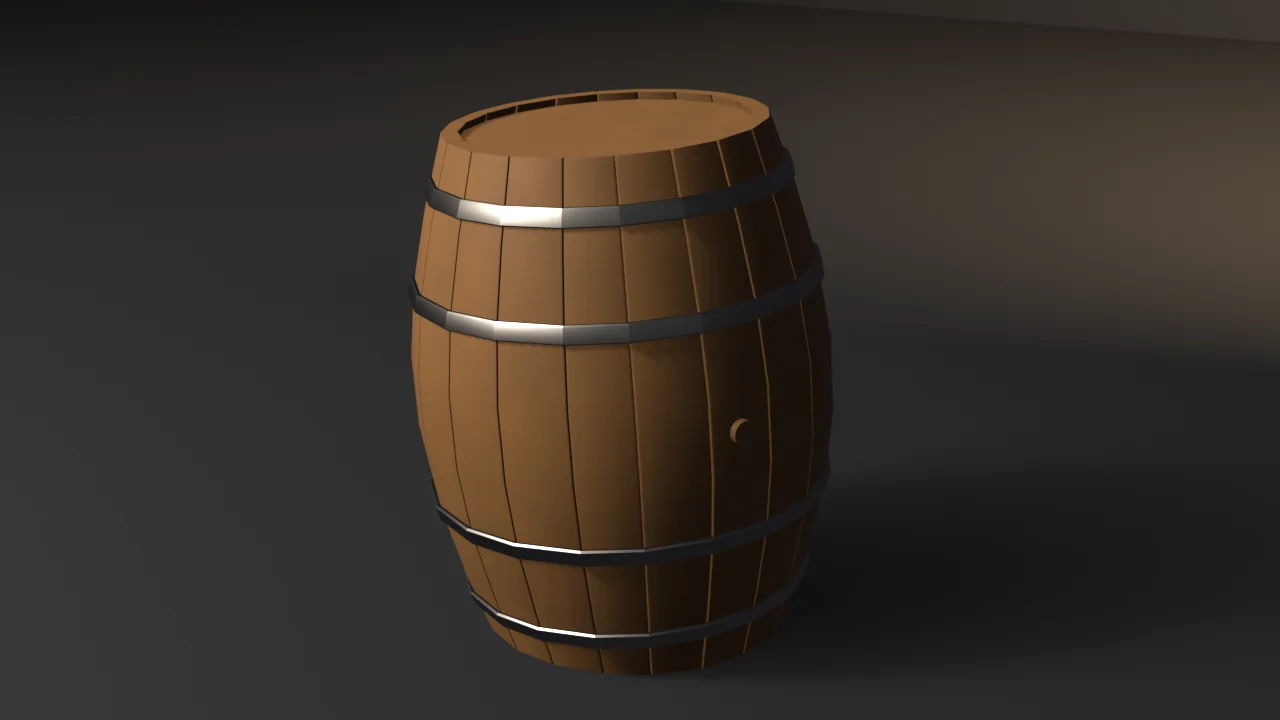
A procedural wine-cask with boarded, croze-seated heads and chord-lofted hoops through UVs, bake, LOD, collider, and Unity glTF, asserting recomputed budgets rather than an API contract.