shipping-crate
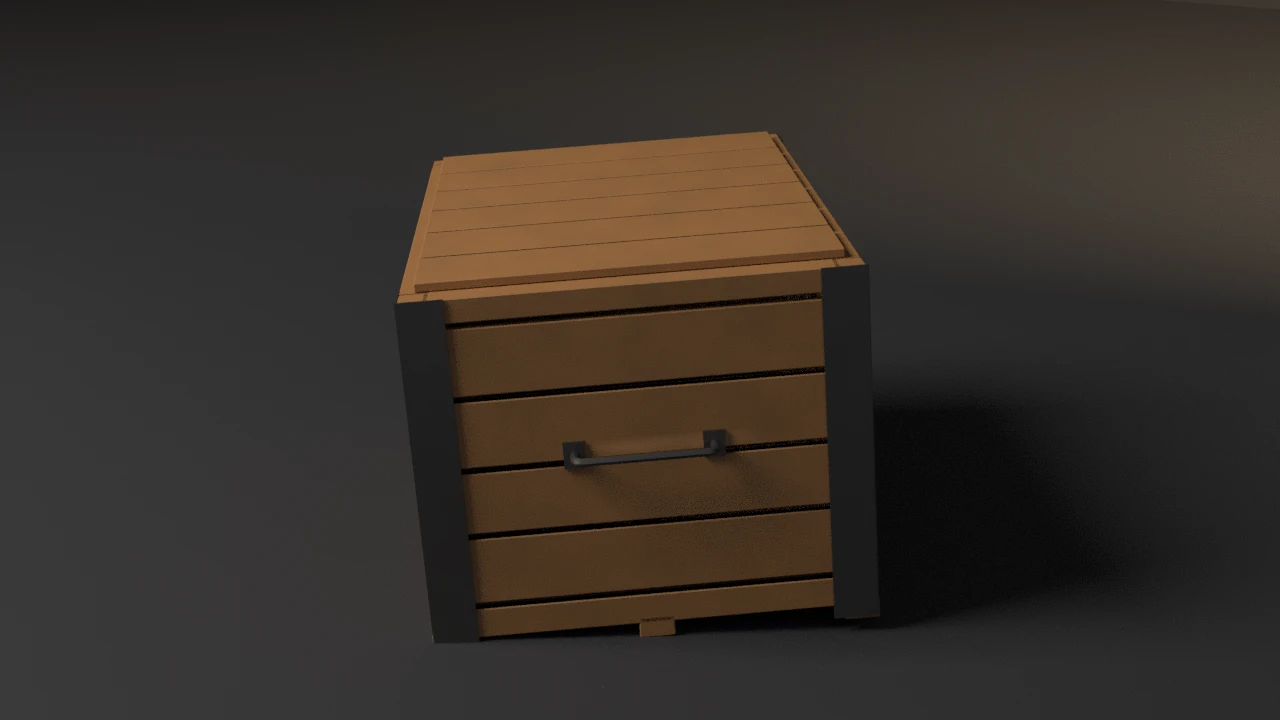
A procedural shipping crate through UVs, bake, LOD, collider, and Unity glTF, asserting recomputed budgets rather than an API contract.
A procedural in-ground basketball goal — one-sweep gooseneck pole, braced framed backboard, regulation rim on a bolted flange and a twelve-loop tapered net hung on the rim hooks — through UVs, bake, LOD, convex collider, and Unity glTF, asserting recomputed budgets rather than an API contract.
Rendered headless by the showcase piece itself — click to zoom.
category Sports
blender --background --python showcase/basketball-hoop/basketball_hoop.py --
A showcase piece, not an example, and the first in the sports category. It builds a procedural outdoor in-ground basketball goal:
The pole, gooseneck and mast are one sweep, because a bent bar is one bar. The straight run of the gooseneck is solved from the mast's offset (gooseneck_path()), so the mast always lands behind the standoffs. Each brace is a tube between two named stations. Its foot sits in the middle of the collar wall and its head sits inside the lower rail.
The rim follows regulation: the top of the ring is at 3.05 m, its inside diameter is 0.457 m, and its inner edge sits 0.151 m off the board face. The bottom line of the shooter's square has its top edge level with the rim. Each net loop is a torus threaded across the hook eye. Its cord passes through the eye and bears 1.5 mm into the hook's lower inside, so the loop hangs on the hook rather than floating near it.
Paint lines are thin annuli sunk 1 mm into the board. They stand proud by different amounts (border 0.8 mm, square 1.2 mm), so neither lands on the board face or on the other. The frame is one rectangular-annulus shell, not four boxes sharing faces. The edge pad runs 8 mm past the frame's ends, so its caps never land on the frame's end faces.
Bevels run once per material with material= set. On the first run, without it, the board's chamfer faces took slot 0 and the board shell classified as steel.
Shading follows what each part is. Round stock (pole, pad, ring, cord) is smooth-shaded. Plates and boxes keep their chamfers crisp through sharp edges above 35° and at every material boundary. The steel is dark, rough powder coat, not chrome.
It asserts budget conformance of the generated result. It does not witness an API contract. "It rendered without error" is not a check.
Composes skills mesh-editing-and-bmesh, bake-high-to-low, depsgraph-and-evaluated-data, engine-export-presets, and snippets bake_normal_high_to_low.py, setup_bake_target_image.py, lod_chain.py / decimate_to_budget.py, convex_hull_collider.py, export_preset_unity.py (helpers copied inline, not imported).
Intended size: 0.42 m anchor plate; 1.83 × 1.05 m board with its bottom at 2.90 m; pole axis 1.22 m behind the board face. The outer AABB is 1.846 × 2.054 × 3.950 m; the board edge pad sets the width.
Every budget is declared as a named constant. Every gate recomputes its value from the mesh, materials, UVs, evaluated LOD, collider, or export file.
| Axis | Declared | Measured (5.2.1) |
|---|---|---|
| Base triangles | 8700–10000 | 9356 |
| LOD1 ratio | 0.32–0.62 of base | 0.5000 |
| LOD2 ratio | 0.10–0.35 of base | 0.2200 |
| Materials | exactly 6 distinct; ≥1000 steel, ≥30 board, ≥24 paint, ≥450 rim, ≥700 net, ≥120 pad faces | 6 slots; 2206 / 54 / 32 / 916 / 1344 / 368 |
| UVs | in 0..1, AABB overlap ≤ 1e-5 | in range, overlap 0 |
| Outer AABB | (1.846, 2.054, 3.950) m ± 0.01 | (1.8460, 2.0540, 3.9500), zmin 0 |
| Collider tris | ≤ 220 | 200 |
| Export | written, size > 0, removed after measuring | 694224 bytes |
DECIMATE COLLAPSE triangle counts are not identical across Blender series, so the LOD gate is a ratio band, not an exact count. Bake pixels are stochastic, so the bake gate is has_data plus operator FINISHED, not byte-identity. Construction uses no RNG; two default runs print identical measurements.
Recomputed from the generated mesh, not asserted about the script.
| Axis | Declared | Measured |
|---|---|---|
| Non-manifold edges | 0 | 0 |
| Loose verts / edges | 0 / 0 | 0 / 0 |
| Doubles merged at 1e-5 | 0 | 0 |
| Zero-area faces | 0 | 0 |
| N-gons | 0 | 0 |
| Coplanar cross-shell face pairs (KD range 0.05 m, plane ε 1e-4) | 0 | 0 |
Grounded: zmin | within 1e-4 of 0 | 0.0000 |
| Axis | Declared | Measured |
|---|---|---|
| Brace bite: deepest vertex of each of the 2 braces inside the collar / inside the lower rail (signed distance to the host shell) | ≥ 0.006 m each, exactly 2 braces | 0.00703 / 0.02176 |
| Net seat: for each of the 12 hooks, distance from the eye centre to the nearest net loop's cord circle (both fitted from the mesh by PCA) | ≤ 0.009 m (the eye's clear radius), 12 hooks, 12 loops | worst 0.00700 |
Rim top height (ring shell max z) | 3.05 m ± 0.010 | 3.0500 |
| Rim inside diameter (min in-plane radius × 2) | 0.457 m ± 0.004 | 0.4570 |
| Rim inner edge to board face | 0.151 m ± 0.005 | 0.1510 |
| Rim tilt (fitted ring axis vs vertical) | ≤ 0.5° | 0.000° |
| One connected assembly (union of shells whose BVH trees overlap) | 1 component | 1 (93 shells) |
Each falsifier violates one named budget. Every one was run on 5.2.1 and exited its declared code. The envelope was unchanged in every run (--tilt-rim moves the Y extent 0.9 mm against a 10 mm tolerance).
| Flag | Budget violated | Exit |
|---|---|---|
--skip-decimate | LOD1 ratio band (measured 1.0000) | 9 |
--stray-vert | loose vertex count is 0 (measured 1) | 15 |
--lift-z | bounding box zmin is 0 (measured 0.05000) | 16 |
--short-brace | brace bite (braces stop 60 mm short of the rail: −0.02125 m) | 17 |
--drop-net | net seat (net lowered 25 mm: worst eye-to-loop 0.03200 m) | 18 |
--tilt-rim | rim level (rim assembly tilted 3° about the flange: 3.000°) | 19 |
--loose-pad | one connected assembly (pad bore 6 mm clear of the pole: 2 components) | 20 |
--drop-net and --tilt-rim move whole sub-assemblies. The net drops without its hooks, and the rim tilts with its hooks and net about the flange, so only the budget each one targets can see the change. --drop-net also splits the assembly in two, but the net-seat check runs first.
blender --background --python basketball_hoop.py --
blender --background --python basketball_hoop.py -- --skip-decimate
blender --background --python basketball_hoop.py -- --stray-vert
blender --background --python basketball_hoop.py -- --lift-z
blender --background --python basketball_hoop.py -- --short-brace
blender --background --python basketball_hoop.py -- --drop-net
blender --background --python basketball_hoop.py -- --tilt-rim
blender --background --python basketball_hoop.py -- --loose-pad
blender --background --python basketball_hoop.py -- --output hoop.png
Smoke passes no flags.
The hero turns the piece HERO_YAW_DEG (−172°), which puts the board about 43° off the camera axis. From there the gooseneck's S reads in profile while the square and net read face-on. The key light's spread keeps it on the hoop instead of the near floor, and a warm wedge pools on the floor behind and to the right.
File-local. 9 is a valid check code. 10 is reserved for gallery_framing.check_framing on the --output path. 15–19 are the hygiene and joint-fit family. 20 is file-local. 21 is the asset-quality floor on the render path: check_asset_quality returns 11, which this piece already spends on the collider ceiling, so the call site remaps it.
| Code | Meaning |
|---|---|
| 0 | Success |
| 1 | Uncaught exception (FATAL wrapper) |
| 2 | argparse / usage |
| 3 | Mesh did not build / no UV layer |
| 4 | Base triangle count outside range |
| 5 | Material count ≠ 6 distinct slots, or a face-count floor missed |
| 6 | UVs outside 0..1 |
| 7 | UV AABB overlap above tolerance |
| 8 | World AABB off declared outer size |
| 9 | LOD ratio band (--skip-decimate lands here) |
| 10 | Framing gate (render path only) |
| 11 | Collider triangle count above ceiling |
| 12 | Bake did not finish or image has no data |
| 13 | Export file missing or empty |
| 14 | --output produced no file |
| 15 | Mesh hygiene: loose, non-manifold, zero-area, doubles, n-gons, coplanar cross-shell pairs |
| 16 | Not grounded: bounding box zmin off 0 |
| 17 | Brace bite: a brace end not inside the collar or the lower rail, or not exactly two braces (--short-brace) |
| 18 | Net seat: a hook with no net loop threaded through its eye, or not 12 hooks and 12 loops (--drop-net) |
| 19 | Rim off regulation: top height, inside diameter, board gap or level (--tilt-rim) |
| 20 | Assembly splits into more than one connected component (--loose-pad) |
| 21 | Asset-quality floor (render path only; remapped from 11) |
"""Game-ready outdoor basketball hoop — a showcase piece, not an example. Asserts budget conformance of a procedural in-ground basketball goal after composing shipped pipeline pieces: bmesh construction, UVs, six materials, high-to-low normal bake, LOD chain, convex collider, Unity glTF export. The pole is one sweep from the anchor plate through an S-shaped gooseneck into the mast behind the board (a bent bar is one sweep). The mast carries the board through two clamp collars, standoffs and a back rail frame; two diagonal support braces run from a collar on the pole to the lower rail. The rim is a regulation ring — 0.457 m inside diameter, top at 3.05 m, inner edge 0.151 m off the board face — on a tapered bracket bolted through a flange plate, with twelve welded net hooks. The net is twelve cord loops hung on those hooks and 24 laid strands that cross in a tapered diamond mesh. The board is framed, with a painted border and shooter's square. Budgets are declared below and recomputed from the generated result. They are not API-contract witnesses. Each falsifier violates one named budget: ``--skip-decimate`` the LOD-ratio band, ``--stray-vert`` mesh hygiene, ``--lift-z`` grounded zmin, ``--short-brace`` brace bite, ``--drop-net`` net loops threaded on the rim hooks, ``--tilt-rim`` rim height / level / size / projection, ``--loose-pad`` one connected assembly. No RNG. Construction is closed-form. DECIMATE COLLAPSE triangle counts are not byte-identical across Blender versions — the LOD gate is a ratio band, not an exact count. blender --background --python basketball_hoop.py -- blender --background --python basketball_hoop.py -- --skip-decimate blender --background --python basketball_hoop.py -- --output hoop.png """ import argparse import math import os import sys import tempfile import traceback import bmesh import bpy import numpy as np from mathutils import Euler, Matrix, Vector from mathutils.bvhtree import BVHTree from mathutils.kdtree import KDTree # Showcase lives at repo-root/showcase/, not under examples/. The framing # helper is the repo's only shared import and lives next to the examples; # resolve the repo root so we do not move gallery_framing.py. _REPO = os.path.abspath( os.path.join(os.path.dirname(os.path.abspath(__file__)), os.pardir, os.pardir) ) sys.path.insert(0, os.path.join(_REPO, "examples")) sys.dont_write_bytecode = True import gallery_framing # noqa: E402 import gallery_asset_quality # noqa: E402 # --- Anchor plate: the only thing on the ground -------------------------- BASE_W = 0.42 BASE_T = 0.025 ANCHOR_XY = 0.165 ANCHOR_R = 0.011 ANCHOR_TOP = BASE_T + 0.062 WASHER_R = 0.026 NUT_R = 0.0195 GUSSET_T = 0.012 GUSSET_REACH = 0.115 GUSSET_H = 0.165 GUSSET_BITE = 0.004 # --- Pole: one sweep from plate to mast top ------------------------------ POLE_R = 0.057 # 4.5 in OD steel pole POLE_SIDES = 18 POLE_SEAT = 0.008 # pole foot below the plate's top face GOOSE_Z = 1.75 # where the gooseneck leaves the vertical GOOSE_BEND_R = 0.45 GOOSE_ANGLE = math.radians(60.0) GOOSE_STEPS = 9 MAST_TOP = 3.80 # --- Board, frame and back rails ------------------------------------------ BOARD_FACE_Y = 1.22 # pole axis to board face: 48 in overhang BOARD_T = 0.030 BOARD_W = 1.83 # regulation 6 ft x 3.5 ft, frame included BOARD_H = 1.05 BOARD_BOT = 2.90 FRAME_W = 0.035 FRAME_PROUD = 0.010 FRAME_BACK = 0.012 PANEL_INSET = 0.020 EDGE_PAD_T = 0.018 EDGE_PAD_REVEAL = 0.008 RAIL_D = 0.050 RAIL_H = 0.050 RAIL_W = 1.30 RAIL_BITE = 0.003 RAIL_Z = (3.08, 3.72) STILE_X = 0.24 STANDOFF = 0.10 STANDOFF_S = 0.060 CLAMP_H = 0.090 # --- Paint ----------------------------------------------------------------- LINE_W = 0.050 BORDER_PROUD = 0.0008 SQUARE_PROUD = 0.0012 PAINT_SINK = 0.001 SQUARE_W = 0.59 SQUARE_H = 0.45 # --- Rim (regulation) ------------------------------------------------------ RIM_TOP = 3.05 RIM_ID = 0.457 RIM_GAP = 0.151 # board face to the ring's inside edge RING_R = 0.008 RING_SEGS = 48 FLANGE_W = 0.16 FLANGE_H = 0.15 FLANGE_T = 0.014 FLANGE_SINK = 0.002 BOLT_R = 0.011 STRUT_R = 0.006 STRUT_ANGLE = math.radians(30.0) NET_HOOKS = 12 HOOK_MAJOR = 0.012 HOOK_MINOR = 0.0025 HOOK_BITE = 0.003 # --- Net ------------------------------------------------------------------- CORD_R = 0.004 NET_LOOP_R = 0.014 NET_LOOP_BITE = 0.0015 # loop cord bears into the hook's lower inside NET_ROWS = 6 NET_LEN = 0.40 NET_BOT_R = 0.145 NET_STRAND_SIDES = 5 KNOT_OFFSET = 0.6 # strand centres sit +/- this x CORD_R off the knot # --- Pad and brace collar -------------------------------------------------- PAD_Z = (0.21, 1.36) PAD_T = 0.038 PAD_GRIP = 0.003 COLLAR_Z = 1.55 COLLAR_H = 0.080 COLLAR_T = 0.016 BRACE_R = 0.0165 BRACE_X = 0.55 BBOX_TOL = 0.01 # Fitted after locking geometry. Recomputed from bound_box. OUTER_SIZE = (1.846, 2.054, 3.950) BASE_TRIS_MIN = 8700 BASE_TRIS_MAX = 10000 LOD1_RATIO_MIN = 0.32 LOD1_RATIO_MAX = 0.62 LOD2_RATIO_MIN = 0.10 LOD2_RATIO_MAX = 0.35 LOD1_TARGET = 0.50 LOD2_TARGET = 0.22 MATERIAL_COUNT = 6 UV_EPS = 1e-4 UV_OVERLAP_MAX = 1e-5 COLLIDER_TRIS_MAX = 220 BAKE_RES = 512 CAGE_EXTRUSION = 0.01 STEEL_FACES_MIN = 1000 BOARD_FACES_MIN = 30 PAINT_FACES_MIN = 24 RIM_FACES_MIN = 450 NET_FACES_MIN = 700 PAD_FACES_MIN = 120 ZMIN_EPS = 1e-4 DOUBLES_EPS = 1e-5 AREA_EPS = 1e-10 COPLANAR_NORMAL_EPS = 1e-4 COPLANAR_PLANE_EPS = 1e-4 COPLANAR_CENTRE_MAX = 0.05 LIFT_Z = 0.05 # Each brace end must bite into its host: deepest brace vertex inside the # collar, and inside the lower rail (signed distance to that shell). BRACE_BITE_MIN = 0.006 SHORT_BRACE = 0.06 # A net loop is hung on its hook when the loop's cord circle passes through # the hook eye: distance from the eye centre to the loop's centre circle is # under the eye's clear radius. Dropped 25 mm, every loop hangs free. NET_THREAD_MAX = 0.009 DROP_NET = 0.025 # Real-world rim: top 3.05 m, 0.457 m inside, inner edge 0.151 m off the # board face, and level. RIM_TOP_TOL = 0.010 RIM_ID_TOL = 0.004 RIM_GAP_TOL = 0.005 RIM_TILT_MAX_DEG = 0.5 TILT_RIM_DEG = 3.0 LOOSE_PAD = 0.006 # Hero yaw: the board faces the camera from ~40 degrees off its normal so # the gooseneck's S reads in profile and the net and square read face-on. HERO_YAW_DEG = -172.0 WALL_Y = 9.0 STEEL_IDX = 0 BOARD_IDX = 1 PAINT_IDX = 2 RIM_IDX = 3 NET_IDX = 4 PAD_IDX = 5 def eevee_engine_id(): return "BLENDER_EEVEE" if bpy.app.version >= (5, 0, 0) else "BLENDER_EEVEE_NEXT" def fail(msg, code): print(f"ERROR: {msg}", file=sys.stderr) return code def triangle_count(mesh): mesh.calc_loop_triangles() return len(mesh.loop_triangles) def evaluated_triangle_count(obj): # Duplicated from snippets/lod_chain.py / decimate_to_budget.py (not a package). depsgraph = bpy.context.evaluated_depsgraph_get() eval_obj = obj.evaluated_get(depsgraph) eval_mesh = eval_obj.to_mesh() try: eval_mesh.calc_loop_triangles() return len(eval_mesh.loop_triangles) finally: eval_obj.to_mesh_clear() # -------------------------------------------------------------------------- # Construction helpers # -------------------------------------------------------------------------- def _mark(faces, mat_idx): for f in faces: f.material_index = mat_idx def add_box(bm, loc, scale, mat_idx): geo = bmesh.ops.create_cube(bm, size=1.0) verts = geo["verts"] origin = Vector(loc) for v in verts: v.co = Vector((v.co.x * scale[0], v.co.y * scale[1], v.co.z * scale[2])) + origin _mark({f for v in verts for f in v.link_faces}, mat_idx) return list(verts) def add_hexahedron(bm, pts, mat_idx): """Closed six-sided solid from 8 corners: 0-3 one end, 4-7 the other, both ends wound the same way.""" v = [bm.verts.new(Vector(p)) for p in pts] quads = [(0, 1, 2, 3), (7, 6, 5, 4), (0, 4, 5, 1), (1, 5, 6, 2), (2, 6, 7, 3), (3, 7, 4, 0)] _mark([bm.faces.new([v[i] for i in q]) for q in quads], mat_idx) return v def add_rect_frame(bm, cx, cz, y0, y1, ow, oh, iw, ih, mat_idx): """Rectangular annulus in the XZ plane, extruded from y0 to y1: one closed shell (a picture frame), never four boxes sharing faces.""" outer = [(-ow / 2, -oh / 2), (ow / 2, -oh / 2), (ow / 2, oh / 2), (-ow / 2, oh / 2)] inner = [(-iw / 2, -ih / 2), (iw / 2, -ih / 2), (iw / 2, ih / 2), (-iw / 2, ih / 2)] o = {y: [bm.verts.new((cx + x, y, cz + z)) for x, z in outer] for y in (y0, y1)} n = {y: [bm.verts.new((cx + x, y, cz + z)) for x, z in inner] for y in (y0, y1)} faces = [] for i in range(4): j = (i + 1) % 4 faces.append(bm.faces.new((o[y0][i], o[y0][j], n[y0][j], n[y0][i]))) faces.append(bm.faces.new((o[y1][j], o[y1][i], n[y1][i], n[y1][j]))) faces.append(bm.faces.new((o[y0][j], o[y0][i], o[y1][i], o[y1][j]))) faces.append(bm.faces.new((n[y0][i], n[y0][j], n[y1][j], n[y1][i]))) _mark(faces, mat_idx) return o[y0] + o[y1] + n[y0] + n[y1] def add_prism_x(bm, profile, x0, x1, mat_idx): """Closed convex (y, z) polygon extruded along X from x0 to x1.""" a = [bm.verts.new((x0, y, z)) for y, z in profile] b = [bm.verts.new((x1, y, z)) for y, z in profile] n = len(profile) faces = [bm.faces.new((a[i], a[(i + 1) % n], b[(i + 1) % n], b[i])) for i in range(n)] faces.append(bm.faces.new(tuple(reversed(a)))) faces.append(bm.faces.new(tuple(b))) _mark(faces, mat_idx) return a + b def add_lathe(bm, profile, segs, mat_idx, center=(0.0, 0.0, 0.0), rot=None, phase=0.0, solid=False): """Revolve a profile [(r, z), ...] about local Z. ``solid``: the profile is an open polyline closed by n-gon caps at its two ends; otherwise it is a closed polygon revolved into a ring shell.""" c = Vector(center) m = rot if rot is not None else Matrix.Identity(3) rings = [] for i in range(segs): a = phase + 2.0 * math.pi * i / segs ca, sa = math.cos(a), math.sin(a) rings.append([bm.verts.new(c + m @ Vector((r * ca, r * sa, z))) for r, z in profile]) n = len(profile) faces = [] last = n - 1 if solid else n for i in range(segs): r0, r1 = rings[i], rings[(i + 1) % segs] for j in range(last): k = (j + 1) % n faces.append(bm.faces.new((r0[j], r1[j], r1[k], r0[k]))) if solid: faces.append(bm.faces.new([rings[i][0] for i in reversed(range(segs))])) faces.append(bm.faces.new([rings[i][n - 1] for i in range(segs)])) _mark(faces, mat_idx) return [v for ring in rings for v in ring] def add_tube(bm, pts, radius, sides, mat_idx, phase=0.0): """Capped round bar swept along a polyline (parallel-transport frames).""" pts = [Vector(p) for p in pts] tans = [] for i in range(len(pts)): a = pts[max(i - 1, 0)] b = pts[min(i + 1, len(pts) - 1)] tans.append((b - a).normalized()) ref = Vector((1.0, 0.0, 0.0)) if abs(tans[0].x) < 0.9 else Vector((0.0, 0.0, 1.0)) nrm = (ref - tans[0] * ref.dot(tans[0])).normalized() rings = [] for p, t in zip(pts, tans): nrm = (nrm - t * nrm.dot(t)).normalized() bi = t.cross(nrm) rings.append([ bm.verts.new(p + radius * (nrm * math.cos(phase + 2.0 * math.pi * k / sides) + bi * math.sin(phase + 2.0 * math.pi * k / sides))) for k in range(sides) ]) faces = [] for r0, r1 in zip(rings, rings[1:]): for k in range(sides): m = (k + 1) % sides faces.append(bm.faces.new((r0[k], r0[m], r1[m], r1[k]))) faces.append(bm.faces.new(tuple(reversed(rings[0])))) faces.append(bm.faces.new(tuple(rings[-1]))) _mark(faces, mat_idx) return [v for ring in rings for v in ring] def add_ring(bm, center, axis, r_major, r_minor, segs, sides, mat_idx, phase=0.0): """Closed torus about ``axis`` through ``center``.""" center = Vector(center) axis = Vector(axis).normalized() ref = Vector((0.0, 0.0, 1.0)) if abs(axis.z) < 0.9 else Vector((1.0, 0.0, 0.0)) u = axis.cross(ref).normalized() w = axis.cross(u) rings = [] for i in range(segs): a = phase + 2.0 * math.pi * i / segs radial = u * math.cos(a) + w * math.sin(a) c = center + radial * r_major rings.append([ bm.verts.new(c + r_minor * (radial * math.cos(2.0 * math.pi * k / sides) + axis * math.sin(2.0 * math.pi * k / sides))) for k in range(sides) ]) faces = [] for i in range(segs): r0, r1 = rings[i], rings[(i + 1) % segs] for k in range(sides): m = (k + 1) % sides faces.append(bm.faces.new((r0[k], r0[m], r1[m], r1[k]))) _mark(faces, mat_idx) return [v for ring in rings for v in ring] def gooseneck_path(): """Pole centreline: vertical, bend forward, straight, bend back to a vertical mast. The straight run is solved from the mast's offset, so the mast always lands behind the board's standoffs.""" board_back = BOARD_FACE_Y - BOARD_T rail_back = board_back - RAIL_D + RAIL_BITE mast_y = rail_back - STANDOFF - POLE_R a = GOOSE_ANGLE rb = GOOSE_BEND_R straight = (mast_y - 2.0 * rb * (1.0 - math.cos(a))) / math.sin(a) pts = [Vector((0.0, 0.0, BASE_T - POLE_SEAT)), Vector((0.0, 0.0, 0.9))] # first bend: centre ahead of the pole at the bend height c1 = Vector((0.0, rb, GOOSE_Z)) for i in range(GOOSE_STEPS + 1): t = a * i / GOOSE_STEPS pts.append(c1 + Vector((0.0, -rb * math.cos(t), rb * math.sin(t)))) p_end1 = pts[-1] d = Vector((0.0, math.sin(a), math.cos(a))) p_start2 = p_end1 + d * straight # second bend back to vertical: centre on the other side of the run c2 = p_start2 + Vector((0.0, -rb * math.cos(a), rb * math.sin(a))) for i in range(GOOSE_STEPS + 1): t = a * (1.0 - i / GOOSE_STEPS) pts.append(c2 + Vector((0.0, rb * math.cos(t), -rb * math.sin(t)))) top_start = pts[-1] pts.append(Vector((0.0, top_start.y, 0.5 * (top_start.z + MAST_TOP)))) pts.append(Vector((0.0, top_start.y, MAST_TOP))) return pts, mast_y, top_start.z def triangulate_ngons(bm): faces = [f for f in bm.faces if len(f.verts) > 4] if faces: bmesh.ops.triangulate(bm, faces=faces) def pack_uvs(bm, margin=0.08): uv = bm.loops.layers.uv.new("UVMap") faces = list(bm.faces) n = len(faces) cols = max(1, math.ceil(math.sqrt(n))) rows = max(1, math.ceil(n / cols)) cell_w = 1.0 / cols cell_h = 1.0 / rows pad_u = margin * cell_w * 0.5 pad_v = margin * cell_h * 0.5 usable_w = cell_w - 2.0 * pad_u usable_h = cell_h - 2.0 * pad_v for i, face in enumerate(faces): col = i % cols row = i // cols nrm = face.normal ax, ay, az = abs(nrm.x), abs(nrm.y), abs(nrm.z) coords = [] for loop in face.loops: co = loop.vert.co if az >= ax and az >= ay: coords.append((co.x, co.y)) elif ax >= ay: coords.append((co.y, co.z)) else: coords.append((co.x, co.z)) xs = [c[0] for c in coords] ys = [c[1] for c in coords] minx, maxx = min(xs), max(xs) miny, maxy = min(ys), max(ys) dx = max(maxx - minx, 1e-8) dy = max(maxy - miny, 1e-8) origin_u = col * cell_w + pad_u origin_v = row * cell_h + pad_v for loop, (x, y) in zip(face.loops, coords): loop[uv].uv = ( origin_u + (x - minx) / dx * usable_w, origin_v + (y - miny) / dy * usable_h, ) # -------------------------------------------------------------------------- # The hoop # -------------------------------------------------------------------------- def build_hoop_mesh(name, bevel_offset, bevel_segments, short_brace=False, drop_net=False, tilt_rim=False, loose_pad=False): bm = bmesh.new() try: bevel_verts = [] # anchor plate, gussets, anchor bolts bevel_verts += add_box(bm, (0.0, 0.0, BASE_T / 2.0), (BASE_W, BASE_W, BASE_T), STEEL_IDX) for k in range(4): ang = 0.5 * math.pi * k rad = Vector((math.cos(ang), math.sin(ang), 0.0)) tan = Vector((-math.sin(ang), math.cos(ang), 0.0)) r0 = POLE_R - GUSSET_BITE z0 = BASE_T - 0.003 tri = [(r0, z0), (r0 + GUSSET_REACH, z0), (r0 + 0.018, z0 + GUSSET_H), (r0, z0 + GUSSET_H)] pts = [] for s in (-0.5, 0.5): for r, z in tri: pts.append(rad * r + tan * (s * GUSSET_T) + Vector((0.0, 0.0, z))) bevel_verts += add_hexahedron(bm, pts, STEEL_IDX) for sx in (-1.0, 1.0): for sy in (-1.0, 1.0): c = (sx * ANCHOR_XY, sy * ANCHOR_XY, 0.0) add_lathe(bm, [(ANCHOR_R, BASE_T - 0.012), (ANCHOR_R, ANCHOR_TOP - 0.003), (ANCHOR_R * 0.7, ANCHOR_TOP)], 8, STEEL_IDX, center=c, solid=True) zw = BASE_T - 0.001 add_lathe(bm, [(WASHER_R - 0.0015, zw), (WASHER_R, zw + 0.0015), (WASHER_R, zw + 0.0045), (WASHER_R - 0.0015, zw + 0.0055)], 14, STEEL_IDX, center=c, solid=True) zn = zw + 0.0045 add_lathe(bm, [(NUT_R * 0.86, zn), (NUT_R, zn + 0.003), (NUT_R, zn + 0.016), (NUT_R * 0.86, zn + 0.019)], 6, STEEL_IDX, center=c, phase=math.pi / 6.0, solid=True) # the pole: one sweep from inside the plate to the mast top path, mast_y, mast_z0 = gooseneck_path() add_tube(bm, path, POLE_R, POLE_SIDES, STEEL_IDX) cap_z = MAST_TOP add_lathe(bm, [(POLE_R + 0.006, cap_z - 0.014), (POLE_R + 0.006, cap_z + 0.010), (POLE_R * 0.75, cap_z + 0.030), (0.018, cap_z + 0.040)], POLE_SIDES, STEEL_IDX, center=(0.0, mast_y, 0.0), solid=True) # padding wrapped on the pole, gripping it; grooves split it into panels ri = POLE_R - PAD_GRIP if loose_pad: ri = POLE_R + LOOSE_PAD ro = POLE_R + PAD_T z0, z1 = PAD_Z prof = [(ri, z0), (ro - 0.012, z0), (ro, z0 + 0.012)] for g in (1.0 / 3.0, 2.0 / 3.0): gz = z0 + (z1 - z0) * g prof += [(ro, gz - 0.012), (ro - 0.007, gz - 0.004), (ro - 0.007, gz + 0.004), (ro, gz + 0.012)] prof += [(ro, z1 - 0.012), (ro - 0.012, z1), (ri, z1)] add_lathe(bm, prof, POLE_SIDES, PAD_IDX) # brace collar and the two support braces to the lower rail cr_i = POLE_R - 0.003 cr_o = POLE_R + COLLAR_T cz0 = COLLAR_Z - COLLAR_H / 2.0 cz1 = COLLAR_Z + COLLAR_H / 2.0 add_lathe(bm, [(cr_i, cz0), (cr_o - 0.004, cz0), (cr_o, cz0 + 0.004), (cr_o, cz1 - 0.004), (cr_o - 0.004, cz1), (cr_i, cz1)], POLE_SIDES, STEEL_IDX) board_back = BOARD_FACE_Y - BOARD_T rail_y = board_back - RAIL_D / 2.0 + RAIL_BITE for sx in (-1.0, 1.0): # the brace foot sits in the middle of the collar wall p0 = Vector((sx * 0.5 * (cr_i + cr_o), 0.015, COLLAR_Z)) p1 = Vector((sx * BRACE_X, rail_y, RAIL_Z[0])) if short_brace: p1 = p1 - (p1 - p0).normalized() * SHORT_BRACE add_tube(bm, [p0, p1], BRACE_R, 10, STEEL_IDX) # mast clamps, standoffs, back rails and stiles for rz in RAIL_Z: add_lathe(bm, [(cr_i, rz - CLAMP_H / 2.0), (cr_o - 0.004, rz - CLAMP_H / 2.0), (cr_o, rz - CLAMP_H / 2.0 + 0.004), (cr_o, rz + CLAMP_H / 2.0 - 0.004), (cr_o - 0.004, rz + CLAMP_H / 2.0), (cr_i, rz + CLAMP_H / 2.0)], POLE_SIDES, STEEL_IDX, center=(0.0, mast_y, 0.0)) y0 = mast_y y1 = board_back - RAIL_D + RAIL_BITE + 0.006 bevel_verts += add_box(bm, (0.0, 0.5 * (y0 + y1), rz), (STANDOFF_S, y1 - y0, STANDOFF_S), STEEL_IDX) bevel_verts += add_box(bm, (0.0, rail_y, rz), (RAIL_W, RAIL_D, RAIL_H), STEEL_IDX) for sx in (-1.0, 1.0): h = RAIL_Z[1] - RAIL_Z[0] bevel_verts += add_box(bm, (sx * STILE_X, board_back - 0.0215, 0.5 * sum(RAIL_Z)), (0.040, 0.047, h), STEEL_IDX) # board panel inside its frame bz = BOARD_BOT + BOARD_H / 2.0 bevel_verts += add_box(bm, (0.0, BOARD_FACE_Y - BOARD_T / 2.0, bz), (BOARD_W - 2.0 * PANEL_INSET, BOARD_T, BOARD_H - 2.0 * PANEL_INSET), BOARD_IDX) bevel_verts += add_rect_frame( bm, 0.0, bz, board_back - FRAME_BACK, BOARD_FACE_Y + FRAME_PROUD, BOARD_W, BOARD_H, BOARD_W - 2.0 * FRAME_W, BOARD_H - 2.0 * FRAME_W, STEEL_IDX) # edge pad wrapped round the frame's bottom member, a reveal past the # frame's ends so its caps never land on the frame's end faces fy_back = board_back - FRAME_BACK fy_front = BOARD_FACE_Y + FRAME_PROUD py0 = fy_back - EDGE_PAD_T py1 = fy_front + EDGE_PAD_T pz0 = BOARD_BOT - EDGE_PAD_T pz1 = BOARD_BOT + FRAME_W + 0.006 ch = 0.010 pad_prof = [(py0 + ch, pz0), (py1 - ch, pz0), (py1, pz0 + ch), (py1, pz1 - ch), (py1 - ch, pz1), (py0 + ch, pz1), (py0, pz1 - ch), (py0, pz0 + ch)] half = BOARD_W / 2.0 + EDGE_PAD_REVEAL bevel_verts += add_prism_x(bm, pad_prof, -half, half, PAD_IDX) # painted border (tucked 3 mm under the frame) and shooter's square bw = BOARD_W - 2.0 * FRAME_W + 0.006 bh = BOARD_H - 2.0 * FRAME_W + 0.006 add_rect_frame(bm, 0.0, bz, BOARD_FACE_Y - PAINT_SINK, BOARD_FACE_Y + BORDER_PROUD, bw, bh, bw - 0.006 - 2.0 * LINE_W, bh - 0.006 - 2.0 * LINE_W, PAINT_IDX) sq_z = RIM_TOP - LINE_W + SQUARE_H / 2.0 add_rect_frame(bm, 0.0, sq_z, BOARD_FACE_Y - PAINT_SINK, BOARD_FACE_Y + SQUARE_PROUD, SQUARE_W, SQUARE_H, SQUARE_W - 2.0 * LINE_W, SQUARE_H - 2.0 * LINE_W, PAINT_IDX) # --- rim assembly (every vertex from here on tilts with --tilt-rim) rim_start = len(bm.verts) ring_z = RIM_TOP - RING_R ring_rc = RIM_ID / 2.0 + RING_R ring_cy = BOARD_FACE_Y + RIM_GAP + RIM_ID / 2.0 fz = ring_z - 0.02 fy0 = BOARD_FACE_Y - FLANGE_SINK fy1 = BOARD_FACE_Y + FLANGE_T bevel_verts += add_box(bm, (0.0, 0.5 * (fy0 + fy1), fz), (FLANGE_W, fy1 - fy0, FLANGE_H), RIM_IDX) xrot = Euler((-0.5 * math.pi, 0.0, 0.0)).to_matrix() for sx in (-1.0, 1.0): for sz in (-1.0, 1.0): add_lathe(bm, [(BOLT_R, fy1 - 0.003), (BOLT_R, fy1 + 0.005), (BOLT_R * 0.8, fy1 + 0.0075)], 6, STEEL_IDX, center=(sx * 0.055, 0.0, fz + sz * 0.052), rot=xrot, phase=math.pi / 6.0, solid=True) # tapered bracket: flange face to the ring's near side by0 = fy1 - 0.004 by1 = ring_cy - ring_rc + 0.004 top = ring_z + 0.004 bracket = [ (-0.055, by0, top - 0.075), (0.055, by0, top - 0.075), (0.055, by0, top), (-0.055, by0, top), (-0.026, by1, top - 0.018), (0.026, by1, top - 0.018), (0.026, by1, top), (-0.026, by1, top), ] bevel_verts += add_hexahedron(bm, bracket, RIM_IDX) # two struts from the bracket to the ring, either side of the board line for sx in (-1.0, 1.0): phi = -0.5 * math.pi + sx * STRUT_ANGLE p1 = Vector((ring_rc * math.cos(phi), ring_cy + ring_rc * math.sin(phi), ring_z - 0.003)) p0 = Vector((sx * 0.030, by0 + 0.055, top - 0.050)) add_tube(bm, [p0, p1], STRUT_R, 8, RIM_IDX) add_ring(bm, (0.0, ring_cy, ring_z), (0.0, 0.0, 1.0), ring_rc, RING_R, RING_SEGS, 8, RIM_IDX) # net hooks: eyes welded under the ring, in the ring's radial plane hook_eyes = [] for k in range(NET_HOOKS): phi = -0.5 * math.pi + math.pi / NET_HOOKS + 2.0 * math.pi * k / NET_HOOKS rad = Vector((math.cos(phi), math.sin(phi), 0.0)) tan = Vector((-math.sin(phi), math.cos(phi), 0.0)) e = Vector((0.0, ring_cy, 0.0)) + rad * ring_rc e.z = ring_z - RING_R - HOOK_MAJOR + HOOK_BITE add_ring(bm, e, tan, HOOK_MAJOR, HOOK_MINOR, 8, 4, RIM_IDX) hook_eyes.append((phi, e, rad, tan)) # --- the net (drops with --drop-net) net_start = len(bm.verts) bottoms = [] for phi, e, rad, tan in hook_eyes: # the loop's cord bears on the lower inside of the hook eye top_pt = e - Vector((0.0, 0.0, HOOK_MAJOR - HOOK_MINOR - CORD_R + NET_LOOP_BITE)) lc = top_pt - Vector((0.0, 0.0, NET_LOOP_R)) add_ring(bm, lc, rad, NET_LOOP_R, CORD_R, 10, 4, NET_IDX, phase=0.3) bottoms.append((phi, lc - Vector((0.0, 0.0, NET_LOOP_R)), tan)) dphi = 2.0 * math.pi / NET_HOOKS z_top = bottoms[0][1].z def net_point(phi, j, off): f = j / NET_ROWS r = ring_rc + (NET_BOT_R - ring_rc) * (1.0 - (1.0 - f) ** 1.4) + off z = z_top - NET_LEN * f return Vector((r * math.cos(phi), ring_cy + r * math.sin(phi), z)) for phi0, b, tan in bottoms: for spin, off, phase in ((1.0, KNOT_OFFSET * CORD_R, 0.0), (-1.0, -KNOT_OFFSET * CORD_R, 0.37)): pts = [b + tan * (spin * 0.003)] for j in range(1, NET_ROWS + 1): pts.append(net_point(phi0 + spin * j * dphi / 2.0, j, off)) add_tube(bm, pts, CORD_R, NET_STRAND_SIDES, NET_IDX, phase=phase) bm.verts.ensure_lookup_table() if drop_net: for v in bm.verts[net_start:]: v.co.z -= DROP_NET if tilt_rim: pivot = Vector((0.0, BOARD_FACE_Y, ring_z)) rot = Matrix.Rotation(math.radians(-TILT_RIM_DEG), 3, "X") for v in bm.verts[rim_start:]: v.co = pivot + rot @ (v.co - pivot) if bevel_offset > 0.0: # One pass per material, with material= set: left at its default # the chamfer faces take slot 0 and the board's rim would render # (and classify) as steel. A set of BMEdges iterates in memory # order, which varies run to run; sort by index. for mat_idx in (STEEL_IDX, BOARD_IDX, RIM_IDX, PAD_IDX): bm.edges.index_update() edges = sorted( {e for v in bevel_verts if v.is_valid for e in v.link_edges if all(f.material_index == mat_idx for f in e.link_faces)}, key=lambda e: e.index, ) if not edges: continue bmesh.ops.bevel( bm, geom=edges, offset=bevel_offset, segments=bevel_segments, profile=0.5, affect="EDGES", clamp_overlap=True, material=mat_idx, ) bmesh.ops.remove_doubles(bm, verts=list(bm.verts), dist=1e-5) bmesh.ops.dissolve_degenerate(bm, dist=1e-6) triangulate_ngons(bm) xs = [v.co.x for v in bm.verts] ys = [v.co.y for v in bm.verts] zs = [v.co.z for v in bm.verts] cx = 0.5 * (min(xs) + max(xs)) cy = 0.5 * (min(ys) + max(ys)) zmin = min(zs) for v in bm.verts: v.co.x -= cx v.co.y -= cy v.co.z -= zmin if v.co.z < 0.0: v.co.z = 0.0 pack_uvs(bm) bmesh.ops.recalc_face_normals(bm, faces=list(bm.faces)) # Round stock (pole, pad, ring, cord) is smooth-shaded; plates and # boxes keep their chamfers crisp through sharp edges. for face in bm.faces: face.smooth = True for edge in bm.edges: mats = {f.material_index for f in edge.link_faces} if len(mats) > 1 or not edge.is_manifold or len(edge.link_faces) != 2: edge.smooth = False else: edge.smooth = edge.calc_face_angle() < math.radians(35.0) me = bpy.data.meshes.new(name) bm.to_mesh(me) me.update() finally: bm.free() obj = bpy.data.objects.new(name, me) bpy.context.collection.objects.link(obj) return obj # -------------------------------------------------------------------------- # Materials # -------------------------------------------------------------------------- def principled(name, color, metallic, roughness, roughness_var=0.0, mottle=0.0, noise_scale=14.0): mat = bpy.data.materials.new(name) mat.use_nodes = True nt = mat.node_tree bsdf = nt.nodes["Principled BSDF"] bsdf.inputs["Base Color"].default_value = color bsdf.inputs["Metallic"].default_value = metallic bsdf.inputs["Roughness"].default_value = roughness if roughness_var > 0.0 or mottle > 0.0: coord = nt.nodes.new("ShaderNodeTexCoord") noise = nt.nodes.new("ShaderNodeTexNoise") noise.inputs["Scale"].default_value = noise_scale noise.inputs["Detail"].default_value = 6.0 nt.links.new(coord.outputs["Object"], noise.inputs["Vector"]) if roughness_var > 0.0: ramp = nt.nodes.new("ShaderNodeValToRGB") lo = max(0.05, roughness - roughness_var) hi = min(0.95, roughness + roughness_var) ramp.color_ramp.elements[0].position = 0.30 ramp.color_ramp.elements[0].color = (lo, lo, lo, 1.0) ramp.color_ramp.elements[1].position = 0.70 ramp.color_ramp.elements[1].color = (hi, hi, hi, 1.0) nt.links.new(noise.outputs["Fac"], ramp.inputs["Fac"]) nt.links.new(ramp.outputs["Color"], bsdf.inputs["Roughness"]) if mottle > 0.0: cramp = nt.nodes.new("ShaderNodeValToRGB") dark = tuple(c * (1.0 - mottle) for c in color[:3]) + (1.0,) cramp.color_ramp.elements[0].position = 0.35 cramp.color_ramp.elements[0].color = dark cramp.color_ramp.elements[1].position = 0.75 cramp.color_ramp.elements[1].color = color nt.links.new(noise.outputs["Fac"], cramp.inputs["Fac"]) nt.links.new(cramp.outputs["Color"], bsdf.inputs["Base Color"]) return mat def hoop_materials(): """(steel, board, paint, rim, net, pad): shared by the check and the render. Powder-coated steel is dark and rough, not chrome; the rim is enamelled orange; the board is a weathered off-white with red paint that is a touch worn; the cord is off-white nylon; the pad is navy vinyl. """ steel = principled("HoopSteel", (0.040, 0.046, 0.052, 1.0), 0.55, 0.52, roughness_var=0.14, mottle=0.25) board = principled("HoopBoard", (0.62, 0.62, 0.60, 1.0), 0.0, 0.38, roughness_var=0.10, mottle=0.07, noise_scale=6.0) paint = principled("HoopPaint", (0.52, 0.045, 0.035, 1.0), 0.0, 0.50, roughness_var=0.12, mottle=0.22, noise_scale=30.0) rim = principled("HoopRim", (0.82, 0.21, 0.025, 1.0), 0.35, 0.42, roughness_var=0.12, mottle=0.18, noise_scale=40.0) net = principled("HoopNet", (0.80, 0.79, 0.74, 1.0), 0.0, 0.82) pad = principled("HoopPad", (0.030, 0.065, 0.19, 1.0), 0.0, 0.62, roughness_var=0.10, mottle=0.10) return steel, board, paint, rim, net, pad def assign_slots(obj, wanted): # Do not materials.clear() — that resets polygon material_index to 0. mats = obj.data.materials for i, mat in enumerate(wanted): if i < len(mats): mats[i] = mat else: mats.append(mat) # -------------------------------------------------------------------------- # Audits # -------------------------------------------------------------------------- def world_bbox(obj): corners = [obj.matrix_world @ Vector(c) for c in obj.bound_box] xs = [c.x for c in corners] ys = [c.y for c in corners] zs = [c.z for c in corners] return (min(xs), min(ys), min(zs), max(xs), max(ys), max(zs)) def uv_stats(mesh): uv = mesh.uv_layers.active if uv is None: return 0.0, 0.0, 1.0, 1.0, 0, 1.0 data = uv.data us = [loop.uv[0] for loop in data] vs = [loop.uv[1] for loop in data] aabbs = [] for poly in mesh.polygons: pu = [data[i].uv[0] for i in poly.loop_indices] pv = [data[i].uv[1] for i in poly.loop_indices] aabbs.append((min(pu), min(pv), max(pu), max(pv))) # sweep along u: only pairs whose u spans overlap are compared aabbs.sort() overlap = 0.0 for i, a in enumerate(aabbs): for j in range(i + 1, len(aabbs)): b = aabbs[j] if b[0] >= a[2]: break x0 = max(a[0], b[0]) y0 = max(a[1], b[1]) x1 = min(a[2], b[2]) y1 = min(a[3], b[3]) overlap += max(0.0, x1 - x0) * max(0.0, y1 - y0) return min(us), min(vs), max(us), max(vs), overlap, len(aabbs) def face_area(me, poly): vs = [me.vertices[i].co for i in poly.vertices] if len(vs) < 3: return 0.0 v0 = vs[0] area = 0.0 for i in range(1, len(vs) - 1): area += (vs[i] - v0).cross(vs[i + 1] - v0).length * 0.5 return area def hygiene_audit(me): # Combinatorics match examples/mesh-hygiene-audit.audit (copied, not imported). ngons = sum(1 for p in me.polygons if len(p.vertices) > 4) zero_area = sum(1 for p in me.polygons if face_area(me, p) <= AREA_EPS) bm = bmesh.new() try: bm.from_mesh(me) loose_v = sum(1 for v in bm.verts if len(v.link_edges) == 0) loose_e = sum(1 for e in bm.edges if len(e.link_faces) == 0) nonman = sum(1 for e in bm.edges if not e.is_manifold) ret = bmesh.ops.find_doubles(bm, verts=list(bm.verts), dist=DOUBLES_EPS) doubles = len(ret.get("targetmap") or {}) finally: bm.free() return {"ngons": ngons, "loose_v": loose_v, "loose_e": loose_e, "nonman": nonman, "zero_area": zero_area, "doubles": doubles} def shells(me): neighbors = [[] for _ in range(len(me.vertices))] for edge in me.edges: a, b = edge.vertices neighbors[a].append(b) neighbors[b].append(a) seen = [False] * len(me.vertices) groups = [] for start in range(len(me.vertices)): if seen[start]: continue seen[start] = True stack = [start] group = [] while stack: cur = stack.pop() group.append(cur) for nxt in neighbors[cur]: if not seen[nxt]: seen[nxt] = True stack.append(nxt) groups.append(group) return groups def zfight_pairs(me, groups): """Coplanar face pairs from *different shells* (copied from showcase/grindstone).""" owner = {} for si, g in enumerate(groups): for vi in g: owner[vi] = si faces = [(p.normal.copy(), p.center.copy(), owner.get(p.vertices[0], -1)) for p in me.polygons] kd = KDTree(len(faces)) for i, (_n, c, _s) in enumerate(faces): kd.insert(c, i) kd.balance() hits = 0 for i, (ni, ci, si) in enumerate(faces): for _co, j, _d in kd.find_range(ci, COPLANAR_CENTRE_MAX): if j <= i: continue nj, cj, sj = faces[j] if si == sj: continue if abs(abs(ni.dot(nj)) - 1.0) > COPLANAR_NORMAL_EPS: continue if abs(ni.dot(cj - ci)) > COPLANAR_PLANE_EPS: continue hits += 1 return hits def shell_polys(me, groups): owner = [0] * len(me.vertices) for si, g in enumerate(groups): for vi in g: owner[vi] = si polys = [[] for _ in groups] for p in me.polygons: polys[owner[p.vertices[0]]].append(p) return polys class Shell: def __init__(self, me, idx, verts, polys): self.idx = idx self.verts = verts pts = [me.vertices[i].co for i in verts] self.pts = pts self.lo = Vector((min(p.x for p in pts), min(p.y for p in pts), min(p.z for p in pts))) self.hi = Vector((max(p.x for p in pts), max(p.y for p in pts), max(p.z for p in pts))) self.size = self.hi - self.lo self.centre = (self.lo + self.hi) * 0.5 mats = {} for p in polys: mats[p.material_index] = mats.get(p.material_index, 0) + 1 self.mat = max(mats, key=mats.get) if mats else None remap = {vi: n for n, vi in enumerate(verts)} self.tree = BVHTree.FromPolygons( [tuple(p) for p in pts], [[remap[v] for v in p.vertices] for p in polys]) self.polys = polys def shell_bite(a, b): """Deepest vertex of shell ``a`` inside closed shell ``b`` (m); negative if none is. Signed by the nearest face's outward normal (normals were recalculated).""" best = -1e9 for co in a.pts: loc, nrm, _i, dist = b.tree.find_nearest(co) if loc is None: continue depth = dist if (co - loc).dot(nrm) < 0.0 else -dist best = max(best, depth) return best def circle_fit(pts): """Centre, unit axis and mean radius of a ring of points (PCA).""" p = np.array([tuple(v) for v in pts], dtype=np.float64) c = p.mean(axis=0) q = p - c _w, vecs = np.linalg.eigh(q.T @ q) axis = vecs[:, 0] if axis[2] < 0.0: axis = -axis inplane = q - np.outer(q @ axis, axis) radius = float(np.linalg.norm(inplane, axis=1).mean()) return c, axis, radius, np.linalg.norm(inplane, axis=1) def point_circle_distance(p, c, axis, radius): d = np.asarray(p, dtype=np.float64) - c h = float(d @ axis) rad = d - h * axis return math.hypot(float(np.linalg.norm(rad)) - radius, h) def classify(me): groups = shells(me) polys = shell_polys(me, groups) parts = [Shell(me, i, g, polys[i]) for i, g in enumerate(groups)] out = {"all": parts, "groups": groups} steel = [s for s in parts if s.mat == STEEL_IDX] out["pole"] = [s for s in steel if s.size.z > 3.0] out["braces"] = [s for s in steel if 1.0 < s.size.z < 3.0 and s.size.x < 0.8] out["collars"] = [s for s in steel if 0.1 < s.size.x < 0.2 and 0.1 < s.size.y < 0.2 and 0.05 < s.size.z < 0.1 and s.centre.z < 2.5] rails = [s for s in steel if s.size.x > 1.0 and s.size.z < 0.08] out["low_rail"] = sorted(rails, key=lambda s: s.centre.z)[:1] rim = [s for s in parts if s.mat == RIM_IDX] out["ring"] = [s for s in rim if s.size.x > 0.4] out["hooks"] = [s for s in rim if max(s.size) < 0.035] net = [s for s in parts if s.mat == NET_IDX] out["loops"] = [s for s in net if max(s.size) < 0.05] out["strands"] = [s for s in net if max(s.size) >= 0.05] boards = [s for s in parts if s.mat == BOARD_IDX] out["board"] = boards return out def brace_audit(cls): if len(cls["braces"]) != 2 or not cls["collars"] or not cls["low_rail"]: return len(cls["braces"]), -1.0, -1.0 collar = cls["collars"][0] rail = cls["low_rail"][0] c_bite = min(shell_bite(b, collar) for b in cls["braces"]) r_bite = min(shell_bite(b, rail) for b in cls["braces"]) return len(cls["braces"]), c_bite, r_bite def net_audit(cls): """Worst hook: distance from its eye centre to the nearest loop's cord circle.""" loops = [circle_fit(s.pts) for s in cls["loops"]] worst = 0.0 for h in cls["hooks"]: e, _a, _r, _ = circle_fit(h.pts) best = min((point_circle_distance(e, c, a, r) for c, a, r, _ in loops), default=9.0) worst = max(worst, best) return len(cls["hooks"]), len(cls["loops"]), len(cls["strands"]), worst def rim_audit(cls): """Rim top height, inside diameter, inner-edge gap to the board face, tilt.""" if len(cls["ring"]) != 1 or not cls["board"]: return None ring = cls["ring"][0] c, axis, _r, radii = circle_fit(ring.pts) tilt = math.degrees(math.acos(min(1.0, abs(float(axis[2]))))) inner_r = float(radii.min()) top = ring.hi.z face_y = max(s.hi.y for s in cls["board"]) gap = (float(c[1]) - inner_r) - face_y return {"top": top, "id": 2.0 * inner_r, "gap": gap, "tilt": tilt} def connected_components(cls): parts = cls["all"] n = len(parts) parent = list(range(n)) def find(i): while parent[i] != i: parent[i] = parent[parent[i]] i = parent[i] return i for i in range(n): a = parts[i] for j in range(i + 1, n): b = parts[j] if (a.lo.x > b.hi.x or b.lo.x > a.hi.x or a.lo.y > b.hi.y or b.lo.y > a.hi.y or a.lo.z > b.hi.z or b.lo.z > a.hi.z): continue if find(i) == find(j): continue if a.tree.overlap(b.tree): parent[find(i)] = find(j) roots = {find(i) for i in range(n)} sizes = {} for i in range(n): sizes[find(i)] = sizes.get(find(i), 0) + 1 return len(roots), sorted(sizes.values()) def add_stray_vert(me): bm = bmesh.new() try: bm.from_mesh(me) bm.verts.new((0.0, 0.0, 1.0)) bm.to_mesh(me) me.update() finally: bm.free() def make_lod(obj, name, ratio, skip_decimate): mesh = obj.data.copy() lod = bpy.data.objects.new(name, mesh) lod.matrix_world = obj.matrix_world.copy() bpy.context.scene.collection.objects.link(lod) if not skip_decimate and 0.0 < ratio < 1.0: mod = lod.modifiers.new("DecimateBudget", "DECIMATE") mod.decimate_type = "COLLAPSE" mod.ratio = ratio return lod def convex_hull_collider(obj, name): # Duplicated from snippets/convex_hull_collider.py (not a package). mesh = bpy.data.meshes.new(name) bm = bmesh.new() try: bm.from_mesh(obj.data) result = bmesh.ops.convex_hull(bm, input=list(bm.verts)) interior = result.get("geom_interior") or [] unused = result.get("geom_unused") or [] if interior: bmesh.ops.delete(bm, geom=interior, context="VERTS") if unused: bmesh.ops.delete(bm, geom=unused, context="VERTS") bm.to_mesh(mesh) mesh.update() finally: bm.free() collider = bpy.data.objects.new(name, mesh) bpy.context.collection.objects.link(collider) collider.matrix_world = obj.matrix_world.copy() return collider def setup_bake_image(obj, target_mat, size=BAKE_RES): # Adapted from snippets/setup_bake_target_image.py — do not replace slots. if not obj.data.uv_layers: return None, None img = bpy.data.images.new("HoopNrm", size, size, alpha=True, float_buffer=False) img.colorspace_settings.name = "Non-Color" nodes = target_mat.node_tree.nodes tex = nodes.new("ShaderNodeTexImage") tex.image = img nodes.active = tex tex.select = True obj.active_material_index = STEEL_IDX return img, tex def bake_normal(high, low): # Duplicated from snippets/bake_normal_high_to_low.py (not a package). scene = bpy.context.scene scene.render.engine = "CYCLES" scene.cycles.device = "CPU" scene.cycles.samples = 1 scene.cycles.use_denoising = False for ob in bpy.context.view_layer.objects: ob.select_set(False) high.select_set(True) low.select_set(True) bpy.context.view_layer.objects.active = low return bpy.ops.object.bake( type="NORMAL", use_selected_to_active=True, cage_extrusion=CAGE_EXTRUSION, use_cage=False, normal_space="TANGENT", margin=4, margin_type="ADJACENT_FACES", use_clear=True, target="IMAGE_TEXTURES", ) def export_unity(path, objects): # Duplicated from snippets/export_preset_unity.py (not a package). for ob in bpy.context.view_layer.objects: ob.select_set(False) for ob in objects: ob.select_set(True) bpy.context.view_layer.objects.active = objects[0] bpy.ops.export_scene.gltf( filepath=path, use_selection=True, export_yup=True, export_apply=True, export_draco_mesh_compression_enable=False, export_animations=False, ) def check(skip_decimate, lift_z=False, stray_vert=False, short_brace=False, drop_net=False, tilt_rim=False, loose_pad=False): bpy.ops.wm.read_factory_settings(use_empty=True) flags = dict(short_brace=short_brace, drop_net=drop_net, tilt_rim=tilt_rim, loose_pad=loose_pad) low = build_hoop_mesh("HoopLow", bevel_offset=0.004, bevel_segments=2, **flags) high = build_hoop_mesh("HoopHigh", bevel_offset=0.004, bevel_segments=4, **flags) mats = hoop_materials() assign_slots(low, mats) assign_slots(high, mats) steel = mats[STEEL_IDX] if stray_vert: add_stray_vert(low.data) if lift_z: for v in low.data.vertices: v.co.z += LIFT_Z low.data.update() none6 = (None, None, None) if low.data is None or len(low.data.polygons) < 6: return (fail("hoop mesh did not build", 3),) + none6 base_tris = triangle_count(low.data) slots = [s for s in low.data.materials if s is not None] nmat = len(slots) distinct_mats = len({id(s) for s in slots}) idx_counts = {} for poly in low.data.polygons: idx_counts[poly.material_index] = idx_counts.get(poly.material_index, 0) + 1 print(f"measured mat_index_counts={dict(sorted(idx_counts.items()))}") u0, v0, u1, v1, overlap, nfaces = uv_stats(low.data) bb = world_bbox(low) size_x, size_y, size_z = bb[3] - bb[0], bb[4] - bb[1], bb[5] - bb[2] hyg = hygiene_audit(low.data) cls = classify(low.data) zf = zfight_pairs(low.data, cls["groups"]) nbraces, collar_bite, rail_bite = brace_audit(cls) nhooks, nloops, nstrands, thread = net_audit(cls) rim = rim_audit(cls) ncomp, comp_sizes = connected_components(cls) img, tex = setup_bake_image(low, steel) if img is None: return (fail("hoop has no UV layer", 3),) + none6 bake_result = bake_normal(high, low) lod1 = make_lod(low, "HoopLOD1", LOD1_TARGET, skip_decimate) lod2 = make_lod(low, "HoopLOD2", LOD2_TARGET, skip_decimate) bpy.context.view_layer.update() lod1_tris = evaluated_triangle_count(lod1) lod2_tris = evaluated_triangle_count(lod2) r1 = lod1_tris / base_tris if base_tris else 0.0 r2 = lod2_tris / base_tris if base_tris else 0.0 collider_src = build_hoop_mesh("HoopColSrc", bevel_offset=0.0, bevel_segments=1) collider = convex_hull_collider(collider_src, "HoopCollider") bpy.data.objects.remove(collider_src, do_unlink=True) col_tris = triangle_count(collider.data) export_path = os.path.join(tempfile.gettempdir(), f"bdt_basketball_hoop_{os.getpid()}.glb") if os.path.exists(export_path): os.remove(export_path) export_unity(export_path, [low, collider]) export_size = os.path.getsize(export_path) if os.path.isfile(export_path) else 0 if os.path.isfile(export_path): try: os.remove(export_path) except OSError: pass print(f"blender={tuple(bpy.app.version)} skip_decimate={skip_decimate}") print(f"measured base_tris={base_tris} lod1_tris={lod1_tris} " f"lod2_tris={lod2_tris} r1={r1:.4f} r2={r2:.4f}") print(f"measured nmat={nmat} uv=({u0:.4f},{v0:.4f})-({u1:.4f},{v1:.4f}) " f"overlap={overlap:.6f} nfaces={nfaces}") print(f"measured bbox=({size_x:.4f},{size_y:.4f},{size_z:.4f}) " f"outer={OUTER_SIZE} zmin={bb[2]:.4f}") print(f"measured collider_tris={col_tris} bake={bake_result} " f"bake_has_data={img.has_data} export_bytes={export_size}") print(f"measured hygiene loose_v={hyg['loose_v']} loose_e={hyg['loose_e']} " f"nonman={hyg['nonman']} zero_area={hyg['zero_area']} " f"doubles={hyg['doubles']} ngons={hyg['ngons']} zfight={zf}") print(f"measured shells={len(cls['all'])} braces={nbraces} " f"collar_bite={collar_bite:.5f} rail_bite={rail_bite:.5f}") print(f"measured hooks={nhooks} loops={nloops} strands={nstrands} " f"worst_thread={thread:.5f}") if rim: print(f"measured rim_top={rim['top']:.4f} rim_id={rim['id']:.4f} " f"rim_gap={rim['gap']:.4f} rim_tilt_deg={rim['tilt']:.3f}") print(f"measured components={ncomp} sizes={comp_sizes}") if not (BASE_TRIS_MIN <= base_tris <= BASE_TRIS_MAX): return (fail(f"base tris {base_tris} not in [{BASE_TRIS_MIN}, {BASE_TRIS_MAX}]", 4),) + none6 if nmat != MATERIAL_COUNT or distinct_mats != MATERIAL_COUNT: return (fail(f"material slots {nmat} distinct {distinct_mats} != {MATERIAL_COUNT}", 5),) + none6 floors = ((STEEL_IDX, STEEL_FACES_MIN, "steel"), (BOARD_IDX, BOARD_FACES_MIN, "board"), (PAINT_IDX, PAINT_FACES_MIN, "paint"), (RIM_IDX, RIM_FACES_MIN, "rim"), (NET_IDX, NET_FACES_MIN, "net"), (PAD_IDX, PAD_FACES_MIN, "pad")) for idx, floor, label in floors: if idx_counts.get(idx, 0) < floor: return (fail(f"{label} faces {idx_counts.get(idx, 0)} < {floor}", 5),) + none6 if u0 < -UV_EPS or v0 < -UV_EPS or u1 > 1.0 + UV_EPS or v1 > 1.0 + UV_EPS: return (fail(f"UVs outside 0..1: ({u0:.4f},{v0:.4f})-({u1:.4f},{v1:.4f})", 6),) + none6 if overlap > UV_OVERLAP_MAX: return (fail(f"UV AABB overlap {overlap:.6f} > {UV_OVERLAP_MAX}", 7),) + none6 if (abs(size_x - OUTER_SIZE[0]) > BBOX_TOL or abs(size_y - OUTER_SIZE[1]) > BBOX_TOL or abs(size_z - OUTER_SIZE[2]) > BBOX_TOL): return (fail(f"bbox ({size_x:.4f},{size_y:.4f},{size_z:.4f}) off outer {OUTER_SIZE}", 8),) + none6 if not (LOD1_RATIO_MIN <= r1 <= LOD1_RATIO_MAX): return (fail(f"LOD1 ratio {r1:.4f} not in [{LOD1_RATIO_MIN}, {LOD1_RATIO_MAX}] " "(--skip-decimate is the designed fail)", 9),) + none6 if not (LOD2_RATIO_MIN <= r2 <= LOD2_RATIO_MAX): return (fail(f"LOD2 ratio {r2:.4f} not in [{LOD2_RATIO_MIN}, {LOD2_RATIO_MAX}]", 9),) + none6 if col_tris > COLLIDER_TRIS_MAX: return (fail(f"collider tris {col_tris} > {COLLIDER_TRIS_MAX}", 11),) + none6 if bake_result != {"FINISHED"} or not img.has_data: return (fail(f"bake failed result={bake_result} has_data={img.has_data}", 12),) + none6 if export_size <= 0: return (fail("export file missing or empty", 13),) + none6 if (hyg["loose_v"] or hyg["loose_e"] or hyg["nonman"] or hyg["zero_area"] or hyg["doubles"] or hyg["ngons"] or zf): return (fail(f"hygiene {hyg} zfight={zf}", 15),) + none6 if bb[2] > ZMIN_EPS: return (fail(f"grounded zmin={bb[2]:.5f}", 16),) + none6 if nbraces != 2 or min(collar_bite, rail_bite) < BRACE_BITE_MIN: return (fail(f"brace bite collar={collar_bite:.5f} rail={rail_bite:.5f} " f"braces={nbraces} (want 2, >= {BRACE_BITE_MIN})", 17),) + none6 if nhooks != NET_HOOKS or nloops != NET_HOOKS or thread > NET_THREAD_MAX: return (fail(f"net seat: hooks={nhooks} loops={nloops} worst eye-to-loop " f"{thread:.5f} > {NET_THREAD_MAX}", 18),) + none6 if (rim is None or abs(rim["top"] - RIM_TOP) > RIM_TOP_TOL or abs(rim["id"] - RIM_ID) > RIM_ID_TOL or abs(rim["gap"] - RIM_GAP) > RIM_GAP_TOL or rim["tilt"] > RIM_TILT_MAX_DEG): return (fail(f"rim off regulation: {rim}", 19),) + none6 if ncomp != 1: return (fail(f"assembly splits into {ncomp} components {comp_sizes}", 20),) + none6 return 0, low, steel, tex def wire_normal(mat, tex): nt = mat.node_tree bsdf = nt.nodes["Principled BSDF"] nrm = nt.nodes.new("ShaderNodeNormalMap") nrm.inputs["Strength"].default_value = 1.0 nt.links.new(tex.outputs["Color"], nrm.inputs["Color"]) nt.links.new(nrm.outputs["Normal"], bsdf.inputs["Normal"]) def render_still(low, steel, tex, path, engine): scene = bpy.context.scene wire_normal(steel, tex) for ob in list(scene.objects): if ob.type == "MESH" and ob != low: ob.hide_render = True ob.hide_viewport = True low.rotation_euler.z = math.radians(HERO_YAW_DEG) bpy.context.view_layer.update() bb = world_bbox(low) centre = Vector((0.5 * (bb[0] + bb[3]), 0.5 * (bb[1] + bb[4]), 0.5 * (bb[2] + bb[5]))) floor_me = bpy.data.meshes.new("Floor") bm = bmesh.new() try: bmesh.ops.create_grid(bm, x_segments=1, y_segments=1, size=60.0) bm.to_mesh(floor_me) finally: bm.free() fmat = bpy.data.materials.new("Floor") fmat.use_nodes = True fb = fmat.node_tree.nodes["Principled BSDF"] fb.inputs["Base Color"].default_value = (0.03, 0.032, 0.037, 1.0) fb.inputs["Roughness"].default_value = 0.7 floor_me.materials.append(fmat) floor = bpy.data.objects.new("Floor", floor_me) scene.collection.objects.link(floor) wall = bpy.data.objects.new("Wall", floor_me.copy()) wall.location = (0.0, WALL_Y, 0.0) wall.rotation_euler = (math.radians(90), 0.0, 0.0) scene.collection.objects.link(wall) world = bpy.data.worlds.new("World") world.use_nodes = True world.node_tree.nodes["Background"].inputs["Color"].default_value = (0.02, 0.021, 0.025, 1.0) scene.world = world def light(name, offset, energy, size, col, target=None, spread=None): ld = bpy.data.lights.new(name, "AREA") ld.energy = energy ld.size = size ld.color = col if spread is not None: ld.spread = math.radians(spread) ob = bpy.data.objects.new(name, ld) ob.location = centre + Vector(offset) aim_at = centre if target is None else Vector(target) ob.rotation_euler = (aim_at - ob.location).normalized().to_track_quat("-Z", "Y").to_euler() scene.collection.objects.link(ob) # Key and fill in the lantern's directions, scaled for a 4 m prop; the # key's spread keeps it on the hoop instead of flooding the near floor. # The warm wedge washes the back wall on the right, the rim traces the # pole and gooseneck against it. light("Key", (-8.5, -12.0, 9.0), 1800.0, 4.0, (1.0, 0.95, 0.90), spread=28.0) light("Fill", (12.0, -8.5, 2.0), 160.0, 16.0, (0.72, 0.82, 1.0)) light("Rim", (-3.5, 5.0, 4.0), 900.0, 4.0, (0.62, 0.78, 1.0)) light("Wedge", (8.0, 3.0, 5.0), 1500.0, 6.0, (1.0, 0.68, 0.38), target=(4.5, WALL_Y - 3.5, 0.0)) cam_data = bpy.data.cameras.new("Cam") cam_data.lens = 50.0 cam = bpy.data.objects.new("Cam", cam_data) # near eye height, a little under the board, so the rim and net read # against the board rather than against the floor view = Vector((-0.55, -0.77, 0.0)).normalized() cam.location = centre + view * 12.2 + Vector((0.0, 0.0, -0.25)) scene.collection.objects.link(cam) aim = bpy.data.objects.new("Aim", None) aim.location = centre + Vector((0.0, 0.0, 0.18)) scene.collection.objects.link(aim) con = cam.constraints.new("TRACK_TO") con.target = aim con.track_axis = "TRACK_NEGATIVE_Z" con.up_axis = "UP_Y" scene.camera = cam scene.render.engine = "CYCLES" if engine == "cycles" else eevee_engine_id() if engine == "cycles": scene.cycles.samples = 32 scene.cycles.device = "CPU" else: try: scene.eevee.taa_render_samples = 64 except AttributeError: pass scene.render.resolution_x = 1280 scene.render.resolution_y = 720 scene.render.image_settings.file_format = "WEBP" if path.lower().endswith(".webp") else "PNG" if path.lower().endswith(".webp"): scene.render.image_settings.quality = 90 scene.render.filepath = path scene.view_settings.view_transform = "Standard" fcode = gallery_framing.check_framing(scene, cam, hero=[low], elements=[low], stage=[floor, wall]) if fcode: return fcode # asset-quality floors return 11, which this piece spends on the # collider ceiling; remap at the call site if gallery_asset_quality.check_asset_quality(scene, cam, [low], stage=[floor, wall]): return 21 bpy.ops.render.render(write_still=True) if not (os.path.exists(path) and os.path.getsize(path) > 0): return fail("render produced no file", 14) return 0 def main(): argv = sys.argv[sys.argv.index("--") + 1:] if "--" in sys.argv else [] p = argparse.ArgumentParser() p.add_argument("--output", default=None) p.add_argument("--engine", default="eevee", choices=("eevee", "cycles")) p.add_argument("--skip-decimate", action="store_true") p.add_argument("--stray-vert", action="store_true") p.add_argument("--lift-z", action="store_true") p.add_argument("--short-brace", action="store_true") p.add_argument("--drop-net", action="store_true") p.add_argument("--tilt-rim", action="store_true") p.add_argument("--loose-pad", action="store_true") args = p.parse_args(argv) code, low, steel, tex = check( args.skip_decimate, lift_z=args.lift_z, stray_vert=args.stray_vert, short_brace=args.short_brace, drop_net=args.drop_net, tilt_rim=args.tilt_rim, loose_pad=args.loose_pad, ) if code: return code if args.output: rcode = render_still(low, steel, tex, os.path.abspath(args.output), args.engine) if rcode: return rcode print(f"rendered still {args.output}") print("basketball-hoop OK") return 0 if __name__ == "__main__": try: sys.exit(main()) except Exception as e: traceback.print_exc() print(f"FATAL: {e}", file=sys.stderr) sys.exit(1)
A procedural shipping crate through UVs, bake, LOD, collider, and Unity glTF, asserting recomputed budgets rather than an API contract.
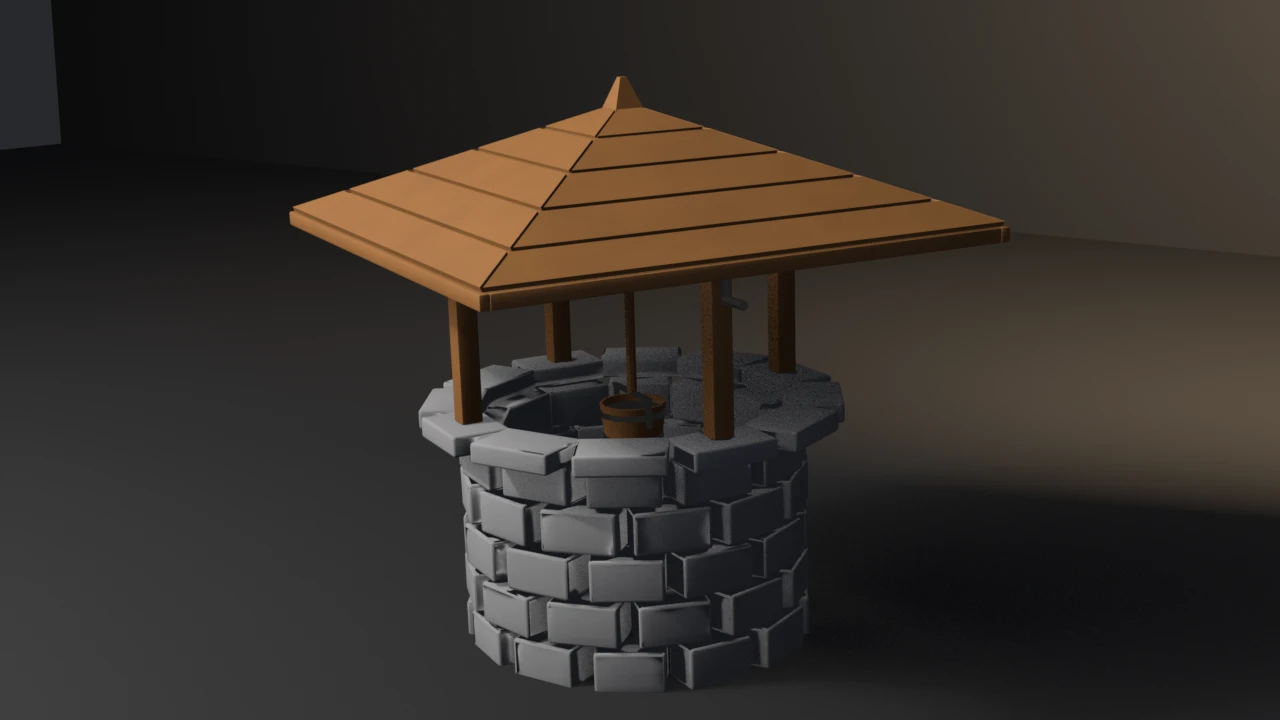
A procedural stone well through UVs, bake, LOD, collider, and Unity glTF, asserting recomputed budgets rather than an API contract.
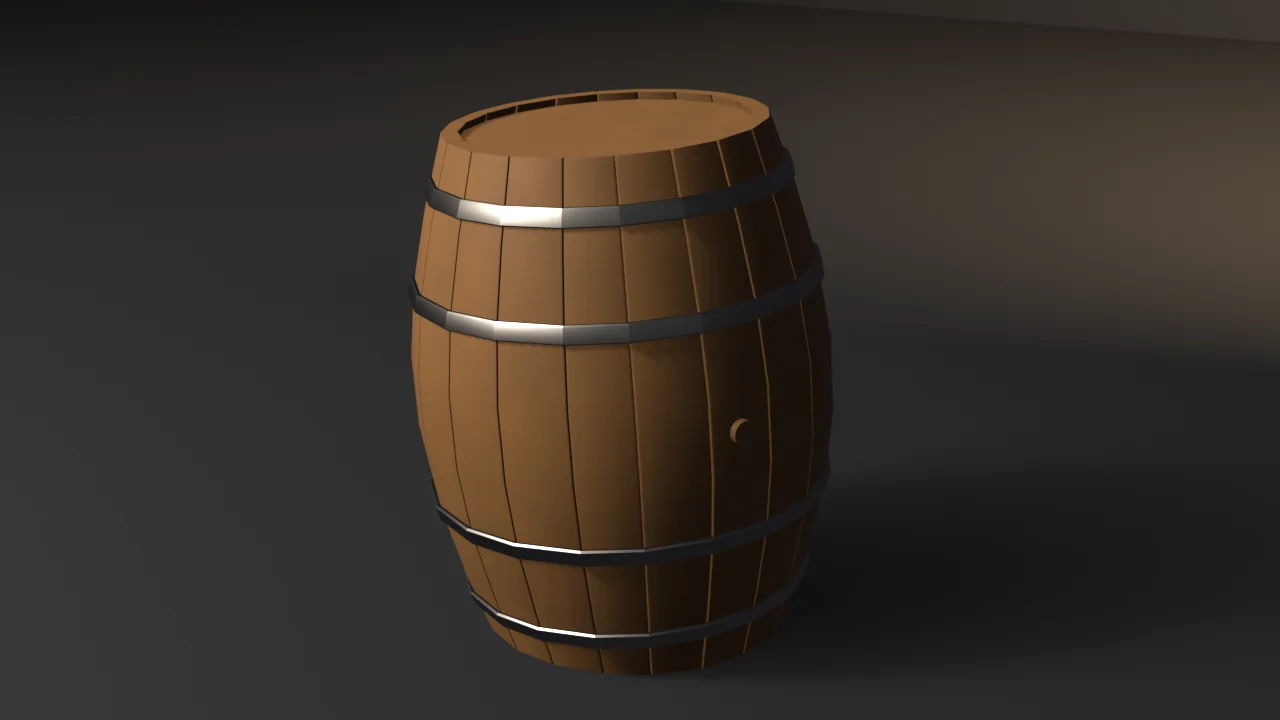
A procedural wine-cask with boarded, croze-seated heads and chord-lofted hoops through UVs, bake, LOD, collider, and Unity glTF, asserting recomputed budgets rather than an API contract.