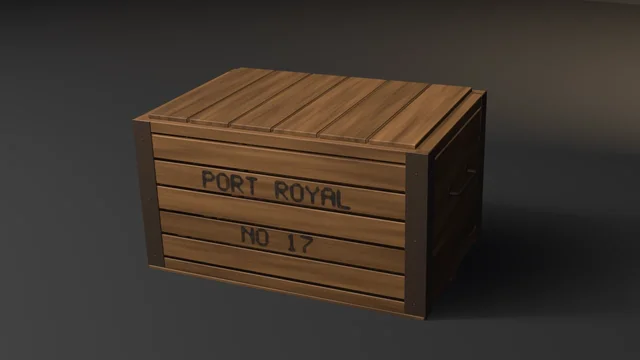
Shipping Crate
A procedural shipping crate through UVs, bake, LOD, collider, and Unity glTF, asserting recomputed budgets rather than an API contract.
showcase/sundial/
A procedural garden sundial — a stepped stone plinth under a tapered octagonal column and cap, a bronze dial plate with inked hour lines and a curved-backed gnomon — carried through UVs, bake, LOD, compound collider, and Unity glTF, asserting recomputed budgets rather than an API contract.
Rendered headless by the showcase piece itself. Select it to enlarge.
category Village
blender --background --python showcase/sundial/sundial.py --
A horizontal garden sundial for 45° north: a stepped stone plinth, a tapered octagonal granite column with a flared foot and collar, a cap, a bronze dial plate with a bead rim, a curved-backed bronze gnomon, twenty inked hour and half-hour lines laid out by the dial formula, two chapter rings and Roman numerals VII–XI and I–V, each numeral on its own hour line. Astragal beads ring the column at its foot and under its collar. A showcase piece, not an example — it witnesses no API contract. It asserts that generated geometry meets declared asset budgets, recomputed from the finished mesh.
| Shipped content | Used for |
|---|---|
skills/mesh-editing-and-bmesh | frusta, octagonal astragal beads, lathed plate and rings, swept ink bars and numeral strokes and a lofted gnomon, all in one bmesh, chamfered with bmesh.ops.bevel |
skills/custom-properties | a face attribute (StoneTone) read by the granite shader |
skills/procedural-materials-and-shaders | speckled granite with grime and a low-contrast lichen held to the plinth joints, and a pitted bump; bronze going green in patches; satin ink |
skills/bake-high-to-low | Cycles tangent-space normal bake, a 128-segment high onto the 64-segment low |
skills/engine-export-presets | Unity glTF (export_yup=True) |
skills/depsgraph-and-evaluated-data | evaluated triangle counts for the LOD ratios |
snippets/decimate_to_budget.py | LOD1 / LOD2 COLLAPSE chain |
snippets/convex_hull_collider.py | a hull per stone block, the plate and the gnomon, merged into a compound |
snippets/lod_chain.py | LOD naming and ratio pattern |
examples/mesh-hygiene-audit | hygiene combinatorics (copied, not imported) |
A sundial exists to tell the time, and it can fail at that without looking wrong. Two things decide it:
tan(φ) = sin(latitude) · tan(15° · hours from noon). Spaced evenly at 15° an hour, the lines look right in every picture and are wrong from 7 to 11 and 13 to 17.The piece measures both off the finished mesh:
atan2(-n.y, n.z), area-weighted over every such face. Band ±0.25° around 45°; measured 45.0000°. The same face gives the height where its plane crosses the dial centre; it must equal the plate's top, ±0.5 mm.--wrong-latitude is the falsifier built for the first. It keeps the apex where it is and tilts the style edge to 38°, so the foot slides 41 mm south of the centre and the envelope does not move. Every other budget passes and the run exits 17. --linear-hours is built for the second: the lines go in at 15° an hour and the bearings are out by 9.84°.
Declared in the script as named constants, recomputed from the generated mesh. Measured values are from Blender 5.2.1; 4.5 and 5.1 were not run locally (see the cross-version note below).
| Budget | Band | Measured | ||
|---|---|---|---|---|
| Base triangles | 3600–4200 | 3924 | ||
| LOD1 ratio | 0.32–0.62 | 0.5000 | ||
| LOD2 ratio | 0.10–0.35 | 0.2196 | ||
| Material slots | exactly 3, distinct | 3 | ||
| Stone / bronze / ink faces | ≥ 240 / 430 / 1300 | 276 / 507 / 1489 | ||
| UV bounds | inside 0..1 | (0.0011, 0.0011)–(0.9989, 0.9989) | ||
| UV AABB overlap | ≤ 1e-5 | 0.000000 | ||
| Outer AABB | 0.600 × 0.600 × 1.010 m ± 0.020 | 0.6000 × 0.6000 × 1.0100 | ||
| Collider triangles | ≤ 480 | 444 (eight hulls) | ||
| Normal bake | {'FINISHED'} with image data | {'FINISHED'}, has_data=True | ||
| glTF export | file written, non-empty | ~322 kB | ||
| Hygiene | all zero | loose 0/0, non-manifold 0, zero-area 0, doubles 0, n-gons 0, coplanar cross-shell pairs 0 | ||
| Grounded AABB | \ | zmin\ | ≤ 1e-4 | 0.00000 |
| Parts | 6 stone, 2 beads, 1 plate, 1 gnomon, 2 rings, 1 noon, 10 bars, 10 ticks, 28 numeral strokes | as stated | ||
| Style angle | 45° ± 0.25° | 45.0000° | ||
| Hour-line bearings | formula ± 0.10°, radial ± 1° | 0.00001°, 0.0000° | ||
| Gnomon bite | 2.0–5.0 mm below the plate's top | 3.50 mm | ||
| Style foot | within 0.5 mm of the dial centre at the plate's top | 0.00 mm | ||
| Ink seat | 0.5–2.5 mm proud, 0.8–3.0 mm buried, every line | 2.00 mm / 2.50 mm | ||
| Noon on the meridian | ≤ 0.5 mm from the gnomon | 0.00 mm | ||
| Plumb column | bottom ring vs top ring centroid ≤ 1.5 mm | 0.00 mm | ||
| Real-world size | column 0.670 ± 0.020, plate Ø 0.400 ± 0.004, gnomon 0.130 ± 0.003 m | 0.670, 0.400, 0.130 |
Real-world size: a 1.01 m garden sundial. A 0.40 m dial at hip height (0.88 m), on a 0.67 m column, with a 0.13 m gnomon at 45°.
bmesh.ops.bevel, material= passed so the chamfer keeps the stone slot.--wrong-latitude holds the apex and changes the slope.φ + u / r_mid. A constant angular offset keeps every I on its own radius, so the three strokes of a III are not parallel planes side by side, and their end caps are not one plane. The two strokes of a V cross just above the point instead of sharing a vertex, which would be a double. Glyph up is outward. The numerals move with the lines under --linear-hours. XII is left to the noon arrow. The part budget counts the strokes in the numeral band (131–161 mm by centroid) against the strokes the glyphs call for; numeral bearings are not separately asserted, since the hour lines they stand on are.Every convention in showcase/README.md, and whether it applies here.
| Convention | Applies | How |
|---|---|---|
| Deterministic, budgets declared, assertions recompute | yes | no RNG; every value above is read off the mesh |
| Falsifier fails the budget it targets | yes | table below |
| Hygiene incl. cross-shell coplanar | yes | exit 15 |
| Plumb and real-world size | yes | column plumb and height, plate and gnomon size (--lean-pedestal); exit 19 |
| A member is tenoned into its seat | yes | each stone part into its host; the gnomon 3.5 mm into the plate (--float-gnomon) |
| Seat conformance (a band: minimum so it cannot float) | yes | the gnomon bite and every ink line's proud and buried depth (--float-gnomon, --float-lines) |
| Mirrored assemblies | partly | the gnomon and noon arrow are centred on the meridian; asserted as one centroid offset (--shift-noon) |
| Material face floors | yes | stone 240, bronze 430, ink 1300 |
| One substance, one slot | yes | granite, bronze, ink |
| Shading is part of the model | yes | stone, beads and gnomon faceted (dressed stone, a bronze plate); the lathed plate and both rings smooth, every edge over 35° hard |
| Edge treatment | partly | chamfered, but no separate budget: removing the chamfers moves the triangle band first |
| Sort bmesh operator inputs | yes | the bevel's edge list is sorted by index |
| The bake cage is narrower than the nearest neighbour | yes | CAGE_EXTRUSION 0.01 m |
| Level on the stage; stage 60 m | yes | turned about Z only; 60 m floor and wall |
| Keep a falsifier's envelope still | yes | no falsifier moves the AABB; --wrong-latitude holds the apex |
| Named supports, wrappers, rope, roofs, vessels, scatter, fasteners | no | the piece has none of these |
Each breaks one pipeline stage so a named budget fails. All nine were run on Blender 5.2.1 and exited the declared code.
| Flag | Target budget | Breaks | Exit |
|---|---|---|---|
--skip-decimate | LOD1 ratio | drops the DECIMATE modifiers, LOD1 ratio goes to 1.0000 | 9 |
--stray-vert | mesh hygiene | adds one loose vertex inside the column | 15 |
--lift-z | grounded zmin | lifts the whole mesh 50 mm | 16 |
--wrong-latitude | style angle | holds the apex and tilts the style edge to 38° | 17 |
--linear-hours | hour-line bearings | puts every line at 15° an hour; 9.839° out | 17 |
--float-gnomon | gnomon bite | lifts the gnomon 5 mm; the bite goes to −1.5 mm | 18 |
--float-lines | ink seat | lifts every ink line 4 mm; 6.0 mm proud, buried −1.5 mm | 18 |
--shift-noon | noon on the meridian | moves the noon arrow 3 mm east; 3.00 mm off | 19 |
--lean-pedestal | plumb column | shears the column's top ring 12 mm east; 11.93 mm | 19 |
File-local and sequential. 9 is a valid check code. 1 is the FATAL wrapper — a crash, never a named check.
| Code | Meaning |
|---|---|
| 0 | Success |
| 1 | Uncaught exception (FATAL wrapper) |
| 2 | argparse / usage |
| 3 | Mesh did not build, has no UV layer, or a part count is wrong |
| 4 | Base triangle count outside band |
| 5 | Material slots, or a material's face floor |
| 6 | UVs outside 0..1 |
| 7 | UV AABB overlap above tolerance |
| 8 | Outer AABB off declared size |
| 9 | LOD1 or LOD2 ratio outside band (--skip-decimate) |
| 10 | Framing gate (examples/gallery_framing.py, render path only) |
| 11 | Collider triangles above ceiling |
| 12 | Normal bake failed or produced no image data |
| 13 | glTF export missing or empty |
| 14 | --output produced no file |
| 15 | Mesh hygiene (--stray-vert) |
| 16 | Grounded zmin (--lift-z) |
| 17 | Style angle or hour-line bearings (--wrong-latitude, --linear-hours) |
| 18 | Gnomon bite, style foot or ink seat (--float-gnomon, --float-lines) |
| 19 | Noon on the meridian, plumb column or real-world size (--shift-noon, --lean-pedestal) |
# Budget check, no render. A few seconds warm.
blender --background --python sundial.py --

# Falsifier: the lines are spaced at 15 degrees an hour. Must exit 17.
blender --background --python sundial.py -- --linear-hours

# Falsifier: the style edge is tilted to 38 degrees. Must exit 17.
blender --background --python sundial.py -- --wrong-latitude

# Render the gallery still (EEVEE; --engine cycles on a GPU-less host).
blender --background --python sundial.py -- --output sundial.webp
Smoke runs the check-only path. It does not pass --output or any falsifier.
Measured on Blender 5.2.1 only. 4.5 and 5.1 were not run for this piece. Nothing here depends on a version-specific API beyond the EEVEE engine id, which the script branches on, and the DECIMATE triangle counts, which are a ratio band.
| Value | 5.2.1 |
|---|---|
| Base triangles | 3924 |
| LOD1 / LOD2 tris | 1962 / 862 |
| Face counts (stone / bronze / ink) | 276 / 507 / 1489 |
| Outer AABB | 0.6000 × 0.6000 × 1.0100 |
| Collider tris | 444 |
| Style angle | 45.0000° |
| glTF bytes | 321636 |
"""Game-ready garden sundial — a showcase piece, not an example. Asserts budget conformance of a procedural horizontal sundial: a stepped stone plinth, a tapered octagonal granite column with a flared collar and a cap, a bronze dial plate with a raised rim, a curved-backed bronze gnomon, and inked hour lines laid out for a named latitude. Carried through UVs, three materials (stone, bronze, ink), a high-to-low normal bake, an LOD chain, a compound convex collider, and a Unity glTF export. The budget that matters here is the one a sundial fails invisibly: it has to tell the time. A gnomon whose style edge is tilted to the wrong angle still stands on the plate, still fits the bounding box and still takes its bite; a dial whose hour lines are spaced evenly at 15 degrees looks like a sundial in every picture. Only the geometry knows. The piece measures the style edge's inclination off the finished gnomon's faces, and every hour line's bearing off its own vertices, and compares them with the horizontal dial formula ``tan(H) = sin(latitude) * tan(15 deg * hours from noon)``. Budgets are declared below and recomputed from the generated result. They are not API-contract witnesses. Each falsifier violates one named budget: ``--skip-decimate`` the LOD-ratio band, ``--stray-vert`` mesh hygiene, ``--lift-z`` grounded zmin, ``--wrong-latitude`` the style angle, ``--linear-hours`` the hour-line bearings, ``--float-gnomon`` the gnomon's bite into the plate, ``--float-lines`` the inked lines' seat, ``--lean-pedestal`` the column's plumb, ``--shift-noon`` the noon line on the gnomon's meridian. No randomness. DECIMATE COLLAPSE triangle counts are not byte-identical across Blender versions — the LOD gate is a ratio band. blender --background --python sundial.py -- blender --background --python sundial.py -- --linear-hours blender --background --python sundial.py -- --output sundial.png """ import argparse import math import os import sys import tempfile import traceback import bmesh import bpy from mathutils import Vector from mathutils.kdtree import KDTree _REPO = os.path.abspath( os.path.join(os.path.dirname(os.path.abspath(__file__)), os.pardir, os.pardir) ) sys.path.insert(0, os.path.join(_REPO, "examples")) sys.dont_write_bytecode = True import gallery_framing # noqa: E402 # The dial: a horizontal plate for 45 degrees north. The gnomon's style # edge rises toward north (+Y) at the latitude; hour lines fan out from # the point where the style edge meets the plate. LATITUDE = 45.0 LAT = math.radians(LATITUDE) WRONG_LATITUDE = 38.0 HOURS = [h for h in range(7, 18) if h != 12] TICKS = [h + 0.5 for h in range(7, 17)] NOON_HALF_W = 0.0050 # Stone, bottom up. Every upper part is tenoned SEAT into its host and its # top is the figure that is fixed, so no two bodies land on one plane. SEAT = 0.010 BASE_W, BASE_TOP = 0.600, 0.085 STEP_W, STEP_TOP = 0.480, 0.150 COL_AF0, COL_AF1, COL_TOP = 0.270, 0.205, 0.810 COLLAR_AF0, COLLAR_AF1 = 0.215, 0.340 COLLAR_Z0, COLLAR_TOP = 0.795, 0.835 FOOT_AF0, FOOT_AF1, FOOT_Z0, FOOT_TOP = 0.350, 0.290, STEP_TOP - SEAT * 0.5, STEP_TOP + 0.050 CAP_AF, CAP_TOP = 0.460, 0.870 CAP_Z0 = COLLAR_TOP - SEAT LEAN = 0.012 # Astragal beads round the column shaft: one bedded in the foot, one tucked # up into the collar. Each grips the shaft by BEAD_GRIP and is buried in its # host block by BEAD_BED, so neither lands on a face of either. BEAD_GRIP, BEAD_BED, BEAD_H, BEAD_PROUD = 0.008, 0.003, 0.026, 0.034 # Dial plate: bronze, a bead rim round a flat field. PLATE_SEG = 64 PLATE_SEG_HI = 128 PLATE_Z0 = CAP_TOP - 0.004 PLATE_TOP = CAP_TOP + 0.010 FIELD_R = 0.176 PLATE_R = 0.200 # Gnomon: a thin bronze plate in the meridian plane, style edge straight, # back edge curved. The style edge is the top edge from foot to apex. GN_L = 0.130 GN_T = 0.008 GN_BITE = 0.0035 GN_SAG = 0.016 GN_CHAMFER = 0.0008 FLOAT_GNOMON = 0.005 # Ink: raised lines on the plate, a keel in the bronze under a low ridge. # Hour lines run in to an inner chapter ring; the numerals stand in the band # between it and the outer ring, each stroke laid along its own radius. BAR_R0, BAR_R1 = 0.060, 0.127 TICK_R0 = 0.108 BAR_HALF_W = 0.0030 TICK_HALF_W = 0.0020 RING_R = 0.1665 INNER_RING_R = 0.1285 NUM_R0, NUM_R1 = 0.1345, 0.1595 NUM_HALF_W = 0.0016 NUM_V_W, NUM_X_W, NUM_GAP = 0.0110, 0.0104, 0.0030 NUMERALS = {7: "VII", 8: "VIII", 9: "IX", 10: "X", 11: "XI", 13: "I", 14: "II", 15: "III", 16: "IV", 17: "V"} BAR_TICK_SPLIT_R = 0.105 NUM_BAND = (0.131, 0.161) NOON_Y0, NOON_Y1, NOON_TIP = 0.138, 0.152, 0.170 INK_KEEL, INK_SHOULDER, INK_EDGE, INK_RIDGE = -0.0025, -0.0010, 0.0010, 0.0020 FLOAT_LINES = 0.004 SHIFT_NOON = 0.003 BBOX_TOL = 0.020 OUTER_SIZE = (0.600, 0.600, 1.010) BASE_TRIS_MIN = 3600 BASE_TRIS_MAX = 4200 LOD1_RATIO_MIN = 0.32 LOD1_RATIO_MAX = 0.62 LOD2_RATIO_MIN = 0.10 LOD2_RATIO_MAX = 0.35 LOD1_TARGET = 0.50 LOD2_TARGET = 0.22 MATERIAL_COUNT = 3 FACE_FLOORS = {0: 240, 1: 430, 2: 1300} UV_EPS = 1e-4 UV_OVERLAP_MAX = 1e-5 COLLIDER_TRIS_MAX = 480 BAKE_RES = 512 CAGE_EXTRUSION = 0.01 ZMIN_EPS = 1e-4 DOUBLES_EPS = 1e-5 AREA_EPS = 1e-10 COPLANAR_NORMAL_EPS = 1e-4 COPLANAR_PLANE_EPS = 1e-4 COPLANAR_CENTRE_MAX = 0.05 LIFT_Z = 0.05 STYLE_TOL_DEG = 0.25 FOOT_TOL = 0.0005 BEARING_TOL_DEG = 0.10 RADIAL_TOL_DEG = 1.0 BITE_MIN, BITE_MAX = 0.0020, 0.0050 PROUD_MIN, PROUD_MAX = 0.0005, 0.0025 INK_SEAT_MIN, INK_SEAT_MAX = 0.0008, 0.0030 MERIDIAN_TOL = 0.0005 PLUMB_TOL = 0.0015 COLUMN_H, COLUMN_H_TOL = 0.670, 0.020 PLATE_DIA, PLATE_DIA_TOL = 0.400, 0.004 GNOMON_H, GNOMON_H_TOL = 0.130, 0.003 STONE_IDX = 0 BRONZE_IDX = 1 INK_IDX = 2 def eevee_engine_id(): """EEVEE id: 'BLENDER_EEVEE' on 5.0+, 'BLENDER_EEVEE_NEXT' on 4.2-4.5.""" return "BLENDER_EEVEE" if bpy.app.version >= (5, 0, 0) else "BLENDER_EEVEE_NEXT" def fail(msg, code): print(f"FAIL[{code}]: {msg}", file=sys.stderr) return code def triangle_count(mesh): mesh.calc_loop_triangles() return len(mesh.loop_triangles) def evaluated_triangle_count(obj): deps = bpy.context.evaluated_depsgraph_get() ev = obj.evaluated_get(deps) mesh = ev.to_mesh() try: mesh.calc_loop_triangles() return len(mesh.loop_triangles) finally: ev.to_mesh_clear() # --- dial geometry ---------------------------------------------------------- def hour_bearing(hours, linear=False): """Bearing from north, east positive, of the line for solar time ``hours``. The horizontal-dial formula tan(phi) = sin(lat) * tan(H) with H the hour angle, taken through atan2 so the quadrant is right near the 6 o'clock lines. ``linear`` spaces them at 15 degrees an hour instead. """ h = math.radians(15.0 * (hours - 12.0)) if linear: return h return math.atan2(math.sin(LAT) * math.sin(h), math.cos(h)) def plate_profile(): zt, zb = PLATE_TOP, PLATE_Z0 return [(0.0, zt), (FIELD_R, zt), (FIELD_R + 0.005, zt + 0.004), (PLATE_R - 0.007, zt + 0.004), (PLATE_R, zt - 0.003), (PLATE_R, zb + 0.004), (PLATE_R - 0.005, zb), (0.0, zb)] def ink_section(half_w): """Keeled hexagon: a ridge proud of the plate, a keel buried in it.""" return [(0.0, INK_KEEL), (half_w, INK_SHOULDER), (half_w, INK_EDGE), (0.0, INK_RIDGE), (-half_w, INK_EDGE), (-half_w, INK_SHOULDER)] def gnomon_outline(wrong_latitude): """(y, z) polygon of the gnomon, style edge from foot to apex first. The style edge is fixed by its apex and its slope. At the design latitude it runs through the dial centre at the plate's top; at the wrong one the apex stays put and the foot slides south, so the envelope does not change. """ zt, zb = PLATE_TOP, PLATE_TOP - GN_BITE apex_z = zt + GN_L * math.tan(LAT) slope = math.tan(math.radians(WRONG_LATITUDE)) if wrong_latitude else math.tan(LAT) y_a = GN_L - (apex_z - zb) / slope # The style edge is one straight edge, foot to apex: intermediate vertices # on it are collinear, and an ear-clipped cap turns collinear triples into # zero-area triangles. pts = [(y_a, zb), (GN_L, apex_z)] steps = 10 for k in range(1, steps): s = k / steps pts.append((GN_L - GN_SAG * math.sin(math.pi * s), apex_z + (zb - apex_z) * s)) pts.append((GN_L, zb)) return pts # --- construction ----------------------------------------------------------- def loft(bm, rings, mat, cap=True): """Quads between consecutive rings (closed loops); n-gon caps at both ends.""" faces = [] for a, b in zip(rings, rings[1:]): n = len(a) for i in range(n): j = (i + 1) % n faces.append(bm.faces.new((a[i], a[j], b[j], b[i]))) if cap: faces.append(bm.faces.new(rings[0])) faces.append(bm.faces.new(list(reversed(rings[-1])))) for f in faces: f.material_index = mat return faces def chamfer(bm, faces, offset, mat): """One-segment chamfer on the shell's near-right-angle edges only. ``recalc_face_normals`` comes first: the dihedral is read off face normals, and a wound-wrong face turns a 90 degree edge into a 90 degree edge the other way round. The bevel's own faces take ``mat`` explicitly; left alone they take slot 0. """ bmesh.ops.recalc_face_normals(bm, faces=faces) own = set(faces) bm.edges.index_update() edges = sorted({e for f in faces for e in f.edges}, key=lambda e: e.index) pick = [e for e in edges if len(e.link_faces) == 2 and all(lf in own for lf in e.link_faces) and math.radians(60.0) <= e.calc_face_angle(0.0) <= math.radians(120.0)] if pick: bmesh.ops.bevel(bm, geom=pick, offset=offset, segments=1, profile=0.5, affect="EDGES", clamp_overlap=True, material=mat) def stone_frustum(bm, n, af0, af1, z0, z1, off, lean=0.0): """Regular n-gon frustum, flats on the axes, ``af`` across flats.""" rings = [] for af, z, shift in ((af0, z0, 0.0), (af1, z1, lean)): radius = af * 0.5 / math.cos(math.pi / n) rings.append([bm.verts.new((radius * math.cos((k + 0.5) * 2.0 * math.pi / n) + shift, radius * math.sin((k + 0.5) * 2.0 * math.pi / n), z)) for k in range(n)]) faces = loft(bm, rings, STONE_IDX) chamfer(bm, faces, off, STONE_IDX) def column_af(z): """Across-flats width of the (unleaned) column shaft at height ``z``.""" z0 = STEP_TOP - SEAT return COL_AF0 + (COL_AF1 - COL_AF0) * (z - z0) / (COL_TOP - z0) def octo_ring(bm, profile): """Closed (af, z) profile swept round an octagon, flats on the axes.""" n = 8 rings = [] for af, z in profile: radius = af * 0.5 / math.cos(math.pi / n) rings.append([bm.verts.new((radius * math.cos((k + 0.5) * 2.0 * math.pi / n), radius * math.sin((k + 0.5) * 2.0 * math.pi / n), z)) for k in range(n)]) faces = [] for a, b in zip(rings, rings[1:] + rings[:1]): for i in range(n): j = (i + 1) % n faces.append(bm.faces.new((a[i], a[j], b[j], b[i]))) for f in faces: f.material_index = STONE_IDX bmesh.ops.recalc_face_normals(bm, faces=faces) def add_beads(bm): """Astragals: a half-round bead on the foot and another under the collar. The profile is offset from the shaft's own width at the bead's height, so the inner wall is BEAD_GRIP inside the taper, and the flat that would sit on the host block is buried BEAD_BED into it instead. """ g, h, p = 2.0 * BEAD_GRIP, BEAD_H, BEAD_PROUD zb = FOOT_TOP - BEAD_BED af = column_af(zb + h * 0.5) octo_ring(bm, [(af - g, zb), (af + 0.010, zb), (af + p, zb + 0.009), (af + p - 0.006, zb + 0.019), (af + 0.006, zb + h), (af - g, zb + h)]) zt = COLLAR_Z0 + BEAD_BED af = column_af(zt - h * 0.5) octo_ring(bm, [(af - g, zt - h), (af + 0.010, zt - h), (af + p, zt - 0.015), (af + p - 0.006, zt - 0.007), (af + 0.006, zt), (af - g, zt)]) def numeral_strokes(text): """Strokes of a Roman numeral as ((u0, v0), (u1, v1)) pairs, u across, v 0..1 up. ``u`` is metres across the band, centred on the hour line; ``v`` runs from the inner edge of the numeral band to the outer. The two strokes of a V cross just above its point rather than sharing a vertex. """ hw, e = NUM_HALF_W, 0.0006 widths = {"I": 2.0 * hw, "V": NUM_V_W, "X": NUM_X_W} total = sum(widths[c] for c in text) + NUM_GAP * (len(text) - 1) u = -total * 0.5 out = [] for c in text: w = widths[c] if c == "I": out.append(((u + hw, 0.0), (u + hw, 1.0))) elif c == "V": out.append(((u + hw, 1.0), (u + w * 0.5 + e, 0.0))) out.append(((u + w - hw, 1.0), (u + w * 0.5 - e, 0.0))) else: out.append(((u + hw, 1.0), (u + w - hw, 0.0))) out.append(((u + w - hw, 1.0), (u + hw, 0.0))) u += w + NUM_GAP return out def add_numerals(bm, linear_hours, lift): """Hour numerals in the chapter band, each stroke on its own radius. A glyph point (u, v) goes to bearing ``phi + u / r_mid`` at radius ``NUM_R0 + v * (NUM_R1 - NUM_R0)``. Constant angular offset keeps an I radial, and two parallel-looking strokes are never on one plane. Glyph up is outward, glyph right is clockwise seen from above. """ r_mid = 0.5 * (NUM_R0 + NUM_R1) for h, text in NUMERALS.items(): phi = hour_bearing(h, linear_hours) for (ua, va), (ub, vb) in numeral_strokes(text): ends = [] for u, v in ((ua, va), (ub, vb)): th, r = phi + u / r_mid, NUM_R0 + v * (NUM_R1 - NUM_R0) ends.append(Vector((r * math.sin(th), r * math.cos(th), 0.0))) straight_bar(bm, ends[0], ends[1], ink_section(NUM_HALF_W), PLATE_TOP + lift) def numeral_stroke_count(): return sum(len(numeral_strokes(t)) for t in NUMERALS.values()) def lathe_z(bm, profile, n, mat, closed=False): """Revolve an (r, z) profile about the Z axis; r == 0 entries are poles.""" rings, poles, verts = [], [], [] for r, z in profile: if r <= 1e-9: v = bm.verts.new((0.0, 0.0, z)) poles.append((len(rings), v)) verts.append(v) else: ring = [bm.verts.new((r * math.cos(2.0 * math.pi * k / n), r * math.sin(2.0 * math.pi * k / n), z)) for k in range(n)] rings.append(ring) verts += ring faces = [] pairs = list(zip(rings, rings[1:])) + ([(rings[-1], rings[0])] if closed else []) for a, b in pairs: for i in range(n): j = (i + 1) % n faces.append(bm.faces.new((a[i], a[j], b[j], b[i]))) for at, pole in poles: ring = rings[0] if at == 0 else rings[-1] for i in range(n): j = (i + 1) % n faces.append(bm.faces.new((pole, ring[i], ring[j]))) for f in faces: f.material_index = mat bmesh.ops.recalc_face_normals(bm, faces=faces) return verts def straight_bar(bm, p0, p1, section, zref, off=None): """``section`` (across, up) pairs swept from plan point p0 to p1.""" d = (p1 - p0).normalized() side = Vector((-d.y, d.x, 0.0)) rings = [[bm.verts.new((p.x + side.x * u, p.y + side.y * u, zref + z)) for u, z in section] for p in (p0, p1)] faces = loft(bm, rings, INK_IDX) bmesh.ops.recalc_face_normals(bm, faces=faces) def add_noon_arrow(bm, shift, lift): w, h = NOON_HALF_W, NOON_HALF_W * 2.0 outline = [(-w, NOON_Y0), (w, NOON_Y0), (w, NOON_Y1), (h, NOON_Y1), (0.0, NOON_TIP), (-h, NOON_Y1), (-w, NOON_Y1)] rings = [[bm.verts.new((x + shift, y, PLATE_TOP + z + lift)) for x, y in outline] for z in (INK_KEEL, INK_RIDGE)] faces = loft(bm, rings, INK_IDX) chamfer(bm, faces, 0.0004, INK_IDX) def build_sundial_mesh( name, hi=False, stray_vert=False, lift_lines=False, lift_gnomon=False, linear_hours=False, wrong_latitude=False, lean_pedestal=False, shift_noon=False, ): n_plate = PLATE_SEG_HI if hi else PLATE_SEG lift = FLOAT_LINES if lift_lines else 0.0 bm = bmesh.new() try: smooth = set() stone_frustum(bm, 4, BASE_W, BASE_W, 0.0, BASE_TOP, 0.006) stone_frustum(bm, 4, STEP_W, STEP_W, BASE_TOP - SEAT, STEP_TOP, 0.005) stone_frustum(bm, 8, COL_AF0, COL_AF1, STEP_TOP - SEAT, COL_TOP, 0.004, lean=LEAN if lean_pedestal else 0.0) stone_frustum(bm, 8, FOOT_AF0, FOOT_AF1, FOOT_Z0, FOOT_TOP, 0.004) stone_frustum(bm, 8, COLLAR_AF0, COLLAR_AF1, COLLAR_Z0, COLLAR_TOP, 0.004) stone_frustum(bm, 8, CAP_AF, CAP_AF, CAP_Z0, CAP_TOP, 0.006) add_beads(bm) smooth.update(lathe_z(bm, plate_profile(), n_plate, BRONZE_IDX)) outline = gnomon_outline(wrong_latitude) gz = FLOAT_GNOMON if lift_gnomon else 0.0 rings = [[bm.verts.new((x, y, z + gz)) for y, z in outline] for x in (-GN_T / 2, GN_T / 2)] faces = loft(bm, rings, BRONZE_IDX) chamfer(bm, faces, GN_CHAMFER, BRONZE_IDX) ring_profile = [(RING_R + u, PLATE_TOP + z + lift) for u, z in ink_section(0.003)] smooth.update(lathe_z(bm, ring_profile, n_plate, INK_IDX, closed=True)) inner_profile = [(INNER_RING_R + u, PLATE_TOP + z + lift) for u, z in ink_section(0.0025)] smooth.update(lathe_z(bm, inner_profile, n_plate, INK_IDX, closed=True)) add_numerals(bm, linear_hours, lift) for h in HOURS: phi = hour_bearing(h, linear_hours) d = Vector((math.sin(phi), math.cos(phi), 0.0)) straight_bar(bm, d * BAR_R0, d * BAR_R1, ink_section(BAR_HALF_W), PLATE_TOP + lift) for h in TICKS: phi = hour_bearing(h, linear_hours) d = Vector((math.sin(phi), math.cos(phi), 0.0)) straight_bar(bm, d * TICK_R0, d * BAR_R1, ink_section(TICK_HALF_W), PLATE_TOP + lift) add_noon_arrow(bm, SHIFT_NOON if shift_noon else 0.0, lift) if stray_vert: bm.verts.new((0.0, 0.0, 0.5)) bmesh.ops.recalc_face_normals(bm, faces=list(bm.faces)) big = [f for f in bm.faces if len(f.verts) > 4] bmesh.ops.triangulate(bm, faces=big, quad_method="BEAUTY", ngon_method="EAR_CLIP") for f in bm.faces: f.smooth = all(v in smooth for v in f.verts) for e in bm.edges: if len(e.link_faces) == 2 and e.calc_face_angle(0.0) > math.radians(35.0): e.smooth = False pack_uvs(bm) me = bpy.data.meshes.new(name) bm.to_mesh(me) me.update() finally: bm.free() paint_pieces(me) obj = bpy.data.objects.new(name, me) bpy.context.collection.objects.link(obj) return obj def pack_uvs(bm, margin=0.08): """One grid cell per face, box-projected on the face's dominant axis.""" uv = bm.loops.layers.uv.new("UVMap") faces = list(bm.faces) cols = max(1, math.ceil(math.sqrt(len(faces)))) rows = max(1, math.ceil(len(faces) / cols)) cw, ch = 1.0 / cols, 1.0 / rows pu, pv = margin * cw * 0.5, margin * ch * 0.5 for i, face in enumerate(faces): ax, ay, az = abs(face.normal.x), abs(face.normal.y), abs(face.normal.z) coords = [] for loop in face.loops: co = loop.vert.co if az >= ax and az >= ay: coords.append((co.x, co.y)) elif ax >= ay: coords.append((co.y, co.z)) else: coords.append((co.x, co.z)) minx, maxx = min(c[0] for c in coords), max(c[0] for c in coords) miny, maxy = min(c[1] for c in coords), max(c[1] for c in coords) dx, dy = max(maxx - minx, 1e-8), max(maxy - miny, 1e-8) ou, ov = (i % cols) * cw + pu, (i // cols) * ch + pv for loop, (x, y) in zip(face.loops, coords): loop[uv].uv = (ou + (x - minx) / dx * (cw - 2 * pu), ov + (y - miny) / dy * (ch - 2 * pv)) def paint_pieces(me): """``StoneTone`` per shell, so no two blocks of granite read as one cut.""" tone = [0.5] * len(me.polygons) vf = [[] for _ in range(len(me.vertices))] for p in me.polygons: for i in p.vertices: vf[i].append(p.index) for k, g in enumerate(shells(me)): t = 0.5 + 0.35 * (((k * 0.6180339887 + 0.3) % 1.0) - 0.5) for fi in {fi for i in g for fi in vf[i]}: tone[fi] = t a = me.attributes.new("StoneTone", "FLOAT", "FACE") a.data.foreach_set("value", tone) # --- surface ---------------------------------------------------------------- def _sock(sockets, identifier): return next(sk for sk in sockets if sk.identifier == identifier) def _mix(nt, blend, a, b, fac): node = nt.nodes.new("ShaderNodeMix") node.data_type = "RGBA" node.blend_type = blend fsock = _sock(node.inputs, "Factor_Float") if isinstance(fac, (int, float)): fsock.default_value = fac else: nt.links.new(fac, fsock) for ident, src in (("A_Color", a), ("B_Color", b)): if isinstance(src, tuple): _sock(node.inputs, ident).default_value = (*src, 1.0) else: nt.links.new(src, _sock(node.inputs, ident)) return _sock(node.outputs, "Result_Color") def stone_material(name): """Weathered granite: coarse tone, fine speckle, grime and lichen in the joints.""" mat = bpy.data.materials.new(name) mat.use_nodes = True nt = mat.node_tree bsdf = nt.nodes["Principled BSDF"] coord = nt.nodes.new("ShaderNodeTexCoord") tone = nt.nodes.new("ShaderNodeAttribute") tone.attribute_name = "StoneTone" noise = nt.nodes.new("ShaderNodeTexNoise") noise.inputs["Scale"].default_value = 5.0 noise.inputs["Detail"].default_value = 8.0 nt.links.new(coord.outputs["Object"], noise.inputs["Vector"]) ramp = nt.nodes.new("ShaderNodeValToRGB") ramp.color_ramp.elements[0].position = 0.30 ramp.color_ramp.elements[0].color = (0.14, 0.13, 0.115, 1.0) ramp.color_ramp.elements[1].position = 0.72 ramp.color_ramp.elements[1].color = (0.31, 0.285, 0.25, 1.0) nt.links.new(noise.outputs["Fac"], ramp.inputs["Fac"]) vor = nt.nodes.new("ShaderNodeTexVoronoi") vor.inputs["Scale"].default_value = 150.0 nt.links.new(coord.outputs["Object"], vor.inputs["Vector"]) speck = nt.nodes.new("ShaderNodeValToRGB") speck.color_ramp.elements[0].position = 0.04 speck.color_ramp.elements[0].color = (0.30, 0.29, 0.28, 1.0) speck.color_ramp.elements[1].position = 0.20 speck.color_ramp.elements[1].color = (1.0, 1.0, 1.0, 1.0) nt.links.new(vor.outputs["Distance"], speck.inputs["Fac"]) base = _mix(nt, "MULTIPLY", ramp.outputs["Color"], speck.outputs["Color"], 1.0) gain = nt.nodes.new("ShaderNodeMath") gain.operation = "MULTIPLY_ADD" gain.inputs[1].default_value = 0.40 gain.inputs[2].default_value = 0.80 nt.links.new(tone.outputs["Fac"], gain.inputs[0]) gaingrey = nt.nodes.new("ShaderNodeCombineColor") for ch in ("Red", "Green", "Blue"): nt.links.new(gain.outputs["Value"], gaingrey.inputs[ch]) base = _mix(nt, "MULTIPLY", base, gaingrey.outputs["Color"], 1.0) # Weathering lives where water sits: a narrow band at the ground and at # each joint of the plinth and foot, broken up by noise. Grime darkens the # band; a grey-olive lichen takes part of it. Low contrast on purpose. sep = nt.nodes.new("ShaderNodeSeparateXYZ") nt.links.new(coord.outputs["Object"], sep.inputs["Vector"]) joints = None for jz, w in ((0.0, 0.035), (BASE_TOP, 0.022), (STEP_TOP, 0.022), (FOOT_TOP, 0.016)): dz = nt.nodes.new("ShaderNodeMath") dz.operation = "SUBTRACT" nt.links.new(sep.outputs["Z"], dz.inputs[0]) dz.inputs[1].default_value = jz ab = nt.nodes.new("ShaderNodeMath") ab.operation = "ABSOLUTE" nt.links.new(dz.outputs["Value"], ab.inputs[0]) band = nt.nodes.new("ShaderNodeMapRange") band.interpolation_type = "SMOOTHSTEP" band.inputs["From Min"].default_value = 0.0 band.inputs["From Max"].default_value = w band.inputs["To Min"].default_value = 1.0 band.inputs["To Max"].default_value = 0.0 nt.links.new(ab.outputs["Value"], band.inputs["Value"]) if joints is None: joints = band.outputs["Result"] else: mx = nt.nodes.new("ShaderNodeMath") mx.operation = "MAXIMUM" nt.links.new(joints, mx.inputs[0]) nt.links.new(band.outputs["Result"], mx.inputs[1]) joints = mx.outputs["Value"] patch = nt.nodes.new("ShaderNodeTexNoise") patch.inputs["Scale"].default_value = 24.0 patch.inputs["Detail"].default_value = 6.0 nt.links.new(coord.outputs["Object"], patch.inputs["Vector"]) patchmap = nt.nodes.new("ShaderNodeMapRange") patchmap.interpolation_type = "SMOOTHSTEP" patchmap.inputs["From Min"].default_value = 0.42 patchmap.inputs["From Max"].default_value = 0.66 nt.links.new(patch.outputs["Fac"], patchmap.inputs["Value"]) cover = nt.nodes.new("ShaderNodeMath") cover.operation = "MULTIPLY" nt.links.new(joints, cover.inputs[0]) nt.links.new(patchmap.outputs["Result"], cover.inputs[1]) grime = nt.nodes.new("ShaderNodeMath") grime.operation = "MULTIPLY" grime.inputs[1].default_value = 0.35 nt.links.new(joints, grime.inputs[0]) base = _mix(nt, "MIX", base, (0.075, 0.07, 0.06), grime.outputs["Value"]) lichen = nt.nodes.new("ShaderNodeMath") lichen.operation = "MULTIPLY" lichen.inputs[1].default_value = 0.6 nt.links.new(cover.outputs["Value"], lichen.inputs[0]) base = _mix(nt, "MIX", base, (0.105, 0.115, 0.075), lichen.outputs["Value"]) nt.links.new(base, bsdf.inputs["Base Color"]) bsdf.inputs["Roughness"].default_value = 0.88 # Bush-hammered pitting: a fine bump the baked normal map feeds into at render. pit = nt.nodes.new("ShaderNodeTexNoise") pit.inputs["Scale"].default_value = 110.0 pit.inputs["Detail"].default_value = 3.0 nt.links.new(coord.outputs["Object"], pit.inputs["Vector"]) bump = nt.nodes.new("ShaderNodeBump") bump.name = "StoneBump" bump.inputs["Strength"].default_value = 0.35 bump.inputs["Distance"].default_value = 0.002 nt.links.new(pit.outputs["Fac"], bump.inputs["Height"]) nt.links.new(bump.outputs["Normal"], bsdf.inputs["Normal"]) return mat def bronze_material(name): """Cast bronze going green in patches. Warm and metallic, not gold, not chrome.""" mat = bpy.data.materials.new(name) mat.use_nodes = True nt = mat.node_tree bsdf = nt.nodes["Principled BSDF"] tc = nt.nodes.new("ShaderNodeTexCoord") noise = nt.nodes.new("ShaderNodeTexNoise") noise.inputs["Scale"].default_value = 26.0 noise.inputs["Detail"].default_value = 7.0 nt.links.new(tc.outputs["Object"], noise.inputs["Vector"]) ramp = nt.nodes.new("ShaderNodeValToRGB") ramp.color_ramp.elements[0].position = 0.38 ramp.color_ramp.elements[0].color = (0.62, 0.37, 0.12, 1.0) mid = ramp.color_ramp.elements.new(0.62) mid.color = (0.88, 0.58, 0.21, 1.0) ramp.color_ramp.elements[2].position = 0.80 ramp.color_ramp.elements[2].color = (0.16, 0.40, 0.31, 1.0) nt.links.new(noise.outputs["Fac"], ramp.inputs["Fac"]) nt.links.new(ramp.outputs["Color"], bsdf.inputs["Base Color"]) metal = nt.nodes.new("ShaderNodeMapRange") metal.inputs["From Min"].default_value = 0.70 metal.inputs["From Max"].default_value = 0.82 metal.inputs["To Min"].default_value = 0.92 metal.inputs["To Max"].default_value = 0.15 nt.links.new(noise.outputs["Fac"], metal.inputs["Value"]) nt.links.new(metal.outputs["Result"], bsdf.inputs["Metallic"]) rough = nt.nodes.new("ShaderNodeMapRange") rough.inputs["From Min"].default_value = 0.70 rough.inputs["From Max"].default_value = 0.82 rough.inputs["To Min"].default_value = 0.30 rough.inputs["To Max"].default_value = 0.70 nt.links.new(noise.outputs["Fac"], rough.inputs["Value"]) nt.links.new(rough.outputs["Result"], bsdf.inputs["Roughness"]) return mat def ink_material(name): """Blackened wax filling the engraving: near-black, satin.""" mat = bpy.data.materials.new(name) mat.use_nodes = True bsdf = mat.node_tree.nodes["Principled BSDF"] bsdf.inputs["Base Color"].default_value = (0.012, 0.011, 0.010, 1.0) bsdf.inputs["Roughness"].default_value = 0.42 bsdf.inputs["Metallic"].default_value = 0.2 return mat def sundial_materials(): return (stone_material("DialGranite"), bronze_material("DialBronze"), ink_material("DialInk")) def assign_slots(obj, mats): slots = obj.data.materials for i, mat in enumerate(mats): if i < len(slots): slots[i] = mat else: slots.append(mat) # --- measurement ------------------------------------------------------------ def world_bbox(obj): corners = [obj.matrix_world @ Vector(c) for c in obj.bound_box] xs, ys, zs = [c.x for c in corners], [c.y for c in corners], [c.z for c in corners] return (min(xs), min(ys), min(zs), max(xs), max(ys), max(zs)) def uv_stats(mesh): uv = mesh.uv_layers.active if uv is None: return 0.0, 0.0, 1.0, 1.0, 0.0, 0 data = uv.data us = [loop.uv[0] for loop in data] vs = [loop.uv[1] for loop in data] aabbs = [] for poly in mesh.polygons: pu = [data[i].uv[0] for i in poly.loop_indices] pv = [data[i].uv[1] for i in poly.loop_indices] aabbs.append((min(pu), min(pv), max(pu), max(pv))) span = max(1e-6, max(a[2] - a[0] for a in aabbs), max(a[3] - a[1] for a in aabbs)) buckets = {} for i, a in enumerate(aabbs): for c in range(int(a[0] // span), int(a[2] // span) + 1): for r in range(int(a[1] // span), int(a[3] // span) + 1): buckets.setdefault((c, r), []).append(i) overlap = 0.0 seen = set() for members in buckets.values(): for ii in range(len(members)): for jj in range(ii + 1, len(members)): i, j = members[ii], members[jj] key = (i, j) if i < j else (j, i) if key in seen: continue seen.add(key) a, b = aabbs[i], aabbs[j] overlap += max(0.0, min(a[2], b[2]) - max(a[0], b[0])) * max( 0.0, min(a[3], b[3]) - max(a[1], b[1])) return min(us), min(vs), max(us), max(vs), overlap, len(aabbs) def face_area(me, poly): idxs = poly.vertices v0 = me.vertices[idxs[0]].co area = 0.0 for i in range(1, len(idxs) - 1): area += (me.vertices[idxs[i]].co - v0).cross(me.vertices[idxs[i + 1]].co - v0).length * 0.5 return area def hygiene_audit(me): ngons = sum(1 for p in me.polygons if len(p.vertices) > 4) zero_area = sum(1 for p in me.polygons if face_area(me, p) <= AREA_EPS) bm = bmesh.new() try: bm.from_mesh(me) loose_v = sum(1 for v in bm.verts if len(v.link_edges) == 0) loose_e = sum(1 for e in bm.edges if len(e.link_faces) == 0) nonman = sum(1 for e in bm.edges if not e.is_manifold) ret = bmesh.ops.find_doubles(bm, verts=list(bm.verts), dist=DOUBLES_EPS) doubles = len(ret.get("targetmap") or {}) finally: bm.free() return {"ngons": ngons, "loose_v": loose_v, "loose_e": loose_e, "nonman": nonman, "zero_area": zero_area, "doubles": doubles} def shells(me): neighbors = [[] for _ in range(len(me.vertices))] for edge in me.edges: a, b = edge.vertices neighbors[a].append(b) neighbors[b].append(a) seen = [False] * len(me.vertices) groups = [] for start in range(len(me.vertices)): if seen[start]: continue seen[start] = True stack = [start] group = [] while stack: cur = stack.pop() group.append(cur) for nxt in neighbors[cur]: if not seen[nxt]: seen[nxt] = True stack.append(nxt) groups.append(group) return groups def zfight_pairs(me): """Coplanar face pairs from *different shells* (copied from showcase/grindstone).""" owner = {} for si, g in enumerate(shells(me)): for vi in g: owner[vi] = si faces = [(p.normal.copy(), p.center.copy(), owner.get(p.vertices[0], -1)) for p in me.polygons] kd = KDTree(len(faces)) for i, (_n, c, _s) in enumerate(faces): kd.insert(c, i) kd.balance() hits = 0 for i, (ni, ci, si) in enumerate(faces): for _co, j, _d in kd.find_range(ci, COPLANAR_CENTRE_MAX): if j <= i: continue nj, cj, sj = faces[j] if si == sj: continue if abs(abs(ni.dot(nj)) - 1.0) > COPLANAR_NORMAL_EPS: continue if abs(ni.dot(cj - ci)) > COPLANAR_PLANE_EPS: continue hits += 1 return hits def classify(me): """Shells by what they are: stone blocks, the dial plate, the gnomon, ink pieces.""" mats = {} for p in me.polygons: for i in p.vertices: mats.setdefault(i, p.material_index) out = {"stone": [], "bead": [], "plate": [], "gnomon": [], "ink": [], "other": []} for g in shells(me): pts = [me.vertices[i].co.copy() for i in g] lo = Vector((min(p.x for p in pts), min(p.y for p in pts), min(p.z for p in pts))) hi = Vector((max(p.x for p in pts), max(p.y for p in pts), max(p.z for p in pts))) rec = {"g": g, "pts": pts, "lo": lo, "hi": hi, "ext": hi - lo, "c": sum(pts, Vector()) / len(pts)} m = mats.get(g[0], -1) if len(g) < 4: out["other"].append(rec) elif m == STONE_IDX: # A bead is the only stone shell shallower than the 35 mm cap. out["bead" if rec["ext"].z < BEAD_H + 0.002 else "stone"].append(rec) elif m == BRONZE_IDX: out["plate" if max(rec["ext"].x, rec["ext"].y) > 0.25 else "gnomon"].append(rec) elif m == INK_IDX: out["ink"].append(rec) else: out["other"].append(rec) return out def principal_bearing(pts): """Bearing of a shell's long axis in plan, from north, folded into (-90, 90].""" cx = sum(p.x for p in pts) / len(pts) cy = sum(p.y for p in pts) / len(pts) sxx = sum((p.x - cx) ** 2 for p in pts) syy = sum((p.y - cy) ** 2 for p in pts) sxy = sum((p.x - cx) * (p.y - cy) for p in pts) theta = 0.5 * math.atan2(2.0 * sxy, sxx - syy) deg = math.degrees(math.atan2(math.cos(theta), math.sin(theta))) while deg > 90.0: deg -= 180.0 while deg <= -90.0: deg += 180.0 return deg def sundial_audit(me): parts = classify(me) out = {k: len(v) for k, v in parts.items()} plate = parts["plate"][0] if len(parts["plate"]) == 1 else None gnomon = parts["gnomon"][0] if len(parts["gnomon"]) == 1 else None plate_top = -99.0 centre = Vector((0.0, 0.0, 0.0)) if plate: centre = Vector((plate["c"].x, plate["c"].y, 0.0)) field = [p.z for p in plate["pts"] if math.hypot(p.x - centre.x, p.y - centre.y) < 0.17] plate_top = max(field) if field else -99.0 out["plate_dia"] = max(plate["ext"].x, plate["ext"].y) out["plate_top"] = plate_top # Style edge: the gnomon's faces that look up and south, whose normals are # in the meridian plane. Their tilt from the horizontal is the style angle. me.calc_loop_triangles() gset = set(gnomon["g"]) if gnomon else set() faces = [p for p in me.polygons if gnomon and set(p.vertices) <= gset and abs(p.normal.x) < 1e-3 and p.normal.z > 0.05 and p.normal.y < -0.05] out["style_faces"] = len(faces) angle, foot = -99.0, 99.0 if faces: tot = sum(face_area(me, p) for p in faces) angle = sum(math.degrees(math.atan2(-p.normal.y, p.normal.z)) * face_area(me, p) for p in faces) / tot foot = sum((p.center.z + p.normal.y * (p.center.y - centre.y) / p.normal.z) * face_area(me, p) for p in faces) / tot out["style_deg"] = angle out["foot_err"] = abs(foot - plate_top) out["gnomon_x"] = gnomon["c"].x if gnomon else 99.0 out["gnomon_bite"] = plate_top - gnomon["lo"].z if gnomon else -99.0 out["gnomon_h"] = gnomon["hi"].z - plate_top if gnomon else -99.0 # Ink: the ring, the noon arrow (the piece on the meridian), the hour bars # and the half-hour ticks (told apart by how far out they sit). ink = list(parts["ink"]) ring = [r for r in ink if max(r["ext"].x, r["ext"].y) > 0.2] rest = [r for r in ink if r not in ring] north = [r for r in rest if r["c"].y > centre.y] noon = min(north, key=lambda r: abs(r["c"].x - centre.x), default=None) pieces = [r for r in rest if r is not noon] rad = {id(r): math.hypot(r["c"].x - centre.x, r["c"].y - centre.y) for r in pieces} numerals = [r for r in pieces if NUM_BAND[0] < rad[id(r)] < NUM_BAND[1]] bars = [r for r in pieces if rad[id(r)] < BAR_TICK_SPLIT_R] ticks = [r for r in pieces if r not in bars and r not in numerals] out["ring"], out["noon"], out["bars"], out["ticks"] = len(ring), 1 if noon else 0, len(bars), len(ticks) out["numeral_strokes"] = len(numerals) out["noon_off"] = abs(noon["c"].x - gnomon["c"].x) if noon and gnomon else 99.0 def bearings(group): got = sorted(math.degrees(math.atan2(r["c"].x - centre.x, r["c"].y - centre.y)) for r in group) radial = max((abs((principal_bearing(r["pts"]) - math.degrees(math.atan2(r["c"].x - centre.x, r["c"].y - centre.y)) + 90.0) % 180.0 - 90.0) for r in group), default=0.0) return got, radial err, radial = 0.0, 0.0 for group, hours in ((bars, HOURS), (ticks, TICKS)): got, rad = bearings(group) want = sorted(math.degrees(hour_bearing(h)) for h in hours) radial = max(radial, rad) if len(got) != len(want): err = 99.0 else: err = max(err, max((abs(a - b) for a, b in zip(got, want)), default=0.0)) out["bearing_err"] = err out["radial_err"] = radial lines = ring + rest out["line_proud"] = (min((r["hi"].z - plate_top for r in lines), default=-99.0), max((r["hi"].z - plate_top for r in lines), default=99.0)) out["line_seat"] = (min((plate_top - r["lo"].z for r in lines), default=-99.0), max((plate_top - r["lo"].z for r in lines), default=99.0)) # Column: tallest stone shell. Plumb is the plan centroid of its bottom ring # against its top ring; its height is the real-world figure. column = max(parts["stone"], key=lambda r: r["ext"].z, default=None) out["column_h"] = column["ext"].z if column else -99.0 out["plumb"] = 99.0 if column: zlo, zhi = column["lo"].z, column["hi"].z low = [p for p in column["pts"] if p.z < zlo + 0.02] top = [p for p in column["pts"] if p.z > zhi - 0.02] a = Vector((sum(p.x for p in low) / len(low), sum(p.y for p in low) / len(low))) b = Vector((sum(p.x for p in top) / len(top), sum(p.y for p in top) / len(top))) out["plumb"] = (a - b).length return out def make_lod(obj, name, ratio, skip_decimate): mesh = obj.data.copy() lod = bpy.data.objects.new(name, mesh) lod.matrix_world = obj.matrix_world.copy() bpy.context.scene.collection.objects.link(lod) if not skip_decimate and 0.0 < ratio < 1.0: mod = lod.modifiers.new("DecimateBudget", "DECIMATE") mod.decimate_type = "COLLAPSE" mod.ratio = ratio return lod def hull_collider(obj, name): """Compound collider: one hull per stone block, the plate and the gnomon. The ink is left out; it is a millimetre of relief on a surface the plate's hull already covers. So are the two column beads: 17 mm of moulding round a shaft whose hull is already there. The plate is hulled over every fourth segment. """ me = obj.data parts = classify(me) groups = [r["pts"] for r in parts["stone"] + parts["gnomon"]] for r in parts["plate"]: step = 2.0 * math.pi / 16.0 keep = [] for p in r["pts"]: q = math.atan2(p.y, p.x) / step if math.hypot(p.x, p.y) < 1e-9 or abs(q - round(q)) < 1e-6: keep.append(p) groups.append(keep) mesh = bpy.data.meshes.new(name) bm = bmesh.new() try: for pts in groups: if len(pts) < 4: continue tmp = bmesh.new() try: vs = [tmp.verts.new(p) for p in pts] bmesh.ops.convex_hull(tmp, input=vs) remap = {} for f in tmp.faces: for v in f.verts: if v not in remap: remap[v] = bm.verts.new(v.co) bm.faces.new([remap[v] for v in f.verts]) finally: tmp.free() bm.to_mesh(mesh) mesh.update() finally: bm.free() col = bpy.data.objects.new(name, mesh) bpy.context.collection.objects.link(col) return col def setup_bake_image(obj, target_mat, size): img = bpy.data.images.new("DialNrm", size, size, alpha=True, float_buffer=False) img.colorspace_settings.name = "Non-Color" nodes = target_mat.node_tree.nodes tex = nodes.new("ShaderNodeTexImage") tex.image = img nodes.active = tex tex.select = True obj.active_material_index = STONE_IDX return img, tex def bake_normal(high, low): scene = bpy.context.scene scene.render.engine = "CYCLES" scene.cycles.device = "CPU" scene.cycles.samples = 1 scene.cycles.use_denoising = False for ob in bpy.context.view_layer.objects: ob.select_set(False) high.select_set(True) low.select_set(True) bpy.context.view_layer.objects.active = low return bpy.ops.object.bake( type="NORMAL", use_selected_to_active=True, cage_extrusion=CAGE_EXTRUSION, use_cage=False, normal_space="TANGENT", margin=4, margin_type="ADJACENT_FACES", use_clear=True, target="IMAGE_TEXTURES", ) def export_unity(path, objects): for ob in bpy.context.view_layer.objects: ob.select_set(False) for ob in objects: ob.select_set(True) bpy.context.view_layer.objects.active = objects[0] bpy.ops.export_scene.gltf( filepath=path, use_selection=True, export_yup=True, export_apply=True, export_draco_mesh_compression_enable=False, export_animations=False, ) def check(skip_decimate, lift_z=False, **flags): bpy.ops.wm.read_factory_settings(use_empty=True) nothing = (None,) * 5 low = build_sundial_mesh("SundialLow", **flags) hi_flags = {k: v for k, v in flags.items() if k != "stray_vert"} high = build_sundial_mesh("SundialHigh", hi=True, **hi_flags) mats = sundial_materials() assign_slots(low, mats) assign_slots(high, mats) if lift_z: for v in low.data.vertices: v.co.z += LIFT_Z low.data.update() bpy.context.view_layer.update() if len(low.data.polygons) < 6 or not low.data.uv_layers: return (fail("sundial mesh did not build, or has no UV layer", 3),) + nothing base_tris = triangle_count(low.data) slots = [s for s in low.data.materials if s is not None] nmat, distinct = len(slots), len({id(s) for s in slots}) idx_counts = {} for poly in low.data.polygons: idx_counts[poly.material_index] = idx_counts.get(poly.material_index, 0) + 1 u0, v0, u1, v1, overlap, nfaces = uv_stats(low.data) bb = world_bbox(low) size_x, size_y, size_z = bb[3] - bb[0], bb[4] - bb[1], bb[5] - bb[2] img, tex = setup_bake_image(low, mats[STONE_IDX], BAKE_RES) bake_result = bake_normal(high, low) lod1 = make_lod(low, "SundialLOD1", LOD1_TARGET, skip_decimate) lod2 = make_lod(low, "SundialLOD2", LOD2_TARGET, skip_decimate) bpy.context.view_layer.update() lod1_tris = evaluated_triangle_count(lod1) lod2_tris = evaluated_triangle_count(lod2) r1 = lod1_tris / base_tris if base_tris else 0.0 r2 = lod2_tris / base_tris if base_tris else 0.0 collider = hull_collider(low, "SundialCollider") col_tris = triangle_count(collider.data) export_path = os.path.join(tempfile.gettempdir(), f"bdt_sundial_{os.getpid()}.glb") if os.path.exists(export_path): os.remove(export_path) export_unity(export_path, [low, collider]) export_size = os.path.getsize(export_path) if os.path.isfile(export_path) else 0 # Blender points TMPDIR at its own temp preference, which on a portable # build is the working directory, so the export must not outlive this. if os.path.isfile(export_path): os.remove(export_path) hyg = hygiene_audit(low.data) zf = zfight_pairs(low.data) sa = sundial_audit(low.data) print(f"blender={tuple(bpy.app.version)} skip_decimate={skip_decimate}") print(f"measured mat_index_counts={dict(sorted(idx_counts.items()))}") print(f"measured base_tris={base_tris} lod1_tris={lod1_tris} " f"lod2_tris={lod2_tris} r1={r1:.4f} r2={r2:.4f}") print(f"measured nmat={nmat} uv=({u0:.4f},{v0:.4f})-({u1:.4f},{v1:.4f}) " f"overlap={overlap:.6f} nfaces={nfaces}") print(f"measured bbox=({size_x:.4f},{size_y:.4f},{size_z:.4f}) " f"outer={OUTER_SIZE} zmin={bb[2]:.5f}") print(f"measured collider_tris={col_tris} bake={bake_result} " f"bake_has_data={img.has_data} export_bytes={export_size}") print(f"measured hygiene loose_v={hyg['loose_v']} loose_e={hyg['loose_e']} " f"nonman={hyg['nonman']} zero_area={hyg['zero_area']} " f"doubles={hyg['doubles']} ngons={hyg['ngons']} zfight={zf}") print(f"measured parts stone={sa['stone']} bead={sa['bead']} plate={sa['plate']} " f"gnomon={sa['gnomon']} ink={sa['ink']} other={sa['other']} ring={sa['ring']} " f"noon={sa['noon']} bars={sa['bars']} ticks={sa['ticks']} " f"numeral_strokes={sa['numeral_strokes']} style_faces={sa['style_faces']}") print(f"measured style={sa['style_deg']:.4f}deg foot_err={sa['foot_err']:.5f} " f"bearing_err={sa['bearing_err']:.5f}deg radial_err={sa['radial_err']:.4f}deg") print(f"measured bite={sa['gnomon_bite']:.5f} line_proud=({sa['line_proud'][0]:.5f}," f"{sa['line_proud'][1]:.5f}) line_seat=({sa['line_seat'][0]:.5f}," f"{sa['line_seat'][1]:.5f}) noon_off={sa['noon_off']:.5f}") print(f"measured plumb={sa['plumb']:.5f} column_h={sa['column_h']:.4f} " f"plate_dia={sa.get('plate_dia', -99.0):.4f} gnomon_h={sa['gnomon_h']:.4f} " f"plate_top={sa['plate_top']:.5f}") if not (BASE_TRIS_MIN <= base_tris <= BASE_TRIS_MAX): return (fail(f"base tris {base_tris} not in [{BASE_TRIS_MIN}, {BASE_TRIS_MAX}]", 4),) + nothing if nmat != MATERIAL_COUNT or distinct != MATERIAL_COUNT: return (fail(f"material slots {nmat} distinct {distinct} != {MATERIAL_COUNT}", 5),) + nothing for idx, floor in FACE_FLOORS.items(): if idx_counts.get(idx, 0) < floor: return (fail(f"material {idx} faces {idx_counts.get(idx, 0)} < {floor}", 5),) + nothing if u0 < -UV_EPS or v0 < -UV_EPS or u1 > 1.0 + UV_EPS or v1 > 1.0 + UV_EPS: return (fail(f"UVs outside 0..1: ({u0:.4f},{v0:.4f})-({u1:.4f},{v1:.4f})", 6),) + nothing if overlap > UV_OVERLAP_MAX: return (fail(f"UV AABB overlap {overlap:.6f} > {UV_OVERLAP_MAX}", 7),) + nothing if (abs(size_x - OUTER_SIZE[0]) > BBOX_TOL or abs(size_y - OUTER_SIZE[1]) > BBOX_TOL or abs(size_z - OUTER_SIZE[2]) > BBOX_TOL): return (fail(f"bbox ({size_x:.4f},{size_y:.4f},{size_z:.4f}) off outer {OUTER_SIZE}", 8),) + nothing if not (LOD1_RATIO_MIN <= r1 <= LOD1_RATIO_MAX): return (fail(f"LOD1 ratio {r1:.4f} not in [{LOD1_RATIO_MIN}, {LOD1_RATIO_MAX}] " "(--skip-decimate is the designed fail)", 9),) + nothing if not (LOD2_RATIO_MIN <= r2 <= LOD2_RATIO_MAX): return (fail(f"LOD2 ratio {r2:.4f} not in [{LOD2_RATIO_MIN}, {LOD2_RATIO_MAX}]", 9),) + nothing if col_tris > COLLIDER_TRIS_MAX: return (fail(f"collider tris {col_tris} > {COLLIDER_TRIS_MAX}", 11),) + nothing if bake_result != {"FINISHED"} or not img.has_data: return (fail(f"bake failed result={bake_result} has_data={img.has_data}", 12),) + nothing if export_size <= 0: return (fail("export file missing or empty", 13),) + nothing if (hyg["loose_v"] or hyg["loose_e"] or hyg["nonman"] or hyg["zero_area"] or hyg["doubles"] or hyg["ngons"] or zf): return (fail(f"hygiene {hyg} zfight={zf} (--stray-vert is the designed fail)", 15),) + nothing if abs(bb[2]) > ZMIN_EPS: return (fail(f"zmin {bb[2]:.6f} not within {ZMIN_EPS} of 0 " "(--lift-z is the designed fail)", 16),) + nothing n_num = numeral_stroke_count() if (sa["stone"] != 6 or sa["bead"] != 2 or sa["plate"] != 1 or sa["gnomon"] != 1 or sa["ring"] != 2 or sa["noon"] != 1 or sa["bars"] != len(HOURS) or sa["ticks"] != len(TICKS) or sa["numeral_strokes"] != n_num): return (fail(f"parts: stone {sa['stone']}/6 bead {sa['bead']}/2 plate {sa['plate']}/1 " f"gnomon {sa['gnomon']}/1 ring {sa['ring']}/2 noon {sa['noon']}/1 " f"bars {sa['bars']}/{len(HOURS)} ticks {sa['ticks']}/{len(TICKS)} " f"numeral strokes {sa['numeral_strokes']}/{n_num}", 3),) + nothing if abs(sa["style_deg"] - LATITUDE) > STYLE_TOL_DEG: return (fail(f"style edge {sa['style_deg']:.3f} deg off the plate, latitude is " f"{LATITUDE} deg (--wrong-latitude is the designed fail)", 17),) + nothing if sa["bearing_err"] > BEARING_TOL_DEG or sa["radial_err"] > RADIAL_TOL_DEG: return (fail(f"hour lines off tan(H) = sin(lat) tan(15 h) by {sa['bearing_err']:.3f} deg " f"(radial {sa['radial_err']:.3f} deg) (--linear-hours is the designed fail)", 17),) + nothing if not (BITE_MIN <= sa["gnomon_bite"] <= BITE_MAX): return (fail(f"gnomon bite {sa['gnomon_bite']:.5f} outside [{BITE_MIN}, {BITE_MAX}] " "(--float-gnomon is the designed fail)", 18),) + nothing if sa["foot_err"] > FOOT_TOL: return (fail(f"style edge meets the plate {sa['foot_err']:.5f} m from the dial centre " f"(> {FOOT_TOL})", 18),) + nothing if (not (PROUD_MIN <= sa["line_proud"][0] and sa["line_proud"][1] <= PROUD_MAX) or not (INK_SEAT_MIN <= sa["line_seat"][0] and sa["line_seat"][1] <= INK_SEAT_MAX)): return (fail(f"ink lines proud {sa['line_proud']} (band [{PROUD_MIN}, {PROUD_MAX}]), " f"seated {sa['line_seat']} (band [{INK_SEAT_MIN}, {INK_SEAT_MAX}]) " "(--float-lines is the designed fail)", 18),) + nothing if sa["noon_off"] > MERIDIAN_TOL: return (fail(f"noon line {sa['noon_off']:.5f} m off the gnomon's meridian " f"(> {MERIDIAN_TOL}) (--shift-noon is the designed fail)", 19),) + nothing if sa["plumb"] > PLUMB_TOL: return (fail(f"column top {sa['plumb']:.5f} m off plumb over its foot " f"(> {PLUMB_TOL}) (--lean-pedestal is the designed fail)", 19),) + nothing if (abs(sa["column_h"] - COLUMN_H) > COLUMN_H_TOL or abs(sa["plate_dia"] - PLATE_DIA) > PLATE_DIA_TOL or abs(sa["gnomon_h"] - GNOMON_H) > GNOMON_H_TOL): return (fail(f"real-world size: column {sa['column_h']:.4f} (want {COLUMN_H}), plate " f"{sa['plate_dia']:.4f} (want {PLATE_DIA}), gnomon {sa['gnomon_h']:.4f} " f"(want {GNOMON_H})", 19),) + nothing return 0, low, high, mats, tex, collider def wire_normal(mat, tex): nt = mat.node_tree nrm = nt.nodes.new("ShaderNodeNormalMap") nt.links.new(tex.outputs["Color"], nrm.inputs["Color"]) bump = nt.nodes.get("StoneBump") target = bump.inputs["Normal"] if bump else nt.nodes["Principled BSDF"].inputs["Normal"] nt.links.new(nrm.outputs["Normal"], target) def render_still(low, mats, tex, path, engine): scene = bpy.context.scene wire_normal(mats[STONE_IDX], tex) for ob in list(scene.objects): if ob.type == "MESH" and ob != low: ob.hide_render = True ob.hide_viewport = True # Level on the floor: turned about Z only. The gnomon lies in the # meridian plane, so the yaw turns its face toward the camera; at -28 # degrees it was seen 62 degrees off its normal and read as a needle. low.rotation_euler.z = math.radians(-58.0) floor_me = bpy.data.meshes.new("Floor") bm = bmesh.new() try: bmesh.ops.create_grid(bm, x_segments=1, y_segments=1, size=60.0) bm.to_mesh(floor_me) finally: bm.free() fmat = bpy.data.materials.new("Floor") fmat.use_nodes = True fb = fmat.node_tree.nodes["Principled BSDF"] fb.inputs["Base Color"].default_value = (0.03, 0.032, 0.037, 1.0) fb.inputs["Roughness"].default_value = 0.7 floor_me.materials.append(fmat) floor = bpy.data.objects.new("Floor", floor_me) scene.collection.objects.link(floor) wall = bpy.data.objects.new("Wall", floor_me.copy()) wall.location = (0.0, 8.5, 0.0) wall.rotation_euler = (math.radians(90), 0.0, 0.0) scene.collection.objects.link(wall) world = bpy.data.worlds.new("World") world.use_nodes = True world.node_tree.nodes["Background"].inputs["Color"].default_value = (0.02, 0.021, 0.025, 1.0) scene.world = world def light(name, kind, loc, energy, size, col, rot=(0, 0, 0)): ld = bpy.data.lights.new(name, kind) ld.energy = energy if kind == "AREA": ld.size = size else: ld.shadow_soft_size = size ld.color = col ob = bpy.data.objects.new(name, ld) ob.location = loc ob.rotation_euler = tuple(math.radians(a) for a in rot) scene.collection.objects.link(ob) light("Key", "AREA", (-2.2, -2.4, 3.2), 300.0, 0.6, (1.0, 0.95, 0.88), (42, 0, -42)) light("Fill", "AREA", (3.2, -2.6, 1.4), 60.0, 5.0, (0.74, 0.84, 1.0), (70, 0, 50)) light("Rim", "AREA", (-1.6, 2.6, 2.2), 220.0, 3.0, (0.62, 0.78, 1.0), (-55, 0, 200)) ld = bpy.data.lights.new("Wedge", "SPOT") ld.energy, ld.color = 220.0, (1.0, 0.66, 0.34) ld.spot_size, ld.spot_blend, ld.shadow_soft_size = math.radians(50.0), 1.0, 0.3 wedge = bpy.data.objects.new("Wedge", ld) wedge.location = (0.5, 1.6, 1.9) wedge.rotation_euler = (Vector((0.2, 0.5, 0.0)) - wedge.location).to_track_quat( "-Z", "Y").to_euler() scene.collection.objects.link(wedge) cam_data = bpy.data.cameras.new("Cam") cam_data.lens = 60.0 cam = bpy.data.objects.new("Cam", cam_data) cam.location = (0.0, -3.1, 2.9) scene.collection.objects.link(cam) aim = bpy.data.objects.new("Aim", None) aim.location = (0.0, 0.0, 0.43) scene.collection.objects.link(aim) con = cam.constraints.new("TRACK_TO") con.target = aim con.track_axis = "TRACK_NEGATIVE_Z" con.up_axis = "UP_Y" scene.camera = cam scene.render.engine = "CYCLES" if engine == "cycles" else eevee_engine_id() if engine == "cycles": scene.cycles.samples = 32 scene.cycles.device = "CPU" else: try: scene.eevee.taa_render_samples = 64 except AttributeError: pass scene.render.resolution_x = 1280 scene.render.resolution_y = 720 scene.render.image_settings.file_format = "WEBP" if path.lower().endswith(".webp") else "PNG" if path.lower().endswith(".webp"): scene.render.image_settings.quality = 90 scene.render.filepath = path scene.view_settings.view_transform = "Standard" fcode = gallery_framing.check_framing(scene, cam, hero=[low], elements=[low], stage=[floor, wall]) if fcode: return fcode bpy.ops.render.render(write_still=True) if not (os.path.exists(path) and os.path.getsize(path) > 0): return fail("render produced no file", 14) return 0 def main(): argv = sys.argv[sys.argv.index("--") + 1:] if "--" in sys.argv else [] p = argparse.ArgumentParser() p.add_argument("--output", default=None) p.add_argument("--engine", default="eevee", choices=("eevee", "cycles")) p.add_argument("--skip-decimate", action="store_true") p.add_argument("--stray-vert", action="store_true") p.add_argument("--lift-z", action="store_true") p.add_argument("--wrong-latitude", action="store_true") p.add_argument("--linear-hours", action="store_true") p.add_argument("--float-gnomon", action="store_true") p.add_argument("--float-lines", action="store_true") p.add_argument("--lean-pedestal", action="store_true") p.add_argument("--shift-noon", action="store_true") args = p.parse_args(argv) code, low, _high, mats, tex, _col = check( args.skip_decimate, lift_z=args.lift_z, stray_vert=args.stray_vert, wrong_latitude=args.wrong_latitude, linear_hours=args.linear_hours, lift_gnomon=args.float_gnomon, lift_lines=args.float_lines, lean_pedestal=args.lean_pedestal, shift_noon=args.shift_noon, ) if code: return code if args.output: rcode = render_still(low, mats, tex, os.path.abspath(args.output), args.engine) if rcode: return rcode print(f"rendered still {args.output}") print("sundial OK") return 0 if __name__ == "__main__": try: sys.exit(main()) except Exception as e: traceback.print_exc() print(f"FATAL: {e}", file=sys.stderr) sys.exit(1)
A procedural shipping crate through UVs, bake, LOD, collider, and Unity glTF, asserting recomputed budgets rather than an API contract.
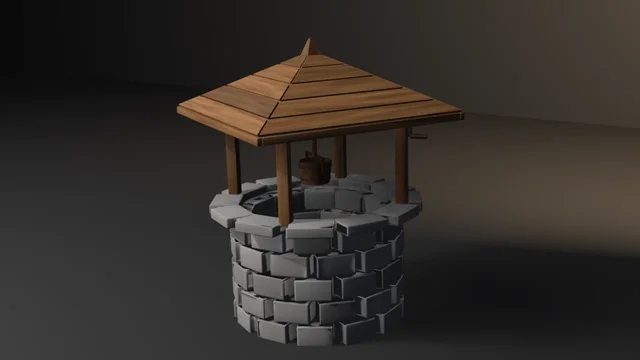
A procedural stone well through UVs, bake, LOD, collider, and Unity glTF, asserting recomputed budgets rather than an API contract.
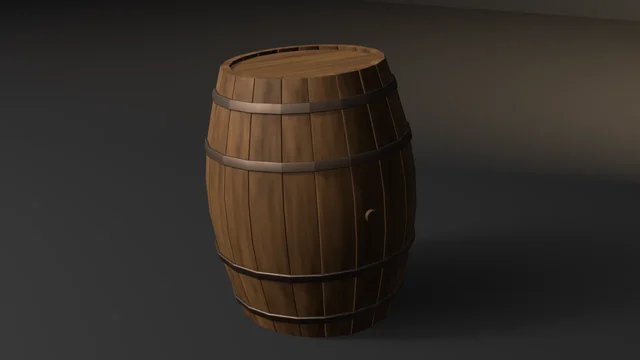
A procedural wine-cask with boarded, croze-seated heads and chord-lofted hoops through UVs, bake, LOD, collider, and Unity glTF, asserting recomputed budgets rather than an API contract.