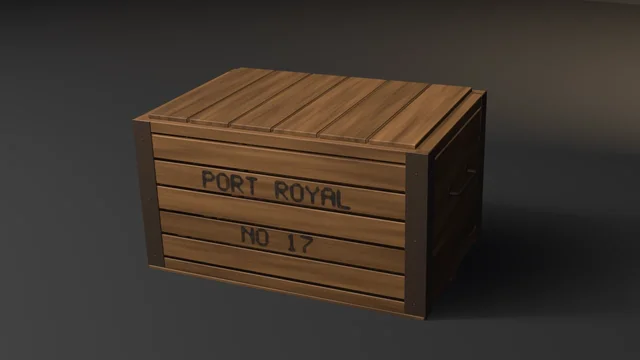
Shipping Crate
A procedural shipping crate through UVs, bake, LOD, collider, and Unity glTF, asserting recomputed budgets rather than an API contract.
showcase/cricket-wicket/
A procedural cricket wicket — three lacquered ash stumps with grooved domed crowns and red ball scuffs, two turned and collared bails lying in the grooves, a turf strip worn bare along a chalked crease and a red leather ball with a raised seam — carried through UVs, bake, LOD, compound collider, and Unity glTF, asserting Laws-of-Cricket sizes and bail seats recomputed from the mesh rather than an API contract.
Rendered headless by the showcase piece itself. Select it to enlarge.
category Sports
blender --background --python showcase/cricket-wicket/cricket_wicket.py --
A cricket wicket as Law 8 of the Laws of Cricket describes it: three turned ash stumps, 28 inches proud of the turf and 9 inches wide over their outer faces, each with a shoulder, a neck and a grooved domed crown; two turned bails whose spigots lie in the grooves and whose collared barrels hang across the gaps; a tight strip of turf worn bare along a chalked bowling crease, its grass thickening toward the edges; and a red leather ball with a raised seam resting in front of the stumps. A showcase piece, not an example — it witnesses no API contract. It asserts that generated geometry meets declared asset budgets, recomputed from the finished mesh.
| Shipped content | Used for |
|---|---|
skills/mesh-editing-and-bmesh | lathed stumps, bails and ball, a lofted turf slab, bipyramid grass blades, all in one bmesh |
skills/custom-properties | face attributes (PlankTone, GrainDir) read by the wood and grass shaders |
skills/procedural-materials-and-shaders | lacquered ash with turned bands and red ball scuffs that knock off the lacquer, stained bail wood, turf, earth, chalk, grass, leather, thread |
skills/bake-high-to-low | Cycles tangent-space normal bake, high onto low |
skills/engine-export-presets | Unity glTF (export_yup=True) |
skills/depsgraph-and-evaluated-data | evaluated triangle counts for the LOD ratios |
snippets/decimate_to_budget.py | LOD1 / LOD2 COLLAPSE chain |
snippets/convex_hull_collider.py | a hull per stump, per bail, for the ball and for the slab, merged into a compound |
snippets/lod_chain.py | LOD naming and ratio pattern |
examples/mesh-hygiene-audit | hygiene combinatorics (copied, not imported) |
A wicket fails invisibly in two ways, and neither moves the bounding box.
The bails must lie in the grooves. A bail floating a few millimetres above its stumps still spans the gap, still sits over the stumps, still fits the outer AABB, and still renders as a bail. The piece measures the seat of each of the four spigots: the lowest point of the spigot against the floor of the groove it lies in, read off the finished stump mesh. Band 0.5–2.0 mm; measured 0.92–1.00 mm. --lift-bails raises both bails 5 mm, the seat goes to −4.0 mm, and the run exits 18 with every other budget green.
The stumps are a real size. Law 8 states numbers, and each is recomputed from the mesh:
--thin-stumps turns the shafts to 32.9 mm and exits 19 on the diameter. --fat-bails swells the barrels and the bails stand 13.7 mm proud, which Law 8 forbids. --small-ball makes a 60 mm ball. Each of these leaves every stump on the floor.
Declared in the script as named constants, recomputed from the generated mesh. Measured values are from Blender 5.2.1.
| Budget | Band | Measured | ||
|---|---|---|---|---|
| Base triangles | 6100–6800 | 6448 | ||
| LOD1 ratio | 0.32–0.62 | 0.5000 | ||
| LOD2 ratio | 0.10–0.35 | 0.2199 | ||
| Material slots | exactly 8, distinct | 8 | ||
| Face floors (ash / bail / turf / earth / chalk / blade / leather / seam) | ≥ 1300 / 630 / 100 / 135 / 6 / 1250 / 180 / 220 | 1344 / 672 / 112 / 152 / 6 / 1344 / 200 / 240 | ||
| UV bounds | inside 0..1 | (0.0012, 0.0011)–(0.9988, 0.9944) | ||
| UV AABB overlap | ≤ 1e-5 | 0.000000 | ||
| Outer AABB | 0.646 × 0.406 × 0.7359 m ± 0.010 | 0.6460 × 0.4060 × 0.7359 | ||
| Collider triangles | ≤ 360 | 294 (seven hulls) | ||
| Normal bake | {'FINISHED'} with image data | {'FINISHED'}, has_data=True | ||
| glTF export | file written, non-empty | ~278 kB | ||
| Hygiene | all zero | loose 0/0, non-manifold 0, zero-area 0, doubles 0, n-gons 0, coplanar cross-shell pairs 0 | ||
| Grounded AABB | \ | zmin\ | ≤ 1e-4 | 0.00000 |
| Named stumps | 3 stumps, each foot z ≤ 1e-4 | 3 at 0.00000 | ||
| Spigot tip on its neck | 4 tips, ≥ 0.5 mm inside the neck radius | 1.03 mm | ||
| Barrel clear of stumps | ≥ 0.5 mm in x at the barrel's height | 6.92 mm | ||
| Bail pair | gap between the two short spigots ≥ 0.3 mm | 0.85 mm | ||
| Spigot seat | 4 spigots, lowest point 0.5–2.0 mm below the groove floor | 0.92–1.00 mm | ||
| Chalk line | 0.8–3.0 mm proud of the turf, ≥ 0.5 mm bitten in | 1.50 / 1.00 mm | ||
| Ball rest | lowest point 0.2–1.5 mm below the turf top | 0.60 mm | ||
| Seam | 0.5–2.0 mm proud of the ball | 1.00 mm | ||
| Stump diameter | 34.9–38.1 mm (Law 8) | 36.5 mm | ||
| Stump height | 711.2 mm ± 1.5 above the turf top | 711.2 mm | ||
| Width over outer faces | 228.6 mm ± 3.0; every gap 40 mm to under 71.3 mm | 228.6 mm; gaps 59.55 mm | ||
| Mirrored stumps | left/right axes mirrored within 1 mm | 0.000 mm | ||
| Bail projection | 2.0–12.7 mm above the stumps' highest point (Law 8) | 4.7 mm | ||
| Ball diameter | 71.3–72.9 mm (Law 5) | 72.0 mm |
The groove floor is flat where the dome is higher and follows the dome where it is lower, so the groove opens through the rim as a ramp. The crown's highest vertex is found by evaluating the crown once, and the crown is placed so that vertex lands exactly 711.2 mm above the turf.
random.Random(11), kept with a probability that rises toward the slab's edges and stays off the worn crease. Tuft roots are at least 24 mm apart. A tuft's three blades are turned a third of a quarter-turn apart, and each blade's root depth walks a golden-ratio sequence, so no two blades share a buried facet plane.--fat-bails at a 17.5 mm barrel stood the bails 12.2 mm proud, inside Law 8's 12.7 mm, and exited 0. At 19.0 mm it stands 13.7 mm proud and exits 19. --lift-bails at 6 mm landed a flat facet in a stump facet's plane and exited 15 on hygiene; at 5 mm it exits 18.Every convention in showcase/README.md, and whether it applies here.
| Convention | Applies | How |
|---|---|---|
| Deterministic, budgets declared, assertions recompute | yes | fixed-seed RNG for grass only; every value above is read off the mesh |
| Falsifier fails the budget it targets | yes | table below, each run on 5.2.1 |
| Hygiene incl. cross-shell coplanar | yes | exit 15 |
| Named supports | yes | the three stumps' feet (--float-stump) |
| Even shaping terms and mirror symmetry | yes | left and right stumps paired (--skew-stump) |
| Plumb and real-world size | yes | stump diameter, height, width, gaps, ball size (--thin-stumps, --small-ball) |
| Joint-fit budgets | yes | spigot tips on their necks, barrels clear of the stumps (--shift-bails) |
| Seat conformance | yes | spigots in the grooves, ball on the turf, seam on the ball, chalk in the turf (--lift-bails, --float-ball, --sink-seam, --sink-chalk) |
| A member is tenoned into its seat, never stood on it | yes | spigots 1 mm into the groove floor, chalk 1 mm into the turf, ball 0.6 mm, stumps through the slab |
| Orthogonal members | n/a | nothing is a board |
| Wrappers follow the host's profile | n/a | no band or hoop |
| Rope, masonry, roofs, vessels, scatter | n/a | grass tufts are decoration, not a scatter budget |
| Shading is part of the model | yes | stumps, bails, ball smooth (turned); every edge over 40° hard (slab, groove walls, blades) |
| One substance, one slot | yes | ash, bail wood, turf, earth, chalk, grass, leather, thread |
| Edge treatment: no right angles | n/a | turned and lofted, no box edges; the asset-quality edge90 is 0.090 |
| Material face floors | yes | all eight slots |
| The bake cage is narrower than the nearest neighbour | yes | CAGE_EXTRUSION 4 mm, well under the 59 mm gaps |
| Level on the stage; stage 60 m | yes | turned about Z only; 60 m floor and wall |
| Keep a falsifier's envelope still | yes | every falsifier stays inside the 10 mm bounding-box tolerance |
Each breaks one pipeline stage so a named budget fails. All thirteen were run on Blender 5.2.1 and exited the declared code. 4.5 and 5.1 were not available locally; CI exercises the default path on both.
| Flag | Target budget | Breaks | Exit |
|---|---|---|---|
--skip-decimate | LOD1 ratio | drops the DECIMATE modifiers, LOD1 ratio goes to 1.0000 | 9 |
--stray-vert | mesh hygiene | adds one loose vertex above the turf | 15 |
--lift-z | grounded AABB | lifts the whole mesh 50 mm | 16 |
--float-stump | named stumps | lifts the left stump 8 mm; the other two and the slab still ground the AABB | 16 |
--shift-bails | bail footprint | slides both bails 8 mm outward; a tip lies 7.0 mm outside its neck | 17 |
--lift-bails | spigot seat | lifts both bails 5 mm; seats go to −4.0 mm | 18 |
--sink-chalk | chalk line | buries the chalk 4 mm; −4.0 mm proud | 18 |
--float-ball | ball rest | lifts the ball 5 mm; −4.4 mm | 18 |
--sink-seam | seam | sinks the seam 3 mm; −2.0 mm proud | 18 |
--thin-stumps | stump diameter | turns the shafts to 0.9 of their radius; 32.85 mm | 19 |
--skew-stump | mirrored stumps | moves the right stump 2 mm along the wicket; 2.0 mm | 19 |
--fat-bails | bail projection | swells the barrels to 19 mm radius; 13.7 mm proud | 19 |
--small-ball | ball diameter | shrinks the ball to 30 mm radius; 60.0 mm | 19 |
File-local and sequential. 9 is a valid check code. 1 is the FATAL wrapper — a crash, never a named check.
| Code | Meaning |
|---|---|
| 0 | Success |
| 1 | Uncaught exception (FATAL wrapper) |
| 2 | argparse / usage |
| 3 | Mesh did not build, or has no UV layer |
| 4 | Base triangle count outside band |
| 5 | Material slots, or a material's face floor |
| 6 | UVs outside 0..1 |
| 7 | UV AABB overlap above tolerance |
| 8 | Outer AABB off declared size |
| 9 | LOD1 or LOD2 ratio outside band (--skip-decimate) |
| 10 | Framing gate (examples/gallery_framing.py, render path only) |
| 11 | Collider triangles above ceiling, or asset-quality gate (render path only) |
| 12 | Normal bake failed or produced no image data |
| 13 | glTF export missing or empty |
| 14 | --output produced no file |
| 15 | Mesh hygiene (--stray-vert) |
| 16 | Grounded AABB zmin, or a stump floating (--lift-z, --float-stump) |
| 17 | Bails not located, spigot tip off its neck, barrel against a stump, or bails touching (--shift-bails) |
| 18 | Spigot seat, chalk line, ball rest or seam (--lift-bails, --sink-chalk, --float-ball, --sink-seam) |
| 19 | Stump diameter, height, width or gaps, mirrored stumps, bail projection, ball diameter (--thin-stumps, --skew-stump, --fat-bails, --small-ball) |
# Budget check, no render.
blender --background --python cricket_wicket.py --

# Falsifier: the bails float over the grooves. Must exit 18.
blender --background --python cricket_wicket.py -- --lift-bails

# Falsifier: the stump shafts are too thin for Law 8. Must exit 19.
blender --background --python cricket_wicket.py -- --thin-stumps

# Render the gallery still (EEVEE; --engine cycles on a GPU-less host).
blender --background --python cricket_wicket.py -- --output cricket_wicket.webp
Smoke runs the check-only path. It does not pass --output or any falsifier.
Blender 5.2.1 only; 4.5.11 and 5.1.2 were not available locally.
| Value | 5.2.1 |
|---|---|
| Base triangles | 6448 |
| LOD1 / LOD2 tris | 3224 / 1418 |
| Face counts (ash / bail / turf / earth / chalk / blade / leather / seam) | 1344 / 672 / 112 / 152 / 6 / 1344 / 200 / 240 |
| Outer AABB | 0.6460 × 0.4060 × 0.7359 |
| Collider tris | 294 |
| Stump 711.2 mm, 36.5 mm, 228.6 mm, gaps 59.55 mm | exact |
| Spigot seats | 0.92–1.00 mm |
"""Game-ready cricket wicket — a showcase piece, not an example. Asserts budget conformance of a procedural cricket wicket as Law 8 of the Laws of Cricket describes it: three turned ash stumps, 28 inches (711.2 mm) proud of the turf and 228.6 mm wide over their outer faces, each topped with a grooved dome, and two stained bails whose spigots lie in the grooves and whose barrels hang across the gaps. The stumps are driven through a slab of turf with a worn bare patch, a chalked bowling crease and tufts of grass. Carried through UVs, six materials, a high-to-low normal bake, an LOD chain, a compound convex collider, and a Unity glTF export. The budgets that matter here are the ones a wicket fails invisibly. The bails must lie in the grooves, not float over them: a bail lifted 6 mm still spans the gap, still sits over the stumps, still fits the bounding box; only the seat knows. And the stumps are a real size: thinned shafts, a stump nudged along the crease, or a fat barrel each break a number the Laws state, while every stump still stands on the floor. Budgets are declared below and recomputed from the generated result. They are not API-contract witnesses. Each falsifier violates one named budget: ``--skip-decimate`` the LOD-ratio band, ``--stray-vert`` mesh hygiene, ``--lift-z`` the grounded AABB, ``--float-stump`` the named stumps, ``--shift-bails`` the bail footprint, ``--lift-bails`` the bail seat, ``--sink-chalk`` the chalk line, ``--thin-stumps`` the stump diameter, ``--skew-stump`` the mirrored stumps, ``--fat-bails`` the bail projection. Randomness is a fixed-seed ``random.Random`` for the grass tufts only. DECIMATE COLLAPSE triangle counts are not byte-identical across Blender versions — the LOD gate is a ratio band. blender --background --python cricket_wicket.py -- blender --background --python cricket_wicket.py -- --lift-bails blender --background --python cricket_wicket.py -- --output cricket_wicket.webp """ import argparse import math import os import random import sys import tempfile import traceback import bmesh import bpy from mathutils import Matrix, Vector from mathutils.kdtree import KDTree _REPO = os.path.abspath( os.path.join(os.path.dirname(os.path.abspath(__file__)), os.pardir, os.pardir) ) sys.path.insert(0, os.path.join(_REPO, "examples")) sys.dont_write_bytecode = True import gallery_framing # noqa: E402 import gallery_asset_quality # noqa: E402 # Law 8, in metres. The stumps stand 28 in above the turf, are 9 in (228.6 # mm) wide over their outer faces, and are 1.375-1.5 in thick. STUMP_H = 0.7112 STUMP_R = 0.01825 STUMP_SPACING = 0.09605 STUMP_SEG = 32 STUMP_SEG_HIGH = 48 THIN_SCALE = 0.90 SKEW_STUMP = 0.002 FLOAT_STUMP = 0.008 # The stump, from the foot up. The spike is driven through the turf; above # the shaft the shoulder steps in to a neck, and the neck carries a domed # crown cut across by a groove that runs along the line of the wicket. TURF_T = 0.020 SPIKE = ((0.0045, 0.0030), (0.0110, 0.0100), (STUMP_R, 0.0170)) SHAFT_MID_ABOVE_TURF = 0.360 SHOULDER_BELOW_CROWN = 0.052 NECK_START_BELOW_CROWN = 0.040 NECK_R = 0.0165 NECK_TOP_BELOW_CROWN = 0.016 CROWN_R = NECK_R CROWN_H = 0.0140 CROWN_FRACS = (0.8, 0.6, 0.4, 0.2) GROOVE_W = 0.0065 GROOVE_FLOOR = 0.0035 GROOVE_RISE = 0.0035 # Bails: Law 8 gives 4 3/8 in overall, a 2 1/8 in barrel and spigots of 1 # 3/8 and 7/8 in. The long spigot rests on the outer stump, the short one # on the middle stump; each bail is shifted out so the two short spigots # meet without touching. BAIL_LONG = 0.0349 BAIL_BARREL = 0.0540 BAIL_SHORT = 0.0222 SPIGOT_R = 0.0040 BARREL_R = 0.0100 FAT_BARREL_R = 0.0190 BAIL_SHIFT = 0.0016 BAIL_BITE = 0.0010 LIFT_BAIL = 0.005 BAIL_SEG = 16 BAIL_SEG_HIGH = 24 # Turf: a tight strip of pitch with a rolled edge, worn bare along the # crease where the batters stand and the bowlers land, and a chalked bowling # crease through the line of the stumps (Law 7). The popping crease, 1.22 m # in front, is off this strip. The chalk stops at the last flat cell so it # never rides the roll. SLAB_X0, SLAB_X1 = -0.32, 0.32 SLAB_Y0, SLAB_Y1 = -0.20, 0.20 SLAB_NX, SLAB_NY = 16, 10 SLAB_ROLL = 0.003 WORN_C = (0.0, -0.02) WORN_RX, WORN_RY = 0.23, 0.115 CHALK_HALF_W = 0.025 CHALK_HALF_L = 0.28 CHALK_BITE = 0.0010 CHALK_PROUD = 0.0015 SINK_CHALK = 0.0040 TUFTS = 56 TUFT_EDGE_BAND = 0.09 TUFT_INNER_KEEP = 0.18 TUFT_SPACING = 0.024 BLADES_PER_TUFT = 3 BLADE_R = 0.0018 BLADE_H = (0.022, 0.046) # Law 5: a ball is 22.4-22.9 cm round, 71.3-72.9 mm across. This one rests on # the worn patch with its lowest point a hair into the earth, its raised seam # on a great circle turned off the vertical. BALL_R = 0.0360 SMALL_BALL_R = 0.0300 BALL_SEG = 20 BALL_LATS = (-72.0, -54.0, -36.0, -18.0, 0.0, 18.0, 36.0, 54.0, 72.0) BALL_AT = (0.175, -0.135) BALL_TILT = 38.0 BALL_YAW = 25.0 BALL_BITE = 0.0006 FLOAT_BALL = 0.005 SEAM_R = 0.0010 SEAM_SEG = 40 SEAM_TUBE = 6 SINK_SEAM = 0.0030 BBOX_TOL = 0.010 OUTER_SIZE = (0.646, 0.406, 0.7359) BASE_TRIS_MIN = 6100 BASE_TRIS_MAX = 6800 LOD1_RATIO_MIN = 0.32 LOD1_RATIO_MAX = 0.62 LOD2_RATIO_MIN = 0.10 LOD2_RATIO_MAX = 0.35 LOD1_TARGET = 0.50 LOD2_TARGET = 0.22 MATERIAL_COUNT = 8 FACE_FLOORS = {0: 1300, 1: 630, 2: 100, 3: 135, 4: 6, 5: 1250, 6: 180, 7: 220} UV_EPS = 1e-4 UV_OVERLAP_MAX = 1e-5 COLLIDER_TRIS_MAX = 360 STUMP_HULL_RINGS = (0, 2, 5, 6, 8) BAIL_HULL_RINGS = (1, 3, 6, 7, 10, 12) BALL_HULL_RINGS = (1, 3, 5, 7) BAKE_RES = 512 CAGE_EXTRUSION = 0.004 ZMIN_EPS = 1e-4 DOUBLES_EPS = 1e-5 AREA_EPS = 1e-10 COPLANAR_NORMAL_EPS = 1e-4 COPLANAR_PLANE_EPS = 1e-4 COPLANAR_CENTRE_MAX = 0.05 LIFT_Z = 0.05 STUMP_Z_MAX = 1e-4 TIP_MARGIN_MIN = 0.0005 BARREL_CLEAR_MIN = 0.0005 BAIL_PAIR_GAP_MIN = 0.0003 SEAT_MIN = 0.0005 SEAT_MAX = 0.0020 CHALK_PROUD_MIN = 0.0008 CHALK_PROUD_MAX = 0.0030 CHALK_BITE_MIN = 0.0005 STUMP_D_MIN = 0.0349 STUMP_D_MAX = 0.0381 HEIGHT_TOL = 0.0015 WIDTH = 0.2286 WIDTH_TOL = 0.0030 BALL_D_MIN = 0.0713 GAP_MIN = 0.040 MIRROR_EPS = 0.0010 PROJECT_MIN = 0.002 PROJECT_MAX = 0.0127 BALL_D_MIN_OK = 0.0713 BALL_D_MAX_OK = 0.0729 BALL_SEAT_MIN = 0.0002 BALL_SEAT_MAX = 0.0015 SEAM_PROUD_MIN = 0.0005 SEAM_PROUD_MAX = 0.0020 ASH_IDX = 0 BAIL_IDX = 1 TURF_IDX = 2 EARTH_IDX = 3 CHALK_IDX = 4 BLADE_IDX = 5 LEATHER_IDX = 6 SEAM_IDX = 7 def eevee_engine_id(): """EEVEE id: 'BLENDER_EEVEE' on 5.0+, 'BLENDER_EEVEE_NEXT' on 4.2-4.5.""" return "BLENDER_EEVEE" if bpy.app.version >= (5, 0, 0) else "BLENDER_EEVEE_NEXT" def fail(msg, code): print(f"FAIL[{code}]: {msg}", file=sys.stderr) return code def triangle_count(mesh): mesh.calc_loop_triangles() return len(mesh.loop_triangles) def evaluated_triangle_count(obj): deps = bpy.context.evaluated_depsgraph_get() ev = obj.evaluated_get(deps) mesh = ev.to_mesh() try: mesh.calc_loop_triangles() return len(mesh.loop_triangles) finally: ev.to_mesh_clear() # --- construction ----------------------------------------------------------- def new_island(ctx): ctx["next"] += 1 return ctx["next"] def stamp(ctx, face, island, uvmap, grain): face[ctx["isl"]] = island for loop in face.loops: loop[ctx["uv"]].uv = uvmap[loop.vert] face[ctx["gx"]], face[ctx["gy"]], face[ctx["gz"]] = grain def island_of(ctx, faces, uvmap, grain=(1.0, 0.0, 0.0)): """One UV island over ``faces``; ``uvmap`` maps a vertex to (u, v).""" island = new_island(ctx) for f in faces: stamp(ctx, f, island, uvmap, grain) def tube(bm, rings, closed_ends, mat_idx, ctx, grains): """Quads between consecutive rings, fans to the two end poles.""" island = new_island(ctx) n = len(rings[0]) arc = [0.0] for a, b in zip(rings, rings[1:]): ca = sum((v.co for v in a), Vector()) / n cb = sum((v.co for v in b), Vector()) / n arc.append(arc[-1] + (cb - ca).length) for k in range(len(rings) - 1): a, b = rings[k], rings[k + 1] for i in range(n): j = (i + 1) % n f = bm.faces.new((a[i], a[j], b[j], b[i])) f.material_index = mat_idx stamp(ctx, f, island, {a[i]: (arc[k], i / n), a[j]: (arc[k], (i + 1) / n), b[j]: (arc[k + 1], (i + 1) / n), b[i]: (arc[k + 1], i / n)}, grains[k]) for pole, ring, s, g, sign in ((closed_ends[0], rings[0], arc[0], grains[0], -1.0), (closed_ends[1], rings[-1], arc[-1], grains[-1], 1.0)): for i in range(n): j = (i + 1) % n vs = (pole, ring[i], ring[j]) if sign < 0 else (pole, ring[j], ring[i]) f = bm.faces.new(vs) f.material_index = mat_idx stamp(ctx, f, island, {pole: (s + sign * 0.01, (i + 0.5) / n), ring[i]: (s, i / n), ring[j]: (s, (i + 1) / n)}, g) def lathe(bm, profile, n, mat_idx, ctx, xf, grain, zfun=None, phase=0.0): """Revolve ``(r, z, cut)`` rows about local Z; ``cut`` rows go through ``zfun``. The first and last rows must have r = 0: they are the end poles. With ``n`` a multiple of 4 a ring vertex lies on every local axis, so the stumps (axis Z) and the bails (axis turned to X) both keep a vertex exactly one radius below the axis. """ rings, poles = [], [] for r, z, cut in profile: if r <= 0.0: zz = zfun(0.0, 0.0, z) if (cut and zfun) else z poles.append(bm.verts.new(xf @ Vector((0.0, 0.0, zz)))) continue ring = [] for k in range(n): a = 2.0 * math.pi * (k + phase) / n x, y = r * math.cos(a), r * math.sin(a) zz = zfun(x, y, z) if (cut and zfun) else z ring.append(bm.verts.new(xf @ Vector((x, y, zz)))) rings.append(ring) tube(bm, rings, poles, mat_idx, ctx, [grain] * len(rings)) def dome(r): return CROWN_H * (1.0 - (r / CROWN_R) ** 2) def groove_z(y, z_dome): """The crown's height over a point at lateral offset ``y`` (zs-relative).""" if abs(y) < GROOVE_W: return min(z_dome, GROOVE_FLOOR + GROOVE_RISE * (abs(y) / GROOVE_W) ** 2) return z_dome def crown_local_max(n): """Highest crown vertex above the crown's base ring, for ``n`` segments.""" best = groove_z(0.0, dome(0.0)) for f in CROWN_FRACS: r = f * CROWN_R for k in range(n): y = r * math.sin(2.0 * math.pi * k / n) best = max(best, groove_z(y, dome(r))) return best def stump_profile(zs, radius_scale): """Foot pole, spike, shaft, shoulder, neck, crown rings, crown pole.""" rows = [(0.0, 0.0, False)] rows += [(r * radius_scale if r >= STUMP_R else r, z, False) for r, z in SPIKE] zt = TURF_T rs = STUMP_R * radius_scale rows += [(rs, zt, False), (rs, zt + SHAFT_MID_ABOVE_TURF, False), (rs, zs - SHOULDER_BELOW_CROWN, False), (NECK_R, zs - NECK_START_BELOW_CROWN, False), (NECK_R, zs - NECK_TOP_BELOW_CROWN, False), (CROWN_R, zs, True)] for f in CROWN_FRACS: rows.append((f * CROWN_R, zs + dome(f * CROWN_R), True)) rows.append((0.0, zs + dome(0.0), True)) return rows def add_stump(bm, ctx, cx, seg, zs, radius_scale, lift): def cut(x, y, z): return zs + groove_z(y, z - zs) xf = Matrix.Translation(Vector((cx, 0.0, lift))) lathe(bm, stump_profile(zs, radius_scale), seg, ASH_IDX, ctx, xf, (0.0, 0.0, 1.0), cut) def bail_profile(barrel_r): """(r, t) from the long tip, through the barrel, to the short tip.""" """A turned barrel: a crisp shoulder off each spigot, then a full-width collar set off from the body by a V-cut bead line, as a bail is turned on the lathe.""" ll, lb, ls = BAIL_LONG, BAIL_BARREL, BAIL_SHORT r = barrel_r return [ (0.0, 0.0, False), (0.0030, 0.0006, False), (SPIGOT_R, 0.0020, False), (SPIGOT_R, ll - 0.0010, False), (SPIGOT_R, ll, False), (r * 0.72, ll + 0.0012, False), (r * 0.94, ll + 0.0040, False), (r, ll + 0.0075, False), (r, ll + 0.0135, False), (r * 0.84, ll + 0.0152, False), (r * 0.97, ll + 0.0170, False), (r * 0.97, ll + lb - 0.0170, False), (r * 0.84, ll + lb - 0.0152, False), (r, ll + lb - 0.0135, False), (r, ll + lb - 0.0075, False), (r * 0.94, ll + lb - 0.0040, False), (r * 0.72, ll + lb - 0.0012, False), (SPIGOT_R, ll + lb, False), (SPIGOT_R, ll + lb + 0.0010, False), (SPIGOT_R, ll + lb + ls - 0.0020, False), (0.0030, ll + lb + ls - 0.0006, False), (0.0, ll + lb + ls, False), ] def add_bail(bm, ctx, side, axis_z, seg, barrel_r, lift): """Bail on ``side`` (-1 left, +1 right): long spigot out, short spigot in.""" centre = side * (STUMP_SPACING * 0.5 + BAIL_SHIFT) tip = centre + side * (BAIL_BARREL * 0.5 + BAIL_LONG) # local +Z -> world +X (left bail) or -X (right bail). rot = Matrix.Rotation(math.pi * 0.5 * (-side), 4, "Y") xf = Matrix.Translation(Vector((tip, 0.0, axis_z + lift))) @ rot # The right bail's facets are turned half a segment, so the two collinear # spigots do not share facet planes (a coplanar cross-shell pair by definition). lathe(bm, bail_profile(barrel_r), seg, BAIL_IDX, ctx, xf, (1.0, 0.0, 0.0), phase=0.5 if side > 0 else 0.0) def add_slab(bm, ctx): nx, ny = SLAB_NX, SLAB_NY dx, dy = (SLAB_X1 - SLAB_X0) / nx, (SLAB_Y1 - SLAB_Y0) / ny top = {} for i in range(nx + 1): for j in range(ny + 1): x, y, z = SLAB_X0 + i * dx, SLAB_Y0 + j * dy, TURF_T if i in (0, nx) or j in (0, ny): if i == 0: x -= SLAB_ROLL if i == nx: x += SLAB_ROLL if j == 0: y -= SLAB_ROLL if j == ny: y += SLAB_ROLL z -= SLAB_ROLL top[(i, j)] = bm.verts.new((x, y, z)) top_faces = [] for i in range(nx): for j in range(ny): f = bm.faces.new((top[(i, j)], top[(i + 1, j)], top[(i + 1, j + 1)], top[(i, j + 1)])) cx = SLAB_X0 + (i + 0.5) * dx - WORN_C[0] cy = SLAB_Y0 + (j + 0.5) * dy - WORN_C[1] worn = (cx / WORN_RX) ** 2 + (cy / WORN_RY) ** 2 < 1.0 f.material_index = EARTH_IDX if worn else TURF_IDX top_faces.append(f) island_of(ctx, top_faces, {v: (v.co.x, v.co.y) for v in top.values()}) order = ([(i, 0) for i in range(nx + 1)] + [(nx, j) for j in range(1, ny + 1)] + [(i, ny) for i in range(nx - 1, -1, -1)] + [(0, j) for j in range(ny - 1, 0, -1)]) upper = [top[k] for k in order] lower = [bm.verts.new((v.co.x, v.co.y, 0.0)) for v in upper] arc = [0.0] for a, b in zip(upper, upper[1:] + upper[:1]): arc.append(arc[-1] + (b.co - a.co).length) wall_faces = [] m = len(upper) for k in range(m): a, b = k, (k + 1) % m f = bm.faces.new((upper[a], lower[a], lower[b], upper[b])) f.material_index = EARTH_IDX wall_faces.append(f) # A ring that closes on itself needs per-face UVs: the seam vertex has two u values. island = new_island(ctx) for k, f in enumerate(wall_faces): a, b = k, (k + 1) % m uv = {upper[a]: (arc[k], TURF_T), lower[a]: (arc[k], 0.0), lower[b]: (arc[k + 1], 0.0), upper[b]: (arc[k + 1], TURF_T)} stamp(ctx, f, island, uv, (1.0, 0.0, 0.0)) # Off the stump line: on the slab's centre it would weld to the middle # stump's spike point at the origin. centre = bm.verts.new((0.0, SLAB_Y0 + 0.75 * (SLAB_Y1 - SLAB_Y0), 0.0)) # A fan's triangles share a corner, so a planar map overlaps their AABBs; # unroll it into one strip per triangle instead. island = new_island(ctx) for k in range(m): f = bm.faces.new((centre, lower[(k + 1) % m], lower[k])) f.material_index = EARTH_IDX stamp(ctx, f, island, {centre: (0.0, (k + 0.5) / m), lower[(k + 1) % m]: (1.0, (k + 1) / m), lower[k]: (1.0, k / m)}, (1.0, 0.0, 0.0)) return top def add_chalk(bm, ctx, sink): z0 = TURF_T - CHALK_BITE z1 = TURF_T + CHALK_PROUD if sink: z1 = TURF_T - sink z0 = z1 - 0.0025 hx, hy = CHALK_HALF_L, CHALK_HALF_W v = [bm.verts.new((sx * hx, sy * hy, z)) for z in (z0, z1) for sy in (-1, 1) for sx in (-1, 1)] quads = [((0, 1, 3, 2), "z"), ((4, 6, 7, 5), "z"), ((0, 4, 5, 1), "y"), ((2, 3, 7, 6), "y"), ((0, 2, 6, 4), "x"), ((1, 5, 7, 3), "x")] for idx, axis in quads: f = bm.faces.new([v[i] for i in idx]) f.material_index = CHALK_IDX proj = {"z": lambda c: (c.x, c.y), "y": lambda c: (c.x, c.z), "x": lambda c: (c.y, c.z)}[axis] island_of(ctx, [f], {vv: proj(vv.co) for vv in f.verts}) def in_worn(x, y, scale=1.0): return ((x - WORN_C[0]) / (WORN_RX * scale)) ** 2 + ((y - WORN_C[1]) / (WORN_RY * scale)) ** 2 < 1.0 def add_tufts(bm, ctx, stump_xs): """Grass thickens toward the slab's edges and thins out where it is walked.""" rng = random.Random(11) placed = 0 centres = [] margin = (SLAB_X1 - SLAB_X0) / SLAB_NX # stay off the rolled outer cells while placed < TUFTS: x = rng.uniform(SLAB_X0 + margin, SLAB_X1 - margin) y = rng.uniform(SLAB_Y0 + margin, SLAB_Y1 - margin) edge = min(x - SLAB_X0, SLAB_X1 - x, y - SLAB_Y0, SLAB_Y1 - y) - margin keep = max(TUFT_INNER_KEEP, 1.0 - edge / TUFT_EDGE_BAND) if rng.random() > keep: continue if in_worn(x, y, 1.12) or abs(y) < CHALK_HALF_W + 0.025: continue if any(math.hypot(x - sx, y) < 0.09 for sx in stump_xs): continue if math.hypot(x - BALL_AT[0], y - BALL_AT[1]) < 0.08: continue # Crowding at the edges must not stack two tufts' roots in one spot. if any(math.hypot(x - tx, y - ty) < TUFT_SPACING for tx, ty in centres): continue centres.append((x, y)) placed += 1 turn = rng.uniform(0.0, 0.5 * math.pi) for k in range(BLADES_PER_TUFT): bx, by = x + rng.uniform(-0.006, 0.006), y + rng.uniform(-0.006, 0.006) h = rng.uniform(*BLADE_H) lean = rng.uniform(0.003, 0.012) ang = rng.uniform(0.0, 2.0 * math.pi) tipc = Vector((bx + lean * math.cos(ang), by + lean * math.sin(ang), TURF_T + h)) base_z = TURF_T + 0.0004 # Each blade's square root is turned a third of a quarter-turn from # its neighbour's, so no two in a tuft share a facet plane. a0 = turn + k * (0.5 * math.pi / BLADES_PER_TUFT) + rng.uniform(-0.12, 0.12) ring = [bm.verts.new((bx + BLADE_R * math.cos(a0 + a), by + BLADE_R * math.sin(a0 + a), base_z)) for a in (0.0, 0.5 * math.pi, math.pi, 1.5 * math.pi)] # Root depth walks a golden-ratio sequence, so two blades turned # alike in different tufts still tilt their buried facets apart. root = 0.0022 + 0.0016 * ((len(centres) * BLADES_PER_TUFT + k) * 0.6180339887 % 1.0) poles = (bm.verts.new((bx, by, TURF_T - root)), bm.verts.new(tipc)) tube(bm, [ring], poles, BLADE_IDX, ctx, [(0.0, 0.0, 1.0)]) def add_ball(bm, ctx, radius, sink_seam, lift): """A leather ball on a tilted axis, resting on the turf, with a raised seam.""" rot = (Matrix.Rotation(math.radians(BALL_YAW), 4, "Z") @ Matrix.Rotation(math.radians(BALL_TILT), 4, "Y")) profile = [(0.0, -radius, False)] profile += [(radius * math.cos(math.radians(la)), radius * math.sin(math.radians(la)), False) for la in BALL_LATS] profile.append((0.0, radius, False)) n0 = len(bm.verts) lathe(bm, profile, BALL_SEG, LEATHER_IDX, ctx, rot, (0.0, 0.0, 1.0)) shape = list(bm.verts)[n0:] low = min(v.co.z for v in shape) shift = Vector((BALL_AT[0], BALL_AT[1], TURF_T - BALL_BITE + lift - low)) for v in shape: v.co += shift centre = shift.copy() axis = (rot @ Vector((0.0, 0.0, 1.0))).normalized() u = axis.cross(Vector((1.0, 0.0, 0.0))).normalized() w = axis.cross(u).normalized() major = radius - (sink_seam if sink_seam else 0.0) rings = [] for i in range(SEAM_SEG): a = 2.0 * math.pi * i / SEAM_SEG radial = u * math.cos(a) + w * math.sin(a) c = centre + radial * major rings.append([bm.verts.new(c + radial * (SEAM_R * math.cos(2 * math.pi * k / SEAM_TUBE)) + axis * (SEAM_R * math.sin(2 * math.pi * k / SEAM_TUBE))) for k in range(SEAM_TUBE)]) island = new_island(ctx) for i in range(SEAM_SEG): a, b = rings[i], rings[(i + 1) % SEAM_SEG] tang = tuple((b[0].co - a[0].co).normalized()) for k in range(SEAM_TUBE): j = (k + 1) % SEAM_TUBE f = bm.faces.new((a[k], a[j], b[j], b[k])) f.material_index = SEAM_IDX stamp(ctx, f, island, {a[k]: (i / SEAM_SEG, k / SEAM_TUBE), a[j]: (i / SEAM_SEG, (k + 1) / SEAM_TUBE), b[j]: ((i + 1) / SEAM_SEG, (k + 1) / SEAM_TUBE), b[k]: ((i + 1) / SEAM_SEG, k / SEAM_TUBE)}, tang) def pack_uvs(bm, ctx, margin=0.06): """Big islands on a grid in the upper band; the blades' tiny ones in the lower.""" uv, isl = ctx["uv"], ctx["isl"] islands, order = {}, [] for face in bm.faces: key = face[isl] if key not in islands: islands[key] = [] order.append(key) islands[key].append(face) big = [k for k in order if not all(f.material_index == BLADE_IDX for f in islands[k])] small = [k for k in order if k not in set(big)] def lay(keys, v0, v1): if not keys: return cols = max(1, math.ceil(math.sqrt(len(keys) * (1.0 / max(v1 - v0, 1e-6))))) rows = max(1, math.ceil(len(keys) / cols)) cw, ch = 1.0 / cols, (v1 - v0) / rows pu, pv = margin * cw * 0.5, margin * ch * 0.5 for idx, key in enumerate(keys): faces = islands[key] allc = [tuple(loop[uv].uv) for f in faces for loop in f.loops] minx, maxx = min(c[0] for c in allc), max(c[0] for c in allc) miny, maxy = min(c[1] for c in allc), max(c[1] for c in allc) dx, dy = max(maxx - minx, 1e-8), max(maxy - miny, 1e-8) ou, ov = (idx % cols) * cw + pu, v0 + (idx // cols) * ch + pv for face in faces: for loop in face.loops: x, y = loop[uv].uv loop[uv].uv = (ou + (x - minx) / dx * (cw - 2 * pu), ov + (y - miny) / dy * (ch - 2 * pv)) lay(big, 0.25, 1.0) lay(small, 0.0, 0.25) def build_wicket_mesh( name, high=False, stray_vert=False, float_stump=False, thin_stumps=False, skew_stump=False, lift_bails=False, fat_bails=False, sink_chalk=False, small_ball=False, float_ball=False, sink_seam=False, ): seg = STUMP_SEG_HIGH if high else STUMP_SEG bseg = BAIL_SEG_HIGH if high else BAIL_SEG zs = TURF_T + STUMP_H - crown_local_max(seg) xs = [-STUMP_SPACING, 0.0, STUMP_SPACING + (SKEW_STUMP if skew_stump else 0.0)] bm = bmesh.new() try: ctx = {"uv": bm.loops.layers.uv.new("UVMap"), "isl": bm.faces.layers.int.new("UVIsland"), "gx": bm.faces.layers.float.new("gx"), "gy": bm.faces.layers.float.new("gy"), "gz": bm.faces.layers.float.new("gz"), "next": 0} for k, cx in enumerate(xs): add_stump(bm, ctx, cx, seg, zs, THIN_SCALE if thin_stumps else 1.0, FLOAT_STUMP if (float_stump and k == 0) else 0.0) axis_z = zs + GROOVE_FLOOR - BAIL_BITE + SPIGOT_R for side in (-1.0, 1.0): add_bail(bm, ctx, side, axis_z, bseg, FAT_BARREL_R if fat_bails else BARREL_R, LIFT_BAIL if lift_bails else 0.0) add_slab(bm, ctx) add_chalk(bm, ctx, SINK_CHALK if sink_chalk else 0.0) add_ball(bm, ctx, SMALL_BALL_R if small_ball else BALL_R, SINK_SEAM if sink_seam else 0.0, FLOAT_BALL if float_ball else 0.0) add_tufts(bm, ctx, [-STUMP_SPACING, 0.0, STUMP_SPACING]) if stray_vert: bm.verts.new((0.0, 0.2, 0.1)) bmesh.ops.recalc_face_normals(bm, faces=list(bm.faces)) for f in bm.faces: f.smooth = True for e in bm.edges: if len(e.link_faces) == 2 and e.calc_face_angle(0.0) > math.radians(40.0): e.smooth = False pack_uvs(bm, ctx) bm.faces.layers.int.remove(ctx["isl"]) me = bpy.data.meshes.new(name) bm.to_mesh(me) me.update() finally: bm.free() paint_pieces(me) obj = bpy.data.objects.new(name, me) bpy.context.collection.objects.link(obj) return obj def paint_pieces(me): """``GrainDir`` from the per-face grain, ``PlankTone`` per shell.""" npoly = len(me.polygons) comps = [] for nm in ("gx", "gy", "gz"): vals = [0.0] * npoly me.attributes[nm].data.foreach_get("value", vals) comps.append(vals) me.attributes.remove(me.attributes[nm]) grain = [c for i in range(npoly) for c in (comps[0][i], comps[1][i], comps[2][i])] tone = [0.5] * npoly vf = [[] for _ in range(len(me.vertices))] for p in me.polygons: for i in p.vertices: vf[i].append(p.index) for k, g in enumerate(shells(me)): t = 0.5 + 0.3 * (((k * 0.6180339887 + 0.3) % 1.0) - 0.5) for fi in {fi for i in g for fi in vf[i]}: tone[fi] = t a = me.attributes.new("PlankTone", "FLOAT", "FACE") a.data.foreach_set("value", tone) b = me.attributes.new("GrainDir", "FLOAT_VECTOR", "FACE") b.data.foreach_set("vector", grain) # --- surface ---------------------------------------------------------------- def _sock(sockets, identifier): return next(sk for sk in sockets if sk.identifier == identifier) def wood_material(name, dark, light, rough=(0.72, 0.52), bands=(), band_color=(0.03, 0.012, 0.005), coat=0.0, stretch=0.94, grain_scale=60.0, scuffs=(), scuff_color=(0.13, 0.095, 0.065), ramp=(0.30, 0.72)): """Timber whose grain runs along ``GrainDir`` and whose tone varies by piece. ``bands`` are (z, half-width) rings of ``band_color`` in object space (a maker's turned bands); ``coat`` is a lacquer layer. ``stretch`` is how far the noise is drawn out along the grain (1.0 would be an endless streak). ``scuffs`` are (x, z, rx, rz) ellipses on the -Y face, where the ball has dulled the lacquer and left leather on the wood. """ mat = bpy.data.materials.new(name) mat.use_nodes = True nt = mat.node_tree bsdf = nt.nodes["Principled BSDF"] coord = nt.nodes.new("ShaderNodeTexCoord") gdir = nt.nodes.new("ShaderNodeAttribute") gdir.attribute_name = "GrainDir" tone = nt.nodes.new("ShaderNodeAttribute") tone.attribute_name = "PlankTone" dot = nt.nodes.new("ShaderNodeVectorMath") dot.operation = "DOT_PRODUCT" nt.links.new(coord.outputs["Object"], dot.inputs[0]) nt.links.new(gdir.outputs["Vector"], dot.inputs[1]) squash = nt.nodes.new("ShaderNodeMath") squash.operation = "MULTIPLY" squash.inputs[1].default_value = stretch nt.links.new(dot.outputs["Value"], squash.inputs[0]) along = nt.nodes.new("ShaderNodeVectorMath") along.operation = "SCALE" nt.links.new(gdir.outputs["Vector"], along.inputs[0]) nt.links.new(squash.outputs["Value"], along.inputs["Scale"]) grain_co = nt.nodes.new("ShaderNodeVectorMath") grain_co.operation = "SUBTRACT" nt.links.new(coord.outputs["Object"], grain_co.inputs[0]) nt.links.new(along.outputs["Vector"], grain_co.inputs[1]) shift = nt.nodes.new("ShaderNodeVectorMath") shift.operation = "ADD" nt.links.new(grain_co.outputs["Vector"], shift.inputs[0]) nt.links.new(tone.outputs["Fac"], shift.inputs[1]) noise = nt.nodes.new("ShaderNodeTexNoise") noise.inputs["Scale"].default_value = grain_scale noise.inputs["Detail"].default_value = 6.0 noise.inputs["Roughness"].default_value = 0.62 nt.links.new(shift.outputs["Vector"], noise.inputs["Vector"]) cramp = nt.nodes.new("ShaderNodeValToRGB") cramp.color_ramp.elements[0].position = ramp[0] cramp.color_ramp.elements[0].color = (*dark, 1.0) cramp.color_ramp.elements[1].position = ramp[1] cramp.color_ramp.elements[1].color = (*light, 1.0) nt.links.new(noise.outputs["Fac"], cramp.inputs["Fac"]) gain = nt.nodes.new("ShaderNodeMath") gain.operation = "MULTIPLY_ADD" gain.inputs[1].default_value = 1.0 gain.inputs[2].default_value = 0.50 nt.links.new(tone.outputs["Fac"], gain.inputs[0]) mix = nt.nodes.new("ShaderNodeMix") mix.data_type = "RGBA" mix.blend_type = "MULTIPLY" _sock(mix.inputs, "Factor_Float").default_value = 1.0 nt.links.new(cramp.outputs["Color"], _sock(mix.inputs, "A_Color")) nt.links.new(gain.outputs["Value"], _sock(mix.inputs, "B_Color")) colour = _sock(mix.outputs, "Result_Color") if bands: sep = nt.nodes.new("ShaderNodeSeparateXYZ") nt.links.new(coord.outputs["Object"], sep.inputs["Vector"]) acc = None for zc, hw in bands: sub = nt.nodes.new("ShaderNodeMath") sub.operation = "SUBTRACT" sub.inputs[1].default_value = zc nt.links.new(sep.outputs["Z"], sub.inputs[0]) ab = nt.nodes.new("ShaderNodeMath") ab.operation = "ABSOLUTE" nt.links.new(sub.outputs["Value"], ab.inputs[0]) lt = nt.nodes.new("ShaderNodeMath") lt.operation = "LESS_THAN" lt.inputs[1].default_value = hw nt.links.new(ab.outputs["Value"], lt.inputs[0]) if acc is None: acc = lt.outputs["Value"] else: both = nt.nodes.new("ShaderNodeMath") both.operation = "ADD" both.use_clamp = True nt.links.new(acc, both.inputs[0]) nt.links.new(lt.outputs["Value"], both.inputs[1]) acc = both.outputs["Value"] banded = nt.nodes.new("ShaderNodeMix") banded.data_type = "RGBA" _sock(banded.inputs, "B_Color").default_value = (*band_color, 1.0) nt.links.new(acc, _sock(banded.inputs, "Factor_Float")) nt.links.new(colour, _sock(banded.inputs, "A_Color")) colour = _sock(banded.outputs, "Result_Color") scuff = None if scuffs: sep = nt.nodes.new("ShaderNodeSeparateXYZ") nt.links.new(coord.outputs["Object"], sep.inputs["Vector"]) # Only the face toward the bowler: 0 behind y = 0, 1 by a third of the radius. front = nt.nodes.new("ShaderNodeMapRange") front.inputs["From Min"].default_value = 0.0 front.inputs["From Max"].default_value = -STUMP_R * 0.35 nt.links.new(sep.outputs["Y"], front.inputs["Value"]) spot = None for sx, sz, rx, rz in scuffs: terms = [] for comp, centre, rad in (("X", sx, rx), ("Z", sz, rz)): d = nt.nodes.new("ShaderNodeMath") d.operation = "SUBTRACT" d.inputs[1].default_value = centre nt.links.new(sep.outputs[comp], d.inputs[0]) q = nt.nodes.new("ShaderNodeMath") q.operation = "DIVIDE" q.inputs[1].default_value = rad nt.links.new(d.outputs["Value"], q.inputs[0]) sq = nt.nodes.new("ShaderNodeMath") sq.operation = "POWER" sq.inputs[1].default_value = 2.0 nt.links.new(q.outputs["Value"], sq.inputs[0]) terms.append(sq.outputs["Value"]) r2 = nt.nodes.new("ShaderNodeMath") r2.operation = "ADD" nt.links.new(terms[0], r2.inputs[0]) nt.links.new(terms[1], r2.inputs[1]) fall = nt.nodes.new("ShaderNodeMapRange") fall.inputs["From Min"].default_value = 1.0 fall.inputs["From Max"].default_value = 0.25 nt.links.new(r2.outputs["Value"], fall.inputs["Value"]) if spot is None: spot = fall.outputs["Result"] else: mx = nt.nodes.new("ShaderNodeMath") mx.operation = "MAXIMUM" nt.links.new(spot, mx.inputs[0]) nt.links.new(fall.outputs["Result"], mx.inputs[1]) spot = mx.outputs["Value"] # Broken up by a noise so it reads as a smear, not a decal. grit = nt.nodes.new("ShaderNodeTexNoise") grit.inputs["Scale"].default_value = 180.0 grit.inputs["Detail"].default_value = 3.0 nt.links.new(coord.outputs["Object"], grit.inputs["Vector"]) gmap = nt.nodes.new("ShaderNodeMapRange") gmap.inputs["From Min"].default_value = 0.25 gmap.inputs["From Max"].default_value = 0.75 gmap.inputs["To Min"].default_value = 0.40 gmap.inputs["To Max"].default_value = 0.95 nt.links.new(grit.outputs["Fac"], gmap.inputs["Value"]) m1 = nt.nodes.new("ShaderNodeMath") m1.operation = "MULTIPLY" nt.links.new(spot, m1.inputs[0]) nt.links.new(front.outputs["Result"], m1.inputs[1]) m2 = nt.nodes.new("ShaderNodeMath") m2.operation = "MULTIPLY" nt.links.new(m1.outputs["Value"], m2.inputs[0]) nt.links.new(gmap.outputs["Result"], m2.inputs[1]) scuff = m2.outputs["Value"] bruised = nt.nodes.new("ShaderNodeMix") bruised.data_type = "RGBA" _sock(bruised.inputs, "B_Color").default_value = (*scuff_color, 1.0) nt.links.new(scuff, _sock(bruised.inputs, "Factor_Float")) nt.links.new(colour, _sock(bruised.inputs, "A_Color")) colour = _sock(bruised.outputs, "Result_Color") nt.links.new(colour, bsdf.inputs["Base Color"]) if coat: for key, val in (("Coat Weight", coat), ("Coat Roughness", 0.12)): if key in bsdf.inputs: bsdf.inputs[key].default_value = val rmap = nt.nodes.new("ShaderNodeMapRange") rmap.inputs["To Min"].default_value = rough[0] rmap.inputs["To Max"].default_value = rough[1] nt.links.new(noise.outputs["Fac"], rmap.inputs["Value"]) rough_out = rmap.outputs["Result"] if scuff is not None: # The lacquer is knocked off where the ball hits: rougher, and no coat. dull = nt.nodes.new("ShaderNodeMix") dull.data_type = "FLOAT" _sock(dull.inputs, "B_Float").default_value = 0.82 nt.links.new(scuff, _sock(dull.inputs, "Factor_Float")) nt.links.new(rough_out, _sock(dull.inputs, "A_Float")) rough_out = _sock(dull.outputs, "Result_Float") if coat and "Coat Weight" in bsdf.inputs: cw = nt.nodes.new("ShaderNodeMapRange") cw.inputs["To Min"].default_value = coat cw.inputs["To Max"].default_value = 0.0 nt.links.new(scuff, cw.inputs["Value"]) nt.links.new(cw.outputs["Result"], bsdf.inputs["Coat Weight"]) nt.links.new(rough_out, bsdf.inputs["Roughness"]) return mat def noise_material(name, dark, light, scale, rough, tone_mix=False, detail=6.0): """Two-colour noise surface (turf, earth, chalk, grass); optional per-shell tone.""" mat = bpy.data.materials.new(name) mat.use_nodes = True nt = mat.node_tree bsdf = nt.nodes["Principled BSDF"] tc = nt.nodes.new("ShaderNodeTexCoord") noise = nt.nodes.new("ShaderNodeTexNoise") noise.inputs["Scale"].default_value = scale noise.inputs["Detail"].default_value = detail nt.links.new(tc.outputs["Object"], noise.inputs["Vector"]) ramp = nt.nodes.new("ShaderNodeValToRGB") ramp.color_ramp.elements[0].position = 0.35 ramp.color_ramp.elements[0].color = (*dark, 1.0) ramp.color_ramp.elements[1].position = 0.70 ramp.color_ramp.elements[1].color = (*light, 1.0) fac = noise.outputs["Fac"] if tone_mix: tone = nt.nodes.new("ShaderNodeAttribute") tone.attribute_name = "PlankTone" add = nt.nodes.new("ShaderNodeMath") add.operation = "ADD" add.inputs[1].default_value = -0.45 nt.links.new(tone.outputs["Fac"], add.inputs[0]) both = nt.nodes.new("ShaderNodeMath") both.operation = "ADD" nt.links.new(noise.outputs["Fac"], both.inputs[0]) nt.links.new(add.outputs["Value"], both.inputs[1]) fac = both.outputs["Value"] nt.links.new(fac, ramp.inputs["Fac"]) nt.links.new(ramp.outputs["Color"], bsdf.inputs["Base Color"]) bsdf.inputs["Roughness"].default_value = rough return mat def leather_material(name): """Red cricket-ball leather: deep, slightly glossy, mottled.""" mat = bpy.data.materials.new(name) mat.use_nodes = True nt = mat.node_tree bsdf = nt.nodes["Principled BSDF"] tc = nt.nodes.new("ShaderNodeTexCoord") noise = nt.nodes.new("ShaderNodeTexNoise") noise.inputs["Scale"].default_value = 140.0 noise.inputs["Detail"].default_value = 8.0 nt.links.new(tc.outputs["Object"], noise.inputs["Vector"]) ramp = nt.nodes.new("ShaderNodeValToRGB") ramp.color_ramp.elements[0].position = 0.35 ramp.color_ramp.elements[0].color = (0.30, 0.012, 0.010, 1.0) ramp.color_ramp.elements[1].position = 0.70 ramp.color_ramp.elements[1].color = (0.55, 0.030, 0.020, 1.0) nt.links.new(noise.outputs["Fac"], ramp.inputs["Fac"]) nt.links.new(ramp.outputs["Color"], bsdf.inputs["Base Color"]) bsdf.inputs["Roughness"].default_value = 0.38 return mat def wicket_materials(): return ( # Scuffs: red leather smeared on where the ball has struck, at the # height a ball that hits the stumps passes them. wood_material("StumpAsh", (0.21, 0.13, 0.060), (0.64, 0.47, 0.25), rough=(0.42, 0.26), bands=((0.625, 0.0030), (0.640, 0.0012)), coat=0.6, stretch=0.985, grain_scale=95.0, scuffs=((0.0, 0.24, 0.017, 0.050), (STUMP_SPACING, 0.16, 0.013, 0.032)), scuff_color=(0.40, 0.085, 0.05), ramp=(0.40, 0.64)), wood_material("BailStained", (0.20, 0.085, 0.030), (0.52, 0.25, 0.095), rough=(0.40, 0.26), coat=0.6, stretch=0.97, grain_scale=80.0), noise_material("Turf", (0.030, 0.070, 0.012), (0.085, 0.160, 0.030), 70.0, 0.92), noise_material("EarthWorn", (0.095, 0.060, 0.034), (0.20, 0.135, 0.075), 45.0, 0.95), noise_material("CreaseChalk", (0.62, 0.60, 0.55), (0.88, 0.87, 0.83), 80.0, 0.88), noise_material("GrassBlade", (0.05, 0.12, 0.020), (0.17, 0.30, 0.050), 30.0, 0.70, tone_mix=True), leather_material("BallLeather"), noise_material("SeamThread", (0.55, 0.50, 0.40), (0.82, 0.78, 0.68), 90.0, 0.80), ) def assign_slots(obj, mats): slots = obj.data.materials for i, mat in enumerate(mats): if i < len(slots): slots[i] = mat else: slots.append(mat) # --- measurement ------------------------------------------------------------ def world_bbox(obj): corners = [obj.matrix_world @ Vector(c) for c in obj.bound_box] xs, ys, zs = [c.x for c in corners], [c.y for c in corners], [c.z for c in corners] return (min(xs), min(ys), min(zs), max(xs), max(ys), max(zs)) def uv_stats(mesh): uv = mesh.uv_layers.active if uv is None: return 0.0, 0.0, 1.0, 1.0, 0.0, 0 data = uv.data us = [loop.uv[0] for loop in data] vs = [loop.uv[1] for loop in data] aabbs = [] for poly in mesh.polygons: pu = [data[i].uv[0] for i in poly.loop_indices] pv = [data[i].uv[1] for i in poly.loop_indices] aabbs.append((min(pu), min(pv), max(pu), max(pv))) span = max(1e-6, max(a[2] - a[0] for a in aabbs), max(a[3] - a[1] for a in aabbs)) buckets = {} for i, a in enumerate(aabbs): for c in range(int(a[0] // span), int(a[2] // span) + 1): for r in range(int(a[1] // span), int(a[3] // span) + 1): buckets.setdefault((c, r), []).append(i) overlap = 0.0 seen = set() for members in buckets.values(): for ii in range(len(members)): for jj in range(ii + 1, len(members)): i, j = members[ii], members[jj] key = (i, j) if i < j else (j, i) if key in seen: continue seen.add(key) a, b = aabbs[i], aabbs[j] overlap += max(0.0, min(a[2], b[2]) - max(a[0], b[0])) * max( 0.0, min(a[3], b[3]) - max(a[1], b[1])) return min(us), min(vs), max(us), max(vs), overlap, len(aabbs) def face_area(me, poly): idxs = poly.vertices v0 = me.vertices[idxs[0]].co area = 0.0 for i in range(1, len(idxs) - 1): area += (me.vertices[idxs[i]].co - v0).cross(me.vertices[idxs[i + 1]].co - v0).length * 0.5 return area def hygiene_audit(me): ngons = sum(1 for p in me.polygons if len(p.vertices) > 4) zero_area = sum(1 for p in me.polygons if face_area(me, p) <= AREA_EPS) bm = bmesh.new() try: bm.from_mesh(me) loose_v = sum(1 for v in bm.verts if len(v.link_edges) == 0) loose_e = sum(1 for e in bm.edges if len(e.link_faces) == 0) nonman = sum(1 for e in bm.edges if not e.is_manifold) ret = bmesh.ops.find_doubles(bm, verts=list(bm.verts), dist=DOUBLES_EPS) doubles = len(ret.get("targetmap") or {}) finally: bm.free() return {"ngons": ngons, "loose_v": loose_v, "loose_e": loose_e, "nonman": nonman, "zero_area": zero_area, "doubles": doubles} def shells(me): neighbors = [[] for _ in range(len(me.vertices))] for edge in me.edges: a, b = edge.vertices neighbors[a].append(b) neighbors[b].append(a) seen = [False] * len(me.vertices) groups = [] for start in range(len(me.vertices)): if seen[start]: continue seen[start] = True stack = [start] group = [] while stack: cur = stack.pop() group.append(cur) for nxt in neighbors[cur]: if not seen[nxt]: seen[nxt] = True stack.append(nxt) groups.append(group) return groups def zfight_pairs(me): """Coplanar face pairs from *different shells* (copied from showcase/grindstone).""" owner = {} for si, g in enumerate(shells(me)): for vi in g: owner[vi] = si faces = [(p.normal.copy(), p.center.copy(), owner.get(p.vertices[0], -1)) for p in me.polygons] kd = KDTree(len(faces)) for i, (_n, c, _s) in enumerate(faces): kd.insert(c, i) kd.balance() hits = 0 for i, (ni, ci, si) in enumerate(faces): for _co, j, _d in kd.find_range(ci, COPLANAR_CENTRE_MAX): if j <= i: continue nj, cj, sj = faces[j] if si == sj: continue if abs(abs(ni.dot(nj)) - 1.0) > COPLANAR_NORMAL_EPS: continue if abs(ni.dot(cj - ci)) > COPLANAR_PLANE_EPS: continue hits += 1 return hits def classify(me): mats = {} for p in me.polygons: for i in p.vertices: mats.setdefault(i, p.material_index) kinds = {ASH_IDX: "stump", BAIL_IDX: "bail", TURF_IDX: "slab", EARTH_IDX: "slab", CHALK_IDX: "chalk", BLADE_IDX: "blade", LEATHER_IDX: "ball", SEAM_IDX: "seam"} out = {"stump": [], "bail": [], "slab": [], "chalk": [], "blade": [], "ball": [], "seam": [], "other": []} for g in shells(me): pts = [me.vertices[i].co.copy() for i in g] lo = Vector((min(p.x for p in pts), min(p.y for p in pts), min(p.z for p in pts))) hi = Vector((max(p.x for p in pts), max(p.y for p in pts), max(p.z for p in pts))) rec = {"g": g, "pts": pts, "lo": lo, "hi": hi, "ext": hi - lo, "c": sum(pts, Vector()) / len(pts)} out[kinds.get(mats.get(g[0], -1), "other")].append(rec) return out def stump_geometry(rec, zt): """Axis (x, y), shaft radius, neck radius and crown top of one stump.""" shaft = [p for p in rec["pts"] if zt + 0.30 < p.z < zt + 0.50] cx = sum(p.x for p in shaft) / len(shaft) cy = sum(p.y for p in shaft) / len(shaft) rad = max(math.hypot(p.x - cx, p.y - cy) for p in shaft) top = rec["hi"].z neck = [p for p in rec["pts"] if top - 0.035 < p.z < top - 0.012] neck_r = max(math.hypot(p.x - cx, p.y - cy) for p in neck) floor = [p.z for p in rec["pts"] if abs(p.y - cy) < 0.0005 and abs(p.x - cx) < 0.012 and p.z > top - 0.020] return {"cx": cx, "cy": cy, "r": rad, "neck_r": neck_r, "top": top, "floor": max(floor) if floor else -99.0} def wicket_audit(me): parts = classify(me) out = {k: len(v) for k, v in parts.items()} slab = parts["slab"][0] if parts["slab"] else None zt = slab["hi"].z if slab else 0.0 out["zt"] = zt stumps = sorted(parts["stump"], key=lambda r: r["c"].x) geo = [stump_geometry(r, zt) for r in stumps] if len(stumps) == 3 else [] out["stump_z"] = max((abs(r["lo"].z) for r in stumps), default=99.0) out["height"] = ((min(g["top"] for g in geo) - zt, max(g["top"] for g in geo) - zt) if geo else (-99.0, 99.0)) out["dia"] = ((2 * min(g["r"] for g in geo), 2 * max(g["r"] for g in geo)) if geo else (-99.0, 99.0)) out["width"] = ((geo[2]["cx"] + geo[2]["r"]) - (geo[0]["cx"] - geo[0]["r"])) if geo else -99.0 gaps = [(geo[i + 1]["cx"] - geo[i + 1]["r"]) - (geo[i]["cx"] + geo[i]["r"]) for i in range(2)] if geo else [] out["gap"] = (min(gaps), max(gaps)) if gaps else (-99.0, 99.0) out["mirror"] = max(abs(geo[0]["cx"] + geo[2]["cx"]), abs(geo[1]["cx"]), abs(geo[0]["cy"] - geo[2]["cy"]), abs(geo[0]["top"] - geo[2]["top"])) if geo else 99.0 bails = sorted(parts["bail"], key=lambda r: r["c"].x) seats, margins, clears = [], [], [] out["pair_gap"] = (bails[1]["lo"].x - bails[0]["hi"].x) if len(bails) == 2 else -99.0 out["project"] = (max(r["hi"].z for r in bails) - max(r["hi"].z for r in stumps) if bails and stumps else -99.0) for b in bails if geo else []: za = (b["lo"].z + b["hi"].z) * 0.5 ya = (b["lo"].y + b["hi"].y) * 0.5 spig = [p for p in b["pts"] if math.hypot(p.y - ya, p.z - za) < 0.0045] barrel = [p for p in b["pts"] if math.hypot(p.y - ya, p.z - za) > 0.0075] for xt in (b["lo"].x, b["hi"].x): k = min(range(3), key=lambda i: abs(geo[i]["cx"] - xt)) g = geo[k] margins.append(g["neck_r"] - abs(xt - g["cx"])) under = [p.z for p in spig if abs(p.x - g["cx"]) < g["neck_r"]] seats.append(g["floor"] - min(under) if under else -99.0) bl, br = min(p.x for p in barrel), max(p.x for p in barrel) zlo, zhi = min(p.z for p in barrel), max(p.z for p in barrel) for side, edge_x in ((-1, bl), (1, br)): cands = [(i, g) for i, g in enumerate(geo) if (g["cx"] < edge_x if side < 0 else g["cx"] > edge_x)] if not cands: continue i, g = (max(cands, key=lambda t: t[1]["cx"]) if side < 0 else min(cands, key=lambda t: t[1]["cx"])) band = [p.x for p in stumps[i]["pts"] if zlo <= p.z <= zhi] if not band: continue clears.append(edge_x - max(band) if side < 0 else min(band) - edge_x) out["seats"] = (min(seats, default=-99.0), max(seats, default=99.0)) out["n_seats"] = len(seats) out["margin"] = min(margins, default=-99.0) out["barrel_clear"] = min(clears, default=-99.0) ball = parts["ball"][0] if parts["ball"] else None seam = parts["seam"][0] if parts["seam"] else None out["ball_d"] = -99.0 out["ball_seat"] = -99.0 out["seam_proud"] = -99.0 if ball: bc = sum(ball["pts"], Vector()) / len(ball["pts"]) mean_r = sum((p - bc).length for p in ball["pts"]) / len(ball["pts"]) out["ball_d"] = 2.0 * mean_r out["ball_seat"] = zt - ball["lo"].z if seam: out["seam_proud"] = max((p - bc).length for p in seam["pts"]) - mean_r ch = parts["chalk"][0] if parts["chalk"] else None out["chalk_proud"] = (ch["hi"].z - zt) if ch else -99.0 out["chalk_bite"] = (zt - ch["lo"].z) if ch else -99.0 return out def make_lod(obj, name, ratio, skip_decimate): mesh = obj.data.copy() lod = bpy.data.objects.new(name, mesh) lod.matrix_world = obj.matrix_world.copy() bpy.context.scene.collection.objects.link(lod) if not skip_decimate and 0.0 < ratio < 1.0: mod = lod.modifiers.new("DecimateBudget", "DECIMATE") mod.decimate_type = "COLLAPSE" mod.ratio = ratio return lod def ring_points(me, group, seg, vert_step, rings): """Every ``vert_step``-th vertex of the chosen rings of a lathed shell, plus its poles. Vertices are laid pole, ring after ring, pole in build order. A hull only needs the rings where the silhouette turns, not every ring. """ order = sorted(group) body = order[1:-1] pts = [] for r in rings: pts += [me.vertices[body[r * seg + k]].co.copy() for k in range(0, seg, vert_step)] return pts + [me.vertices[order[0]].co.copy(), me.vertices[order[-1]].co.copy()] def hull_collider(obj, name): """Compound collider: a hull per stump, one per bail, one for the turf slab.""" me = obj.data parts = classify(me) groups = [] for r in parts["stump"]: groups.append(ring_points(me, r["g"], STUMP_SEG, 4, STUMP_HULL_RINGS)) for r in parts["bail"]: groups.append(ring_points(me, r["g"], BAIL_SEG, 4, BAIL_HULL_RINGS)) for r in parts["ball"]: groups.append(ring_points(me, r["g"], BALL_SEG, 4, BALL_HULL_RINGS)) for r in parts["slab"]: groups.append([p for p in r["pts"] if p.z < 1e-6 or abs(p.z - (TURF_T - SLAB_ROLL)) < 1e-6]) mesh = bpy.data.meshes.new(name) bm = bmesh.new() try: for pts in groups: if len(pts) < 4: continue tmp = bmesh.new() try: vs = [tmp.verts.new(p) for p in pts] bmesh.ops.convex_hull(tmp, input=vs) remap = {} for f in tmp.faces: for v in f.verts: if v not in remap: remap[v] = bm.verts.new(v.co) bm.faces.new([remap[v] for v in f.verts]) finally: tmp.free() bm.to_mesh(mesh) mesh.update() finally: bm.free() col = bpy.data.objects.new(name, mesh) bpy.context.collection.objects.link(col) return col def setup_bake_image(obj, target_mat, size): img = bpy.data.images.new("WicketNrm", size, size, alpha=True, float_buffer=False) img.colorspace_settings.name = "Non-Color" nodes = target_mat.node_tree.nodes tex = nodes.new("ShaderNodeTexImage") tex.image = img nodes.active = tex tex.select = True obj.active_material_index = ASH_IDX return img, tex def bake_normal(high, low): scene = bpy.context.scene scene.render.engine = "CYCLES" scene.cycles.device = "CPU" scene.cycles.samples = 1 scene.cycles.use_denoising = False for ob in bpy.context.view_layer.objects: ob.select_set(False) high.select_set(True) low.select_set(True) bpy.context.view_layer.objects.active = low return bpy.ops.object.bake( type="NORMAL", use_selected_to_active=True, cage_extrusion=CAGE_EXTRUSION, use_cage=False, normal_space="TANGENT", margin=4, margin_type="ADJACENT_FACES", use_clear=True, target="IMAGE_TEXTURES", ) def export_unity(path, objects): for ob in bpy.context.view_layer.objects: ob.select_set(False) for ob in objects: ob.select_set(True) bpy.context.view_layer.objects.active = objects[0] bpy.ops.export_scene.gltf( filepath=path, use_selection=True, export_yup=True, export_apply=True, export_draco_mesh_compression_enable=False, export_animations=False, ) def apply_shift_bails(me): """Falsifier: slide both bails 8 mm outward along the wicket's line.""" parts = classify(me) for rec in parts["bail"]: d = -0.008 if rec["c"].x < 0 else 0.008 for i in rec["g"]: me.vertices[i].co.x += d me.update() def check(skip_decimate, lift_z=False, shift_bails=False, **flags): bpy.ops.wm.read_factory_settings(use_empty=True) nothing = (None,) * 5 low = build_wicket_mesh("WicketLow", **flags) hi_flags = {k: v for k, v in flags.items() if k != "stray_vert"} high = build_wicket_mesh("WicketHigh", high=True, **hi_flags) if shift_bails: apply_shift_bails(low.data) apply_shift_bails(high.data) mats = wicket_materials() assign_slots(low, mats) assign_slots(high, mats) if lift_z: for v in low.data.vertices: v.co.z += LIFT_Z low.data.update() bpy.context.view_layer.update() if len(low.data.polygons) < 6 or not low.data.uv_layers: return (fail("wicket mesh did not build, or has no UV layer", 3),) + nothing base_tris = triangle_count(low.data) slots = [s for s in low.data.materials if s is not None] nmat, distinct = len(slots), len({id(s) for s in slots}) idx_counts = {} for poly in low.data.polygons: idx_counts[poly.material_index] = idx_counts.get(poly.material_index, 0) + 1 u0, v0, u1, v1, overlap, nfaces = uv_stats(low.data) bb = world_bbox(low) size_x, size_y, size_z = bb[3] - bb[0], bb[4] - bb[1], bb[5] - bb[2] img, tex = setup_bake_image(low, mats[ASH_IDX], BAKE_RES) bake_result = bake_normal(high, low) lod1 = make_lod(low, "WicketLOD1", LOD1_TARGET, skip_decimate) lod2 = make_lod(low, "WicketLOD2", LOD2_TARGET, skip_decimate) bpy.context.view_layer.update() lod1_tris = evaluated_triangle_count(lod1) lod2_tris = evaluated_triangle_count(lod2) r1 = lod1_tris / base_tris if base_tris else 0.0 r2 = lod2_tris / base_tris if base_tris else 0.0 collider = hull_collider(low, "WicketCollider") col_tris = triangle_count(collider.data) export_path = os.path.join(tempfile.gettempdir(), f"bdt_wicket_{os.getpid()}.glb") if os.path.exists(export_path): os.remove(export_path) export_unity(export_path, [low, collider]) export_size = os.path.getsize(export_path) if os.path.isfile(export_path) else 0 # Blender points TMPDIR at its own temp preference, which on a portable # build is the working directory, so the export must not outlive this. if os.path.isfile(export_path): os.remove(export_path) hyg = hygiene_audit(low.data) zf = zfight_pairs(low.data) wa = wicket_audit(low.data) print(f"blender={tuple(bpy.app.version)} skip_decimate={skip_decimate}") print(f"measured mat_index_counts={dict(sorted(idx_counts.items()))}") print(f"measured base_tris={base_tris} lod1_tris={lod1_tris} " f"lod2_tris={lod2_tris} r1={r1:.4f} r2={r2:.4f}") print(f"measured nmat={nmat} uv=({u0:.4f},{v0:.4f})-({u1:.4f},{v1:.4f}) " f"overlap={overlap:.6f} nfaces={nfaces}") print(f"measured bbox=({size_x:.4f},{size_y:.4f},{size_z:.4f}) " f"outer={OUTER_SIZE} zmin={bb[2]:.5f}") print(f"measured collider_tris={col_tris} bake={bake_result} " f"bake_has_data={img.has_data} export_bytes={export_size}") print(f"measured hygiene loose_v={hyg['loose_v']} loose_e={hyg['loose_e']} " f"nonman={hyg['nonman']} zero_area={hyg['zero_area']} " f"doubles={hyg['doubles']} ngons={hyg['ngons']} zfight={zf}") print(f"measured parts stumps={wa['stump']} bails={wa['bail']} slab={wa['slab']} " f"chalk={wa['chalk']} blades={wa['blade']} other={wa['other']} " f"stump_z={wa['stump_z']:.5f}") print(f"measured stumps height=({wa['height'][0]:.5f},{wa['height'][1]:.5f}) " f"dia=({wa['dia'][0]:.5f},{wa['dia'][1]:.5f}) width={wa['width']:.5f} " f"gap=({wa['gap'][0]:.5f},{wa['gap'][1]:.5f}) mirror={wa['mirror']:.6f}") print(f"measured bails seats={wa['n_seats']}x({wa['seats'][0]:.5f},{wa['seats'][1]:.5f}) " f"tip_margin={wa['margin']:.5f} barrel_clear={wa['barrel_clear']:.5f} " f"pair_gap={wa['pair_gap']:.5f} project={wa['project']:.5f}") print(f"measured chalk proud={wa['chalk_proud']:.5f} bite={wa['chalk_bite']:.5f}") print(f"measured ball d={wa['ball_d']:.5f} seat={wa['ball_seat']:.5f} " f"seam_proud={wa['seam_proud']:.5f} blades={wa['blade']}") if not (BASE_TRIS_MIN <= base_tris <= BASE_TRIS_MAX): return (fail(f"base tris {base_tris} not in [{BASE_TRIS_MIN}, {BASE_TRIS_MAX}]", 4),) + nothing if nmat != MATERIAL_COUNT or distinct != MATERIAL_COUNT: return (fail(f"material slots {nmat} distinct {distinct} != {MATERIAL_COUNT}", 5),) + nothing for idx, floor in FACE_FLOORS.items(): if idx_counts.get(idx, 0) < floor: return (fail(f"material {idx} faces {idx_counts.get(idx, 0)} < {floor}", 5),) + nothing if u0 < -UV_EPS or v0 < -UV_EPS or u1 > 1.0 + UV_EPS or v1 > 1.0 + UV_EPS: return (fail(f"UVs outside 0..1: ({u0:.4f},{v0:.4f})-({u1:.4f},{v1:.4f})", 6),) + nothing if overlap > UV_OVERLAP_MAX: return (fail(f"UV AABB overlap {overlap:.6f} > {UV_OVERLAP_MAX}", 7),) + nothing if (abs(size_x - OUTER_SIZE[0]) > BBOX_TOL or abs(size_y - OUTER_SIZE[1]) > BBOX_TOL or abs(size_z - OUTER_SIZE[2]) > BBOX_TOL): return (fail(f"bbox ({size_x:.4f},{size_y:.4f},{size_z:.4f}) off outer {OUTER_SIZE}", 8),) + nothing if not (LOD1_RATIO_MIN <= r1 <= LOD1_RATIO_MAX): return (fail(f"LOD1 ratio {r1:.4f} not in [{LOD1_RATIO_MIN}, {LOD1_RATIO_MAX}] " "(--skip-decimate is the designed fail)", 9),) + nothing if not (LOD2_RATIO_MIN <= r2 <= LOD2_RATIO_MAX): return (fail(f"LOD2 ratio {r2:.4f} not in [{LOD2_RATIO_MIN}, {LOD2_RATIO_MAX}]", 9),) + nothing if col_tris > COLLIDER_TRIS_MAX: return (fail(f"collider tris {col_tris} > {COLLIDER_TRIS_MAX}", 11),) + nothing if bake_result != {"FINISHED"} or not img.has_data: return (fail(f"bake failed result={bake_result} has_data={img.has_data}", 12),) + nothing if export_size <= 0: return (fail("export file missing or empty", 13),) + nothing if (hyg["loose_v"] or hyg["loose_e"] or hyg["nonman"] or hyg["zero_area"] or hyg["doubles"] or hyg["ngons"] or zf): return (fail(f"hygiene {hyg} zfight={zf} (--stray-vert is the designed fail)", 15),) + nothing if abs(bb[2]) > ZMIN_EPS: return (fail(f"zmin {bb[2]:.6f} not within {ZMIN_EPS} of 0 " "(--lift-z is the designed fail)", 16),) + nothing if wa["stump"] != 3 or wa["stump_z"] > STUMP_Z_MAX: return (fail(f"stumps: {wa['stump']} of 3, worst foot z={wa['stump_z']:.5f} > {STUMP_Z_MAX} " "(--float-stump is the designed fail)", 16),) + nothing if wa["bail"] != 2 or wa["n_seats"] != 4: return (fail(f"{wa['bail']} of 2 bails, {wa['n_seats']} of 4 spigots located", 17),) + nothing if wa["margin"] < TIP_MARGIN_MIN: return (fail(f"a spigot tip is {wa['margin']:.5f} inside its stump's neck, below " f"{TIP_MARGIN_MIN} (--shift-bails is the designed fail)", 17),) + nothing if wa["barrel_clear"] < BARREL_CLEAR_MIN: return (fail(f"barrel clears its stump by {wa['barrel_clear']:.5f} < {BARREL_CLEAR_MIN} " "(--shift-bails is the designed fail)", 17),) + nothing if wa["pair_gap"] < BAIL_PAIR_GAP_MIN: return (fail(f"bails meet: gap {wa['pair_gap']:.5f} < {BAIL_PAIR_GAP_MIN}", 17),) + nothing if wa["seats"][0] < SEAT_MIN or wa["seats"][1] > SEAT_MAX: return (fail(f"bail spigot seats {wa['seats']} outside [{SEAT_MIN}, {SEAT_MAX}] " "(--lift-bails is the designed fail)", 18),) + nothing if not (CHALK_PROUD_MIN <= wa["chalk_proud"] <= CHALK_PROUD_MAX) or wa["chalk_bite"] < CHALK_BITE_MIN: return (fail(f"chalk proud {wa['chalk_proud']:.5f} (band [{CHALK_PROUD_MIN}, " f"{CHALK_PROUD_MAX}]), bite {wa['chalk_bite']:.5f} < {CHALK_BITE_MIN} " "(--sink-chalk is the designed fail)", 18),) + nothing if not (BALL_SEAT_MIN <= wa["ball_seat"] <= BALL_SEAT_MAX): return (fail(f"ball rests {wa['ball_seat']:.5f} into the turf, outside [{BALL_SEAT_MIN}, " f"{BALL_SEAT_MAX}] (--float-ball is the designed fail)", 18),) + nothing if not (SEAM_PROUD_MIN <= wa["seam_proud"] <= SEAM_PROUD_MAX): return (fail(f"seam stands {wa['seam_proud']:.5f} proud of the ball, outside " f"[{SEAM_PROUD_MIN}, {SEAM_PROUD_MAX}] (--sink-seam is the designed fail)", 18),) + nothing if wa["dia"][0] < STUMP_D_MIN or wa["dia"][1] > STUMP_D_MAX: return (fail(f"stump diameter {wa['dia']} outside Law 8's [{STUMP_D_MIN}, {STUMP_D_MAX}] " "(--thin-stumps is the designed fail)", 19),) + nothing if (abs(wa["height"][0] - STUMP_H) > HEIGHT_TOL or abs(wa["height"][1] - STUMP_H) > HEIGHT_TOL): return (fail(f"stump height {wa['height']} off {STUMP_H} by more than {HEIGHT_TOL}", 19),) + nothing if abs(wa["width"] - WIDTH) > WIDTH_TOL or wa["gap"][1] >= BALL_D_MIN or wa["gap"][0] < GAP_MIN: return (fail(f"width {wa['width']:.5f} (Law 8: {WIDTH} +- {WIDTH_TOL}), gaps {wa['gap']} " f"(a ball of {BALL_D_MIN} must not pass; stumps must not touch)", 19),) + nothing if not (BALL_D_MIN_OK <= wa["ball_d"] <= BALL_D_MAX_OK): return (fail(f"ball diameter {wa['ball_d']:.5f} outside Law 5's [{BALL_D_MIN_OK}, " f"{BALL_D_MAX_OK}] (--small-ball is the designed fail)", 19),) + nothing if wa["mirror"] > MIRROR_EPS: return (fail(f"stumps not mirrored: {wa['mirror']:.6f} > {MIRROR_EPS} " "(--skew-stump is the designed fail)", 19),) + nothing if not (PROJECT_MIN <= wa["project"] <= PROJECT_MAX): return (fail(f"bails stand {wa['project']:.5f} above the stumps, outside [{PROJECT_MIN}, " f"{PROJECT_MAX}] (Law 8: 12.7 mm; --fat-bails is the designed fail)", 19),) + nothing return 0, low, high, mats, tex, collider def wire_normal(mat, tex): nt = mat.node_tree nrm = nt.nodes.new("ShaderNodeNormalMap") nt.links.new(tex.outputs["Color"], nrm.inputs["Color"]) nt.links.new(nrm.outputs["Normal"], nt.nodes["Principled BSDF"].inputs["Normal"]) def render_still(low, mats, tex, path, engine): scene = bpy.context.scene wire_normal(mats[ASH_IDX], tex) for ob in list(scene.objects): if ob.type == "MESH" and ob != low: ob.hide_render = True ob.hide_viewport = True # Nearly square to the wicket, so the bails lie across the frame as bars # rather than foreshortening into the stump tops. low.rotation_euler.z = math.radians(-12.0) floor_me = bpy.data.meshes.new("Floor") bm = bmesh.new() try: bmesh.ops.create_grid(bm, x_segments=1, y_segments=1, size=60.0) bm.to_mesh(floor_me) finally: bm.free() fmat = bpy.data.materials.new("Floor") fmat.use_nodes = True fb = fmat.node_tree.nodes["Principled BSDF"] fb.inputs["Base Color"].default_value = (0.03, 0.032, 0.037, 1.0) fb.inputs["Roughness"].default_value = 0.7 floor_me.materials.append(fmat) floor = bpy.data.objects.new("Floor", floor_me) scene.collection.objects.link(floor) wall = bpy.data.objects.new("Wall", floor_me.copy()) wall.location = (0.0, 8.5, 0.0) wall.rotation_euler = (math.radians(90), 0.0, 0.0) scene.collection.objects.link(wall) world = bpy.data.worlds.new("World") world.use_nodes = True world.node_tree.nodes["Background"].inputs["Color"].default_value = (0.02, 0.021, 0.025, 1.0) scene.world = world def light(name, kind, loc, energy, size, col, rot=(0, 0, 0)): ld = bpy.data.lights.new(name, kind) ld.energy = energy if kind == "AREA": ld.size = size else: ld.shadow_soft_size = size ld.color = col ob = bpy.data.objects.new(name, ld) ob.location = loc ob.rotation_euler = tuple(math.radians(a) for a in rot) scene.collection.objects.link(ob) light("Key", "AREA", (-2.4, -3.2, 3.0), 360.0, 3.0, (1.0, 0.95, 0.88), (50, 0, -35)) light("Fill", "AREA", (3.2, -2.6, 1.4), 60.0, 5.0, (0.74, 0.84, 1.0), (70, 0, 50)) light("Rim", "AREA", (-1.6, 2.6, 2.2), 220.0, 3.0, (0.62, 0.78, 1.0), (-55, 0, 200)) ld = bpy.data.lights.new("Wedge", "SPOT") ld.energy, ld.color = 220.0, (1.0, 0.66, 0.34) ld.spot_size, ld.spot_blend, ld.shadow_soft_size = math.radians(50.0), 1.0, 0.3 wedge = bpy.data.objects.new("Wedge", ld) wedge.location = (0.5, 1.6, 1.9) wedge.rotation_euler = (Vector((0.2, 0.5, 0.0)) - wedge.location).to_track_quat( "-Z", "Y").to_euler() scene.collection.objects.link(wedge) cam_data = bpy.data.cameras.new("Cam") cam_data.lens = 65.0 cam = bpy.data.objects.new("Cam", cam_data) # 28 degrees off square, a hair above the crowns so the grooves show. cam.location = (0.83, -2.88, 0.80) scene.collection.objects.link(cam) aim = bpy.data.objects.new("Aim", None) aim.location = (0.0, 0.0, 0.33) scene.collection.objects.link(aim) con = cam.constraints.new("TRACK_TO") con.target = aim con.track_axis = "TRACK_NEGATIVE_Z" con.up_axis = "UP_Y" scene.camera = cam scene.render.engine = "CYCLES" if engine == "cycles" else eevee_engine_id() if engine == "cycles": scene.cycles.samples = 32 scene.cycles.device = "CPU" else: try: scene.eevee.taa_render_samples = 64 except AttributeError: pass scene.render.resolution_x = 1280 scene.render.resolution_y = 720 scene.render.image_settings.file_format = "WEBP" if path.lower().endswith(".webp") else "PNG" if path.lower().endswith(".webp"): scene.render.image_settings.quality = 90 scene.render.filepath = path scene.view_settings.view_transform = "Standard" fcode = gallery_framing.check_framing(scene, cam, hero=[low], elements=[low], stage=[floor, wall]) if fcode: return fcode if gallery_asset_quality.check_asset_quality(scene, cam, [low], stage=[floor, wall]): return gallery_asset_quality.EXIT_ASSET_QUALITY bpy.ops.render.render(write_still=True) if not (os.path.exists(path) and os.path.getsize(path) > 0): return fail("render produced no file", 14) return 0 def main(): argv = sys.argv[sys.argv.index("--") + 1:] if "--" in sys.argv else [] p = argparse.ArgumentParser() p.add_argument("--output", default=None) p.add_argument("--engine", default="eevee", choices=("eevee", "cycles")) p.add_argument("--skip-decimate", action="store_true") p.add_argument("--stray-vert", action="store_true") p.add_argument("--lift-z", action="store_true") p.add_argument("--float-stump", action="store_true") p.add_argument("--shift-bails", action="store_true") p.add_argument("--lift-bails", action="store_true") p.add_argument("--sink-chalk", action="store_true") p.add_argument("--thin-stumps", action="store_true") p.add_argument("--skew-stump", action="store_true") p.add_argument("--fat-bails", action="store_true") p.add_argument("--small-ball", action="store_true") p.add_argument("--float-ball", action="store_true") p.add_argument("--sink-seam", action="store_true") args = p.parse_args(argv) code, low, _high, mats, tex, _col = check( args.skip_decimate, lift_z=args.lift_z, shift_bails=args.shift_bails, stray_vert=args.stray_vert, float_stump=args.float_stump, thin_stumps=args.thin_stumps, skew_stump=args.skew_stump, lift_bails=args.lift_bails, fat_bails=args.fat_bails, sink_chalk=args.sink_chalk, small_ball=args.small_ball, float_ball=args.float_ball, sink_seam=args.sink_seam, ) if code: return code if args.output: rcode = render_still(low, mats, tex, os.path.abspath(args.output), args.engine) if rcode: return rcode print(f"rendered still {args.output}") print("cricket wicket OK") return 0 if __name__ == "__main__": try: sys.exit(main()) except Exception as e: traceback.print_exc() print(f"FATAL: {e}", file=sys.stderr) sys.exit(1)
A procedural shipping crate through UVs, bake, LOD, collider, and Unity glTF, asserting recomputed budgets rather than an API contract.
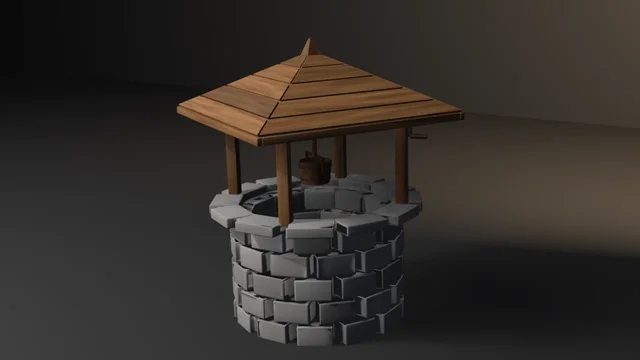
A procedural stone well through UVs, bake, LOD, collider, and Unity glTF, asserting recomputed budgets rather than an API contract.
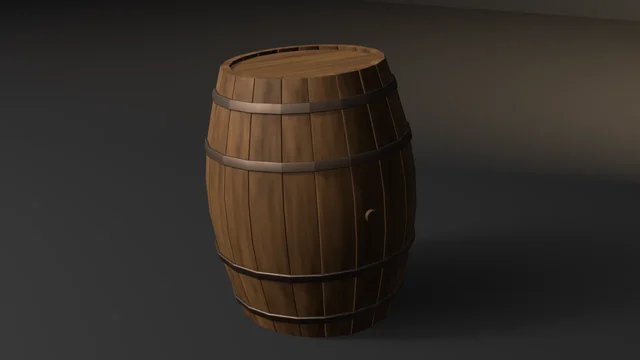
A procedural wine-cask with boarded, croze-seated heads and chord-lofted hoops through UVs, bake, LOD, collider, and Unity glTF, asserting recomputed budgets rather than an API contract.