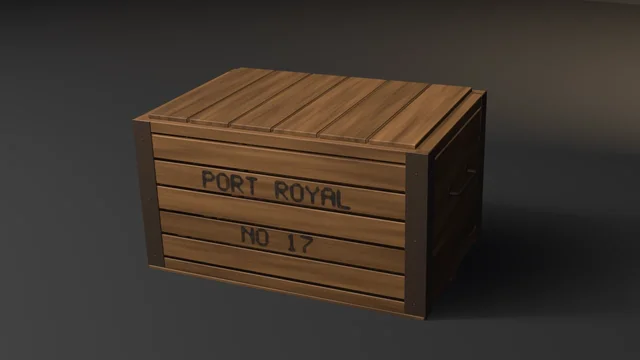
Shipping Crate
A procedural shipping crate through UVs, bake, LOD, collider, and Unity glTF, asserting recomputed budgets rather than an API contract.
showcase/moka-pot/
A procedural three-cup Moka Express-pattern pot — an eight-flat boiler and collector flaring out from an hourglass waist with a proud grip band, a V beak pinched from the rim, a hinged faceted lid and bakelite knob, a two-root bakelite D handle on a riveted fin, and a brass valve — carried through UVs, bake, LOD, compound collider, and Unity glTF, asserting recomputed budgets rather than an API contract.
Rendered headless by the showcase piece itself. Select it to enlarge.
category Household
blender --background --python showcase/moka-pot/moka_pot.py --
A three-cup Moka Express-pattern stovetop pot: an eight-flat boiler that flares out to its foot, a collector that flares out to its rim, both pinching to the screw joint where the collector's threaded skirt stands proud as a grip band, a V beak pinched from the rim, a faceted lid on a hinge knuckle under a bakelite knob, a bakelite D handle rooted in a riveted fin, and a brass safety valve. A showcase piece, not an example — it witnesses no API contract. It asserts that generated geometry meets declared asset budgets, recomputed from the finished mesh.
| Shipped content | Used for |
|---|---|
skills/mesh-editing-and-bmesh | eight-flat lathes, a swept handle, a prism beak and plates, all in one bmesh; bevel pinned to a material slot |
skills/procedural-materials-and-shaders | brushed aluminium, glossy bakelite, brass |
skills/bake-high-to-low | Cycles tangent-space normal bake, high onto low |
skills/engine-export-presets | Unity glTF (export_yup=True) |
skills/depsgraph-and-evaluated-data | evaluated triangle counts for the LOD ratios |
snippets/decimate_to_budget.py | LOD1 / LOD2 COLLAPSE chain |
snippets/convex_hull_collider.py | one hull for the body, spout and lid, one for the handle |
snippets/lod_chain.py | LOD naming and ratio pattern |
examples/mesh-hygiene-audit | hygiene combinatorics (copied, not imported) |
A moka pot is an octagon all the way up. Eight flats, every ring of the boiler and of the collector the same size on all eight sides, every ring centred on one vertical axis. Two ways to break that leave every other budget green:
Neither moves the bounding box (the handle and spout set it), the triangle band, the hygiene audit or a joint. So the piece measures both off the generated vertices:
--odd-facet pushes one flat of the collector's mid ring 2.5 mm out and exits 19 on the spread (1.97 mm measured, with the AABB unchanged). --lean-pot shears the pot 4 mm over its height and exits 19 on the plumb line (3.28 mm measured, spread untouched).
Declared in the script as named constants, recomputed from the generated mesh. Measured values are from Blender 5.2.1; 4.5 and 5.1 were not available locally and are unverified (CI runs the check-only path on both).
| Budget | Band | Measured | ||
|---|---|---|---|---|
| Base triangles | 1200–1400 | 1300 | ||
| LOD1 ratio | 0.32–0.62 | 0.5000 | ||
| LOD2 ratio | 0.10–0.35 | 0.2185 | ||
| Material slots | exactly 3, distinct | 3 | ||
| Aluminium / bakelite / brass faces | ≥ 160 / 280 / 100 | 197 / 388 / 124 | ||
| UV bounds | inside 0..1 | (0.0025, 0.0025)–(0.9975, 0.9975) | ||
| UV AABB overlap | ≤ 1e-5 | 0.000000 | ||
| Outer AABB | 0.1327 × 0.0832 × 0.1600 m ± 0.006 | 0.1327 × 0.0832 × 0.1600 | ||
| Collider triangles | ≤ 200 | 154 (two hulls) | ||
| Normal bake | {'FINISHED'} with image data | {'FINISHED'}, has_data=True | ||
| glTF export | file written, non-empty | ~78 kB | ||
| Hygiene | all zero | loose 0/0, non-manifold 0, zero-area 0, doubles 0, n-gons 0, coplanar cross-shell pairs 0 | ||
| Grounded AABB | \ | zmin\ | ≤ 1e-4, boiler zmin ≤ 1e-4 | 0.00000 |
| Shells | exactly 10, none unclassified | 10 | ||
| Collector seat on the boiler | 2.5–4.5 mm | 3.50 mm | ||
| Handle bite into the fin | 1.0–3.0 mm, each of the two roots | 2.50 mm, both roots | ||
| Knob bite into the lid | 1.0–3.0 mm | 1.80 mm | ||
| Lid seat on the collector | 1.0–3.0 mm | 1.80 mm | ||
| Spout bite and reach | base 0.9–3.0 mm into the wall; tip 10–15 mm beyond it | 1.50 mm; 12.41 mm | ||
| Fin bite | 0.9–3.0 mm into the wall | 1.50 mm | ||
| Hinge bite | 1.5–5.0 mm into the collector | 2.63 mm | ||
| Fasteners (valve, one rivet) | bite 0.8–2.5 mm, proud ≥ 1.2 mm | valve 1.60 / 4.60; rivet 1.20 / 1.80 | ||
| Real size: foot, collector, height | 83.2 / 80.2 / 160.0 mm ± 3 | 83.2 / 80.2 / 160.0 | ||
| Plumb | ≤ 0.8 mm | 0.000 mm | ||
| Eight-fold spread | ≤ 0.2 mm | 0.000 mm |
Real-world size: a three-cup Moka Express is listed at 16.0 cm tall and 9.0 cm across the base point to point, which is 83.2 mm across its flats. The collector rim is read off product photos at 0.96 of the foot, 80.2 mm across its flats. The waist at the joint is 0.76 of the foot. Spout tip to handle is about 133 mm.
(apothem, z) profiles: the distance from the axis to the middle of a flat, which is what a ruler across the pot reads. Vertices every 45° offset by 22.5° put a flat square on each axis, so the fin and the spout each sit on a flat. The boiler flares from a 63.6 mm neck to an 83.2 mm foot; the collector from a 65.2 mm waist to an 80.2 mm rim. Its bottom 9 mm is a vertical skirt 67.6 mm across, 2.0 mm proud of the boiler's neck and 1.2 mm proud of its own waist: the grip band. Every edge over 30° is chamfered 0.7 mm, which includes the 45° ridge between flats, so the ridges catch light.--float-spout first shifted the whole spout in +x, which is into the pot: the bite read 5.5 mm and the failure was a sunk spout, not a floating one. It now lifts the base outward by 4 mm and leaves the tip where it was, so only the bite fails and the reach stays in its band.Every convention in showcase/README.md, and whether it applies here.
| Convention | Applies | How |
|---|---|---|
| Deterministic, budgets declared, assertions recompute | yes | no RNG; every value above is read off the mesh |
| Falsifier fails the budget it targets | yes | table below |
| Hygiene incl. cross-shell coplanar | yes | exit 15; --flush-joint is the coplanar falsifier |
| Named supports | no | one support (the boiler's foot) |
| Joint-fit budgets | yes | shell count, collector seat, both handle roots (exit 17) |
| Fasteners aimed down the host normal | yes | rivet and valve (--float-valve, exit 18) |
| Seat conformance | yes | knob, lid, spout, fin, hinge, fasteners (exit 18) |
| A member is tenoned into its seat, never stood on it | yes | collector, lid, knob, handle |
| Plumb and real-world size | yes | exit 19; plumb, three sizes in metres |
| Mirrored assemblies | no | nothing is paired |
| Even shaping terms | n/a | no shaping function; profiles are piecewise linear |
| Edge treatment: no right angles | yes | 0.7 mm chamfer on every aluminium edge over 30°; the asset-quality right-angle fraction is 0.044 |
| One substance, one slot | yes | aluminium, bakelite, brass |
| Shading is part of the model | yes | see Construction |
| Chamfer n-gon caps, then triangulate | yes | every cap |
| Sort bmesh operator inputs | yes | bevel edges sorted by index |
| Level on the stage; stage scaled | yes | turned about Z only; the 60 m stage and the rig are scaled by 0.2 with light power by 0.04 |
| Keep a falsifier's envelope still | yes | every falsifier moves less than BBOX_TOL (6 mm) |
| Rope, masonry, roofs, hung rings, scatter | no | none present |
Each breaks one pipeline stage so a named budget fails. All ten were run on Blender 5.2.1 and exited the documented code; 4.5.11 and 5.1.2 were not available locally and are unverified.
| Flag | Target budget | Breaks | Exit |
|---|---|---|---|
--skip-decimate | LOD1 ratio | drops the DECIMATE modifiers, LOD1 ratio goes to 1.0000 | 9 |
--stray-vert | mesh hygiene | adds one loose vertex on the axis | 15 |
--flush-joint | coplanar cross-shell pairs | drops the boiler's top plane onto the collector's floor plane; 6 pairs | 15 |
--lift-z | grounded zmin | lifts the whole mesh 20 mm | 16 |
--short-handle | handle bite | stops both handle roots 3 mm outside the fin; no root vertex inside it | 17 |
--float-knob | knob bite | lifts the knob 4 mm; −2.2 mm | 18 |
--float-spout | spout bite | lifts the spout's base 4 mm off the wall, tip fixed; −2.5 mm | 18 |
--float-valve | fastener seat | lifts the valve 3 mm off its flat; −1.4 mm | 18 |
--lean-pot | plumb | shears the pot 4 mm over its height; 3.28 mm drift | 19 |
--odd-facet | eight-fold spread | pushes one mid-ring flat 2.5 mm out; 1.97 mm spread | 19 |
File-local and sequential. 9 is a valid check code. 1 is the FATAL wrapper — a crash, never a named check. 10 is the framing gate and 21 the asset-quality gate (the helper's own code, 11, is spent here on the collider ceiling), both on the render path only.
| Code | Meaning |
|---|---|
| 0 | Success |
| 1 | Uncaught exception (FATAL wrapper) |
| 2 | argparse / usage |
| 3 | Mesh did not build, or has no UV layer |
| 4 | Base triangle count outside band |
| 5 | Material slots, or a material's face floor |
| 6 | UVs outside 0..1 |
| 7 | UV AABB overlap above tolerance |
| 8 | Outer AABB off declared size |
| 9 | LOD1 or LOD2 ratio outside band (--skip-decimate) |
| 10 | Framing gate (examples/gallery_framing.py, render path only) |
| 11 | Collider triangles above ceiling |
| 12 | Normal bake failed or produced no image data |
| 13 | glTF export missing or empty |
| 14 | --output produced no file |
| 15 | Mesh hygiene (--stray-vert, --flush-joint) |
| 16 | Grounded zmin (--lift-z) |
| 17 | Shell count, collector seat, or handle bite (--short-handle) |
| 18 | Knob, lid, spout, fin, hinge or fastener seat (--float-knob, --float-spout, --float-valve) |
| 19 | Real-world size, plumb, or eight-fold spread (--lean-pot, --odd-facet) |
| 21 | Asset-quality gate (examples/gallery_asset_quality.py, render path only) |
# Budget check, no render. ~1 s on a warm 5.2.
blender --background --python moka_pot.py --

# Falsifier: the pot leans at the lid. Must exit 19.
blender --background --python moka_pot.py -- --lean-pot

# Falsifier: one flat out of line with the other seven. Must exit 19.
blender --background --python moka_pot.py -- --odd-facet

# Render the gallery still (EEVEE; --engine cycles on a GPU-less host).
blender --background --python moka_pot.py -- --output moka_pot.webp
Smoke runs the check-only path. It does not pass --output or any falsifier.
Measured on 5.2.1 only. 4.5 and 5.1 are unverified locally.
| Value | 5.2.1 |
|---|---|
| Base triangles | 1300 |
| LOD1 / LOD2 tris | 650 / 284 |
| Face counts (aluminium / bakelite / brass) | 197 / 388 / 124 |
| Outer AABB | 0.1327 × 0.0832 × 0.1600 |
| Collider tris | 154 |
| glTF bytes | 77860 |
"""Game-ready moka pot — a showcase piece, not an example. Asserts budget conformance of a procedural eight-sided aluminium stovetop coffee maker: a tapered lower boiler, an upper collector that flares back out from the waist, a faceted lid under a bakelite knob, a pinched pour spout, and a bakelite handle carried on a riveted bracket, with a brass safety valve on the boiler. Carried through UVs, three materials (aluminium, bakelite, brass), a high-to-low normal bake, an LOD chain, a compound convex collider, and a Unity glTF export. The budget that matters here is the one a moka pot fails invisibly: it has to be an octagon *all the way up*. Eight flats, one per facet, every ring of the boiler and the collector the same size on all eight sides and every ring centred on one vertical axis. A body that is a hair out of round, or leans two millimetres at the lid, still passes the bounding box, the triangle band and the hygiene audit; only a per-ring comparison of the eight sectors, and a plumb line from foot to lid, see it. The piece reads both off the generated vertices and asserts the size in metres against the figures a three-cup pot has in a kitchen. Budgets are declared below and recomputed from the generated result. They are not API-contract witnesses. Each falsifier violates one named budget: ``--skip-decimate`` the LOD-ratio band, ``--stray-vert`` mesh hygiene, ``--lift-z`` grounded zmin, ``--flush-joint`` the coplanar budget at the boiler-collector joint, ``--short-handle`` the handle's bite into its bracket, ``--float-knob`` the knob seat, ``--float-spout`` the spout seat, ``--float-valve`` the valve seat, ``--lean-pot`` the plumb line, ``--odd-facet`` the eight-fold symmetry. No randomness. DECIMATE COLLAPSE triangle counts are not byte-identical across Blender versions — the LOD gate is a ratio band. blender --background --python moka_pot.py -- blender --background --python moka_pot.py -- --lean-pot blender --background --python moka_pot.py -- --output moka_pot.webp """ import argparse import math import os import sys import tempfile import traceback import bmesh import bpy from mathutils import Quaternion, Vector from mathutils.bvhtree import BVHTree from mathutils.kdtree import KDTree _REPO = os.path.abspath( os.path.join(os.path.dirname(os.path.abspath(__file__)), os.pardir, os.pardir) ) sys.path.insert(0, os.path.join(_REPO, "examples")) sys.dont_write_bytecode = True import gallery_asset_quality # noqa: E402 import gallery_framing # noqa: E402 # Eight flats, one facet each. A vertex every 45 degrees offset by half a # step puts a flat square on each axis, so the handle bracket sits on a # flat and the spout opposite it on another. SIDES = 8 PHASE = math.pi / SIDES COS_HALF = math.cos(math.pi / SIDES) # Profiles are (apothem, z): the distance from the axis to the middle of a # flat, which is what a ruler across the pot reads. Both ends of each list # are the flat caps. # The Moka Express is an hourglass: the boiler flares out to its foot and # the collector flares out to its rim, both pinching to the screw joint, # where the collector's threaded skirt stands proud as a grip band. The # waist reads about three quarters of the foot (0.76 here). BOILER = [(0.0395, 0.0000), (0.0414, 0.0025), (0.0416, 0.0045), (0.0312, 0.0615), (0.0318, 0.0630), (0.0318, 0.0660)] BOILER_TAPER = (2, 3) # the rings bounding the boiler's flank UPPER = [(0.0330, 0.0625), (0.0338, 0.0638), (0.0338, 0.0700), (0.0326, 0.0714), (0.0397, 0.1290), (0.0401, 0.1303), (0.0401, 0.1318), (0.0395, 0.1333)] UPPER_FLARE = (3, 4) # the rings bounding the collector's flank LID = [(0.0380, 0.1315), (0.0384, 0.1322), (0.0384, 0.1350), (0.0376, 0.1360), (0.0320, 0.1370), (0.0195, 0.1385), (0.0150, 0.1398)] # Knob: a turned bakelite finial on a neck; (radius, z), round not faceted. KNOB = [(0.0095, 0.1380), (0.0098, 0.1405), (0.0085, 0.1420), (0.0115, 0.1445), (0.0135, 0.1485), (0.0136, 0.1520), (0.0124, 0.1555), (0.0090, 0.1585), (0.0050, 0.1600)] KNOB_SIDES = 12 CHAMFER = 0.0007 CHAMFER_ANGLE = math.radians(30.0) CAP_ANGLE = math.radians(60.0) CHAMFER_BAKE = 0.0012 CHAMFER_BRASS = 0.0004 # Spout: a V beak pinched out of the -x flat at the rim. In plan a # triangle whose base spans the flat and whose apex is a sharp vertical # edge; its underside sweeps down the wall, its lip rises to the tip. SPOUT_BITE = 0.0015 SPOUT_REACH = 0.0125 SPOUT_TOP = 0.1300 SPOUT_LIP = 0.1312 SPOUT_BASE_BOT = 0.1090 SPOUT_TIP_BOT = 0.1272 SPOUT_HALF_BASE = 0.0150 FLOAT_SPOUT = 0.0040 # outward, off the wall # Bracket on the +x flat: a fin that follows the wall's flare, with two # brass rivets between the handle's two roots. BRACKET_Z = (0.0722, 0.1275) BRACKET_HALF = 0.0110 BRACKET_BITE = 0.0015 BRACKET_OUT = 0.0045 # One rivet, centred in the D's opening. Two would have to share the fin's # plane 8.5 mm apart, a cross-shell coplanar pair by the hygiene metric. RIVET_ZS = (0.1020,) RIVET = [(0.0030, -0.0012), (0.0030, 0.0004), (0.0024, 0.0014), (0.0014, 0.0018)] # Handle: a bakelite D loop in the xz plane, rooted in the fin at two # stations; each root cap is cut parallel to the fin's raked face. HANDLE_BITE = 0.0025 SHORT_HANDLE = 0.0030 # The D's centreline is a superellipse half: REACH out from the fin, HALF # up and down from HANDLE_ZC, squared off by HANDLE_POW < 1. Its roots # leave the fin horizontally at HANDLE_ZC +- HANDLE_HALF. HANDLE_ZC = 0.1000 HANDLE_HALF = 0.0205 HANDLE_REACH = 0.0340 HANDLE_POW = 0.55 HANDLE_RINGS = 22 HANDLE_SIDES = 12 # Hinge knuckle on top of the fin, joining the lid's edge to the rim. HINGE_X = (0.0368, 0.0478) HINGE_Z = (0.1268, 0.1356) HINGE_HALF = 0.0060 # Safety valve on the boiler's 225-degree flat (front left of the hero). VALVE_Z = 0.034 VALVE_DEG = 225.0 VALVE = [(0.0050, -0.0016), (0.0052, 0.0014), (0.0046, 0.0030), (0.0028, 0.0043), (0.0014, 0.0046)] FASTENER_SIDES = 12 FLOAT_VALVE = 0.0030 FLOAT_KNOB = 0.0040 # Lean: the falsifier shears the pot sideways in proportion to height. LEAN = 0.0040 ODD_FACET = 0.0025 BBOX_TOL = 0.006 OUTER_SIZE = (0.1327, 0.0832, 0.1600) BASE_TRIS_MIN = 1200 BASE_TRIS_MAX = 1400 LOD1_RATIO_MIN = 0.32 LOD1_RATIO_MAX = 0.62 LOD2_RATIO_MIN = 0.10 LOD2_RATIO_MAX = 0.35 LOD1_TARGET = 0.50 LOD2_TARGET = 0.22 MATERIAL_COUNT = 3 FACE_FLOORS = {0: 160, 1: 280, 2: 100} UV_EPS = 1e-4 UV_OVERLAP_MAX = 1e-5 COLLIDER_TRIS_MAX = 200 BAKE_RES = 512 CAGE_EXTRUSION = 0.002 ZMIN_EPS = 1e-4 DOUBLES_EPS = 1e-5 AREA_EPS = 1e-12 COPLANAR_NORMAL_EPS = 1e-4 COPLANAR_PLANE_EPS = 1e-4 COPLANAR_CENTRE_MAX = 0.02 LIFT_Z = 0.02 SHELLS_EXPECTED = 10 UPPER_SEAT_MIN = 0.0025 UPPER_SEAT_MAX = 0.0045 LID_SEAT_MIN = 0.0010 LID_SEAT_MAX = 0.0030 KNOB_BITE_MIN = 0.0010 KNOB_BITE_MAX = 0.0030 SPOUT_BITE_MIN = 0.0009 SPOUT_BITE_MAX = 0.0030 SPOUT_REACH_MIN = 0.0100 SPOUT_REACH_MAX = 0.0150 BRACKET_BITE_MIN = 0.0009 BRACKET_BITE_MAX = 0.0030 HANDLE_BITE_MIN = 0.0010 HANDLE_BITE_MAX = 0.0030 HINGE_BITE_MIN = 0.0015 HINGE_BITE_MAX = 0.0050 FASTENER_BITE_MIN = 0.0008 FASTENER_BITE_MAX = 0.0025 FASTENER_PROUD_MIN = 0.0012 # Real-world size of a three-cup Moka Express, metres: 16.0 cm tall and # 9.0 cm across the foot point to point (retailer listings), which is # 8.32 cm across its flats. The collector rim is read off product photos # at 0.96 of the foot: 8.02 cm across its flats. REAL_FOOT_FLATS = 0.0832 REAL_COLLECTOR_FLATS = 0.0802 REAL_TOTAL_H = 0.1600 REAL_TOL = 0.003 PLUMB_MAX = 0.0008 SYM_EPS = 2e-4 ALU_IDX = 0 BAKE_IDX = 1 BRASS_IDX = 2 def eevee_engine_id(): """EEVEE id: 'BLENDER_EEVEE' on 5.0+, 'BLENDER_EEVEE_NEXT' on 4.2-4.5.""" return "BLENDER_EEVEE" if bpy.app.version >= (5, 0, 0) else "BLENDER_EEVEE_NEXT" def fail(msg, code): print(f"FAIL[{code}]: {msg}", file=sys.stderr) return code def triangle_count(mesh): mesh.calc_loop_triangles() return len(mesh.loop_triangles) def evaluated_triangle_count(obj): deps = bpy.context.evaluated_depsgraph_get() ev = obj.evaluated_get(deps) mesh = ev.to_mesh() try: mesh.calc_loop_triangles() return len(mesh.loop_triangles) finally: ev.to_mesh_clear() def wall_a(profile, z): """Apothem of a profile at height ``z``, linear between its rings.""" for (a0, z0), (a1, z1) in zip(profile, profile[1:]): if z0 <= z <= z1 and z1 > z0: return a0 + (a1 - a0) * (z - z0) / (z1 - z0) raise ValueError(f"z={z} outside profile") # --- construction ----------------------------------------------------------- def new_island(ctx): ctx["next"] += 1 return ctx["next"] def stamp(ctx, face, island, uvmap): face[ctx["isl"]] = island for loop in face.loops: loop[ctx["uv"]].uv = uvmap[loop.vert] def loft(bm, rings, mat_idx, ctx): """Quads between consecutive closed rings of equal length; one strip island.""" island = new_island(ctx) n = len(rings[0]) arc = [0.0] for a, b in zip(rings, rings[1:]): ca = sum((v.co for v in a), Vector()) / n cb = sum((v.co for v in b), Vector()) / n arc.append(arc[-1] + (cb - ca).length) for k in range(len(rings) - 1): a, b = rings[k], rings[k + 1] for i in range(n): j = (i + 1) % n f = bm.faces.new((a[i], a[j], b[j], b[i])) f.material_index = mat_idx stamp(ctx, f, island, {a[i]: (arc[k], i / n), a[j]: (arc[k], (i + 1) / n), b[j]: (arc[k + 1], (i + 1) / n), b[i]: (arc[k + 1], i / n)}) def cap_rings(bm, rings, mat_idx): """Close both end rings of a solid with one n-gon each (triangulated later).""" for ring, flip in ((rings[0], True), (rings[-1], False)): f = bm.faces.new(tuple(reversed(ring)) if flip else tuple(ring)) f.material_index = mat_idx def lathe_solid(bm, rings_pts, mat_idx, ctx, verts_out): """A closed solid from rings of 3D points; side quads plus two n-gon caps.""" rings = [[bm.verts.new(p) for p in pts] for pts in rings_pts] loft(bm, rings, mat_idx, ctx) cap_rings(bm, rings, mat_idx) for r in rings: verts_out.extend(r) return rings def octagon(a, z, dx=0.0): r = a / COS_HALF return [(dx + r * math.cos(PHASE + 2.0 * math.pi * k / SIDES), r * math.sin(PHASE + 2.0 * math.pi * k / SIDES), z) for k in range(SIDES)] def add_faceted(bm, profile, ctx, verts_out, odd=False): """An eight-flat body of revolution from an (apothem, z) profile.""" rings_pts = [octagon(a, z) for a, z in profile] if odd: # Push the +y flat of the mid-height ring out: one facet no longer # matches the seven others. mid = rings_pts[len(rings_pts) // 2] for k, p in enumerate(mid): if abs(math.atan2(p[1], p[0]) - math.pi / 2.0) < math.pi / SIDES + 1e-6: mid[k] = (p[0], p[1] + ODD_FACET, p[2]) return lathe_solid(bm, rings_pts, ALU_IDX, ctx, verts_out) def add_round(bm, profile, ctx, mat_idx, verts_out, lift=0.0): """A smooth turned body from an (r, z) profile.""" rings_pts = [[(r * math.cos(2.0 * math.pi * k / KNOB_SIDES), r * math.sin(2.0 * math.pi * k / KNOB_SIDES), z + lift) for k in range(KNOB_SIDES)] for r, z in profile] return lathe_solid(bm, rings_pts, mat_idx, ctx, verts_out) def add_spout(bm, upper_wall, float_spout, verts_out): """A V beak on the -x flat: a triangular prism, base driven SPOUT_BITE into the wall.""" # A floated spout lifts its base off the wall and leaves the tip where it # was, so only the bite moves and the reach stays in its band. shift = -FLOAT_SPOUT if float_spout else 0.0 zb, zt, zk, zl = SPOUT_BASE_BOT, SPOUT_TOP, SPOUT_TIP_BOT, SPOUT_LIP def base_x(z): return -(wall_a(upper_wall, z) - SPOUT_BITE) + shift tip_x = -(wall_a(upper_wall, zt) + SPOUT_REACH) hb = SPOUT_HALF_BASE # Each triangle CCW from above: -y base, apex, +y base. lo = [bm.verts.new(p) for p in ((base_x(zb), -hb, zb), (tip_x, 0.0, zk), (base_x(zb), hb, zb))] hi = [bm.verts.new(p) for p in ((base_x(zt), -hb, zt), (tip_x, 0.0, zl), (base_x(zt), hb, zt))] faces = [bm.faces.new(tuple(reversed(lo))), bm.faces.new(tuple(hi))] for i in range(3): j = (i + 1) % 3 faces.append(bm.faces.new((lo[i], lo[j], hi[j], hi[i]))) for f in faces: f.material_index = ALU_IDX verts_out.extend(lo + hi) def plate_x(z, out): return wall_a(UPPER, z) + out def add_bracket(bm, verts_out): """A plate on the +x flat that follows the wall's rake.""" z0, z1 = BRACKET_Z h = BRACKET_HALF inner = lambda z: wall_a(UPPER, z) - BRACKET_BITE # noqa: E731 outer = lambda z: wall_a(UPPER, z) + BRACKET_OUT # noqa: E731 lo = [bm.verts.new(p) for p in ((inner(z0), -h, z0), (outer(z0), -h, z0), (outer(z0), h, z0), (inner(z0), h, z0))] hi = [bm.verts.new(p) for p in ((inner(z1), -h, z1), (outer(z1), -h, z1), (outer(z1), h, z1), (inner(z1), h, z1))] # Quad rings in the xy plane, one at each end, lofted along z. faces = [bm.faces.new(tuple(reversed(lo))), bm.faces.new(tuple(hi))] for i in range(4): j = (i + 1) % 4 faces.append(bm.faces.new((lo[i], lo[j], hi[j], hi[i]))) for f in faces: f.material_index = ALU_IDX verts_out.extend(lo + hi) def section(t, w): """A rounded rectangle, ``t`` thick along the path normal and ``w`` wide in y.""" pts = [] for k in range(HANDLE_SIDES): ang = 2.0 * math.pi * k / HANDLE_SIDES c, s = math.cos(ang), math.sin(ang) pts.append((math.copysign(abs(c) ** 0.55, c) * t * 0.5, math.copysign(abs(s) ** 0.55, s) * w * 0.5)) return pts def handle_rings(short): # Both root caps sit HANDLE_BITE inside the fin's outer face; a short # handle stops SHORT_HANDLE outside it instead. off = SHORT_HANDLE if short else -HANDLE_BITE def centre(theta): c, s = math.cos(theta), math.sin(theta) z = HANDLE_ZC + HANDLE_HALF * math.copysign(abs(s) ** HANDLE_POW, s) return Vector((plate_x(z, BRACKET_OUT) + off + HANDLE_REACH * abs(c) ** HANDLE_POW, z)) rings = [] for i in range(HANDLE_RINGS): s = i / (HANDLE_RINGS - 1) theta = math.pi * (0.5 - s) pos = centre(theta) # Tangent by central difference; at the roots the fin-ward step is # replaced by the outward one so the cap faces straight into the fin. h = 1e-4 tan = (centre(theta - h) - centre(theta + h)).normalized() if i in (0, HANDLE_RINGS - 1): tan = Vector((1.0 if i == 0 else -1.0, 0.0)) # Slim at the roots, fuller through the grip at the bottom of the D. t = 0.0115 + 0.0030 * math.sin(math.pi * s) + 0.0010 * s w = 0.0130 + 0.0030 * math.sin(math.pi * s) n = Vector((-tan.y, tan.x)) pts = [] for u, v in section(t, w): q = pos + n * u pts.append([q.x, v, q.y]) if i in (0, HANDLE_RINGS - 1): # Cut the root cap parallel to the fin's raked outer face. for p in pts: p[0] = plate_x(p[2], BRACKET_OUT) + off rings.append([tuple(p) for p in pts]) return rings def add_fastener(bm, origin, axis, profile, ctx, mat_idx, verts_out): """A turned head whose axis is ``axis`` (the host normal), foot at h < 0.""" axis = axis.normalized() q = Vector((0.0, 0.0, 1.0)).rotation_difference(axis) rings = [] for r, h in profile: pts = [] for k in range(FASTENER_SIDES): ang = 2.0 * math.pi * k / FASTENER_SIDES pts.append(tuple(origin + q @ Vector((r * math.cos(ang), r * math.sin(ang), h)))) rings.append(pts) lathe_solid(bm, rings, mat_idx, ctx, verts_out) def add_hinge(bm, verts_out): x0, x1 = HINGE_X z0, z1 = HINGE_Z h = HINGE_HALF lo = [bm.verts.new(p) for p in ((x0, -h, z0), (x1, -h, z0), (x1, h, z0), (x0, h, z0))] hi = [bm.verts.new(p) for p in ((x0, -h, z1), (x1, -h, z1), (x1, h, z1), (x0, h, z1))] faces = [bm.faces.new(tuple(reversed(lo))), bm.faces.new(tuple(hi))] for i in range(4): j = (i + 1) % 4 faces.append(bm.faces.new((lo[i], lo[j], hi[j], hi[i]))) for f in faces: f.material_index = ALU_IDX verts_out.extend(lo + hi) def bevel_pass(bm, verts, mat_idx, offset, angle): bm.edges.index_update() edges = sorted({e for v in verts if v.is_valid for e in v.link_edges if len(e.link_faces) == 2 and e.calc_face_angle(0.0) > angle}, key=lambda e: e.index) if edges: bmesh.ops.bevel(bm, geom=edges, offset=offset, segments=1, profile=0.5, affect="EDGES", clamp_overlap=True, material=mat_idx) def build_pot_mesh( name, stray_vert=False, flush_joint=False, short_handle=False, float_knob=False, float_spout=False, float_valve=False, odd_facet=False, ): bm = bmesh.new() try: ctx = {"uv": bm.loops.layers.uv.new("UVMap"), "isl": bm.faces.layers.int.new("UVIsland"), "next": 0} alu, bake, brass = [], [], [] boiler = list(BOILER) if flush_joint: # The boiler's top plane drops onto the collector's floor plane. mid = 0.5 * (boiler[-3][1] + UPPER[0][1]) boiler[-2:] = [(boiler[-1][0], mid), (boiler[-1][0], UPPER[0][1])] add_faceted(bm, boiler, ctx, alu) add_faceted(bm, UPPER, ctx, alu, odd=odd_facet) add_faceted(bm, LID, ctx, alu) add_spout(bm, UPPER, float_spout, alu) add_bracket(bm, alu) add_hinge(bm, alu) add_round(bm, KNOB, ctx, BAKE_IDX, bake, lift=FLOAT_KNOB if float_knob else 0.0) rings = handle_rings(short_handle) lathe_solid(bm, rings, BAKE_IDX, ctx, bake) # Rivets on the bracket's outer face, aimed down its normal. (a0, z0), (a1, z1) = UPPER[UPPER_FLARE[0]], UPPER[UPPER_FLARE[1]] slope = (a1 - a0) / (z1 - z0) rake = Vector((1.0, 0.0, -slope)) for z in RIVET_ZS: org = Vector((plate_x(z, BRACKET_OUT), 0.0, z)) add_fastener(bm, org, rake, RIVET, ctx, BRASS_IDX, brass) # Valve on the boiler's 225-degree flat, normal read off the taper. ang = math.radians(VALVE_DEG) nh = Vector((math.cos(ang), math.sin(ang), 0.0)) (a0, z0), (a1, z1) = BOILER[BOILER_TAPER[0]], BOILER[BOILER_TAPER[1]] bslope = (a1 - a0) / (z1 - z0) axis = nh + Vector((0.0, 0.0, -bslope)) org = nh * wall_a(BOILER, VALVE_Z) + Vector((0.0, 0.0, VALVE_Z)) if float_valve: org = org + axis.normalized() * FLOAT_VALVE add_fastener(bm, org, axis, VALVE, ctx, BRASS_IDX, brass) bevel_pass(bm, alu, ALU_IDX, CHAMFER, CHAMFER_ANGLE) bevel_pass(bm, bake, BAKE_IDX, CHAMFER_BAKE, CAP_ANGLE) bevel_pass(bm, brass, BRASS_IDX, CHAMFER_BRASS, CAP_ANGLE) bmesh.ops.triangulate(bm, faces=[f for f in bm.faces if len(f.verts) > 4]) if stray_vert: bm.verts.new((0.0, 0.0, 0.05)) bmesh.ops.recalc_face_normals(bm, faces=list(bm.faces)) for f in bm.faces: # Aluminium is faceted; turned bakelite and brass are smooth. f.smooth = f.material_index != ALU_IDX for e in bm.edges: if len(e.link_faces) == 2 and e.calc_face_angle(0.0) > math.radians(35.0): e.smooth = False pack_uvs(bm, ctx) bm.faces.layers.int.remove(ctx["isl"]) me = bpy.data.meshes.new(name) bm.to_mesh(me) me.update() finally: bm.free() obj = bpy.data.objects.new(name, me) bpy.context.collection.objects.link(obj) return obj def pack_uvs(bm, ctx, margin=0.06): """One grid cell per UV island: strip islands by their layer tag, else a face each.""" uv, isl = ctx["uv"], ctx["isl"] bm.faces.index_update() islands, order = {}, [] for face in bm.faces: key = ("s", face[isl]) if face[isl] else ("f", face.index) if key not in islands: islands[key] = [] order.append(key) islands[key].append(face) cols = max(1, math.ceil(math.sqrt(len(order)))) rows = max(1, math.ceil(len(order) / cols)) cw, ch = 1.0 / cols, 1.0 / rows pu, pv = margin * cw * 0.5, margin * ch * 0.5 for idx, key in enumerate(order): faces = islands[key] coords = {} for face in faces: if face[isl]: coords[face.index] = [tuple(loop[uv].uv) for loop in face.loops] continue nrm = face.normal ax, ay, az = abs(nrm.x), abs(nrm.y), abs(nrm.z) pts = [] for loop in face.loops: co = loop.vert.co if az >= ax and az >= ay: pts.append((co.x, co.y)) elif ax >= ay: pts.append((co.y, co.z)) else: pts.append((co.x, co.z)) coords[face.index] = pts allc = [c for cs in coords.values() for c in cs] minx, maxx = min(c[0] for c in allc), max(c[0] for c in allc) miny, maxy = min(c[1] for c in allc), max(c[1] for c in allc) dx, dy = max(maxx - minx, 1e-8), max(maxy - miny, 1e-8) ou, ov = (idx % cols) * cw + pu, (idx // cols) * ch + pv for face in faces: for loop, (x, y) in zip(face.loops, coords[face.index]): loop[uv].uv = (ou + (x - minx) / dx * (cw - 2 * pu), ov + (y - miny) / dy * (ch - 2 * pv)) # --- surface ---------------------------------------------------------------- def _sock(sockets, identifier): return next(sk for sk in sockets if sk.identifier == identifier) def aluminium_material(name): """Cast aluminium: light grey, brushed roughness, a warm cast in the dark.""" mat = bpy.data.materials.new(name) mat.use_nodes = True # noqa: deprecated in 6.0, still the only path on 4.5 nt = mat.node_tree bsdf = nt.nodes["Principled BSDF"] tc = nt.nodes.new("ShaderNodeTexCoord") mapping = nt.nodes.new("ShaderNodeMapping") mapping.inputs["Scale"].default_value = (60.0, 60.0, 4.0) nt.links.new(tc.outputs["Object"], mapping.inputs["Vector"]) noise = nt.nodes.new("ShaderNodeTexNoise") noise.inputs["Scale"].default_value = 1.0 noise.inputs["Detail"].default_value = 5.0 nt.links.new(mapping.outputs["Vector"], noise.inputs["Vector"]) ramp = nt.nodes.new("ShaderNodeValToRGB") ramp.color_ramp.elements[0].position = 0.35 ramp.color_ramp.elements[0].color = (0.60, 0.61, 0.64, 1.0) ramp.color_ramp.elements[1].position = 0.70 ramp.color_ramp.elements[1].color = (0.80, 0.80, 0.82, 1.0) nt.links.new(noise.outputs["Fac"], ramp.inputs["Fac"]) nt.links.new(ramp.outputs["Color"], bsdf.inputs["Base Color"]) bsdf.inputs["Metallic"].default_value = 0.78 rmap = nt.nodes.new("ShaderNodeMapRange") rmap.inputs["To Min"].default_value = 0.22 rmap.inputs["To Max"].default_value = 0.36 nt.links.new(noise.outputs["Fac"], rmap.inputs["Value"]) nt.links.new(rmap.outputs["Result"], bsdf.inputs["Roughness"]) return mat def bakelite_material(name): """Bakelite: near-black, glossy, with a faint warm brown in the grazing light.""" mat = bpy.data.materials.new(name) mat.use_nodes = True # noqa: deprecated in 6.0, still the only path on 4.5 nt = mat.node_tree bsdf = nt.nodes["Principled BSDF"] tc = nt.nodes.new("ShaderNodeTexCoord") noise = nt.nodes.new("ShaderNodeTexNoise") noise.inputs["Scale"].default_value = 90.0 noise.inputs["Detail"].default_value = 3.0 nt.links.new(tc.outputs["Object"], noise.inputs["Vector"]) ramp = nt.nodes.new("ShaderNodeValToRGB") ramp.color_ramp.elements[0].position = 0.40 ramp.color_ramp.elements[0].color = (0.010, 0.009, 0.009, 1.0) ramp.color_ramp.elements[1].position = 0.65 ramp.color_ramp.elements[1].color = (0.028, 0.024, 0.022, 1.0) nt.links.new(noise.outputs["Fac"], ramp.inputs["Fac"]) nt.links.new(ramp.outputs["Color"], bsdf.inputs["Base Color"]) rough = nt.nodes.new("ShaderNodeMapRange") rough.inputs["To Min"].default_value = 0.14 rough.inputs["To Max"].default_value = 0.24 nt.links.new(noise.outputs["Fac"], rough.inputs["Value"]) nt.links.new(rough.outputs["Result"], bsdf.inputs["Roughness"]) return mat def brass_material(name): mat = bpy.data.materials.new(name) mat.use_nodes = True # noqa: deprecated in 6.0, still the only path on 4.5 nt = mat.node_tree bsdf = nt.nodes["Principled BSDF"] bsdf.inputs["Base Color"].default_value = (0.78, 0.52, 0.17, 1.0) bsdf.inputs["Metallic"].default_value = 1.0 bsdf.inputs["Roughness"].default_value = 0.34 return mat def pot_materials(): return (aluminium_material("PotAluminium"), bakelite_material("PotBakelite"), brass_material("PotBrass")) def assign_slots(obj, mats): slots = obj.data.materials for i, mat in enumerate(mats): if i < len(slots): slots[i] = mat else: slots.append(mat) # --- measurement ------------------------------------------------------------ def world_bbox(obj): corners = [obj.matrix_world @ Vector(c) for c in obj.bound_box] xs, ys, zs = [c.x for c in corners], [c.y for c in corners], [c.z for c in corners] return (min(xs), min(ys), min(zs), max(xs), max(ys), max(zs)) def uv_stats(mesh): uv = mesh.uv_layers.active if uv is None: return 0.0, 0.0, 1.0, 1.0, 0.0, 0 data = uv.data us = [loop.uv[0] for loop in data] vs = [loop.uv[1] for loop in data] aabbs = [] for poly in mesh.polygons: pu = [data[i].uv[0] for i in poly.loop_indices] pv = [data[i].uv[1] for i in poly.loop_indices] aabbs.append((min(pu), min(pv), max(pu), max(pv))) span = max(1e-6, max(a[2] - a[0] for a in aabbs), max(a[3] - a[1] for a in aabbs)) buckets = {} for i, a in enumerate(aabbs): for c in range(int(a[0] // span), int(a[2] // span) + 1): for r in range(int(a[1] // span), int(a[3] // span) + 1): buckets.setdefault((c, r), []).append(i) overlap = 0.0 seen = set() for members in buckets.values(): for ii in range(len(members)): for jj in range(ii + 1, len(members)): i, j = members[ii], members[jj] key = (i, j) if i < j else (j, i) if key in seen: continue seen.add(key) a, b = aabbs[i], aabbs[j] overlap += max(0.0, min(a[2], b[2]) - max(a[0], b[0])) * max( 0.0, min(a[3], b[3]) - max(a[1], b[1])) return min(us), min(vs), max(us), max(vs), overlap, len(aabbs) def face_area(me, poly): idxs = poly.vertices v0 = me.vertices[idxs[0]].co area = 0.0 for i in range(1, len(idxs) - 1): area += (me.vertices[idxs[i]].co - v0).cross(me.vertices[idxs[i + 1]].co - v0).length * 0.5 return area def hygiene_audit(me): ngons = sum(1 for p in me.polygons if len(p.vertices) > 4) zero_area = sum(1 for p in me.polygons if face_area(me, p) <= AREA_EPS) bm = bmesh.new() try: bm.from_mesh(me) loose_v = sum(1 for v in bm.verts if len(v.link_edges) == 0) loose_e = sum(1 for e in bm.edges if len(e.link_faces) == 0) nonman = sum(1 for e in bm.edges if not e.is_manifold) ret = bmesh.ops.find_doubles(bm, verts=list(bm.verts), dist=DOUBLES_EPS) doubles = len(ret.get("targetmap") or {}) edge90 = 0 for e in bm.edges: if len(e.link_faces) == 2 and abs( math.degrees(e.calc_face_angle(0.0)) - 90.0) < 5.0: edge90 += 1 finally: bm.free() return {"ngons": ngons, "loose_v": loose_v, "loose_e": loose_e, "nonman": nonman, "zero_area": zero_area, "doubles": doubles, "edge90": edge90} def shells(me): neighbors = [[] for _ in range(len(me.vertices))] for edge in me.edges: a, b = edge.vertices neighbors[a].append(b) neighbors[b].append(a) seen = [False] * len(me.vertices) groups = [] for start in range(len(me.vertices)): if seen[start]: continue seen[start] = True stack = [start] group = [] while stack: cur = stack.pop() group.append(cur) for nxt in neighbors[cur]: if not seen[nxt]: seen[nxt] = True stack.append(nxt) groups.append(group) return groups def zfight_pairs(me): """Coplanar face pairs from *different shells* (copied from showcase/grindstone).""" owner = {} for si, g in enumerate(shells(me)): for vi in g: owner[vi] = si faces = [(p.normal.copy(), p.center.copy(), owner.get(p.vertices[0], -1)) for p in me.polygons] kd = KDTree(len(faces)) for i, (_n, c, _s) in enumerate(faces): kd.insert(c, i) kd.balance() hits = 0 for i, (ni, ci, si) in enumerate(faces): for _co, j, _d in kd.find_range(ci, COPLANAR_CENTRE_MAX): if j <= i: continue nj, cj, sj = faces[j] if si == sj: continue if abs(abs(ni.dot(nj)) - 1.0) > COPLANAR_NORMAL_EPS: continue if abs(ni.dot(cj - ci)) > COPLANAR_PLANE_EPS: continue hits += 1 return hits def classify(me): """Name each shell by material and place; ``other`` collects strays.""" mats = {} for p in me.polygons: for i in p.vertices: mats.setdefault(i, p.material_index) names = ("boiler", "upper", "lid", "spout", "bracket", "hinge", "knob", "handle", "rivet", "valve", "other") out = {k: [] for k in names} for g in shells(me): pts = [me.vertices[i].co.copy() for i in g] lo = Vector((min(p.x for p in pts), min(p.y for p in pts), min(p.z for p in pts))) hi = Vector((max(p.x for p in pts), max(p.y for p in pts), max(p.z for p in pts))) c = sum(pts, Vector()) / len(pts) rec = {"g": g, "pts": pts, "lo": lo, "hi": hi, "ext": hi - lo, "c": c} e = rec["ext"] m = mats.get(g[0], -1) if m == ALU_IDX: if e.x > 0.06 and e.z > 0.05 and lo.z < 0.001: key = "boiler" elif e.x > 0.06 and e.z > 0.05: key = "upper" elif e.x > 0.06 and lo.z > 0.1: key = "lid" elif c.x < -0.03: key = "spout" elif c.x > 0.03 and lo.z < 0.1: key = "bracket" elif c.x > 0.03: key = "hinge" else: key = "other" elif m == BAKE_IDX: key = "knob" if lo.z > 0.12 else ("handle" if e.x > 0.03 else "other") elif m == BRASS_IDX: key = "valve" if c.z < 0.06 else "rivet" else: key = "other" out[key].append(rec) return out def shell_bvh(me, rec): group = set(rec["g"]) remap = {v: i for i, v in enumerate(sorted(group))} verts = [me.vertices[v].co.copy() for v in sorted(group)] polys = [tuple(remap[v] for v in p.vertices) for p in me.polygons if all(v in group for v in p.vertices)] return BVHTree.FromPolygons(verts, polys) def depth_along(bvh, origin, direction): """Signed distance from ``origin`` out to the host surface along ``direction``. Positive when ``origin`` sits inside the host (the ray exits through its skin), negative when it is outside and the surface lies behind. """ hit = bvh.ray_cast(origin, direction) if hit[0] is not None: return hit[3] hit = bvh.ray_cast(origin, -direction) if hit[0] is not None: return -hit[3] return -99.0 def depth_band(bvh, pts, direction): ds = [depth_along(bvh, p, direction) for p in pts] return (min(ds, default=-99.0), max(ds, default=-99.0)) def symmetry_spread(rec): """Worst spread between the eight sectors' outermost radius, ring by ring.""" rings = {} for p in rec["pts"]: rings.setdefault(round(p.z, 5), []).append(p) worst = 0.0 for pts in rings.values(): if len(pts) < SIDES: continue cx = sum(p.x for p in pts) / len(pts) cy = sum(p.y for p in pts) / len(pts) sect = {} for p in pts: ang = math.atan2(p.y - cy, p.x - cx) - PHASE k = int(round(ang / (2.0 * math.pi / SIDES))) % SIDES r = math.hypot(p.x - cx, p.y - cy) sect[k] = max(sect.get(k, 0.0), r) if len(sect) == SIDES: worst = max(worst, max(sect.values()) - min(sect.values())) return worst def slab_centre(pts, z0, z1): sel = [p for p in pts if z0 <= p.z <= z1] if not sel: return None return (sum(p.x for p in sel) / len(sel), sum(p.y for p in sel) / len(sel)) def pot_audit(me): parts = classify(me) out = {k: len(v) for k, v in parts.items()} one = {k: (v[0] if v else None) for k, v in parts.items()} boiler, upper, lid = one["boiler"], one["upper"], one["lid"] out["shells"] = len(shells(me)) # Joints along the axis: the collector onto the boiler, lid onto the # collector, knob into the lid. out["upper_seat"] = (boiler["hi"].z - upper["lo"].z) if boiler and upper else -99.0 out["lid_seat"] = (upper["hi"].z - lid["lo"].z) if upper and lid else -99.0 out["knob_bite"] = (lid["hi"].z - one["knob"]["lo"].z) if lid and one["knob"] else -99.0 # Spout, bracket, handle, hinge: rays against the host read off the mesh. nox = Vector((-1.0, 0.0, 0.0)) pox = Vector((1.0, 0.0, 0.0)) out["spout_bite"] = (-99.0, -99.0) out["spout_reach"] = -99.0 out["bracket_bite"] = (-99.0, -99.0) out["handle_bite"] = (-99.0, -99.0) out["hinge_bite"] = (-99.0, -99.0) if upper: ub = shell_bvh(me, upper) sp = one["spout"] if sp: base = [p for p in sp["pts"] if p.x > sp["hi"].x - 0.0025] out["spout_bite"] = depth_band(ub, base, nox) out["spout_reach"] = upper["lo"].x - sp["lo"].x br = one["bracket"] if br: # The fin rakes further than it is thick, so split its faces by # signed distance off the collector's surface, not by world x. sd = [] for p in br["pts"]: loc, nrm, _i, _d = ub.find_nearest(p) sd.append((p - loc).dot(nrm) if loc is not None else 0.0) cut = 0.5 * (min(sd) + max(sd)) inner = [p for p, s in zip(br["pts"], sd) if s < cut] out["bracket_bite"] = depth_band(ub, inner, pox) hg = one["hinge"] if hg: inner = [p for p in hg["pts"] if p.x < hg["lo"].x + 0.0015 and p.z < upper["hi"].z - 0.001] out["hinge_bite"] = depth_band(ub, inner, pox) br, hd = one["bracket"], one["handle"] if br and hd: # Each of the D's two roots is read on its own: the handle verts # inside the fin, split at the handle's mid height. A root with no # vert inside the fin is a float. bb = shell_bvh(me, br) zmid = 0.5 * (hd["lo"].z + hd["hi"].z) bands = [] for half in ([p for p in hd["pts"] if p.z >= zmid], [p for p in hd["pts"] if p.z < zmid]): ds = [d for d in (depth_along(bb, p, pox) for p in half) if d > 0.0] bands.append((min(ds), max(ds)) if ds else (-99.0, -99.0)) out["handle_bite"] = (min(b[0] for b in bands), max(b[1] for b in bands)) # Fasteners: height of each head above its host's plane, read off the # host mesh at the head's own position. def fastener_seat(heads, host): bites, prouds = [], [] hb = shell_bvh(me, host) for h in heads: loc, nrm, _i, _d = hb.find_nearest(h["c"]) if loc is None: return -99.0, -99.0, -99.0 hs = [(p - loc).dot(nrm) for p in h["pts"]] bites.append(-min(hs)) prouds.append(max(hs)) return min(bites), max(bites), min(prouds) out["valve_seat"] = fastener_seat(parts["valve"], boiler) if boiler and parts["valve"] else (-99.0,) * 3 out["rivet_seat"] = fastener_seat(parts["rivet"], br) if br and parts["rivet"] else (-99.0,) * 3 # Real-world size of the body, and plumb. out["foot_flats"] = (boiler["hi"].y - boiler["lo"].y) if boiler else 0.0 out["collector_flats"] = (upper["hi"].y - upper["lo"].y) if upper else 0.0 out["total_h"] = max((r["hi"].z for rs in parts.values() for r in rs), default=0.0) out["plumb"] = 99.0 if boiler and upper: foot = slab_centre(boiler["pts"], 0.0, 0.003) top = slab_centre(upper["pts"], upper["hi"].z - 0.003, upper["hi"].z) if foot and top: out["plumb"] = math.hypot(foot[0] - top[0], foot[1] - top[1]) out["symmetry"] = max(symmetry_spread(boiler) if boiler else 99.0, symmetry_spread(upper) if upper else 99.0) return out def make_lod(obj, name, ratio, skip_decimate): mesh = obj.data.copy() lod = bpy.data.objects.new(name, mesh) lod.matrix_world = obj.matrix_world.copy() bpy.context.scene.collection.objects.link(lod) if not skip_decimate and 0.0 < ratio < 1.0: mod = lod.modifiers.new("DecimateBudget", "DECIMATE") mod.decimate_type = "COLLAPSE" mod.ratio = ratio return lod def hull_collider(obj, name): """Compound collider: one hull for the body, spout and lid, one for the handle. The knob, rivets and valve stand proud by a few millimetres and add triangles and nothing a character could collide with; they are left out. """ parts = classify(obj.data) body = [p for k in ("boiler", "upper", "lid", "spout") for r in parts[k] for p in r["pts"]] body = [p for i, p in enumerate(body) if i % 2 == 0] groups = [body] if parts["handle"]: groups.append(parts["handle"][0]["pts"][::2]) mesh = bpy.data.meshes.new(name) bm = bmesh.new() try: for pts in groups: tmp = bmesh.new() try: vs = [tmp.verts.new(p) for p in pts] bmesh.ops.convex_hull(tmp, input=vs) bmesh.ops.dissolve_limit(tmp, angle_limit=math.radians(9.0), verts=list(tmp.verts), edges=list(tmp.edges)) bmesh.ops.triangulate(tmp, faces=list(tmp.faces)) remap = {} for f in tmp.faces: for v in f.verts: if v not in remap: remap[v] = bm.verts.new(v.co) bm.faces.new([remap[v] for v in f.verts]) finally: tmp.free() bm.to_mesh(mesh) mesh.update() finally: bm.free() col = bpy.data.objects.new(name, mesh) bpy.context.collection.objects.link(col) return col def setup_bake_image(obj, target_mat, size): img = bpy.data.images.new("PotNrm", size, size, alpha=True, float_buffer=False) img.colorspace_settings.name = "Non-Color" nodes = target_mat.node_tree.nodes tex = nodes.new("ShaderNodeTexImage") tex.image = img nodes.active = tex tex.select = True obj.active_material_index = ALU_IDX return img, tex def bake_normal(high, low): scene = bpy.context.scene scene.render.engine = "CYCLES" scene.cycles.device = "CPU" scene.cycles.samples = 1 scene.cycles.use_denoising = False for ob in bpy.context.view_layer.objects: ob.select_set(False) high.select_set(True) low.select_set(True) bpy.context.view_layer.objects.active = low return bpy.ops.object.bake( type="NORMAL", use_selected_to_active=True, cage_extrusion=CAGE_EXTRUSION, use_cage=False, normal_space="TANGENT", margin=4, margin_type="ADJACENT_FACES", use_clear=True, target="IMAGE_TEXTURES", ) def export_unity(path, objects): for ob in bpy.context.view_layer.objects: ob.select_set(False) for ob in objects: ob.select_set(True) bpy.context.view_layer.objects.active = objects[0] bpy.ops.export_scene.gltf( filepath=path, use_selection=True, export_yup=True, export_apply=True, export_draco_mesh_compression_enable=False, export_animations=False, ) def band_bad(v, lo, hi): return not (lo <= v[0] and v[1] <= hi) def check(skip_decimate, lift_z=False, lean_pot=False, **flags): bpy.ops.wm.read_factory_settings(use_empty=True) nothing = (None,) * 5 low = build_pot_mesh("PotLow", **flags) hi_flags = {k: v for k, v in flags.items() if k != "stray_vert"} high = build_pot_mesh("PotHigh", **hi_flags) mats = pot_materials() assign_slots(low, mats) assign_slots(high, mats) if lift_z: for v in low.data.vertices: v.co.z += LIFT_Z if lean_pot: for v in low.data.vertices: v.co.x += LEAN * v.co.z / OUTER_SIZE[2] if lift_z or lean_pot: low.data.update() bpy.context.view_layer.update() if len(low.data.polygons) < 6 or not low.data.uv_layers: return (fail("pot mesh did not build, or has no UV layer", 3),) + nothing base_tris = triangle_count(low.data) slots = [s for s in low.data.materials if s is not None] nmat, distinct = len(slots), len({id(s) for s in slots}) idx_counts = {} for poly in low.data.polygons: idx_counts[poly.material_index] = idx_counts.get(poly.material_index, 0) + 1 u0, v0, u1, v1, overlap, nfaces = uv_stats(low.data) bb = world_bbox(low) size_x, size_y, size_z = bb[3] - bb[0], bb[4] - bb[1], bb[5] - bb[2] img, tex = setup_bake_image(low, mats[ALU_IDX], BAKE_RES) bake_result = bake_normal(high, low) lod1 = make_lod(low, "PotLOD1", LOD1_TARGET, skip_decimate) lod2 = make_lod(low, "PotLOD2", LOD2_TARGET, skip_decimate) bpy.context.view_layer.update() lod1_tris = evaluated_triangle_count(lod1) lod2_tris = evaluated_triangle_count(lod2) r1 = lod1_tris / base_tris if base_tris else 0.0 r2 = lod2_tris / base_tris if base_tris else 0.0 collider = hull_collider(high, "PotCollider") col_tris = triangle_count(collider.data) export_path = os.path.join(tempfile.gettempdir(), f"bdt_pot_{os.getpid()}.glb") if os.path.exists(export_path): os.remove(export_path) export_unity(export_path, [low, collider]) export_size = os.path.getsize(export_path) if os.path.isfile(export_path) else 0 # Blender points TMPDIR at its own temp preference, which on a portable # build is the working directory, so the export must not outlive this. if os.path.isfile(export_path): os.remove(export_path) hyg = hygiene_audit(low.data) zf = zfight_pairs(low.data) ca = pot_audit(low.data) print(f"blender={tuple(bpy.app.version)} skip_decimate={skip_decimate}") print(f"measured mat_index_counts={dict(sorted(idx_counts.items()))}") print(f"measured base_tris={base_tris} lod1_tris={lod1_tris} " f"lod2_tris={lod2_tris} r1={r1:.4f} r2={r2:.4f}") print(f"measured nmat={nmat} uv=({u0:.4f},{v0:.4f})-({u1:.4f},{v1:.4f}) " f"overlap={overlap:.6f} nfaces={nfaces}") print(f"measured bbox=({size_x:.4f},{size_y:.4f},{size_z:.4f}) " f"outer={OUTER_SIZE} zmin={bb[2]:.5f}") print(f"measured collider_tris={col_tris} bake={bake_result} " f"bake_has_data={img.has_data} export_bytes={export_size}") print(f"measured hygiene loose_v={hyg['loose_v']} loose_e={hyg['loose_e']} " f"nonman={hyg['nonman']} zero_area={hyg['zero_area']} " f"doubles={hyg['doubles']} ngons={hyg['ngons']} zfight={zf} edge90={hyg['edge90']}") print(f"measured shells={ca['shells']} " + " ".join( f"{k}={ca[k]}" for k in ("boiler", "upper", "lid", "spout", "bracket", "hinge", "knob", "handle", "rivet", "valve", "other"))) print(f"measured axial upper_seat={ca['upper_seat']:.5f} lid_seat={ca['lid_seat']:.5f} " f"knob_bite={ca['knob_bite']:.5f}") print(f"measured rays spout_bite=({ca['spout_bite'][0]:.5f},{ca['spout_bite'][1]:.5f}) " f"spout_reach={ca['spout_reach']:.5f} " f"bracket_bite=({ca['bracket_bite'][0]:.5f},{ca['bracket_bite'][1]:.5f}) " f"handle_bite=({ca['handle_bite'][0]:.5f},{ca['handle_bite'][1]:.5f}) " f"hinge_bite=({ca['hinge_bite'][0]:.5f},{ca['hinge_bite'][1]:.5f})") print("measured fasteners (bite_min, bite_max, proud_min) " f"valve=({ca['valve_seat'][0]:.5f},{ca['valve_seat'][1]:.5f},{ca['valve_seat'][2]:.5f}) " f"rivets=({ca['rivet_seat'][0]:.5f},{ca['rivet_seat'][1]:.5f},{ca['rivet_seat'][2]:.5f})") print(f"measured size foot_flats={ca['foot_flats']:.5f} collector_flats={ca['collector_flats']:.5f} " f"total_h={ca['total_h']:.5f} plumb={ca['plumb']:.6f} symmetry={ca['symmetry']:.6f}") if not (BASE_TRIS_MIN <= base_tris <= BASE_TRIS_MAX): return (fail(f"base tris {base_tris} not in [{BASE_TRIS_MIN}, {BASE_TRIS_MAX}]", 4),) + nothing if nmat != MATERIAL_COUNT or distinct != MATERIAL_COUNT: return (fail(f"material slots {nmat} distinct {distinct} != {MATERIAL_COUNT}", 5),) + nothing for idx, floor in FACE_FLOORS.items(): if idx_counts.get(idx, 0) < floor: return (fail(f"material {idx} faces {idx_counts.get(idx, 0)} < {floor}", 5),) + nothing if u0 < -UV_EPS or v0 < -UV_EPS or u1 > 1.0 + UV_EPS or v1 > 1.0 + UV_EPS: return (fail(f"UVs outside 0..1: ({u0:.4f},{v0:.4f})-({u1:.4f},{v1:.4f})", 6),) + nothing if overlap > UV_OVERLAP_MAX: return (fail(f"UV AABB overlap {overlap:.6f} > {UV_OVERLAP_MAX}", 7),) + nothing if (abs(size_x - OUTER_SIZE[0]) > BBOX_TOL or abs(size_y - OUTER_SIZE[1]) > BBOX_TOL or abs(size_z - OUTER_SIZE[2]) > BBOX_TOL): return (fail(f"bbox ({size_x:.4f},{size_y:.4f},{size_z:.4f}) off outer {OUTER_SIZE}", 8),) + nothing if not (LOD1_RATIO_MIN <= r1 <= LOD1_RATIO_MAX): return (fail(f"LOD1 ratio {r1:.4f} not in [{LOD1_RATIO_MIN}, {LOD1_RATIO_MAX}] " "(--skip-decimate is the designed fail)", 9),) + nothing if not (LOD2_RATIO_MIN <= r2 <= LOD2_RATIO_MAX): return (fail(f"LOD2 ratio {r2:.4f} not in [{LOD2_RATIO_MIN}, {LOD2_RATIO_MAX}]", 9),) + nothing if col_tris > COLLIDER_TRIS_MAX: return (fail(f"collider tris {col_tris} > {COLLIDER_TRIS_MAX}", 11),) + nothing if bake_result != {"FINISHED"} or not img.has_data: return (fail(f"bake failed result={bake_result} has_data={img.has_data}", 12),) + nothing if export_size <= 0: return (fail("export file missing or empty", 13),) + nothing if (hyg["loose_v"] or hyg["loose_e"] or hyg["nonman"] or hyg["zero_area"] or hyg["doubles"] or hyg["ngons"] or zf): return (fail(f"hygiene {hyg} zfight={zf} (--stray-vert, --flush-joint are the " "designed fails)", 15),) + nothing if abs(bb[2]) > ZMIN_EPS or ca["boiler"] != 1 or abs( classify(low.data)["boiler"][0]["lo"].z) > ZMIN_EPS: return (fail(f"zmin {bb[2]:.6f} not within {ZMIN_EPS} of 0 " "(--lift-z is the designed fail)", 16),) + nothing if ca["shells"] != SHELLS_EXPECTED or ca["other"]: return (fail(f"{ca['shells']} shells, {ca['other']} unclassified, expected " f"{SHELLS_EXPECTED}", 17),) + nothing if not (UPPER_SEAT_MIN <= ca["upper_seat"] <= UPPER_SEAT_MAX): return (fail(f"collector seat {ca['upper_seat']:.5f} outside [{UPPER_SEAT_MIN}, " f"{UPPER_SEAT_MAX}]", 17),) + nothing if band_bad(ca["handle_bite"], HANDLE_BITE_MIN, HANDLE_BITE_MAX): return (fail(f"handle bite {ca['handle_bite']} outside [{HANDLE_BITE_MIN}, " f"{HANDLE_BITE_MAX}] (--short-handle is the designed fail)", 17),) + nothing if not (KNOB_BITE_MIN <= ca["knob_bite"] <= KNOB_BITE_MAX): return (fail(f"knob bite {ca['knob_bite']:.5f} outside [{KNOB_BITE_MIN}, " f"{KNOB_BITE_MAX}] (--float-knob is the designed fail)", 18),) + nothing if not (LID_SEAT_MIN <= ca["lid_seat"] <= LID_SEAT_MAX): return (fail(f"lid seat {ca['lid_seat']:.5f} outside [{LID_SEAT_MIN}, {LID_SEAT_MAX}]", 18),) + nothing if (band_bad(ca["spout_bite"], SPOUT_BITE_MIN, SPOUT_BITE_MAX) or not (SPOUT_REACH_MIN <= ca["spout_reach"] <= SPOUT_REACH_MAX)): return (fail(f"spout bite {ca['spout_bite']} outside [{SPOUT_BITE_MIN}, {SPOUT_BITE_MAX}] " f"or reach {ca['spout_reach']:.5f} outside [{SPOUT_REACH_MIN}, " f"{SPOUT_REACH_MAX}] (--float-spout is the designed fail)", 18),) + nothing if band_bad(ca["bracket_bite"], BRACKET_BITE_MIN, BRACKET_BITE_MAX): return (fail(f"bracket bite {ca['bracket_bite']} outside [{BRACKET_BITE_MIN}, " f"{BRACKET_BITE_MAX}]", 18),) + nothing if band_bad(ca["hinge_bite"], HINGE_BITE_MIN, HINGE_BITE_MAX): return (fail(f"hinge bite {ca['hinge_bite']} outside [{HINGE_BITE_MIN}, {HINGE_BITE_MAX}]", 18),) + nothing if ca["rivet"] != len(RIVET_ZS) or ca["valve"] != 1: return (fail(f"{ca['rivet']} rivets, {ca['valve']} valves", 18),) + nothing for label, seat in (("valve", ca["valve_seat"]), ("rivet", ca["rivet_seat"])): if (seat[0] < FASTENER_BITE_MIN or seat[1] > FASTENER_BITE_MAX or seat[2] < FASTENER_PROUD_MIN): return (fail(f"{label} seat (bite min, bite max, proud min) {seat} outside bite " f"[{FASTENER_BITE_MIN}, {FASTENER_BITE_MAX}] or proud < " f"{FASTENER_PROUD_MIN} (--float-valve is the designed fail)", 18),) + nothing if (abs(ca["foot_flats"] - REAL_FOOT_FLATS) > REAL_TOL or abs(ca["collector_flats"] - REAL_COLLECTOR_FLATS) > REAL_TOL or abs(ca["total_h"] - REAL_TOTAL_H) > REAL_TOL): return (fail(f"real size foot {ca['foot_flats']:.4f} collector {ca['collector_flats']:.4f} " f"height {ca['total_h']:.4f} off {REAL_FOOT_FLATS}/{REAL_COLLECTOR_FLATS}/" f"{REAL_TOTAL_H} +-{REAL_TOL}", 19),) + nothing if ca["plumb"] > PLUMB_MAX: return (fail(f"plumb drift {ca['plumb']:.6f} > {PLUMB_MAX} " "(--lean-pot is the designed fail)", 19),) + nothing if ca["symmetry"] > SYM_EPS: return (fail(f"eight-fold spread {ca['symmetry']:.6f} > {SYM_EPS} " "(--odd-facet is the designed fail)", 19),) + nothing return 0, low, high, mats, tex, collider def wire_normal(mat, tex): nt = mat.node_tree nrm = nt.nodes.new("ShaderNodeNormalMap") nt.links.new(tex.outputs["Color"], nrm.inputs["Color"]) nt.links.new(nrm.outputs["Normal"], nt.nodes["Principled BSDF"].inputs["Normal"]) SC = 0.2 # the stage and rig are the churn's, scaled to a pot a fifth as tall def render_still(low, mats, tex, path, engine): scene = bpy.context.scene wire_normal(mats[ALU_IDX], tex) for ob in list(scene.objects): if ob.type == "MESH" and ob != low: ob.hide_render = True ob.hide_viewport = True # Level on the floor: turned about Z only. low.rotation_euler.z = math.radians(24.0) floor_me = bpy.data.meshes.new("Floor") bm = bmesh.new() try: bmesh.ops.create_grid(bm, x_segments=1, y_segments=1, size=60.0 * SC) bm.to_mesh(floor_me) finally: bm.free() fmat = bpy.data.materials.new("Floor") fmat.use_nodes = True # noqa: deprecated in 6.0, still the only path on 4.5 fb = fmat.node_tree.nodes["Principled BSDF"] fb.inputs["Base Color"].default_value = (0.03, 0.032, 0.037, 1.0) fb.inputs["Roughness"].default_value = 0.7 floor_me.materials.append(fmat) floor = bpy.data.objects.new("Floor", floor_me) scene.collection.objects.link(floor) wall = bpy.data.objects.new("Wall", floor_me.copy()) wall.location = (0.0, 8.5 * SC, 0.0) wall.rotation_euler = (math.radians(90), 0.0, 0.0) scene.collection.objects.link(wall) world = bpy.data.worlds.new("World") world.use_nodes = True world.node_tree.nodes["Background"].inputs["Color"].default_value = (0.02, 0.021, 0.025, 1.0) scene.world = world def light(name, kind, loc, energy, size, col, rot=(0, 0, 0)): ld = bpy.data.lights.new(name, kind) ld.energy = energy * SC * SC ld.size = size * SC ld.color = col ob = bpy.data.objects.new(name, ld) ob.location = tuple(c * SC for c in loc) ob.rotation_euler = tuple(math.radians(a) for a in rot) scene.collection.objects.link(ob) light("Key", "AREA", (-2.4, -3.2, 3.2), 360.0, 3.0, (1.0, 0.95, 0.88), (50, 0, -35)) light("Fill", "AREA", (3.2, -2.6, 1.6), 60.0, 5.0, (0.74, 0.84, 1.0), (68, 0, 50)) light("Rim", "AREA", (-1.6, 2.6, 2.4), 220.0, 3.0, (0.62, 0.78, 1.0), (-55, 0, 200)) ld = bpy.data.lights.new("Wedge", "SPOT") ld.energy, ld.color = 220.0 * SC * SC, (1.0, 0.66, 0.34) ld.spot_size, ld.spot_blend, ld.shadow_soft_size = math.radians(50.0), 1.0, 0.3 * SC wedge = bpy.data.objects.new("Wedge", ld) wedge.location = (0.5 * SC, 1.6 * SC, 2.0 * SC) wedge.rotation_euler = (Vector((0.25 * SC, 0.5 * SC, 0.0)) - wedge.location).to_track_quat( "-Z", "Y").to_euler() scene.collection.objects.link(wedge) cam_data = bpy.data.cameras.new("Cam") cam_data.lens = 50.0 cam = bpy.data.objects.new("Cam", cam_data) cam.location = (1.0 * SC, -2.25 * SC, 0.95 * SC) scene.collection.objects.link(cam) aim = bpy.data.objects.new("Aim", None) aim.location = (0.016, 0.0, 0.080) scene.collection.objects.link(aim) con = cam.constraints.new("TRACK_TO") con.target = aim con.track_axis = "TRACK_NEGATIVE_Z" con.up_axis = "UP_Y" scene.camera = cam scene.render.engine = "CYCLES" if engine == "cycles" else eevee_engine_id() if engine == "cycles": scene.cycles.samples = 32 scene.cycles.device = "CPU" else: try: scene.eevee.taa_render_samples = 64 except AttributeError: pass scene.render.resolution_x = 1280 scene.render.resolution_y = 720 scene.render.image_settings.file_format = "WEBP" if path.lower().endswith(".webp") else "PNG" if path.lower().endswith(".webp"): scene.render.image_settings.quality = 90 scene.render.filepath = path # Standard, not AgX: AgX washes the aluminium toward pastel grey. scene.view_settings.view_transform = "Standard" fcode = gallery_framing.check_framing(scene, cam, hero=[low], elements=[low], stage=[floor, wall]) if fcode: return fcode # The asset-quality floors return 11, which this piece spends on the # collider ceiling; remap at the call site. if gallery_asset_quality.check_asset_quality(scene, cam, [low], stage=[floor, wall]): return 21 bpy.ops.render.render(write_still=True) if not (os.path.exists(path) and os.path.getsize(path) > 0): return fail("render produced no file", 14) return 0 def main(): argv = sys.argv[sys.argv.index("--") + 1:] if "--" in sys.argv else [] p = argparse.ArgumentParser() p.add_argument("--output", default=None) p.add_argument("--engine", default="eevee", choices=("eevee", "cycles")) p.add_argument("--skip-decimate", action="store_true") p.add_argument("--stray-vert", action="store_true") p.add_argument("--lift-z", action="store_true") p.add_argument("--flush-joint", action="store_true") p.add_argument("--short-handle", action="store_true") p.add_argument("--float-knob", action="store_true") p.add_argument("--float-spout", action="store_true") p.add_argument("--float-valve", action="store_true") p.add_argument("--lean-pot", action="store_true") p.add_argument("--odd-facet", action="store_true") args = p.parse_args(argv) code, low, _high, mats, tex, _col = check( args.skip_decimate, lift_z=args.lift_z, lean_pot=args.lean_pot, stray_vert=args.stray_vert, flush_joint=args.flush_joint, short_handle=args.short_handle, float_knob=args.float_knob, float_spout=args.float_spout, float_valve=args.float_valve, odd_facet=args.odd_facet, ) if code: return code if args.output: rcode = render_still(low, mats, tex, os.path.abspath(args.output), args.engine) if rcode: return rcode print(f"rendered still {args.output}") print("moka pot OK") return 0 if __name__ == "__main__": try: sys.exit(main()) except Exception as e: traceback.print_exc() print(f"FATAL: {e}", file=sys.stderr) sys.exit(1)
A procedural shipping crate through UVs, bake, LOD, collider, and Unity glTF, asserting recomputed budgets rather than an API contract.
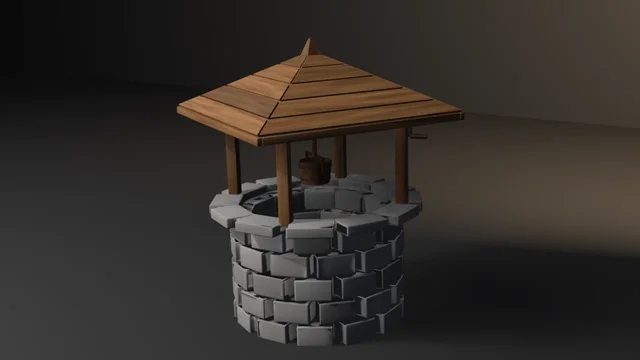
A procedural stone well through UVs, bake, LOD, collider, and Unity glTF, asserting recomputed budgets rather than an API contract.
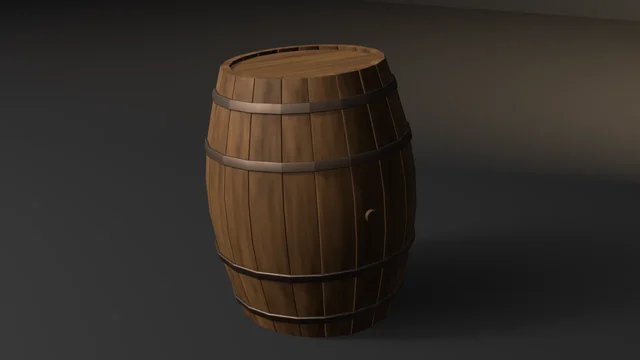
A procedural wine-cask with boarded, croze-seated heads and chord-lofted hoops through UVs, bake, LOD, collider, and Unity glTF, asserting recomputed budgets rather than an API contract.