shipping-crate
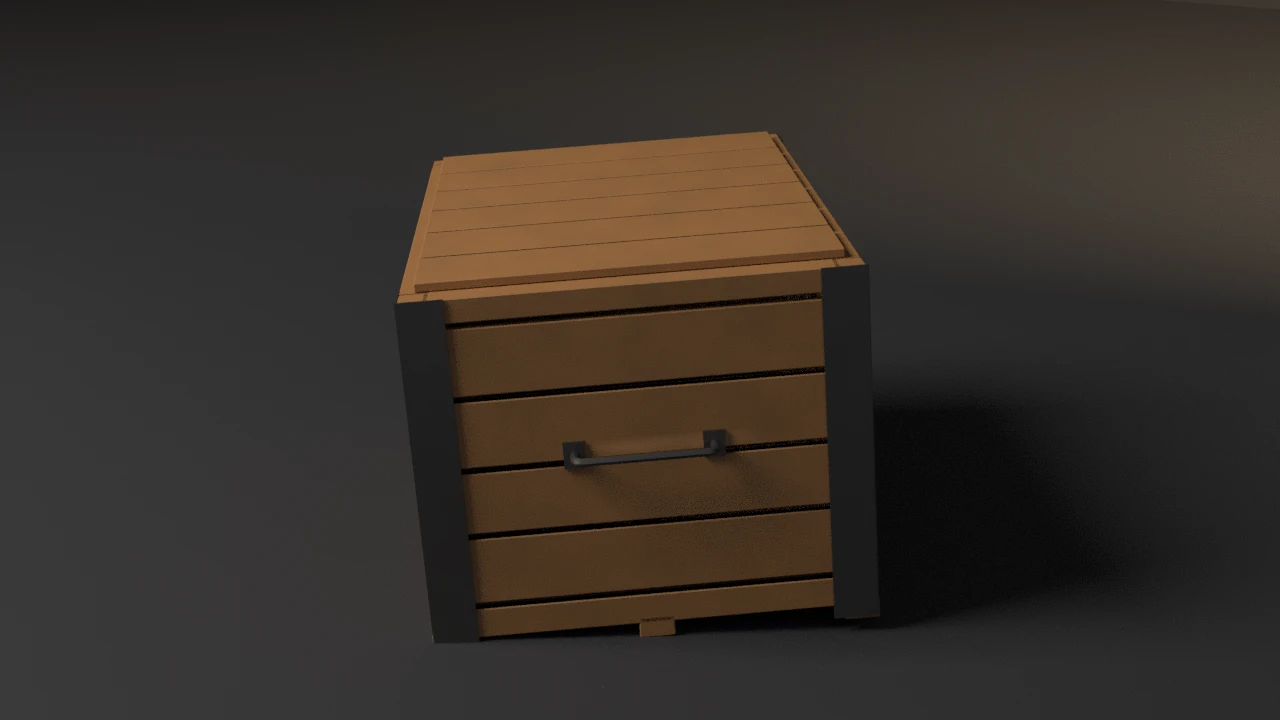
A procedural shipping crate through UVs, bake, LOD, collider, and Unity glTF, asserting recomputed budgets rather than an API contract.
A procedural 1950s oscillating pedestal fan — a hollow two-tier cast base on a rubber gasket with a rotary speed switch and badge, a telescoping enamel and chrome column with a knurled height-lock collar, a strap yoke with a knurled tilt knob, a slotted motor housing with a trim band and an oscillation knob, a two-half wire guard of radial spokes and concentric rings welded to clipped rim rings with a centre badge, four swept brass blades on a hub with a hex spinner nut, and a cord to a plug — through UVs, bake, LOD, collider, and Unity glTF, asserting recomputed budgets rather than an API contract.
Rendered headless by the showcase piece itself — click to zoom.
category Household
blender --background --python showcase/floor-fan/floor_fan.py --
A showcase piece, not an example, and the third in the household category. It builds a procedural 1950s oscillating pedestal fan:
The head is placed from a named frame (hw()): it turns 28° on the column (it is oscillating) and tilts 7° up about the pivot, 155 mm behind the guard's rim plane. The yoke turns with the head but does not tilt. Every part of the head — guard, rotor, housing, bosses — is built in head-local coordinates, so the tilt and the turn move it as one.
The guard's two domes are closed-form: the front is y = y_rim + 0.066 (1 − (ρ/R)^2.6), flat across the middle and rolling down onto the rim; the rear is deeper (0.095, exponent 3) to clear the blades' pitch. A spoke follows its dome from inside the badge bezel (or the rear mount ring) out to its rim ring and ends on the ring's centreline. A ring lies on the dome at its radius, so it crosses every spoke of its half.
Two things the coplanar budget forced:
0.618 k rad, modulo a facet).The two rim rings are not copies either: the rear ring is 1 mm smaller in major radius, 0.3 mm thinner and has its tube turned half a facet.
The cord is a Catmull-Rom spline clamped to rest on the floor. The plug's chamfer pass set its sole 1.2 mm below the floor, which grounded the whole piece on the plug and lifted the gasket; the plug is set back down after the chamfer, so the gasket and plug both reach Z = 0.
Shading follows what each part is. Turned and swept stock is smooth-shaded; the thin six-sided wire smooths across its facets (62°), everything else stays crisp above 35° and at every material boundary. The enamel is a muted sage under a clear coat, the brass and chrome rough enough to catch the key rather than mirror a black stage.
It asserts budget conformance of the generated result. It does not witness an API contract. "It rendered without error" is not a check.
Composes skills mesh-editing-and-bmesh, bake-high-to-low, depsgraph-and-evaluated-data, engine-export-presets, and snippets bake_normal_high_to_low.py, setup_bake_target_image.py, lod_chain.py / decimate_to_budget.py, convex_hull_collider.py, export_preset_unity.py (helpers copied inline, not imported).
Intended size: a 0.40 m base, a guard 0.452 m across its rim, and 1.23 m overall. The outer AABB is 0.761 × 0.704 × 1.229 m. The guard's rim sets the top, the guard and the cord's loop set the plan. The origin is under the base centre, so the fan drops onto a floor by its gasket.
Every budget is declared as a named constant. Every gate recomputes its value from the mesh, materials, UVs, evaluated LOD, collider, or export file.
| Axis | Declared | Measured (5.2.1) |
|---|---|---|
| Base triangles | 40600–41900 | 41460 |
| LOD1 ratio | 0.32–0.62 of base | 0.5000 |
| LOD2 ratio | 0.10–0.35 of base | 0.2200 |
| Materials | exactly 6 distinct; ≥4350 enamel, ≥12800 chrome, ≥540 brass, ≥1120 rubber, ≥740 bakelite, ≥400 badge faces | 6 slots; 4732 / 13960 / 584 / 1216 / 810 / 440 |
| UVs | in 0..1, AABB overlap ≤ 1e-5 | in range, overlap 0 |
| Outer AABB | (0.761, 0.704, 1.230) m ± 0.01 | (0.7614, 0.7039, 1.2286), zmin 0 |
| Collider tris | ≤ 2200 | 1997 |
| Export | written, size > 0, removed after measuring | 3114936 bytes |
No falsifier changes the topology, so every one of them measures the default's 41460 triangles and the default's AABB.
DECIMATE COLLAPSE triangle counts are not identical across Blender series, so the LOD gate is a ratio band, not an exact count. Bake pixels are stochastic, so the bake gate is has_data plus operator FINISHED, not byte-identity. Construction uses no RNG; two default runs print identical measurements.
Recomputed from the generated mesh, not asserted about the script.
| Axis | Declared | Measured |
|---|---|---|
| Non-manifold edges | 0 | 0 |
| Loose verts / edges | 0 / 0 | 0 / 0 |
| Doubles merged at 1e-5 | 0 | 0 |
| Zero-area faces | 0 | 0 |
| N-gons | 0 | 0 |
| Coplanar cross-shell face pairs (KD range 0.05 m, plane ε 1e-4) | 0 | 0 |
Grounded: zmin, and the gasket's own zmin | within 1e-4 of 0 | 0.0000 / 0.0000 |
The guard axis is read off the mesh: the centre and normal (smallest PCA axis) of the front rim ring, the only chrome shells 0.4 m across being the two rims. Every other head part is classified by its lateral radius about that axis.
| Axis | Declared | Measured |
|---|---|---|
| Coaxial: the rear rim's normal against the front's, and the centre of the rear rim, hub, spinner, shaft, badge bezel, rear mount and motor housing off the guard axis | ≤ 0.2°; ≤ 0.0005 m; 7 parts found | 0.0078°; 0.000001 m; 7 |
| Guard wires seated: each spoke's nearest vertex to its own rim ring's centreline circle; each concentric ring crossing (BVH) every spoke of its half; each spoke's inner end in the badge bezel or rear mount | ≤ 0.0026 m; 24 + 24 spokes, 7 rings, 6 clips; 0 loose | 0.000743 m; 24 per ring on all 7; 0 |
| Column plumb: both tubes' PCA axes against Z, and each axis through the base's centre at the boss top | ≤ 0.2°; ≤ 0.001 m | 0.0000°; 0.000000 m |
| Size: guard rim and base diameters | 0.452 / 0.400 m ± 0.004 | 0.4522 / 0.4000 |
| Blade clearance: rim rings' inner face minus the farthest blade vertex, about the guard axis; nearest blade vertex to any guard wire | 0.012–0.030 m; ≥ 0.006 m; 4 blades, each seated in the hub | 0.01945 m; 0.01403 m; 4, 0 unseated |
| Blade spacing: angles of the blades about the hub's own axis | every gap 90° ± 0.3° | worst 0.0002° |
| Stance: the steepest incline the fan stands on before its mass centre (shell volumes × densities) passes the gasket's edge | ≥ 16° | 19.06° (28.43 kg; base 12.66 kg; centre 0.510 m up, 0.176 m inside the edge) |
| One connected assembly (union of shells whose BVH trees overlap) | 1 component | 1 (109 shells) |
A fan on a pole is a real tip risk: its head is a third of its mass and sits a metre up. The stance budget measures exactly that. The densities are named constants — cast iron and steel 7850, brass 8500, rubber 1200, bakelite 1400, the badges 2500 — with two per-shell overrides where the mesh is solid but the part is not: the motor housing (700, a pressed shell round windings and air) and the two column tubes (1100, drawn tube rather than bar).
Each falsifier violates one named budget. Every one was run on 5.2.1 and exited its declared code. None moves the envelope: every run measured the same triangle count and outer AABB as the default, and every budget checked before its own stayed green.
| Flag | Budget violated | Exit |
|---|---|---|
--skip-decimate | LOD1 ratio band (measured 1.0000) | 9 |
--stray-vert | loose vertex count is 0 (measured 1, placed inside the envelope) | 15 |
--lift-z | bounding box zmin is 0 (measured 0.05000) | 16 |
--offset-hub | rotor coaxial with the guard (hub, spinner and blades moved 3 mm off the axis: 0.003000 m) | 17 |
--short-spoke | guard wires seated (one front spoke stopped 12 mm short of its rim ring: 0.014906 m) | 18 |
--lean-column | column plumb and coaxial (lower tube leaning 1° on its foot: 1.0000°, 0.001501 m off the base's axis) | 19 |
--long-blades | blade-tip clearance band (tips 12 mm longer: 0.00745 m) | 20 |
--skew-blade | equal blade spacing (one blade turned 5°: 4.9998°) | 21 |
--hollow-base | stance (base pressed from 1.2 mm sheet: 18.64 kg, base 2.87 kg, centre 0.752 m up: 12.39°) | 22 |
--loose-spinner | one connected assembly (spinner nut backed 6 mm off the hub: 2 components) | 23 |
--offset-hub leaves the tip clearance in band (0.01648 m) and the blades evenly spaced about their own hub, so only the coaxial budget sees it. --long-blades still leaves every tip 7.4 mm clear of the nearest wire, so the band's floor is what fails. --lean-column tilts only the lower tube; the upper tube, the collar and the head stay put, and the tube stays inside the base's boss. --hollow-base keeps the outer casting, so the envelope and footprint are unchanged and only the mass moves.
blender --background --python floor_fan.py --
blender --background --python floor_fan.py -- --skip-decimate
blender --background --python floor_fan.py -- --stray-vert
blender --background --python floor_fan.py -- --lift-z
blender --background --python floor_fan.py -- --offset-hub
blender --background --python floor_fan.py -- --short-spoke
blender --background --python floor_fan.py -- --lean-column
blender --background --python floor_fan.py -- --long-blades
blender --background --python floor_fan.py -- --skew-blade
blender --background --python floor_fan.py -- --hollow-base
blender --background --python floor_fan.py -- --loose-spinner
blender --background --python floor_fan.py -- --output fan.png
Smoke passes no flags.
The hero turns the piece HERO_YAW_DEG (164°). The base's switch and badge then face the camera, while the head, turned 28° on the column, shows the guard three-quarter with the motor housing, yoke and tilt knob in profile. The cord's loop lies in the foreground. The wall stands 3 m behind the fan and the warm wedge pools on it behind the head.
File-local. 9 is a valid check code. 10 is reserved for gallery_framing.check_framing on the --output path. 15–19 are the hygiene and joint-fit family. 20–23 are file-local. 24 is the asset-quality floor on the render path: check_asset_quality returns 11, which this piece already spends on the collider ceiling, so the call site remaps it.
| Code | Meaning |
|---|---|
| 0 | Success |
| 1 | Uncaught exception (FATAL wrapper) |
| 2 | argparse / usage |
| 3 | Mesh did not build / no UV layer |
| 4 | Base triangle count outside range |
| 5 | Material count ≠ 6 distinct slots, or a face-count floor missed |
| 6 | UVs outside 0..1 |
| 7 | UV AABB overlap above tolerance |
| 8 | World AABB off declared outer size |
| 9 | LOD ratio band (--skip-decimate lands here) |
| 10 | Framing gate (render path only) |
| 11 | Collider triangle count above ceiling |
| 12 | Bake did not finish or image has no data |
| 13 | Export file missing or empty |
| 14 | --output produced no file |
| 15 | Mesh hygiene: loose, non-manifold, zero-area, doubles, n-gons, coplanar cross-shell pairs |
| 16 | Not grounded: bounding box zmin, or the gasket's, off 0 |
| 17 | Coaxial: a turned head part off the guard axis, or the rims not parallel (--offset-hub) |
| 18 | Guard wires: a spoke's end off its rim ring, a ring not crossing every spoke of its half, a spoke loose at its inner end, or not 24 + 24 spokes, 7 rings and 6 clips (--short-spoke) |
| 19 | Column plumb and size: a tube tilted or off the base's axis, or the guard or base diameter off (--lean-column) |
| 20 | Blade clearance: tip clearance outside its band, a blade too near a wire, a blade not seated in the hub, or not 4 blades (--long-blades) |
| 21 | Blade spacing: a gap off 90° (--skew-blade) |
| 22 | Stance: the fan tips on an incline under 16° (--hollow-base) |
| 23 | Assembly splits into more than one connected component (--loose-spinner) |
| 24 | Asset-quality floor (render path only; remapped from 11) |
"""Game-ready vintage oscillating pedestal fan — a showcase piece, not an example. Asserts budget conformance of a procedural 1950s-style floor fan after composing shipped pipeline pieces: bmesh construction, UVs, six materials, high-to-low normal bake, LOD chain, convex collider, Unity glTF export. A round cast base in two tiers, hollow underneath and standing on a rubber gasket, carries a rotary speed switch on its sloped top and a maker's badge on its riser. A telescoping column rises from a ferrule in the base's boss: an enamelled lower tube, a knurled height-lock collar with a thumb screw, and a chrome upper tube into a neck fitting. A strap yoke on the neck holds the head on a tilt pivot, with a knurled tilt knob on one side and a cap nut on the other. The head is a motor housing with a chrome trim band, a ring of cooling slots and a gearbox carrying the oscillation knob, and a wire guard in two halves: radial spokes and concentric rings, each half welded to its own rim ring, the two rims clipped together, a badge at the front centre. Inside, four broad swept brass blades on a hub with a spinner nut. A cord leaves a grommet in the base's riser and ends in a plug on the floor. Budgets are declared below and recomputed from the generated result. They are not API-contract witnesses. Each falsifier violates one named budget: ``--skip-decimate`` the LOD-ratio band, ``--stray-vert`` mesh hygiene, ``--lift-z`` grounded zmin, ``--offset-hub`` the rotor coaxial with the guard, ``--short-spoke`` guard wires seated on their rim rings, ``--lean-column`` the column plumb and coaxial with the base, ``--long-blades`` the blade-tip clearance band, ``--skew-blade`` equal blade spacing, ``--hollow-base`` the tip-over angle, ``--loose-spinner`` one connected assembly. No RNG. Construction is closed-form. DECIMATE COLLAPSE triangle counts are not byte-identical across Blender versions — the LOD gate is a ratio band, not an exact count. blender --background --python floor_fan.py -- blender --background --python floor_fan.py -- --skip-decimate blender --background --python floor_fan.py -- --output fan.png """ import argparse import math import os import sys import tempfile import traceback import bmesh import bpy import numpy as np from mathutils import Matrix, Vector from mathutils.bvhtree import BVHTree from mathutils.kdtree import KDTree # Showcase lives at repo-root/showcase/, not under examples/. The framing # helper is the repo's only shared import and lives next to the examples; # resolve the repo root so we do not move gallery_framing.py. _REPO = os.path.abspath( os.path.join(os.path.dirname(os.path.abspath(__file__)), os.pardir, os.pardir) ) sys.path.insert(0, os.path.join(_REPO, "examples")) sys.dont_write_bytecode = True import gallery_framing # noqa: E402 import gallery_asset_quality # noqa: E402 # --- Base: a hollow cast shell of two tiers, on a rubber gasket ------------ BASE_SEGS = 80 # outer (r, z) from the bottom edge up and in to the column hole BASE_OUTER = [ (0.1935, 0.0040), (0.1985, 0.0062), (0.2000, 0.0100), (0.2000, 0.0280), (0.1985, 0.0322), (0.1950, 0.0345), (0.1625, 0.0368), (0.1590, 0.0392), (0.1565, 0.0450), (0.1500, 0.0540), (0.1350, 0.0640), (0.1150, 0.0730), (0.0900, 0.0810), (0.0650, 0.0880), (0.0485, 0.0950), (0.0425, 0.1010), (0.0405, 0.1120), (0.0385, 0.1172), (0.0350, 0.1200), (0.0225, 0.1210), ] # a smoothed copy of the outer line, offset inward by the wall for the inside BASE_INNER_GUIDE = [ (0.1935, 0.0040), (0.2000, 0.0110), (0.2000, 0.0280), (0.1625, 0.0370), (0.1500, 0.0540), (0.1150, 0.0730), (0.0650, 0.0880), (0.0425, 0.1010), (0.0405, 0.1120), (0.0225, 0.1210), ] BASE_WALL = 0.009 # cast iron HOLLOW_WALL = 0.0012 # --hollow-base: pressed from thin sheet HOLE_R = 0.0225 GASKET = [(0.1860, 0.0), (0.1968, 0.0), (0.1975, 0.0012), (0.1975, 0.0050), (0.1860, 0.0050)] SWITCH_RHO = 0.1245 # speed switch on the sloped top, at the front BADGE_Z = 0.0190 # --- Column ---------------------------------------------------------------- TUBE_R = 0.0240 # lower tube, enamel TUBE_Z = (0.035, 0.640) UTUBE_R = 0.0165 # upper tube, chrome UTUBE_Z = (0.560, 0.818) COLLAR_Z = (0.612, 0.662) COLLAR_R = 0.0310 GRIP = 0.0008 # a hooped ring's inner face inside its host LEAN_DEG = 1.0 # --lean-column # --- Head frame -------------------------------------------------------------- # Head-local: x right, y forward (the blowing direction), z up; origin at # the centre of the guard's rim plane. The head turns OSC_DEG on the # column (it is oscillating) and tilts TILT_DEG up about the pivot. PIVOT_Z = 0.985 PIVOT_BACK = 0.155 # pivot axis behind the rim plane OSC_DEG = 28.0 TILT_DEG = 7.0 # --- Guard ------------------------------------------------------------------- RIM_F = (0.2225, 0.0036, 0.0032) # (major, minor, y) front rim ring RIM_R = (0.2215, 0.0033, -0.0030) # rear rim ring: the pair overlap 0.7 mm RIM_SEGS = 128 DOME_F = (0.066, 2.6) # front dome height and exponent DOME_R = (0.095, 3.0) # rear dome depth and exponent SPOKES_F = 24 SPOKES_R = 24 SPOKE_R = 0.0015 SPOKE_PTS = 14 SPOKE_START_F = 0.030 # inside the badge bezel SPOKE_START_R = 0.058 # inside the rear mount ring RINGS_F = (0.068, 0.110, 0.150, 0.188) RINGS_R = (0.095, 0.140, 0.182) RING_WIRE = 0.0019 RING_SEGS = 80 CLIPS = 6 SHORT_SPOKE = 0.012 # --short-spoke: one spoke stops this far short # --- Rotor ------------------------------------------------------------------- BLADES = 4 Y_BLADE = -0.010 HUB_R = 0.044 SPINNER_R = 0.026 # (r, chord, pitch deg): a narrow neck in the hub, a broad paddle, a rounded tip BLADE_STATIONS = [ (0.030, 0.034, 30.0), (0.042, 0.036, 30.0), (0.055, 0.050, 29.0), (0.070, 0.072, 27.0), (0.090, 0.095, 25.0), (0.110, 0.112, 23.5), (0.130, 0.122, 22.0), (0.150, 0.125, 21.0), (0.165, 0.118, 20.0), (0.177, 0.104, 19.5), (0.186, 0.086, 19.0), (0.192, 0.066, 18.5), (0.196, 0.046, 18.0), (0.199, 0.024, 18.0), ] AIRFOIL_X = (1.0, 0.80, 0.55, 0.30, 0.10, 0.0, 0.10, 0.30, 0.55, 0.80) BLADE_T = 0.0024 BLADE_CAMBER = 0.05 BLADE_SWEEP = 0.032 # leading edge carried forward toward the tip OFFSET_HUB = 0.003 # --offset-hub LONG_BLADES = 0.012 # --long-blades SKEW_DEG = 5.0 # --skew-blade LOOSE_SPINNER = 0.006 # --loose-spinner # --- Motor ------------------------------------------------------------------- MOTOR = [ (0.030, -0.0840), (0.054, -0.0880), (0.066, -0.0980), (0.078, -0.1100), (0.088, -0.1220), (0.0935, -0.1340), (0.0940, -0.1450), (0.0940, -0.2000), (0.0940, -0.2050), (0.0940, -0.2400), (0.0940, -0.2450), (0.0915, -0.2600), (0.0850, -0.2760), (0.0740, -0.2910), (0.0580, -0.3030), (0.0380, -0.3110), (0.0180, -0.3150), ] SLOT_ROWS = (8, 9) MOTOR_SEGS = 64 # --- Cord and plug ------------------------------------------------------------ CORD_R = 0.0034 CORD_PTS = [(0.0, -0.186, 0.019), (0.0, -0.214, 0.019), (0.006, -0.238, 0.011), (0.030, -0.262, CORD_R), (0.120, -0.300, CORD_R), (0.260, -0.290, CORD_R), (0.400, -0.200, CORD_R), (0.470, -0.050, CORD_R), (0.480, 0.110, CORD_R), (0.440, 0.240, CORD_R), (0.405, 0.330, 0.0110)] PLUG_SIZE = (0.046, 0.032, 0.024) PRONG_STAGGER = 0.0005 BBOX_TOL = 0.01 # Fitted after locking geometry. Recomputed from bound_box. OUTER_SIZE = (0.761, 0.704, 1.230) BASE_TRIS_MIN = 40600 BASE_TRIS_MAX = 41900 LOD1_RATIO_MIN = 0.32 LOD1_RATIO_MAX = 0.62 LOD2_RATIO_MIN = 0.10 LOD2_RATIO_MAX = 0.35 LOD1_TARGET = 0.50 LOD2_TARGET = 0.22 MATERIAL_COUNT = 6 UV_EPS = 1e-4 UV_OVERLAP_MAX = 1e-5 COLLIDER_TRIS_MAX = 2200 BAKE_RES = 1024 CAGE_EXTRUSION = 0.004 ENAMEL_FACES_MIN = 4350 CHROME_FACES_MIN = 12800 BRASS_FACES_MIN = 540 RUBBER_FACES_MIN = 1120 BAKELITE_FACES_MIN = 740 BADGE_FACES_MIN = 400 ZMIN_EPS = 1e-4 DOUBLES_EPS = 1e-5 AREA_EPS = 1e-10 COPLANAR_NORMAL_EPS = 1e-4 COPLANAR_PLANE_EPS = 1e-4 COPLANAR_CENTRE_MAX = 0.05 LIFT_Z = 0.05 # Rotor coaxial with the guard: every turned part of the head on the axis # the rim rings define. AXIS_TOL = 0.0005 AXIS_TILT_MAX_DEG = 0.2 # Guard wires: every spoke's outer end inside its rim ring's tube. SEAT_MAX = 0.0026 # Column: plumb, and on the base's axis where it enters the boss. PLUMB_MAX_DEG = 0.2 COAX_MAX = 0.001 GUARD_DIA = 0.452 BASE_DIA = 0.400 SIZE_TOL = 0.004 # Blades: radial tip clearance to the rim rings' inner face, and the # nearest approach of any blade vertex to any guard wire. TIP_CLEAR = (0.012, 0.030) WIRE_CLEAR_MIN = 0.006 SPACING_TOL_DEG = 0.3 # Stance: a floor fan must not tip on a named incline. DENSITY = (7850.0, 7850.0, 8500.0, 1200.0, 1400.0, 2500.0) MOTOR_DENSITY = 700.0 # a pressed housing round windings and air TUBE_DENSITY = 1100.0 # the column tubes are drawn tube, not bar TIP_MIN_DEG = 16.0 HERO_YAW_DEG = 164.0 WALL_Y = 3.0 ENAMEL_IDX = 0 CHROME_IDX = 1 BRASS_IDX = 2 RUBBER_IDX = 3 BAKELITE_IDX = 4 BADGE_IDX = 5 Y_UP = Matrix(((1.0, 0.0, 0.0), (0.0, 0.0, 1.0), (0.0, -1.0, 0.0))) # local Z -> +Y X_UP = Matrix(((0.0, 0.0, 1.0), (0.0, 1.0, 0.0), (-1.0, 0.0, 0.0))) # local Z -> +X X_DOWN = Matrix(((0.0, 0.0, -1.0), (0.0, 1.0, 0.0), (1.0, 0.0, 0.0))) # local Z -> -X ZAX = Vector((0.0, 0.0, 1.0)) def eevee_engine_id(): return "BLENDER_EEVEE" if bpy.app.version >= (5, 0, 0) else "BLENDER_EEVEE_NEXT" def fail(msg, code): print(f"ERROR: {msg}", file=sys.stderr) return code def triangle_count(mesh): mesh.calc_loop_triangles() return len(mesh.loop_triangles) def evaluated_triangle_count(obj): # Duplicated from snippets/lod_chain.py / decimate_to_budget.py (not a package). depsgraph = bpy.context.evaluated_depsgraph_get() eval_obj = obj.evaluated_get(depsgraph) eval_mesh = eval_obj.to_mesh() try: eval_mesh.calc_loop_triangles() return len(eval_mesh.loop_triangles) finally: eval_obj.to_mesh_clear() # -------------------------------------------------------------------------- # Frames # -------------------------------------------------------------------------- C_ROT = Matrix.Rotation(math.radians(OSC_DEG), 3, "Z") # column frame H_ROT = C_ROT @ Matrix.Rotation(math.radians(TILT_DEG), 3, "X") # head frame PIVOT_W = Vector((0.0, 0.0, PIVOT_Z)) PIVOT_L = Vector((0.0, -PIVOT_BACK, 0.0)) FWD = H_ROT @ Vector((0.0, 1.0, 0.0)) H_AXIS = H_ROT @ Y_UP # lathe local Z -> head forward def hw(p): """Head-local point to world.""" return PIVOT_W + H_ROT @ (Vector(p) - PIVOT_L) def cw(p): """Column-frame point (turned with the head, not tilted) to world.""" return C_ROT @ Vector(p) # -------------------------------------------------------------------------- # Construction helpers # -------------------------------------------------------------------------- def _mark(faces, mat_idx): for f in faces: f.material_index = mat_idx def add_box(bm, loc, scale, mat_idx): geo = bmesh.ops.create_cube(bm, size=1.0) verts = geo["verts"] origin = Vector(loc) for v in verts: v.co = Vector((v.co.x * scale[0], v.co.y * scale[1], v.co.z * scale[2])) + origin _mark({f for v in verts for f in v.link_faces}, mat_idx) return list(verts) def add_lathe(bm, profile, segs, mat_idx, center=(0.0, 0.0, 0.0), rot=None, phase=0.0, solid=False, seg_mats=None, cap_mats=None, rmod=None): """Revolve a profile [(r, z), ...] about local Z. ``solid``: the profile is an open polyline closed by n-gon caps at its two ends; otherwise it is a closed polygon revolved into a ring shell. ``seg_mats`` gives a material per profile segment, ``cap_mats`` the (start, end) caps, and ``rmod(i, j)`` scales the radius of profile point ``j`` on ring ``i``.""" c = Vector(center) m = rot if rot is not None else Matrix.Identity(3) rings = [] for i in range(segs): a = phase + 2.0 * math.pi * i / segs ca, sa = math.cos(a), math.sin(a) ring = [] for j, (r, z) in enumerate(profile): rr = r * (rmod(i, j) if rmod else 1.0) ring.append(bm.verts.new(c + m @ Vector((rr * ca, rr * sa, z)))) rings.append(ring) n = len(profile) last = n - 1 if solid else n for i in range(segs): r0, r1 = rings[i], rings[(i + 1) % segs] for j in range(last): k = (j + 1) % n f = bm.faces.new((r0[j], r1[j], r1[k], r0[k])) f.material_index = seg_mats[j] if seg_mats else mat_idx if solid: f0 = bm.faces.new([rings[i][0] for i in reversed(range(segs))]) f1 = bm.faces.new([rings[i][n - 1] for i in range(segs)]) f0.material_index = cap_mats[0] if cap_mats else mat_idx f1.material_index = cap_mats[1] if cap_mats else mat_idx return [v for ring in rings for v in ring] def add_tube(bm, pts, radius, sides, mat_idx, phase=0.0, side=None, flat=1.0): """Capped bar swept along a polyline (parallel-transport frames). With ``side`` the section's first axis is held on that vector instead, and ``flat`` scales the section across it (a strap).""" pts = [Vector(p) for p in pts] tans = [] for i in range(len(pts)): a = pts[max(i - 1, 0)] b = pts[min(i + 1, len(pts) - 1)] tans.append((b - a).normalized()) ref = Vector((1.0, 0.0, 0.0)) if abs(tans[0].x) < 0.9 else Vector((0.0, 0.0, 1.0)) nrm = (ref - tans[0] * ref.dot(tans[0])).normalized() rings = [] for p, t in zip(pts, tans): if side is not None: nrm = (Vector(side) - t * Vector(side).dot(t)).normalized() else: nrm = (nrm - t * nrm.dot(t)).normalized() bi = t.cross(nrm) rings.append([ bm.verts.new(p + radius * (nrm * math.cos(phase + 2.0 * math.pi * k / sides) + bi * flat * math.sin(phase + 2.0 * math.pi * k / sides))) for k in range(sides) ]) faces = [] for r0, r1 in zip(rings, rings[1:]): for k in range(sides): m = (k + 1) % sides faces.append(bm.faces.new((r0[k], r0[m], r1[m], r1[k]))) faces.append(bm.faces.new(tuple(reversed(rings[0])))) faces.append(bm.faces.new(tuple(rings[-1]))) _mark(faces, mat_idx) return [v for ring in rings for v in ring] def add_ring(bm, center, axis, r_major, r_minor, segs, sides, mat_idx, phase=0.0, tube_phase=0.0, u=None, ra=None, rb=None): """Closed torus about ``axis`` through ``center``. With ``u`` the centreline is an ellipse of radii ``ra`` (along u) and ``rb``.""" center = Vector(center) axis = Vector(axis).normalized() if u is None: ref = Vector((0.0, 0.0, 1.0)) if abs(axis.z) < 0.9 else Vector((1.0, 0.0, 0.0)) u = axis.cross(ref).normalized() else: u = (Vector(u) - axis * Vector(u).dot(axis)).normalized() w = axis.cross(u) ra = r_major if ra is None else ra rb = r_major if rb is None else rb rings = [] for i in range(segs): a = phase + 2.0 * math.pi * i / segs c = center + u * (ra * math.cos(a)) + w * (rb * math.sin(a)) tangent = (-u * ra * math.sin(a) + w * rb * math.cos(a)).normalized() radial = tangent.cross(axis).normalized() rings.append([ bm.verts.new(c + r_minor * (radial * math.cos(tube_phase + 2.0 * math.pi * k / sides) + axis * math.sin(tube_phase + 2.0 * math.pi * k / sides))) for k in range(sides) ]) faces = [] for i in range(segs): r0, r1 = rings[i], rings[(i + 1) % segs] for k in range(sides): m = (k + 1) % sides faces.append(bm.faces.new((r0[k], r0[m], r1[m], r1[k]))) _mark(faces, mat_idx) return [v for ring in rings for v in ring] def offset_polyline(pts, t, sign): """Miter offset of a 2D polyline by ``t`` toward the side given by the segment normal ``sign * (dz, -dx)``.""" def nrm(p, q): dx, dz = q[0] - p[0], q[1] - p[1] ln = math.hypot(dx, dz) return (sign * dz / ln, -sign * dx / ln) out = [] for i, p in enumerate(pts): ns = [] if i > 0: ns.append(nrm(pts[i - 1], p)) if i < len(pts) - 1: ns.append(nrm(p, pts[i + 1])) nx = sum(n[0] for n in ns) nz = sum(n[1] for n in ns) ln = math.hypot(nx, nz) nx, nz = nx / ln, nz / ln k = t / max(nx * ns[0][0] + nz * ns[0][1], 0.2) out.append((p[0] + nx * k, p[1] + nz * k)) return out def hull2d(pts): """Convex hull, counter-clockwise (monotone chain).""" pts = sorted(set((round(x, 9), round(z, 9)) for x, z in pts)) def cross(o, a, b): return (a[0] - o[0]) * (b[1] - o[1]) - (a[1] - o[1]) * (b[0] - o[0]) lower, upper = [], [] for p in pts: while len(lower) >= 2 and cross(lower[-2], lower[-1], p) <= 1e-12: lower.pop() lower.append(p) for p in reversed(pts): while len(upper) >= 2 and cross(upper[-2], upper[-1], p) <= 1e-12: upper.pop() upper.append(p) return lower[:-1] + upper[:-1] def catmull(pts, per=6): pts = [Vector(p) for p in pts] ext = [pts[0] * 2.0 - pts[1]] + pts + [pts[-1] * 2.0 - pts[-2]] out = [] for i in range(1, len(ext) - 2): p0, p1, p2, p3 = ext[i - 1], ext[i], ext[i + 1], ext[i + 2] for k in range(per): t = k / per out.append(0.5 * ((2.0 * p1) + (-p0 + p2) * t + (2.0 * p0 - 5.0 * p1 + 4.0 * p2 - p3) * t * t + (-p0 + 3.0 * p1 - 3.0 * p2 + p3) * t * t * t)) out.append(pts[-1]) return out def triangulate_ngons(bm): faces = [f for f in bm.faces if len(f.verts) > 4] if faces: bmesh.ops.triangulate(bm, faces=faces) def pack_uvs(bm, margin=0.08): uv = bm.loops.layers.uv.new("UVMap") faces = list(bm.faces) n = len(faces) cols = max(1, math.ceil(math.sqrt(n))) rows = max(1, math.ceil(n / cols)) cell_w = 1.0 / cols cell_h = 1.0 / rows pad_u = margin * cell_w * 0.5 pad_v = margin * cell_h * 0.5 usable_w = cell_w - 2.0 * pad_u usable_h = cell_h - 2.0 * pad_v for i, face in enumerate(faces): col = i % cols row = i // cols nrm = face.normal ax, ay, az = abs(nrm.x), abs(nrm.y), abs(nrm.z) coords = [] for loop in face.loops: co = loop.vert.co if az >= ax and az >= ay: coords.append((co.x, co.y)) elif ax >= ay: coords.append((co.y, co.z)) else: coords.append((co.x, co.z)) xs = [c[0] for c in coords] ys = [c[1] for c in coords] minx, maxx = min(xs), max(xs) miny, maxy = min(ys), max(ys) dx = max(maxx - minx, 1e-8) dy = max(maxy - miny, 1e-8) origin_u = col * cell_w + pad_u origin_v = row * cell_h + pad_v for loop, (x, y) in zip(face.loops, coords): loop[uv].uv = ( origin_u + (x - minx) / dx * usable_w, origin_v + (y - miny) / dy * usable_h, ) # -------------------------------------------------------------------------- # The fan # -------------------------------------------------------------------------- def dome_f(rho): h, p = DOME_F return RIM_F[2] + h * (1.0 - (rho / RIM_F[0]) ** p) def dome_r(rho): h, p = DOME_R return RIM_R[2] - h * (1.0 - (rho / RIM_R[0]) ** p) def spoke_path(a, r0, r1, dome, ring_y, short=0.0): """A guard wire from r0 on the dome out to r1, ending on the rim ring's centreline; ``short`` stops it that far inside the ring.""" d = (math.cos(a), 0.0, math.sin(a)) pts = [] for i in range(SPOKE_PTS): s = 1.0 - (1.0 - i / (SPOKE_PTS - 1)) ** 1.35 rho = r0 + (r1 - short - r0) * s y = ring_y if (i == SPOKE_PTS - 1 and not short) else dome(rho) pts.append(hw((rho * d[0], y, rho * d[2]))) return pts def add_base(bm, wall): guide = offset_polyline(BASE_INNER_GUIDE, wall, -1.0) guide[0] = (guide[0][0], BASE_OUTER[0][1]) guide[-1] = (HOLE_R, guide[-1][1]) profile = BASE_OUTER + list(reversed(guide)) add_lathe(bm, profile, BASE_SEGS, ENAMEL_IDX) def add_blade(bm, a, spin, tip_extra, center): """One lofted blade, every section wrapped onto its own cylinder about the rotor axis: pitched, cambered, swept forward toward a rounded tip.""" e_r = Vector((math.cos(a), 0.0, math.sin(a))) e_t = Vector((0.0, 1.0, 0.0)).cross(e_r) * spin r_first, r_last = BLADE_STATIONS[0][0], BLADE_STATIONS[-1][0] secs = [] for r, chord, beta_deg in BLADE_STATIONS: if tip_extra and r > 0.10: r = r + tip_extra * (r - 0.10) / (r_last - 0.10) beta = math.radians(beta_deg) sweep = BLADE_SWEEP * ((r - r_first) / (r_last - r_first)) ** 2 ring = [] for k, xc in enumerate(AIRFOIL_X): upper = k < 5 camber = BLADE_CAMBER * chord * 4.0 * xc * (1.0 - xc) yt = 0.5 * BLADE_T * (4.0 * xc * (1.0 - xc)) ** 0.35 yy = camber + (yt if upper else -yt) s = (xc - 0.42) * chord - sweep t_off = -math.cos(beta) * s - math.sin(beta) * yy z_off = -math.sin(beta) * s + math.cos(beta) * yy ang = t_off / r p = center + Vector((0.0, Y_BLADE + z_off, 0.0)) \ + r * (e_r * math.cos(ang) + e_t * math.sin(ang)) ring.append(bm.verts.new(hw(p))) secs.append(ring) n = len(AIRFOIL_X) faces = [] for r0, r1 in zip(secs, secs[1:]): for k in range(n): m = (k + 1) % n faces.append(bm.faces.new((r0[k], r0[m], r1[m], r1[k]))) faces.append(bm.faces.new(tuple(reversed(secs[0])))) faces.append(bm.faces.new(tuple(secs[-1]))) _mark(faces, BRASS_IDX) def build_fan_mesh(name, bevel_offset, bevel_segments, offset_hub=False, short_spoke=False, lean_column=False, long_blades=False, skew_blade=False, hollow_base=False, loose_spinner=False): bm = bmesh.new() try: bevel_verts = [] # ---- base, gasket, trim ring, speed switch, badge add_base(bm, HOLLOW_WALL if hollow_base else BASE_WALL) add_lathe(bm, GASKET, BASE_SEGS, RUBBER_IDX, phase=math.pi / BASE_SEGS) # a chrome bead run round the tread step, hooped into the riser's shoulder add_ring(bm, (0.0, 0.0, 0.0372), ZAX, 0.1612, 0.0026, BASE_SEGS, 6, CHROME_IDX, phase=math.pi / BASE_SEGS) # switch: escutcheon, knob with a pointer lobe, three detent studs dz = (BASE_OUTER[11][1] - BASE_OUTER[10][1]) dr = (BASE_OUTER[11][0] - BASE_OUTER[10][0]) t = (SWITCH_RHO - BASE_OUTER[10][0]) / dr sz = BASE_OUTER[10][1] + dz * t # the slope's outward normal in (radial, z), carried to the +Y azimuth nrm = Vector((0.0, dz, -dr)).normalized() sw = Vector((0.0, SWITCH_RHO, sz)) srot = Matrix((Vector((1.0, 0.0, 0.0)), nrm.cross(Vector((1.0, 0.0, 0.0))), nrm)).transposed() add_lathe(bm, [(0.0240, -0.0030), (0.0250, 0.0010), (0.0236, 0.0026), (0.0180, 0.0030)], 40, CHROME_IDX, center=sw, rot=srot, solid=True) def pointer(i, j): if j in (1, 2, 3): if i == 0: return 1.30 return 0.93 if i % 2 else 1.0 return 1.0 add_lathe(bm, [(0.0150, 0.0020), (0.0160, 0.0050), (0.0160, 0.0150), (0.0140, 0.0185), (0.0080, 0.0205), (0.0030, 0.0210)], 32, BAKELITE_IDX, center=sw, rot=srot, solid=True, rmod=pointer, phase=math.pi / 2.0) for k in range(3): a = math.radians(150.0 + 45.0 * k) loc = sw + srot @ Vector((0.0205 * math.cos(a), 0.0205 * math.sin(a), 0.0)) # each stud a touch prouder and turned, or their facets share planes st = 0.0003 * k add_lathe(bm, [(0.0017, 0.0015 - st), (0.0017, 0.0038 + st), (0.0008, 0.0046 + st)], 10, CHROME_IDX, center=loc, rot=srot, solid=True, phase=0.21 * k) # maker's badge on the riser, an oval plaque with a bezel brot = Y_UP bc = Vector((0.0, BASE_OUTER[3][0] - 0.0006, BADGE_Z)) plaque = add_lathe(bm, [(0.0105, -0.0022), (0.0105, 0.0006), (0.0096, 0.0014), (0.0080, 0.0017)], 32, BADGE_IDX, center=bc, rot=brot, solid=True) bezel = add_lathe(bm, [(0.0101, -0.0024), (0.0122, -0.0024), (0.0124, 0.0009), (0.0114, 0.0016), (0.0101, 0.0010)], 32, CHROME_IDX, center=bc, rot=brot, phase=math.pi / 32.0) for v in plaque + bezel: v.co.x *= 2.1 v.co.z = BADGE_Z + (v.co.z - BADGE_Z) * 0.62 # ---- column: ferrule, lower tube, collar with thumb screw, upper tube, neck add_lathe(bm, [(TUBE_R - GRIP, 0.112), (0.0280, 0.112), (0.0296, 0.1150), (0.0296, 0.1340), (0.0280, 0.1370), (TUBE_R - GRIP, 0.1370)], 48, CHROME_IDX) lean = Matrix.Rotation(math.radians(LEAN_DEG), 3, "X") if lean_column else None z0, z1 = TUBE_Z add_lathe(bm, [(0.020, 0.0), (TUBE_R, 0.004), (TUBE_R, z1 - z0 - 0.004), (0.0205, z1 - z0)], 48, ENAMEL_IDX, center=(0.0, 0.0, z0), rot=lean, solid=True) def knurl(i, j): return 0.965 if (j in (2, 3) and i % 2) else 1.0 c0, c1 = COLLAR_Z add_lathe(bm, [(TUBE_R - GRIP, c0), (COLLAR_R - 0.002, c0), (COLLAR_R, c0 + 0.003), (COLLAR_R, c1 - 0.003), (COLLAR_R - 0.002, c1), (TUBE_R - GRIP, c1)], 56, CHROME_IDX, rmod=knurl) ta = math.radians(-150.0) tdir = Vector((math.cos(ta), math.sin(ta), 0.0)) trot = Matrix((ZAX.cross(tdir), ZAX, tdir)).transposed() tc = Vector((0.0, 0.0, 0.5 * (c0 + c1))) add_lathe(bm, [(0.0036, COLLAR_R - 0.004), (0.0036, 0.047)], 12, CHROME_IDX, center=tc, rot=trot, solid=True) wing = add_lathe(bm, [(0.0060, 0.0440), (0.0105, 0.0455), (0.0110, 0.0500), (0.0105, 0.0575), (0.0070, 0.0590)], 20, BAKELITE_IDX, center=tc, rot=trot, solid=True) for v in wing: loc = v.co - tc along = loc.dot(tdir) lat = loc - tdir * along v.co = tc + tdir * along + lat.dot(ZAX) * ZAX * 1.35 + (lat - lat.dot(ZAX) * ZAX) * 0.55 u0, u1 = UTUBE_Z add_lathe(bm, [(0.0130, u0), (UTUBE_R, u0 + 0.003), (UTUBE_R, u1 - 0.003), (0.0150, u1)], 40, CHROME_IDX, solid=True, phase=math.pi / 40.0) yoke_z = PIVOT_Z - 0.126 add_lathe(bm, [(0.0120, 0.800), (0.0190, 0.804), (0.0190, 0.826), (0.0245, 0.836), (0.0300, 0.846), (0.0300, yoke_z - 0.003), (0.0270, yoke_z + 0.0005)], 40, CHROME_IDX, solid=True) # ---- yoke: a strap bent into a U under the head, eyes on the pivot half_w = 0.113 r_c = 0.030 path = [(-half_w, 0.0, PIVOT_Z), (-half_w, 0.0, yoke_z + r_c + 0.03)] for k in range(1, 6): th = math.pi + 0.5 * math.pi * k / 6.0 path.append((-half_w + r_c + r_c * math.cos(th), 0.0, yoke_z + r_c + r_c * math.sin(th))) path += [(-half_w + r_c, 0.0, yoke_z), (half_w - r_c, 0.0, yoke_z)] for k in range(1, 6): th = 1.5 * math.pi + 0.5 * math.pi * k / 6.0 path.append((half_w - r_c + r_c * math.cos(th), 0.0, yoke_z + r_c + r_c * math.sin(th))) path += [(half_w, 0.0, yoke_z + r_c + 0.03), (half_w, 0.0, PIVOT_Z)] add_tube(bm, [cw(p) for p in path], 0.0130, 12, ENAMEL_IDX, side=C_ROT @ Vector((0.0, 1.0, 0.0)), flat=0.36) for s in (-1.0, 1.0): add_lathe(bm, [(0.0200, -0.0046), (0.0212, -0.0034), (0.0212, 0.0034), (0.0200, 0.0046)], 32, ENAMEL_IDX, center=cw((s * half_w, 0.0, PIVOT_Z)), rot=C_ROT @ X_UP, solid=True, phase=math.pi / 32.0 if s > 0 else 0.0) # pivot bolt, tilt knob (+x) and cap nut (-x) add_lathe(bm, [(0.0050, -0.1240), (0.0060, -0.1230), (0.0060, 0.1190), (0.0050, 0.1200)], 16, CHROME_IDX, center=PIVOT_W, rot=C_ROT @ X_UP, solid=True) def ribs(i, j): return 0.93 if (j in (2, 3) and i % 2) else 1.0 add_lathe(bm, [(0.0120, 0.1165), (0.0200, 0.1175), (0.0225, 0.1215), (0.0225, 0.1355), (0.0200, 0.1400), (0.0130, 0.1440), (0.0060, 0.1455)], 36, BAKELITE_IDX, center=PIVOT_W, rot=C_ROT @ X_UP, solid=True, rmod=ribs) add_lathe(bm, [(0.0110, 0.1165), (0.0125, 0.1175), (0.0125, 0.1235), (0.0095, 0.1285), (0.0040, 0.1305)], 6, CHROME_IDX, center=PIVOT_W, rot=C_ROT @ X_DOWN, solid=True) # ---- motor housing: slots, trim band, pivot bosses, gearbox and knob def slots(i, j): return 0.955 if (j in SLOT_ROWS and (i % 4) in (1, 2)) else 1.0 add_lathe(bm, MOTOR, MOTOR_SEGS, ENAMEL_IDX, center=hw((0.0, 0.0, 0.0)), rot=H_AXIS, solid=True, rmod=slots) add_lathe(bm, [(0.0940 - GRIP, -0.1985), (0.0962, -0.1985), (0.0975, -0.1970), (0.0975, -0.1885), (0.0962, -0.1870), (0.0940 - GRIP, -0.1870)], MOTOR_SEGS, CHROME_IDX, center=hw((0.0, 0.0, 0.0)), rot=H_AXIS, phase=math.pi / MOTOR_SEGS) for s in (-1.0, 1.0): add_lathe(bm, [(0.0240, 0.0800), (0.0240, 0.1048), (0.0200, 0.1088)], 32, ENAMEL_IDX, center=hw(PIVOT_L), rot=H_ROT @ (X_UP if s > 0 else X_DOWN), solid=True, phase=math.pi / 32.0) gb = hw((0.0, -0.268, 0.078)) add_lathe(bm, [(0.0300, -0.0060), (0.0320, 0.0060), (0.0300, 0.0170), (0.0230, 0.0250), (0.0120, 0.0290)], 32, ENAMEL_IDX, center=gb, rot=H_ROT, solid=True) add_lathe(bm, [(0.0040, 0.0240), (0.0040, 0.0600)], 12, CHROME_IDX, center=gb, rot=H_ROT, solid=True) add_lathe(bm, [(0.0060, 0.0550), (0.0120, 0.0560), (0.0135, 0.0590), (0.0135, 0.0680), (0.0110, 0.0720), (0.0050, 0.0740)], 24, BAKELITE_IDX, center=gb, rot=H_ROT, solid=True, rmod=ribs) # ---- rotor: shaft, hub, spinner nut, four blades add_lathe(bm, [(0.0065, -0.0900), (0.0065, Y_BLADE - 0.018)], 16, CHROME_IDX, center=hw((0.0, 0.0, 0.0)), rot=H_AXIS, solid=True) rotor = Vector((OFFSET_HUB, 0.0, 0.0)) if offset_hub else Vector() yb = Y_BLADE add_lathe(bm, [(0.0200, yb - 0.024), (0.0400, yb - 0.0225), (HUB_R, yb - 0.0185), (HUB_R, yb + 0.0120), (0.0405, yb + 0.0165), (0.0300, yb + 0.0180)], 48, CHROME_IDX, center=hw(rotor), rot=H_AXIS, solid=True) def hexnut(i, j): if j in (0, 1, 2): a = 2.0 * math.pi * i / 36 return 1.0 / math.cos(((a + math.pi / 6.0) % (math.pi / 3.0)) - math.pi / 6.0) * 0.92 return 1.0 spin_y = rotor + Vector((0.0, LOOSE_SPINNER if loose_spinner else 0.0, 0.0)) add_lathe(bm, [(0.0180, yb + 0.0150), (SPINNER_R - 0.0015, yb + 0.0160), (SPINNER_R - 0.0015, yb + 0.0250), (0.0215, yb + 0.0300), (0.0200, yb + 0.0360), (0.0150, yb + 0.0430), (0.0080, yb + 0.0475), (0.0020, yb + 0.0490)], 36, CHROME_IDX, center=hw(spin_y), rot=H_AXIS, solid=True, rmod=hexnut) for b in range(BLADES): a = math.radians(20.0) + 2.0 * math.pi * b / BLADES if skew_blade and b == 0: a += math.radians(SKEW_DEG) add_blade(bm, a, 1.0, LONG_BLADES if long_blades else 0.0, rotor) # ---- guard: rim rings, clips, badge, rear mount, rings, spokes for (maj, mnr, y), tp in ((RIM_F, 0.0), (RIM_R, math.pi / 8.0)): add_ring(bm, hw((0.0, y, 0.0)), FWD, maj, mnr, RIM_SEGS, 8, CHROME_IDX, phase=math.pi / RIM_SEGS, tube_phase=tp) r_mid = 0.5 * (RIM_F[0] + RIM_R[0]) for k in range(CLIPS): a = math.radians(60.0 * k + 3.75) radial = H_ROT @ Vector((math.cos(a), 0.0, math.sin(a))) tang = H_ROT @ Vector((-math.sin(a), 0.0, math.cos(a))) add_ring(bm, hw((r_mid * math.cos(a), 0.5 * (RIM_F[2] + RIM_R[2]), r_mid * math.sin(a))), tang, 0.0, 0.0012, 16, 5, CHROME_IDX, u=radial, ra=0.0049, rb=0.0077) yb0 = dome_f(SPOKE_START_F) add_lathe(bm, [(0.0300, yb0 - 0.0050), (0.0350, yb0 - 0.0040), (0.0362, yb0 + 0.0010), (0.0342, yb0 + 0.0055), (0.0300, yb0 + 0.0065)], 48, CHROME_IDX, center=hw((0.0, 0.0, 0.0)), rot=H_AXIS, solid=True) def rays(i, j): return 0.97 if (j in (2,) and i % 3 == 0) else 1.0 add_lathe(bm, [(0.0292, yb0 + 0.0055), (0.0292, yb0 + 0.0082), (0.0250, yb0 + 0.0102), (0.0150, yb0 + 0.0116), (0.0050, yb0 + 0.0121)], 48, BADGE_IDX, center=hw((0.0, 0.0, 0.0)), rot=H_AXIS, solid=True, rmod=rays, phase=math.pi / 48.0) yr0 = dome_r(SPOKE_START_R) add_lathe(bm, [(0.0500, yr0 - 0.0070), (0.0640, yr0 - 0.0070), (0.0660, yr0 - 0.0045), (0.0660, yr0 + 0.0045), (0.0640, yr0 + 0.0070), (0.0500, yr0 + 0.0070)], 48, CHROME_IDX, center=hw((0.0, 0.0, 0.0)), rot=H_AXIS) for i, rho in enumerate(RINGS_F): add_ring(bm, hw((0.0, dome_f(rho), 0.0)), FWD, rho, RING_WIRE, RING_SEGS, 6, CHROME_IDX, phase=math.pi * (i % 2) / RING_SEGS, tube_phase=math.pi / 6.0) for i, rho in enumerate(RINGS_R): add_ring(bm, hw((0.0, dome_r(rho), 0.0)), FWD, rho, RING_WIRE, RING_SEGS, 6, CHROME_IDX, phase=math.pi * (i % 2) / RING_SEGS) for k in range(SPOKES_F): a = 2.0 * math.pi * k / SPOKES_F sh = SHORT_SPOKE if (short_spoke and k == 3) else 0.0 # every wire's facets turned its own amount, so no two share a plane add_tube(bm, spoke_path(a, SPOKE_START_F, RIM_F[0], dome_f, RIM_F[2], sh), SPOKE_R, 6, CHROME_IDX, phase=(0.618 * k) % (math.pi / 3.0)) for k in range(SPOKES_R): a = 2.0 * math.pi * (k + 0.5) / SPOKES_R add_tube(bm, spoke_path(a, SPOKE_START_R, RIM_R[0], dome_r, RIM_R[2]), SPOKE_R, 6, CHROME_IDX, phase=(0.618 * k + 0.31) % (math.pi / 3.0)) # ---- cord: grommet in the rear riser, over the floor, to a plug add_lathe(bm, [(CORD_R - 0.0002, -0.0030), (0.0062, -0.0030), (0.0068, 0.0010), (0.0058, 0.0040), (CORD_R - 0.0002, 0.0040)], 20, RUBBER_IDX, center=(0.0, -BASE_OUTER[3][0], CORD_PTS[0][2]), rot=Matrix(((1.0, 0.0, 0.0), (0.0, 0.0, -1.0), (0.0, 1.0, 0.0)))) cpts = catmull(CORD_PTS, per=6) for p in cpts: p.z = max(p.z, CORD_R + 0.0002) add_tube(bm, cpts, CORD_R, 10, RUBBER_IDX) end = cpts[-1] dirn = (cpts[-1] - cpts[-3]) dirn.z = 0.0 dirn.normalize() yaw = math.atan2(dirn.y, dirn.x) rz = Matrix.Rotation(yaw, 3, "Z") srot2 = rz @ Matrix(((0.0, 0.0, 1.0), (0.0, 1.0, 0.0), (-1.0, 0.0, 0.0))) add_lathe(bm, [(CORD_R - 0.0002, -0.0110), (0.0048, -0.0065), (0.0072, 0.0000), (0.0072, 0.0055), (CORD_R - 0.0002, 0.0055)], 20, RUBBER_IDX, center=end, rot=srot2) lx, ly, lz = PLUG_SIZE pc = end + dirn * (0.0045 + lx / 2.0) pc.z = lz / 2.0 body = add_box(bm, (0.0, 0.0, 0.0), (lx, ly, lz), BAKELITE_IDX) for v in body: v.co = pc + rz @ v.co bevel_verts += body for side in (-1.0, 1.0): st_ = PRONG_STAGGER if side > 0 else 0.0 q0 = pc + rz @ Vector((lx / 2.0 - 0.004 - st_, side * 0.0080, 0.0)) q1 = pc + rz @ Vector((lx / 2.0 + 0.018 + st_, side * 0.0080, 0.0)) add_tube(bm, [q0, q1], 0.0024, 8, CHROME_IDX, phase=math.pi / 8.0 if side > 0 else 0.0) if bevel_offset > 0.0: bm.edges.index_update() edges = sorted( {e for v in bevel_verts if v.is_valid for e in v.link_edges if len(e.link_faces) == 2 and all(f.material_index == BAKELITE_IDX for f in e.link_faces) and e.calc_face_angle() > math.radians(60.0)}, key=lambda e: e.index, ) if edges: bmesh.ops.bevel(bm, geom=edges, offset=bevel_offset, segments=bevel_segments, profile=0.5, affect="EDGES", clamp_overlap=True, material=BAKELITE_IDX) # the chamfer pass leaves the plug's sole below the floor: set the # plug, its prongs and strain relief back down on it near = [v for v in bm.verts if (v.co - pc).length < 0.06] sole = min(v.co.z for v in near if any(f.material_index == BAKELITE_IDX for f in v.link_faces)) for v in near: v.co.z -= sole bmesh.ops.remove_doubles(bm, verts=list(bm.verts), dist=1e-5) bmesh.ops.dissolve_degenerate(bm, dist=1e-6) triangulate_ngons(bm) zmin = min(v.co.z for v in bm.verts) for v in bm.verts: v.co.z -= zmin if v.co.z < 0.0: v.co.z = 0.0 pack_uvs(bm) bmesh.ops.recalc_face_normals(bm, faces=list(bm.faces)) # Turned and swept stock is smooth-shaded; chamfers, knurls and # treads stay crisp. Thin wire (6-sided) smooths across its facets. for face in bm.faces: face.smooth = True for edge in bm.edges: mats = {f.material_index for f in edge.link_faces} if len(mats) > 1 or not edge.is_manifold or len(edge.link_faces) != 2: edge.smooth = False else: lim = 62.0 if mats <= {CHROME_IDX, BRASS_IDX} else 35.0 edge.smooth = edge.calc_face_angle() < math.radians(lim) me = bpy.data.meshes.new(name) bm.to_mesh(me) me.update() finally: bm.free() obj = bpy.data.objects.new(name, me) bpy.context.collection.objects.link(obj) return obj # -------------------------------------------------------------------------- # Materials # -------------------------------------------------------------------------- def principled(name, color, metallic, roughness, roughness_var=0.0, mottle=0.0, noise_scale=14.0, coat=0.0): mat = bpy.data.materials.new(name) mat.use_nodes = True nt = mat.node_tree bsdf = nt.nodes["Principled BSDF"] bsdf.inputs["Base Color"].default_value = color bsdf.inputs["Metallic"].default_value = metallic bsdf.inputs["Roughness"].default_value = roughness if coat > 0.0 and "Coat Weight" in bsdf.inputs: bsdf.inputs["Coat Weight"].default_value = coat bsdf.inputs["Coat Roughness"].default_value = 0.08 if roughness_var > 0.0 or mottle > 0.0: coord = nt.nodes.new("ShaderNodeTexCoord") noise = nt.nodes.new("ShaderNodeTexNoise") noise.inputs["Scale"].default_value = noise_scale noise.inputs["Detail"].default_value = 6.0 nt.links.new(coord.outputs["Object"], noise.inputs["Vector"]) if roughness_var > 0.0: ramp = nt.nodes.new("ShaderNodeValToRGB") lo = max(0.04, roughness - roughness_var) hi = min(0.95, roughness + roughness_var) ramp.color_ramp.elements[0].position = 0.30 ramp.color_ramp.elements[0].color = (lo, lo, lo, 1.0) ramp.color_ramp.elements[1].position = 0.70 ramp.color_ramp.elements[1].color = (hi, hi, hi, 1.0) nt.links.new(noise.outputs["Fac"], ramp.inputs["Fac"]) nt.links.new(ramp.outputs["Color"], bsdf.inputs["Roughness"]) if mottle > 0.0: cramp = nt.nodes.new("ShaderNodeValToRGB") dark = tuple(c * (1.0 - mottle) for c in color[:3]) + (1.0,) cramp.color_ramp.elements[0].position = 0.35 cramp.color_ramp.elements[0].color = dark cramp.color_ramp.elements[1].position = 0.75 cramp.color_ramp.elements[1].color = color nt.links.new(noise.outputs["Fac"], cramp.inputs["Fac"]) nt.links.new(cramp.outputs["Color"], bsdf.inputs["Base Color"]) return mat def fan_materials(): """(enamel, chrome, brass, rubber, bakelite, badge): shared by the check and the render. The castings, tubes and housing are a muted sage stove enamel under a clear coat; the guard, trim and fittings bright chrome plate, rough enough to catch the key rather than mirror a black stage; the blades polished brass; cord, grommet and gasket black rubber; the knobs and plug brown bakelite; the badges cream vitreous enamel. """ enamel = principled("FanEnamel", (0.155, 0.215, 0.180, 1.0), 0.0, 0.30, roughness_var=0.08, mottle=0.08, noise_scale=36.0, coat=0.45) chrome = principled("FanChrome", (0.88, 0.88, 0.90, 1.0), 1.0, 0.27, roughness_var=0.06, noise_scale=70.0) brass = principled("FanBrass", (0.76, 0.58, 0.34, 1.0), 1.0, 0.36, roughness_var=0.08, mottle=0.10, noise_scale=45.0) rubber = principled("FanRubber", (0.018, 0.018, 0.020, 1.0), 0.0, 0.62, roughness_var=0.08, noise_scale=80.0) bakelite = principled("FanBakelite", (0.060, 0.030, 0.018, 1.0), 0.0, 0.28, roughness_var=0.06, mottle=0.25, noise_scale=90.0) badge = principled("FanBadge", (0.70, 0.62, 0.46, 1.0), 0.0, 0.25, roughness_var=0.05, mottle=0.06, noise_scale=120.0, coat=0.6) return enamel, chrome, brass, rubber, bakelite, badge def assign_slots(obj, wanted): # Do not materials.clear() — that resets polygon material_index to 0. mats = obj.data.materials for i, mat in enumerate(wanted): if i < len(mats): mats[i] = mat else: mats.append(mat) # -------------------------------------------------------------------------- # Audits # -------------------------------------------------------------------------- def world_bbox(obj): corners = [obj.matrix_world @ Vector(c) for c in obj.bound_box] xs = [c.x for c in corners] ys = [c.y for c in corners] zs = [c.z for c in corners] return (min(xs), min(ys), min(zs), max(xs), max(ys), max(zs)) def uv_stats(mesh): uv = mesh.uv_layers.active if uv is None: return 0.0, 0.0, 1.0, 1.0, 0, 1.0 data = uv.data us = [loop.uv[0] for loop in data] vs = [loop.uv[1] for loop in data] aabbs = [] for poly in mesh.polygons: pu = [data[i].uv[0] for i in poly.loop_indices] pv = [data[i].uv[1] for i in poly.loop_indices] aabbs.append((min(pu), min(pv), max(pu), max(pv))) aabbs.sort() overlap = 0.0 for i, a in enumerate(aabbs): for j in range(i + 1, len(aabbs)): b = aabbs[j] if b[0] >= a[2]: break x0 = max(a[0], b[0]) y0 = max(a[1], b[1]) x1 = min(a[2], b[2]) y1 = min(a[3], b[3]) overlap += max(0.0, x1 - x0) * max(0.0, y1 - y0) return min(us), min(vs), max(us), max(vs), overlap, len(aabbs) def face_area(me, poly): vs = [me.vertices[i].co for i in poly.vertices] if len(vs) < 3: return 0.0 v0 = vs[0] area = 0.0 for i in range(1, len(vs) - 1): area += (vs[i] - v0).cross(vs[i + 1] - v0).length * 0.5 return area def hygiene_audit(me): # Combinatorics match examples/mesh-hygiene-audit.audit (copied, not imported). ngons = sum(1 for p in me.polygons if len(p.vertices) > 4) zero_area = sum(1 for p in me.polygons if face_area(me, p) <= AREA_EPS) bm = bmesh.new() try: bm.from_mesh(me) loose_v = sum(1 for v in bm.verts if len(v.link_edges) == 0) loose_e = sum(1 for e in bm.edges if len(e.link_faces) == 0) nonman = sum(1 for e in bm.edges if not e.is_manifold) ret = bmesh.ops.find_doubles(bm, verts=list(bm.verts), dist=DOUBLES_EPS) doubles = len(ret.get("targetmap") or {}) finally: bm.free() return {"ngons": ngons, "loose_v": loose_v, "loose_e": loose_e, "nonman": nonman, "zero_area": zero_area, "doubles": doubles} def shells(me): neighbors = [[] for _ in range(len(me.vertices))] for edge in me.edges: a, b = edge.vertices neighbors[a].append(b) neighbors[b].append(a) seen = [False] * len(me.vertices) groups = [] for start in range(len(me.vertices)): if seen[start]: continue seen[start] = True stack = [start] group = [] while stack: cur = stack.pop() group.append(cur) for nxt in neighbors[cur]: if not seen[nxt]: seen[nxt] = True stack.append(nxt) groups.append(group) return groups def zfight_pairs(me, groups): """Coplanar face pairs from *different shells* (copied from showcase/grindstone).""" owner = {} for si, g in enumerate(groups): for vi in g: owner[vi] = si faces = [(p.normal.copy(), p.center.copy(), owner.get(p.vertices[0], -1)) for p in me.polygons] kd = KDTree(len(faces)) for i, (_n, c, _s) in enumerate(faces): kd.insert(c, i) kd.balance() hits = 0 for i, (ni, ci, si) in enumerate(faces): for _co, j, _d in kd.find_range(ci, COPLANAR_CENTRE_MAX): if j <= i: continue nj, cj, sj = faces[j] if si == sj: continue if abs(abs(ni.dot(nj)) - 1.0) > COPLANAR_NORMAL_EPS: continue if abs(ni.dot(cj - ci)) > COPLANAR_PLANE_EPS: continue hits += 1 return hits def shell_polys(me, groups): owner = [0] * len(me.vertices) for si, g in enumerate(groups): for vi in g: owner[vi] = si polys = [[] for _ in groups] for p in me.polygons: polys[owner[p.vertices[0]]].append(p) return polys class Shell: def __init__(self, me, idx, verts, polys): self.idx = idx self.verts = verts pts = [me.vertices[i].co.copy() for i in verts] self.pts = pts self.lo = Vector((min(p.x for p in pts), min(p.y for p in pts), min(p.z for p in pts))) self.hi = Vector((max(p.x for p in pts), max(p.y for p in pts), max(p.z for p in pts))) self.size = self.hi - self.lo self.mean = sum(pts, Vector()) / len(pts) mats = {} for p in polys: mats[p.material_index] = mats.get(p.material_index, 0) + 1 self.mat = max(mats, key=mats.get) if mats else None remap = {vi: n for n, vi in enumerate(verts)} self.tri_idx = [[remap[v] for v in p.vertices] for p in polys] self.tree = BVHTree.FromPolygons([tuple(p) for p in pts], self.tri_idx) def pca_axis(pts, largest=True): p = np.array([tuple(v) for v in pts], dtype=np.float64) c = p.mean(axis=0) q = p - c _w, vecs = np.linalg.eigh(q.T @ q) axis = vecs[:, -1] if largest else vecs[:, 0] if axis[2] < 0.0: axis = -axis return Vector(c), Vector(axis) class Axis: """A line through ``c`` along unit ``n``: lateral and axial coordinates.""" def __init__(self, c, n): self.c = Vector(c) self.n = Vector(n).normalized() def t(self, p): return (p - self.c).dot(self.n) def lat(self, p): d = p - self.c return d - self.n * d.dot(self.n) def classify(me): groups = shells(me) polys = shell_polys(me, groups) parts = [Shell(me, i, g, polys[i]) for i, g in enumerate(groups)] out = {"all": parts, "groups": groups, "axis": None} chrome = [s for s in parts if s.mat == CHROME_IDX] # the guard: its two rim rings are the only chrome shells 0.4 m across rims = [s for s in chrome if max(s.size) > 0.40] out["rims"] = rims out["blades"] = [s for s in parts if s.mat == BRASS_IDX] out["base"] = next((s for s in parts if s.mat == ENAMEL_IDX and s.size.x > 0.35), None) out["gasket"] = next((s for s in parts if s.mat == RUBBER_IDX and s.size.x > 0.35 and s.size.y > 0.35 and s.size.z < 0.008), None) col = [s for s in parts if s.size.z > 0.2 and s.size.x < 0.07 and s.size.y < 0.07] out["tube"] = next((s for s in col if s.mat == ENAMEL_IDX), None) out["utube"] = next((s for s in col if s.mat == CHROME_IDX), None) if len(rims) != 2: return out c, n = pca_axis(rims[0].pts, largest=False) ax = Axis(c, n) head_enamel = [s for s in parts if s.mat == ENAMEL_IDX and ax.lat(s.mean).length < 0.02 and max(s.size) > 0.15 and s is not out["base"]] out["motor"] = head_enamel[0] if len(head_enamel) == 1 else None if out["motor"] is not None and ax.t(out["motor"].mean) > 0.0: ax = Axis(c, -n) rims.sort(key=lambda s: -ax.t(s.mean)) # front first out["axis"] = ax def own(s): """Lateral radius range of a shell about the guard axis through its own mean.""" rs = [ax.lat(p - s.mean + ax.c).length for p in s.pts] return min(rs), max(rs) turned = {"shaft": [], "spinner": [], "bezel": [], "hub": [], "mount": [], "rings": []} spokes_f, spokes_r, clips = [], [], [] for s in chrome: if s in rims or (s.mean - ax.c).length > 0.30: continue rho = [ax.lat(p).length for p in s.pts] if max(rho) > 0.20 and max(rho) - min(rho) > 0.10: (spokes_f if ax.t(s.mean) > 0.0 else spokes_r).append(s) continue if min(rho) > 0.20: clips.append(s) continue if ax.lat(s.mean).length > 0.02 or abs(ax.t(s.mean)) > 0.35: continue r0, r1 = own(s) span = max(abs(ax.t(p - s.mean + ax.c)) for p in s.pts) if r0 > 0.9 * r1 and 0.06 < r1 < 0.21 and span < 0.004: turned["rings"].append(s) elif r1 < 0.010: turned["shaft"].append(s) elif 0.020 < r1 < 0.031: turned["spinner"].append(s) elif 0.033 < r1 < 0.040: turned["bezel"].append(s) elif 0.041 < r1 < 0.050: turned["hub"].append(s) elif 0.060 < r1 < 0.072: turned["mount"].append(s) out.update(turned) out["spokes_f"], out["spokes_r"], out["clips"] = spokes_f, spokes_r, clips return out def coaxial_audit(cls): """Every turned part of the head against the axis the front rim ring defines: the rear rim's centre and normal, and the centres of the hub, spinner, shaft, badge bezel, rear mount and motor housing.""" ax = cls["axis"] res = {"offset": 9.0, "tilt": 90.0, "worst": "none", "found": 0} if ax is None: return res _c, n2 = pca_axis(cls["rims"][1].pts, largest=False) res["tilt"] = math.degrees(math.acos(min(1.0, abs(n2.dot(ax.n))))) parts = [("rear rim", cls["rims"][1])] for key in ("hub", "spinner", "shaft", "bezel", "mount"): parts += [(key, s) for s in cls[key]] if cls.get("motor") is not None: parts.append(("motor", cls["motor"])) res["found"] = len(parts) worst, name = 0.0, "none" for label, s in parts: d = ax.lat(s.mean).length if d > worst: worst, name = d, label res["offset"], res["worst"] = worst, name return res def ring_centre_dist(ring, ax, p): c = ring.mean h = (p - c).dot(ax.n) lat = (p - c) - ax.n * h rm = ring.major return math.hypot(lat.length - rm, h) def seat_audit(cls): """Per spoke: the nearest approach of its vertices to its own rim ring's centreline circle; per concentric ring: the spokes of its half it crosses; per spoke: whether its inner end is in the badge or mount.""" ax = cls["axis"] res = {"front": len(cls.get("spokes_f", [])), "rear": len(cls.get("spokes_r", [])), "seat": 9.0, "worst_spoke": -1, "ring_hits": [], "rings": len(cls.get("rings", [])), "inner_loose": 0} if ax is None: return res for r in cls["rims"]: r.major = sum(ax.lat(p - r.mean + ax.c).length for p in r.pts) / len(r.pts) worst, wi = 0.0, -1 for half, rim in ((cls["spokes_f"], cls["rims"][0]), (cls["spokes_r"], cls["rims"][1])): for s in half: d = min(ring_centre_dist(rim, ax, p) for p in s.pts) if d > worst: worst, wi = d, s.idx res["seat"], res["worst_spoke"] = worst, wi for ring in cls["rings"]: half = cls["spokes_f"] if ax.t(ring.mean) > 0.0 else cls["spokes_r"] res["ring_hits"].append(sum(1 for s in half if ring.tree.overlap(s.tree))) for half, key in ((cls["spokes_f"], "bezel"), (cls["spokes_r"], "mount")): hosts = cls[key] for s in half: if not any(h.tree.overlap(s.tree) for h in hosts): res["inner_loose"] += 1 return res def column_audit(cls): """Both column tubes plumb (PCA axis against Z), each axis through the base's centre where it enters the boss, and the guard and base diameters read off the mesh.""" res = {"tilt": 90.0, "coax": 9.0, "guard_dia": 0.0, "base_dia": 0.0} base = cls["base"] if base is None or cls["tube"] is None or cls["utube"] is None: return res bc = base.mean z_boss = base.hi.z tilts, offs = [], [] for s in (cls["tube"], cls["utube"]): c, a = pca_axis(s.pts) tilts.append(math.degrees(math.acos(min(1.0, abs(a.z))))) k = (z_boss - c.z) / a.z offs.append(math.hypot(c.x + a.x * k - bc.x, c.y + a.y * k - bc.y)) res["tilt"], res["coax"] = max(tilts), max(offs) res["base_dia"] = 2.0 * max(math.hypot(p.x - bc.x, p.y - bc.y) for p in base.pts) ax = cls["axis"] if ax is not None: rim = cls["rims"][0] res["guard_dia"] = 2.0 * max(ax.lat(p - rim.mean + ax.c).length for p in rim.pts) return res def blade_audit(cls): """Radial tip clearance (rim rings' inner face minus the farthest blade vertex, about the guard axis); the nearest approach of any blade vertex to any guard wire; blade count and angular gaps about the hub's own axis; every blade seated in the hub.""" ax = cls["axis"] res = {"blades": len(cls["blades"]), "tip": -1.0, "wire": -1.0, "gap_err": 90.0, "angles": [], "unseated": 0} if ax is None or not cls["hub"]: return res inner = min(min(ax.lat(p).length for p in r.pts) for r in cls["rims"]) tip = max(ax.lat(p).length for b in cls["blades"] for p in b.pts) res["tip"] = inner - tip wires = cls["rims"] + cls["rings"] + cls["spokes_f"] + cls["spokes_r"] + cls["clips"] pts, tris = [], [] for s in wires: base_i = len(pts) pts += [tuple(p) for p in s.pts] tris += [[base_i + i for i in t] for t in s.tri_idx] tree = BVHTree.FromPolygons(pts, tris) near = 9.0 for b in cls["blades"]: for p in b.pts: hit = tree.find_nearest(p) if hit[0] is not None: near = min(near, hit[3]) res["wire"] = near hub = cls["hub"][0] hub_ax = Axis(hub.mean, ax.n) ref = hub_ax.lat(cls["rims"][0].pts[0]).normalized() ref2 = ax.n.cross(ref) angs = [] for b in cls["blades"]: v = hub_ax.lat(b.mean) angs.append(math.degrees(math.atan2(v.dot(ref2), v.dot(ref))) % 360.0) if not b.tree.overlap(hub.tree): res["unseated"] += 1 angs.sort() nb = len(angs) gaps = [((angs[(q + 1) % nb] - angs[q]) % 360.0) for q in range(nb)] if nb else [] res["gap_err"] = max((abs(g - 360.0 / BLADES) for g in gaps), default=90.0) res["angles"] = [round(a, 3) for a in angs] return res def shell_mass(s): """Volume and centroid of one closed shell (divergence theorem over a fan triangulation of its faces).""" vol = 0.0 mom = Vector() for tri in s.tri_idx: a = s.pts[tri[0]] for k in range(1, len(tri) - 1): b, c = s.pts[tri[k]], s.pts[tri[k + 1]] v = a.dot(b.cross(c)) / 6.0 vol += v mom += v * (a + b + c) / 4.0 return vol, (mom / vol if abs(vol) > 1e-15 else s.mean) def stance_audit(cls): """Mass centre (shell volumes x densities) against the gasket's footprint: the steepest incline, in the worst direction, the fan stands on before its mass centre passes the footprint's edge.""" gasket = cls["gasket"] if gasket is None: return None total = 0.0 mom = Vector() for s in cls["all"]: if s.mat is None: continue vol, cen = shell_mass(s) if s is cls.get("motor"): rho = MOTOR_DENSITY elif s is cls["tube"] or s is cls["utube"]: rho = TUBE_DENSITY else: rho = DENSITY[s.mat] m = abs(vol) * rho total += m mom += m * cen com = mom / total gc = gasket.mean r_foot = max(math.hypot(p.x - gc.x, p.y - gc.y) for p in gasket.pts if p.z < gasket.lo.z + 1e-4) margin = r_foot - math.hypot(com.x - gc.x, com.y - gc.y) base_mass = abs(shell_mass(cls["base"])[0]) * DENSITY[ENAMEL_IDX] if cls["base"] else 0.0 return {"mass": total, "base_mass": base_mass, "com": com, "margin": margin, "r_foot": r_foot, "angle": math.degrees(math.atan2(margin, com.z - gasket.lo.z))} def connected_components(cls): parts = cls["all"] n = len(parts) parent = list(range(n)) def find(i): while parent[i] != i: parent[i] = parent[parent[i]] i = parent[i] return i for i in range(n): a = parts[i] for j in range(i + 1, n): b = parts[j] if (a.lo.x > b.hi.x or b.lo.x > a.hi.x or a.lo.y > b.hi.y or b.lo.y > a.hi.y or a.lo.z > b.hi.z or b.lo.z > a.hi.z): continue if find(i) == find(j): continue if a.tree.overlap(b.tree): parent[find(i)] = find(j) roots = {find(i) for i in range(n)} sizes = {} for i in range(n): sizes[find(i)] = sizes.get(find(i), 0) + 1 return len(roots), sorted(sizes.values()) def add_stray_vert(me): bm = bmesh.new() try: bm.from_mesh(me) # inside the envelope, so only the hygiene budget can see it bm.verts.new((0.0, 0.0, 0.3)) bm.to_mesh(me) me.update() finally: bm.free() def make_lod(obj, name, ratio, skip_decimate): mesh = obj.data.copy() lod = bpy.data.objects.new(name, mesh) lod.matrix_world = obj.matrix_world.copy() bpy.context.scene.collection.objects.link(lod) if not skip_decimate and 0.0 < ratio < 1.0: mod = lod.modifiers.new("DecimateBudget", "DECIMATE") mod.decimate_type = "COLLAPSE" mod.ratio = ratio return lod def convex_hull_collider(obj, name): # Duplicated from snippets/convex_hull_collider.py (not a package). mesh = bpy.data.meshes.new(name) bm = bmesh.new() try: bm.from_mesh(obj.data) result = bmesh.ops.convex_hull(bm, input=list(bm.verts)) interior = result.get("geom_interior") or [] unused = result.get("geom_unused") or [] if interior: bmesh.ops.delete(bm, geom=interior, context="VERTS") if unused: bmesh.ops.delete(bm, geom=unused, context="VERTS") bm.to_mesh(mesh) mesh.update() finally: bm.free() collider = bpy.data.objects.new(name, mesh) bpy.context.collection.objects.link(collider) collider.matrix_world = obj.matrix_world.copy() return collider def setup_bake_image(obj, target_mat, size=BAKE_RES): # Adapted from snippets/setup_bake_target_image.py — do not replace slots. if not obj.data.uv_layers: return None, None img = bpy.data.images.new("FanNrm", size, size, alpha=True, float_buffer=False) img.colorspace_settings.name = "Non-Color" nodes = target_mat.node_tree.nodes tex = nodes.new("ShaderNodeTexImage") tex.image = img nodes.active = tex tex.select = True obj.active_material_index = BAKELITE_IDX return img, tex def bake_normal(high, low): # Duplicated from snippets/bake_normal_high_to_low.py (not a package). scene = bpy.context.scene scene.render.engine = "CYCLES" scene.cycles.device = "CPU" scene.cycles.samples = 1 scene.cycles.use_denoising = False for ob in bpy.context.view_layer.objects: ob.select_set(False) high.select_set(True) low.select_set(True) bpy.context.view_layer.objects.active = low return bpy.ops.object.bake( type="NORMAL", use_selected_to_active=True, cage_extrusion=CAGE_EXTRUSION, use_cage=False, normal_space="TANGENT", margin=4, margin_type="ADJACENT_FACES", use_clear=True, target="IMAGE_TEXTURES", ) def export_unity(path, objects): # Duplicated from snippets/export_preset_unity.py (not a package). for ob in bpy.context.view_layer.objects: ob.select_set(False) for ob in objects: ob.select_set(True) bpy.context.view_layer.objects.active = objects[0] bpy.ops.export_scene.gltf( filepath=path, use_selection=True, export_yup=True, export_apply=True, export_draco_mesh_compression_enable=False, export_animations=False, ) def check(skip_decimate, lift_z=False, stray_vert=False, **flags): bpy.ops.wm.read_factory_settings(use_empty=True) low = build_fan_mesh("FanLow", bevel_offset=0.0012, bevel_segments=1, **flags) high = build_fan_mesh("FanHigh", bevel_offset=0.0012, bevel_segments=3, **flags) mats = fan_materials() assign_slots(low, mats) assign_slots(high, mats) # The bake targets the bakelite: the plug body is where the high mesh's # rounder chamfer differs most from the low. target = mats[BAKELITE_IDX] if stray_vert: add_stray_vert(low.data) if lift_z: for v in low.data.vertices: v.co.z += LIFT_Z low.data.update() none3 = (None, None, None) if low.data is None or len(low.data.polygons) < 6: return (fail("fan mesh did not build", 3),) + none3 base_tris = triangle_count(low.data) slots = [s for s in low.data.materials if s is not None] nmat = len(slots) distinct_mats = len({id(s) for s in slots}) idx_counts = {} for poly in low.data.polygons: idx_counts[poly.material_index] = idx_counts.get(poly.material_index, 0) + 1 print(f"measured mat_index_counts={dict(sorted(idx_counts.items()))}") u0, v0, u1, v1, overlap, nfaces = uv_stats(low.data) bb = world_bbox(low) size_x, size_y, size_z = bb[3] - bb[0], bb[4] - bb[1], bb[5] - bb[2] hyg = hygiene_audit(low.data) cls = classify(low.data) zf = zfight_pairs(low.data, cls["groups"]) coax = coaxial_audit(cls) seat = seat_audit(cls) column = column_audit(cls) blades = blade_audit(cls) stance = stance_audit(cls) ncomp, comp_sizes = connected_components(cls) img, tex = setup_bake_image(low, target) if img is None: return (fail("fan has no UV layer", 3),) + none3 bake_result = bake_normal(high, low) lod1 = make_lod(low, "FanLOD1", LOD1_TARGET, skip_decimate) lod2 = make_lod(low, "FanLOD2", LOD2_TARGET, skip_decimate) bpy.context.view_layer.update() lod1_tris = evaluated_triangle_count(lod1) lod2_tris = evaluated_triangle_count(lod2) r1 = lod1_tris / base_tris if base_tris else 0.0 r2 = lod2_tris / base_tris if base_tris else 0.0 collider_src = build_fan_mesh("FanColSrc", bevel_offset=0.0, bevel_segments=1) collider = convex_hull_collider(collider_src, "FanCollider") bpy.data.objects.remove(collider_src, do_unlink=True) col_tris = triangle_count(collider.data) export_path = os.path.join(tempfile.gettempdir(), f"bdt_floor_fan_{os.getpid()}.glb") if os.path.exists(export_path): os.remove(export_path) export_unity(export_path, [low, collider]) export_size = os.path.getsize(export_path) if os.path.isfile(export_path) else 0 if os.path.isfile(export_path): try: os.remove(export_path) except OSError: pass print(f"blender={tuple(bpy.app.version)} skip_decimate={skip_decimate}") print(f"measured base_tris={base_tris} lod1_tris={lod1_tris} " f"lod2_tris={lod2_tris} r1={r1:.4f} r2={r2:.4f}") print(f"measured nmat={nmat} uv=({u0:.4f},{v0:.4f})-({u1:.4f},{v1:.4f}) " f"overlap={overlap:.6f} nfaces={nfaces}") print(f"measured bbox=({size_x:.4f},{size_y:.4f},{size_z:.4f}) " f"outer={OUTER_SIZE} zmin={bb[2]:.4f} min=({bb[0]:.4f},{bb[1]:.4f})") print(f"measured collider_tris={col_tris} bake={bake_result} " f"bake_has_data={img.has_data} export_bytes={export_size}") print(f"measured hygiene loose_v={hyg['loose_v']} loose_e={hyg['loose_e']} " f"nonman={hyg['nonman']} zero_area={hyg['zero_area']} " f"doubles={hyg['doubles']} ngons={hyg['ngons']} zfight={zf}") print(f"measured shells={len(cls['all'])} rims={len(cls['rims'])} " f"spokes=({seat['front']},{seat['rear']}) rings={seat['rings']} " f"clips={len(cls.get('clips', []))} blades={blades['blades']}") print(f"measured coaxial offset={coax['offset']:.6f} worst={coax['worst']} " f"parts={coax['found']} rim_tilt_deg={coax['tilt']:.4f}") print(f"measured seat spoke_to_rim={seat['seat']:.6f} ring_hits={seat['ring_hits']} " f"inner_loose={seat['inner_loose']}") print(f"measured column tilt_deg={column['tilt']:.4f} coax={column['coax']:.6f} " f"guard_dia={column['guard_dia']:.4f} base_dia={column['base_dia']:.4f}") print(f"measured blades tip_clear={blades['tip']:.5f} wire_clear={blades['wire']:.5f} " f"gap_err_deg={blades['gap_err']:.4f} angles={blades['angles']} " f"unseated={blades['unseated']}") if stance: print(f"measured mass={stance['mass']:.3f}kg base={stance['base_mass']:.3f}kg com=({stance['com'].x:.4f}," f"{stance['com'].y:.4f},{stance['com'].z:.4f}) margin={stance['margin']:.4f} " f"foot_r={stance['r_foot']:.4f} tip_angle_deg={stance['angle']:.3f}") print(f"measured components={ncomp} sizes={comp_sizes[-5:]}") if not (BASE_TRIS_MIN <= base_tris <= BASE_TRIS_MAX): return (fail(f"base tris {base_tris} not in [{BASE_TRIS_MIN}, {BASE_TRIS_MAX}]", 4),) + none3 if nmat != MATERIAL_COUNT or distinct_mats != MATERIAL_COUNT: return (fail(f"material slots {nmat} distinct {distinct_mats} != {MATERIAL_COUNT}", 5),) + none3 floors = ((ENAMEL_IDX, ENAMEL_FACES_MIN, "enamel"), (CHROME_IDX, CHROME_FACES_MIN, "chrome"), (BRASS_IDX, BRASS_FACES_MIN, "brass"), (RUBBER_IDX, RUBBER_FACES_MIN, "rubber"), (BAKELITE_IDX, BAKELITE_FACES_MIN, "bakelite"), (BADGE_IDX, BADGE_FACES_MIN, "badge")) for idx, floor, label in floors: if idx_counts.get(idx, 0) < floor: return (fail(f"{label} faces {idx_counts.get(idx, 0)} < {floor}", 5),) + none3 if u0 < -UV_EPS or v0 < -UV_EPS or u1 > 1.0 + UV_EPS or v1 > 1.0 + UV_EPS: return (fail(f"UVs outside 0..1: ({u0:.4f},{v0:.4f})-({u1:.4f},{v1:.4f})", 6),) + none3 if overlap > UV_OVERLAP_MAX: return (fail(f"UV AABB overlap {overlap:.6f} > {UV_OVERLAP_MAX}", 7),) + none3 if (abs(size_x - OUTER_SIZE[0]) > BBOX_TOL or abs(size_y - OUTER_SIZE[1]) > BBOX_TOL or abs(size_z - OUTER_SIZE[2]) > BBOX_TOL): return (fail(f"bbox ({size_x:.4f},{size_y:.4f},{size_z:.4f}) off outer {OUTER_SIZE}", 8),) + none3 if not (LOD1_RATIO_MIN <= r1 <= LOD1_RATIO_MAX): return (fail(f"LOD1 ratio {r1:.4f} not in [{LOD1_RATIO_MIN}, {LOD1_RATIO_MAX}] " "(--skip-decimate is the designed fail)", 9),) + none3 if not (LOD2_RATIO_MIN <= r2 <= LOD2_RATIO_MAX): return (fail(f"LOD2 ratio {r2:.4f} not in [{LOD2_RATIO_MIN}, {LOD2_RATIO_MAX}]", 9),) + none3 if col_tris > COLLIDER_TRIS_MAX: return (fail(f"collider tris {col_tris} > {COLLIDER_TRIS_MAX}", 11),) + none3 if bake_result != {"FINISHED"} or not img.has_data: return (fail(f"bake failed result={bake_result} has_data={img.has_data}", 12),) + none3 if export_size <= 0: return (fail("export file missing or empty", 13),) + none3 if (hyg["loose_v"] or hyg["loose_e"] or hyg["nonman"] or hyg["zero_area"] or hyg["doubles"] or hyg["ngons"] or zf): return (fail(f"hygiene {hyg} zfight={zf}", 15),) + none3 if bb[2] > ZMIN_EPS or cls["gasket"] is None or cls["gasket"].lo.z > ZMIN_EPS: return (fail(f"grounded zmin={bb[2]:.5f} gasket zmin=" f"{cls['gasket'] and cls['gasket'].lo.z:.5f}", 16),) + none3 if coax["found"] != 7 or coax["offset"] > AXIS_TOL or coax["tilt"] > AXIS_TILT_MAX_DEG: return (fail(f"rotor and head not coaxial with the guard: {coax}", 17),) + none3 if (seat["front"] != SPOKES_F or seat["rear"] != SPOKES_R or seat["seat"] > SEAT_MAX or seat["rings"] != len(RINGS_F) + len(RINGS_R) or seat["inner_loose"] or len(cls["clips"]) != CLIPS or any(h != (SPOKES_F if i < len(RINGS_F) else SPOKES_R) for i, h in enumerate(sorted(seat["ring_hits"], reverse=True)))): return (fail(f"guard wires not seated: {seat}", 18),) + none3 if (column["tilt"] > PLUMB_MAX_DEG or column["coax"] > COAX_MAX or abs(column["guard_dia"] - GUARD_DIA) > SIZE_TOL or abs(column["base_dia"] - BASE_DIA) > SIZE_TOL): return (fail(f"column plumb / size: {column}", 19),) + none3 if (blades["blades"] != BLADES or blades["unseated"] or not (TIP_CLEAR[0] <= blades["tip"] <= TIP_CLEAR[1]) or blades["wire"] < WIRE_CLEAR_MIN): return (fail(f"blade clearance: tip {blades['tip']:.5f} not in {TIP_CLEAR} or wire " f"{blades['wire']:.5f} < {WIRE_CLEAR_MIN}", 20),) + none3 if blades["gap_err"] > SPACING_TOL_DEG: return (fail(f"blade spacing off by {blades['gap_err']:.3f} deg", 21),) + none3 if stance is None or stance["angle"] < TIP_MIN_DEG: return (fail(f"tips over: {stance and round(stance['angle'], 3)} deg < {TIP_MIN_DEG}", 22),) + none3 if ncomp != 1: return (fail(f"assembly splits into {ncomp} components {comp_sizes}", 23),) + none3 return 0, low, target, tex def wire_normal(mat, tex): nt = mat.node_tree bsdf = nt.nodes["Principled BSDF"] nrm = nt.nodes.new("ShaderNodeNormalMap") nrm.inputs["Strength"].default_value = 1.0 nt.links.new(tex.outputs["Color"], nrm.inputs["Color"]) nt.links.new(nrm.outputs["Normal"], bsdf.inputs["Normal"]) def render_still(low, target, tex, path, engine): scene = bpy.context.scene wire_normal(target, tex) for ob in list(scene.objects): if ob.type == "MESH" and ob != low: ob.hide_render = True ob.hide_viewport = True low.rotation_euler.z = math.radians(HERO_YAW_DEG) bpy.context.view_layer.update() bb = world_bbox(low) centre = Vector((0.5 * (bb[0] + bb[3]), 0.5 * (bb[1] + bb[4]), 0.5 * (bb[2] + bb[5]))) floor_me = bpy.data.meshes.new("Floor") bm = bmesh.new() try: bmesh.ops.create_grid(bm, x_segments=1, y_segments=1, size=60.0) bm.to_mesh(floor_me) finally: bm.free() fmat = bpy.data.materials.new("Floor") fmat.use_nodes = True fb = fmat.node_tree.nodes["Principled BSDF"] fb.inputs["Base Color"].default_value = (0.03, 0.032, 0.037, 1.0) fb.inputs["Roughness"].default_value = 0.7 floor_me.materials.append(fmat) floor = bpy.data.objects.new("Floor", floor_me) scene.collection.objects.link(floor) wall = bpy.data.objects.new("Wall", floor_me.copy()) wall.location = (0.0, centre.y + WALL_Y, 0.0) wall.rotation_euler = (math.radians(90), 0.0, 0.0) scene.collection.objects.link(wall) world = bpy.data.worlds.new("World") world.use_nodes = True world.node_tree.nodes["Background"].inputs["Color"].default_value = (0.02, 0.021, 0.025, 1.0) scene.world = world def light(name, offset, energy, size, col, target=None, spread=None): ld = bpy.data.lights.new(name, "AREA") ld.energy = energy ld.size = size ld.color = col if spread is not None: ld.spread = math.radians(spread) ob = bpy.data.objects.new(name, ld) ob.location = centre + Vector(offset) aim_at = centre if target is None else Vector(target) ob.rotation_euler = (aim_at - ob.location).normalized().to_track_quat("-Z", "Y").to_euler() scene.collection.objects.link(ob) # The house rig scaled to a 1.25 m prop: warm key upper left, cool fill # low right, cool rim behind, warm wedge pooled on the back wall. light("Key", (-2.0, -2.4, 2.2), 92.0, 1.3, (1.0, 0.94, 0.86), spread=26.0) light("Fill", (2.6, -1.8, 0.4), 9.0, 3.0, (0.72, 0.82, 1.0)) light("Rim", (-0.9, 1.6, 1.4), 60.0, 1.1, (0.62, 0.78, 1.0)) light("Wedge", (2.2, 2.3, 0.9), 125.0, 1.8, (1.0, 0.68, 0.38), target=(centre.x + 2.4, centre.y + WALL_Y, 0.55)) cam_data = bpy.data.cameras.new("Cam") cam_data.lens = 50.0 cam = bpy.data.objects.new("Cam", cam_data) view = Vector((-0.55, -0.83, 0.0)).normalized() cam.location = centre + view * 3.95 + Vector((0.0, 0.0, 0.42)) scene.collection.objects.link(cam) aim = bpy.data.objects.new("Aim", None) aim.location = centre + Vector((0.0, 0.0, -0.01)) scene.collection.objects.link(aim) con = cam.constraints.new("TRACK_TO") con.target = aim con.track_axis = "TRACK_NEGATIVE_Z" con.up_axis = "UP_Y" scene.camera = cam scene.render.engine = "CYCLES" if engine == "cycles" else eevee_engine_id() if engine == "cycles": scene.cycles.samples = 32 scene.cycles.device = "CPU" else: try: scene.eevee.taa_render_samples = 64 except AttributeError: pass scene.render.resolution_x = 1280 scene.render.resolution_y = 720 scene.render.image_settings.file_format = "WEBP" if path.lower().endswith(".webp") else "PNG" if path.lower().endswith(".webp"): scene.render.image_settings.quality = 90 scene.render.filepath = path # Standard, not AgX: AgX washes the enamel and brass toward pastel scene.view_settings.view_transform = "Standard" fcode = gallery_framing.check_framing(scene, cam, hero=[low], elements=[low], stage=[floor, wall]) if fcode: return fcode # asset-quality floors return 11, which this piece spends on the # collider ceiling; remap at the call site if gallery_asset_quality.check_asset_quality(scene, cam, [low], stage=[floor, wall]): return 24 bpy.ops.render.render(write_still=True) if not (os.path.exists(path) and os.path.getsize(path) > 0): return fail("render produced no file", 14) return 0 def main(): argv = sys.argv[sys.argv.index("--") + 1:] if "--" in sys.argv else [] p = argparse.ArgumentParser() p.add_argument("--output", default=None) p.add_argument("--engine", default="eevee", choices=("eevee", "cycles")) p.add_argument("--skip-decimate", action="store_true") p.add_argument("--stray-vert", action="store_true") p.add_argument("--lift-z", action="store_true") p.add_argument("--offset-hub", action="store_true") p.add_argument("--short-spoke", action="store_true") p.add_argument("--lean-column", action="store_true") p.add_argument("--long-blades", action="store_true") p.add_argument("--skew-blade", action="store_true") p.add_argument("--hollow-base", action="store_true") p.add_argument("--loose-spinner", action="store_true") args = p.parse_args(argv) code, low, target, tex = check( args.skip_decimate, lift_z=args.lift_z, stray_vert=args.stray_vert, offset_hub=args.offset_hub, short_spoke=args.short_spoke, lean_column=args.lean_column, long_blades=args.long_blades, skew_blade=args.skew_blade, hollow_base=args.hollow_base, loose_spinner=args.loose_spinner, ) if code: return code if args.output: rcode = render_still(low, target, tex, os.path.abspath(args.output), args.engine) if rcode: return rcode print(f"rendered still {args.output}") print("floor-fan OK") return 0 if __name__ == "__main__": try: sys.exit(main()) except Exception as e: traceback.print_exc() print(f"FATAL: {e}", file=sys.stderr) sys.exit(1)
A procedural shipping crate through UVs, bake, LOD, collider, and Unity glTF, asserting recomputed budgets rather than an API contract.
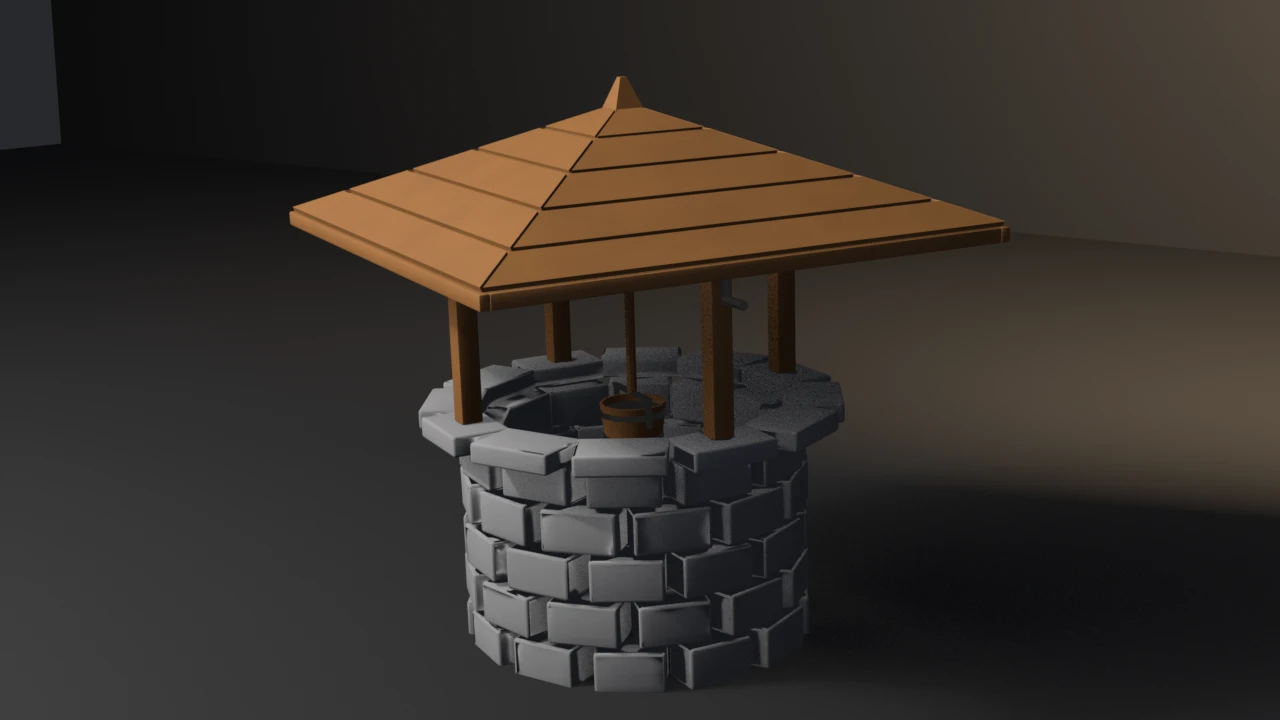
A procedural stone well through UVs, bake, LOD, collider, and Unity glTF, asserting recomputed budgets rather than an API contract.
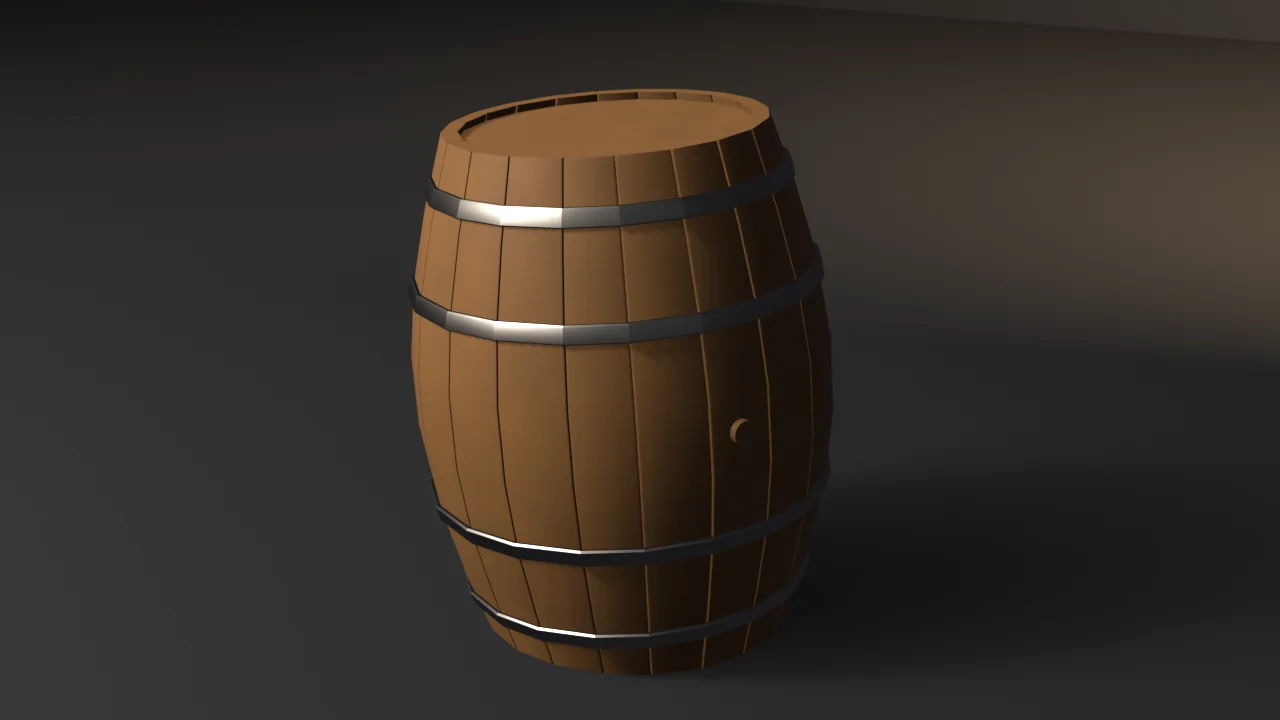
A procedural wine-cask with boarded, croze-seated heads and chord-lofted hoops through UVs, bake, LOD, collider, and Unity glTF, asserting recomputed budgets rather than an API contract.