shipping-crate
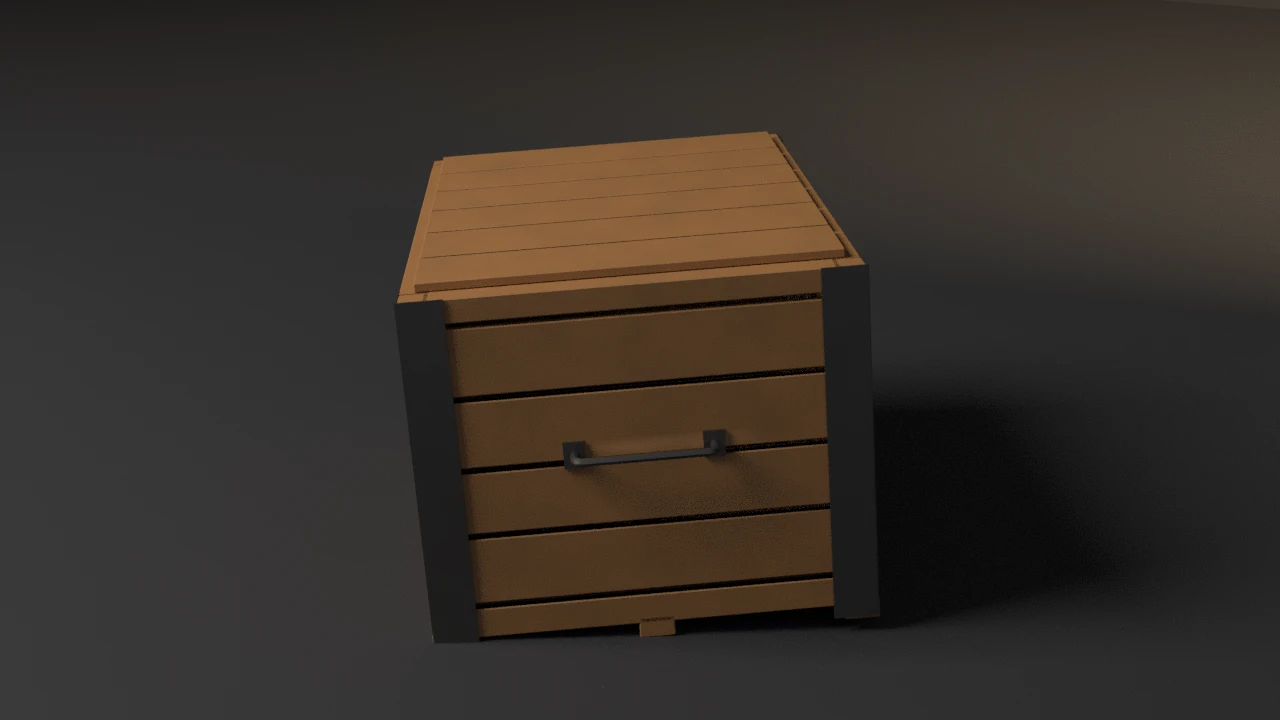
A procedural shipping crate through UVs, bake, LOD, collider, and Unity glTF, asserting recomputed budgets rather than an API contract.
A procedural coastal diorama tile — a fragment of a bedded sandstone headland at the sea's edge as one eroded mass: eighteen level hard and soft beds running on from the legs into the roof and the stack, jointed faces leaning back and battered and flared at the foot, one weathering field read on the face through every bed, fallen-out blocks and open joints, soft beds undercut to a wave-cut notch; two legs curving in on an ellipse to meet at the crown under a roof that steps down seaward; a tapering stack standing in the sea; the sea filling the tile to its rim with foam at the shore and round the feet, a wave-cut platform, tide pools and a shingle cove, fallen blocks, boulders and pebbles, and a draped turf mat with sea grass and thrift cushions — through UVs, bake, LOD, collider, and Unity glTF, asserting recomputed budgets rather than an API contract.
Rendered headless by the showcase piece itself — click to zoom.
category Nature
blender --background --python showcase/sea-stack-arch/sea_stack_arch.py --
A showcase piece, not an example, and the tenth in the nature category. It builds a procedural game-ready coastal diorama tile, 2.84 × 1.96 m across and 1.46 m high: a fragment of a bedded sandstone headland at the sea's edge, with a natural arch through it and a sea stack standing in the water beside it.
The littoral bands are in the materials: dark wet stone and green-black weed at the waterline, a barnacle crust over it, a black lichen band above, then orange and grey lichen high up, bird lime splashed on the high ledges and streaked down the seaward faces; each bed its own cast, so the strata band across the rock; overhangs stay dark and damp.
Every seeded draw comes from random.Random(SEED) in plan_scene(), before anything is built: each face's drift and set-backs, the weathering fields, each bed's relief, fallen-out blocks, joints and undercut, the loose rock and the cover. Per-point variety comes from closed-form functions of position. No flag draws from the stream, so a falsifier changes only what it names.
Every column is sampled on one fixed set of rays from its centre, and a bed's outline on a ray is where the ray leaves the intersection of its half-planes, each set in by the bed's set-back. A soft bed on a ray is the hard face either side, read with that bed's own set-back, less its undercut, so the bites are exact; a leg's top soft bed is also cast against the roof's lowest bed from the leg's own centre. The piece is a stack of flat beds, a coplanar hazard: each bed's walls batter by their own degree or two, arrises carry a sub-millimetre wear ray by ray, a pass draws any soft-bed facet still in another bed's plane 1.5 mm toward its own centroid, and blades, stalks, heads and cushions landing in another shell's plane turn 3° about their root.
Rock is smooth-shaded with an 18° crease, so the arrises and fallen-out blocks stay crisp; grass and heads smooth. Eight materials: sandstone (the beds and fallen blocks), wave-cut shelf (platform, shingle, seabed, skirt), sea water, foam, cobble (boulders and pebbles), turf, grass (sea grass, thrift leaves and stalks), sea thrift.
It asserts budget conformance of the generated result. It does not witness an API contract. "It rendered without error" is not a check.
Composes skills mesh-editing-and-bmesh, bake-high-to-low, depsgraph-and-evaluated-data, engine-export-presets, and snippets bake_normal_high_to_low.py, setup_bake_target_image.py, lod_chain.py / decimate_to_budget.py, convex_hull_collider.py, export_preset_unity.py (helpers copied inline, not imported).
The collider is five convex hulls joined in one mesh, built from points only: each leg, the roof, the stack and the tile, so a player can pass under the arch.
Every budget is declared as a named constant. Every gate recomputes its value from the mesh, materials, UVs, evaluated LOD, collider, or export file.
| Axis | Declared | Measured (5.2.1) |
|---|---|---|
| Base triangles | 89900–90900 | 90422 |
| LOD1 ratio | 0.32–0.62 of base | 0.5000 |
| LOD2 ratio | 0.10–0.35 of base | 0.2200 |
| Materials | exactly 8 distinct; face floors sandstone ≥45000, shelf ≥13000, water ≥5380, foam ≥1900, cobble ≥2770, turf ≥5370, grass ≥5170, thrift ≥3440 | 8 slots; 46448 / 13438 / 5546 / 1966 / 2856 / 5540 / 5331 / 3552 |
| UVs | in 0..1, AABB overlap ≤ 1e-5 | in range, overlap 0 |
| Outer AABB | (2.8400, 1.9600, 1.4649) m ± 0.01 | (2.8400, 1.9600, 1.4649), zmin 0 |
| Collider tris (five hulls) | ≤ 270 | 244 |
| Export | written, size > 0, removed after measuring | 9158084 bytes |
DECIMATE COLLAPSE triangle counts are not identical across Blender series, so the LOD gate is a ratio band, not an exact count. Bake pixels are stochastic, so the bake gate is has_data plus operator FINISHED, not byte-identity. The plan is seeded and nothing else is random; two default runs print identical measurements, and 4.5.11 and 5.1.2 print the same measurements as 5.2.1.
Recomputed from the generated mesh, not asserted about the script.
| Axis | Declared | Measured |
|---|---|---|
| Non-manifold edges | 0 | 0 |
| Loose verts / edges | 0 / 0 | 0 / 0 |
| Doubles merged at 1e-5 | 0 | 0 |
| Zero-area faces | 0 | 0 |
| N-gons | 0 | 0 |
| Coplanar cross-shell face pairs (KD range 0.05 m, plane ε 1e-4) | 0 | 0 |
Grounded: zmin | within 1e-4 of 0 | 0.0000 |
The tile's flat base is the only geometry at Z = 0.
A headland has no joinery. What makes this read as a sea arch is that the beds lie level and run on from column to column, that the soft beds are cut back under the hard ones, that the roof rests on both legs and the legs and the stack stand in the ground, that there is a clear hole through it, that the stack stands over its own foot, that the sea lies level and is held by the shore and the tile's rim with its foam at the waterline, that the loose rock rests on the ground, that the turf and flowers grow out of the tops, and that the rock is ragged rather than squared. Each face carries Part, Ident (column and layer), Layer, Hard and Cap tags and each vertex a Ring, so a bed, its end rings and its top can be named; every measurement is then made on the shell's geometry.
| Axis | Declared | Measured |
|---|---|---|
| Beds bite: every soft bed's end ring, shallowest vertex inside the hard bed it runs into (ray-parity signed depth, majority of seven rays), the roof's lowest bed over each leg included | 0.001–0.030 m, 41 joints | 0.0019–0.0163; roof on the legs 0.0149, 0.0156 |
| Stack plumb: the volume centroid of all its beds inside the convex footprint of its narrowest section (the foot notch's middle ring) | ≥ 0.100 m | 0.1276 |
| Feet sealed: for each leg and the stack, in each of 8 sectors round the lowest bed, its most-buried vertex under the ground straight above it | ≥ 0.020 m in 8 of 8 | worst 0.0307, 8 of 8 each |
| Aperture: rays along +Y past every bed; clear height up the opening's centre line from the water, and the narrowest clear width over the 0.60 m above the water | width ≥ 0.22 m, height ≥ 0.68 m | width 0.2640, height 0.7570 |
| Bedding level: a least-squares plane through every hard bed's top-cap vertices; its tilt, and per layer the spread of the fitted heights across the columns | tilt ≤ 0.8°, spread ≤ 0.004 m, 21 bed tops | tilt 0.0000°, spread 0.00000 |
| Undercut: per soft bed, the median over its middle ring of how far the hard beds either side stand out past it, cast along its own outward normal at each host's face ring nearest it | 0.008–0.085 m, 22 soft beds | 0.0125–0.0786 |
| Water: the median height of the sea's top sheet and its largest excursion from it; each pool's top flat | level 0.105 ± 0.0015 m; ripple 0.0015–0.0090 m; pools ≤ 0.0005 m | 0.10500; 0.00240; 0.0, 0.0 |
| Water contained: the ground (the shore or the tile's rim) over every rim vertex and rim-edge midpoint of the sea's and each pool's top | ≥ 0.008 m, 544 points | 0.01007 |
| Foam seated: every foam vertex off the water's level; its land edge's top under the ground or inside a foot | ≤ 0.006 m; ≥ 0.004 m, 3 lines | 0.00430; 0.00535 |
| Loose rock sealed: per block, boulder and pebble, in each sector holding a vertex, its most-buried vertex under the ground | ≥ 0.003 m, 57 pieces | worst 0.0050 |
| Loose rock apart: pairs of pieces whose BVH trees overlap | 0 | 0 |
| Cover rooted: every blade's and stalk's base cap and every cushion's underside inside the turf or the top bed under it (the deeper of the two); every blade, stalk, head and cushion joined to its top | 0.004–0.050 m, 324 roots; none loose | 0.0075–0.0395; none loose |
| Ragged: the share of the rock's walls (faces within 20° of vertical, by area) whose plan normal lies within 5° of its column's own axes | ≤ 0.25 | 0.1764 |
The feet are bedded against the ground as built: each lowest bed's foot is set 30 mm under the lowest ground point beneath its widest ring, and kept off the sea sheet's two planes. The pools' levels are read off the built platform. The bite is the distance to the host's nearest face, so it is smallest beside a fallen-out block, where the host's face turns in within a few millimetres of the soft bed's ring.
Each falsifier violates one named budget. Every one was run on 5.2.1 and 4.5.11 and exited its declared code. The envelope and the triangle count were unchanged in every run.
| Flag | Budget violated | Exit |
|---|---|---|
--skip-decimate | LOD1 ratio band (measured 1.0000) | 9 |
--stray-vert | loose vertex count is 0 (measured 1) | 15 |
--lift-z | bounding box zmin is 0 (measured 0.05000) | 16 |
--gap-lintel | beds bite (the left leg's top bed stopped 15 mm under the roof: −0.0150 m) | 17 |
--lean-stack | stack plumb (the stack sheared 0.50 m per metre of height toward the sea: 0.0571 m) | 19 |
--cut-pillar | feet sealed (the right leg's foot stopped 20 mm over the seabed: worst sector −0.0406 m, 0 of 8) | 20 |
--close-arch | aperture (the right leg's side of the opening narrowed to a tenth: width 0.2080 m) | 21 |
--tilt-beds | bedding level (the interior bed boundaries turned 2.5° about a line across the fin: 2.530°) | 22 |
--flush-beds | undercut (every soft bed's middle rings 2 mm behind the hard beds, its bites unchanged: 0.0020–0.0065 m on the failing beds) | 23 |
--flat-sea | water level and ripple (the sheet laid flat: ripple 0.00000 m) | 24 |
--short-sea | water contained (the rim stopped 50 mm short of the shoreline: −0.01925 m) | 25 |
--lift-foam | foam seated (the foam raised 20 mm: 0.02430 m off the water, land edge −0.01465 m) | 26 |
--perch-talus | loose rock sealed (each piece seated against the ground at its centre alone: −0.0420 m) | 27 |
--pile-talus | loose rock apart (three blocks drawn together after the relaxation: 1 pair overlaps) | 28 |
--float-cover | cover rooted (every blade, stalk and cushion base raised 50 mm, its tip held: −0.0335 m, all 398 pieces loose) | 29 |
--tidy-rock | ragged (every bed squared to a box on its column's axes, leaning and battered as before but without weathering, fallen blocks, joints or the curved arch: 0.8314) | 31 |
The roof's grass and thrift are the top of the envelope, so --float-cover holds every tip where it was and moves the bases alone. --lean-stack shears the stack horizontally about its foot, which keeps each bed's footprint over the one below at every height, so the bites do not steal it; --close-arch narrows only the right leg's side of the hole, so the legs' faces never come to share a plane; --tilt-beds turns the interior boundaries only, leaving the foot and the top. --tidy-rock keeps the triangle count (every ring keeps its rays) and spreads the cover over the weathered top's outline, so it changes the rock alone.
blender --background --python sea_stack_arch.py --
blender --background --python sea_stack_arch.py -- --skip-decimate
blender --background --python sea_stack_arch.py -- --stray-vert
blender --background --python sea_stack_arch.py -- --lift-z
blender --background --python sea_stack_arch.py -- --gap-lintel
blender --background --python sea_stack_arch.py -- --lean-stack
blender --background --python sea_stack_arch.py -- --cut-pillar
blender --background --python sea_stack_arch.py -- --close-arch
blender --background --python sea_stack_arch.py -- --tilt-beds
blender --background --python sea_stack_arch.py -- --flush-beds
blender --background --python sea_stack_arch.py -- --flat-sea
blender --background --python sea_stack_arch.py -- --short-sea
blender --background --python sea_stack_arch.py -- --lift-foam
blender --background --python sea_stack_arch.py -- --perch-talus
blender --background --python sea_stack_arch.py -- --pile-talus
blender --background --python sea_stack_arch.py -- --float-cover
blender --background --python sea_stack_arch.py -- --tidy-rock
blender --background --python sea_stack_arch.py -- --output arch.png
Smoke passes no flags.
The hero does not turn the piece (HERO_YAW_DEG 0) and looks at the fin from the front, 13° to the left of the arch's axis and a little above the roof, so the opening reads against the warm wedge on the wall behind it and the stack stands clear to its right. Framing measures fill x 0.816, y 0.861, margins left 0.119, right 0.066, bottom 0.056, top 0.083; the asset-quality floors pass.
File-local. 9 is a valid check code. 10 is reserved for gallery_framing.check_framing on the --output path. 15–17 and 19 are the hygiene, grounded, joint-fit (beds bite) and plumb (stack) family; 18 is not used. 20–29 and 31 are file-local. 30 is the asset-quality floor on the render path: check_asset_quality returns 11, which this piece already spends on the collider ceiling, so the call site remaps it.
| Code | Meaning |
|---|---|
| 0 | Success |
| 1 | Uncaught exception (FATAL wrapper) |
| 2 | argparse / usage |
| 3 | Mesh did not build, no UV layer, or not one tile, one sea and 43 bed shells |
| 4 | Base triangle count outside range |
| 5 | Material count ≠ 8 distinct slots, or a face-count floor missed |
| 6 | UVs outside 0..1 |
| 7 | UV AABB overlap above tolerance |
| 8 | World AABB off declared outer size |
| 9 | LOD ratio band (--skip-decimate lands here) |
| 10 | Framing gate (render path only) |
| 11 | Collider triangle count above ceiling |
| 12 | Bake did not finish or image has no data |
| 13 | Export file missing or empty |
| 14 | --output produced no file |
| 15 | Mesh hygiene: loose, non-manifold, zero-area, doubles, n-gons, coplanar cross-shell pairs |
| 16 | Not grounded: bounding box zmin off 0 |
| 17 | Beds bite: a soft bed's end ring not inside the hard bed it runs into, the roof's lowest bed on a leg included (--gap-lintel) |
| 19 | Stack plumb: its mass centre not inside its footprint (--lean-stack) |
| 20 | Feet sealed: a sector round a leg's or the stack's foot not bedded in the ground (--cut-pillar) |
| 21 | Aperture: the opening's clear width or height under its minimum (--close-arch) |
| 22 | Bedding: a bed top tilted, or a layer's height not continuous across the columns (--tilt-beds) |
| 23 | Undercut: a soft bed recessed outside its band (--flush-beds) |
| 24 | Water: the sea off its level or its ripple outside the band, or a pool not flat (--flat-sea) |
| 25 | Water contained: a sheet's rim not under the ground (--short-sea) |
| 26 | Foam: off the waterline, or its land edge not under the ground or in the rock (--lift-foam) |
| 27 | Loose rock: a sector of a block, boulder or pebble not bedded in the ground (--perch-talus) |
| 28 | Loose rock: two pieces overlap (--pile-talus) |
| 29 | Cover: a root out of its band in the turf, or a piece not joined to its top (--float-cover) |
| 30 | Asset-quality floor (render path only; remapped from 11) |
| 31 | Ragged: too much of the rock's walls squared to its axes (--tidy-rock) |
"""Game-ready sea stack and arch — a showcase piece, not an example. Asserts budget conformance of a procedural coastal diorama tile after composing shipped pipeline pieces: bmesh construction, UVs, eight materials, high-to-low normal bake, LOD chain, convex hull colliders, Unity glTF export. A fragment of a bedded sandstone headland stands at the sea's edge on a square coastal tile. The sea fills the right of the tile out to its edge, where the tile's rim holds it, and runs through the arch to the back edge; a wave-cut rock platform and a shingle cove take the left. The headland is one eroded mass of level beds: hard sandstone beds stand out as ledges over thin undercut soft ones, and every bed's outline is the headland's jointed faces, each leaning back with height and set back by the bed's own amount, with blocks fallen out, a few open joints and a rough weathered face. The sea has cut a rounded hole through it: two legs, battered and flared at the foot and cut back at the waterline, curve in to meet under a roof of hard beds whose upper beds step down toward the sea. A rugged, tapering stack stands in the sea beside it. The sea is a rippled sheet at a declared level, foam lies at the waterline along the shore and round the feet standing in the water, fallen blocks, boulders and a shingle of pebbles rest on the platform and the beach, and a turf mat drapes over the tops with sea grass and cushions of sea thrift. Budgets are declared below and recomputed from the generated result. They are not API-contract witnesses. Each falsifier violates one named budget: ``--skip-decimate`` the LOD-ratio band, ``--stray-vert`` mesh hygiene, ``--lift-z`` grounded zmin, ``--gap-lintel`` every bed biting the bed it lies on (the roof on both legs), ``--lean-stack`` the stack's mass over its footprint, ``--cut-pillar`` the legs and the stack sealed in the platform, ``--close-arch`` the clear aperture, ``--tilt-beds`` the bedding level and continuous, ``--flush-beds`` the soft beds recessed, ``--flat-sea`` the water level and ripple band, ``--short-sea`` the water contained, ``--lift-foam`` the foam seated at the waterline, ``--perch-talus`` the loose rocks sealed on the platform, ``--pile-talus`` the loose rocks apart, ``--float-cover`` the cover rooted in the tops, ``--tidy-rock`` the rock ragged rather than squared. Seeded, not random: ``random.Random(SEED)`` draws the whole plan before anything is built, so flags never shift the stream. DECIMATE COLLAPSE triangle counts are not byte-identical across Blender versions — the LOD gate is a ratio band, not an exact count. blender --background --python sea_stack_arch.py -- blender --background --python sea_stack_arch.py -- --skip-decimate blender --background --python sea_stack_arch.py -- --output arch.png """ import argparse import math import os import random import sys import tempfile import traceback import bmesh import bpy from mathutils import Matrix, Vector from mathutils.bvhtree import BVHTree from mathutils.kdtree import KDTree # Showcase lives at repo-root/showcase/, not under examples/. The framing # helper is the repo's only shared import and lives next to the examples; # resolve the repo root so we do not move gallery_framing.py. _REPO = os.path.abspath( os.path.join(os.path.dirname(os.path.abspath(__file__)), os.pardir, os.pardir) ) sys.path.insert(0, os.path.join(_REPO, "examples")) sys.dont_write_bytecode = True import gallery_framing # noqa: E402 import gallery_asset_quality # noqa: E402 SEED = 5903 TAU = 2.0 * math.pi UP = Vector((0.0, 0.0, 1.0)) # --- The tile: a rounded square, sea on the right, shore on the left --------- TILE_H = (1.42, 0.98) # half extents, m TILE_RC = 0.24 # corner radius TILE_N = {"low": 80, "high": 112} WATER_LEVEL = 0.105 SHELF_Z = 0.165 # the wave-cut platform's top, before its swells LIP = 0.016 # the tile's rim this far over the water where the sea meets it LIP_W = 0.035 # the rim's width LIP_R = 0.055 # the seabed climbs to the rim over this RAMP_ROCK = 0.07 # the platform's edge drops to the water over this RAMP_BEACH = 0.50 # the shingle beach climbs from the water over this RAMP_SEA = 0.14 # the seabed falls from the waterline over this SEABED_NEAR = 0.075 SEABED_FAR = 0.047 # the waterline, as x at y: a cove in front, the channel under the arch SHORE = ((-1.10, -0.40), (-0.98, -0.46), (-0.72, -0.63), (-0.42, -0.62), (-0.14, -0.52), (0.12, -0.44), (0.46, -0.43), (0.76, -0.55), (0.98, -0.67), (1.10, -0.71)) BEACH_Y = (0.30, 0.46) # the beach fades in over -y in this band # tide pools: centre, radius, depth POOLS = (((-1.17, -0.19), 0.080, 0.028), ((-1.12, 0.80), 0.090, 0.030)) POOL_RAMP = 0.04 POOL_FREE = 0.012 # a pool's level this far under the lowest point of its rim SEA_C = (0.55, -0.05) # the water sheet's polar centre WATER_MARGIN = 0.05 # the sea's rim runs this far past the shoreline, under the shore WATER_EDGE_IN = 0.012 # and this far inside the tile's outline, under its rim WATER_SLAB = 0.026 POOL_SLAB = 0.010 WATER_N = 48 POOL_N = 10 RIPPLE_AMP = 0.0024 CALM_W = 0.07 # ripples die out over this width off the shore CALM_FEET = ((0.24, 0.32, 0.40), (0.86, -0.20, 0.34)) # and inside these discs round the feet FOAM_N = 300 COL_FOAM_N = 96 FOAM_IN = (0.030, 0.100) # the foam's land edge this far under the rock, the beach FOAM_OUT = (0.014, 0.048) FOAM_T = 0.0035 # half its thickness # --- The beds --------------------------------------------------------------- # Bed boundaries (m): layer k lies between BOUNDS[k - 1] and BOUNDS[k]; # layer 0 runs down into the platform. Hard beds of uneven thickness, thin # soft beds between them; the legs stop at layer 10, the roof is 11-17. BOUNDS = (0.255, 0.360, 0.385, 0.470, 0.490, 0.600, 0.635, 0.700, 0.718, 0.838, 0.862, 0.975, 0.998, 1.098, 1.130, 1.262, 1.282, 1.350) HARD = tuple(k % 2 for k in range(len(BOUNDS))) # a hard bed's profile: (height fraction, arris fraction): a chamfer at the # foot, a weathered round at the top HARD_PROFILE = ((0.0, 1.0), (0.12, 0.0), (0.84, 0.0), (0.94, 0.3), (1.0, 1.0)) CH = 0.006 # a hard bed's weathered arris (tidy rock) NOTCH = 0.026 # a soft bed recessed this far behind the hard beds either side NOTCH_END = 0.022 # its end rings at least this far inside them NOTCH_FOOT = 0.065 # the wave-cut notch at a foot BITE = 0.012 # a soft bed runs this far into the hard beds either side EMBED = 0.030 # the lowest bed's foot this far under the platform all round JW = 0.030 # an open joint's V half-width at the face FIN_Y = 0.32 # the headland's centre line Z_REF = 0.25 # the faces are placed at this height and lean back above it FLARE = 0.060 # the feet flare out this far at the ground FLARE_H = 0.10 BUTTRESS = (0.075, 0.64, 1.6) # the legs and the stack batter out below this height, this far at z = 0 # the headland's faces at Z_REF: bearing (deg), a point, lean back per metre # of height. Ordered round the outline, so each face turns the corner. FIN_FACES = ((-110.0, (-1.14, 0.075), 0.08), (-99.0, (-0.72, 0.055), 0.07), (-83.0, (-0.08, 0.055), 0.07), (-72.0, (0.34, 0.095), 0.09), (-38.0, (0.47, 0.13), 0.24), (-9.0, (0.53, 0.32), 0.25), (34.0, (0.46, 0.52), 0.22), (70.0, (0.34, 0.555), 0.08), (83.0, (-0.06, 0.585), 0.07), (99.0, (-0.62, 0.60), 0.06), (110.0, (-1.06, 0.58), 0.08), (150.0, (-1.12, 0.53), 0.20), (189.0, (-1.18, 0.32), 0.24), (212.0, (-1.12, 0.11), 0.22)) # the fin's open joints: a point and a bearing in plan, and the lowest layer FIN_JOINTS = ((-0.96, FIN_Y, 94.0, 0), (-0.16, FIN_Y, 87.0, 13), (0.30, FIN_Y, 97.0, 0)) # the arch: hole centre line, half-widths at the springing, crowns APER_X = -0.20 ARCH_SPRING = 0.20 ARCH_W = (0.30, 0.25) # left and right half-widths at the springing ARCH_CROWN = (0.835, 0.825) # the legs meet here, under the roof ARCH_P, ARCH_Q = 2.0, 0.5 ARCH_OVER = 0.018 # over the crown the legs run this far into each other SETBACK_MAX = 0.075 # a bed's relief never eats further into the mass than this ARCH_TURN = (7.0, 173.0) # the legs' inner faces' bearings ARCH_CORNER = (38.0, 0.15) # the hole's arrises cut at this turn, this far off the centre line # the roof's upper beds end short: seaward (x, bearing), landward (x, bearing) ROOF_ENDS = {13: ((0.30, 8.0), (-1.20, 185.0)), 15: ((0.13, -12.0), (-1.08, 178.0)), 17: ((0.02, 14.0), (-1.06, 176.0))} STACK_C = (0.86, -0.20) STACK_YAW = 25.0 STACK_R = (0.235, 0.215, 0.245, 0.225, 0.210, 0.235, 0.220) # face distances at Z_REF STACK_JOINTS = ((0.0, 0.01, 101.0, 0),) # the stack's upper beds broken back: bearing (deg), distance of the cut from the centre STACK_CUTS = {9: (300.0, 0.16), 11: (205.0, 0.135), 13: (55.0, 0.125)} # columns: id, plan centre, rays, layers COLUMNS = { "A": {"id": 1, "centre": (-0.84, FIN_Y), "M": 112, "layers": range(0, 11)}, "B": {"id": 2, "centre": (0.20, FIN_Y), "M": 88, "layers": range(0, 11)}, "L": {"id": 3, "centre": (-0.42, FIN_Y), "M": 172, "layers": range(11, 18)}, "S": {"id": 4, "centre": STACK_C, "M": 80, "layers": range(0, 14)}, } COLUMN_ORDER = ("A", "B", "L", "S") KEY_OF = {spec["id"]: key for key, spec in COLUMNS.items()} LINTEL_LAYER = 11 TILT_X0 = -0.33 # --tilt-beds turns the beds about this line # --- Loose rock --------------------------------------------------------------- # fallen blocks: plan centre, length, width, height TALUS = ((-0.86, -0.15, 0.22, 0.15, 0.11), (-0.58, -0.19, 0.14, 0.10, 0.08), (-1.22, 0.76, 0.18, 0.12, 0.09), (0.30, -0.22, 0.13, 0.10, 0.08), (0.74, 0.46, 0.15, 0.11, 0.08)) TALUS_M = 28 # rounded boulders: plan centre, radius BOULDERS = ((-0.46, -0.27, 0.046), (-1.30, -0.33, 0.050), (-0.98, -0.32, 0.040), (-0.78, 0.80, 0.042), (0.06, -0.32, 0.034), (-0.30, -0.42, 0.030)) N_PEBBLES = 46 PEBBLE_R = (0.012, 0.030) ROCK_GAP = 0.008 # loose rocks held apart by this beyond their radius bounds REST_SINK = 0.005 # every sector's most-buried vertex this far under the platform # --- Cover -------------------------------------------------------------------- TURF_H = 0.013 # the mat's dome over its rim TURF_BASE = 0.007 # its rim this far over the top bed TURF_RINGS = 8 TURF_LIP = (-0.008, 0.028) # the mat's rim this far past the top bed's face TUFTS = {"L": 34, "S": 7} THRIFT = {"L": 13, "S": 3} COVER_SPACING = {"L": 0.044, "S": 0.046} COVER_F = {"L": (0.05, 0.78), "S": (0.05, 0.45)} # a clump's reach toward the top's edge ROOT_D = 0.030 # a blade or stalk starts this far under the turf's top BBOX_TOL = 0.01 # Fitted after locking geometry. Recomputed from bound_box. OUTER_SIZE = (2.8400, 1.9600, 1.4649) BASE_TRIS_MIN = 89900 BASE_TRIS_MAX = 90900 LOD1_RATIO_MIN = 0.32 LOD1_RATIO_MAX = 0.62 LOD2_RATIO_MIN = 0.10 LOD2_RATIO_MAX = 0.35 LOD1_TARGET = 0.50 LOD2_TARGET = 0.22 MATERIAL_COUNT = 8 UV_EPS = 1e-4 UV_OVERLAP_MAX = 1e-5 COLLIDER_TRIS_MAX = 270 BAKE_RES = 512 CAGE_EXTRUSION = 0.01 # face floors: rock, shelf, water, foam, cobble, turf, grass, thrift FACE_FLOORS = (45000, 13000, 5380, 1900, 2770, 5370, 5170, 3440) ZMIN_EPS = 1e-4 DOUBLES_EPS = 1e-5 AREA_EPS = 1e-10 COPLANAR_NORMAL_EPS = 1e-4 COPLANAR_PLANE_EPS = 1e-4 COPLANAR_CENTRE_MAX = 0.05 LIFT_Z = 0.05 # Beds bite: every soft bed's end ring inside the hard bed it runs into BED_BITE = (0.001, 0.030) GAP_LINTEL = 0.015 # --gap-lintel stops one leg's top bed this far under the roof # Stack: its mass centre inside its notch's footprint TIP_MIN = 0.100 LEAN = 0.50 # --lean-stack shears the stack this far per metre of height LEAN_DIR = (0.30, -0.954) # Sealed: every sector's most-buried foot vertex under the platform SECTORS = 8 SEAL_EPS = 0.020 CUT_PILLAR = 0.020 # --cut-pillar stops a leg's foot this far over the platform # Aperture: rays through the opening along +Y APER_W_MIN = 0.22 APER_H_MIN = 0.68 CLOSE_ARCH = 0.10 # --close-arch narrows the right leg's side of the opening to this fraction # Bedding: every hard bed's top level within a tilt band, each layer continuous TILT_MAX_DEG = 0.8 LEVEL_TOL = 0.004 TILT_BEDS_DEG = 2.5 # Notch: the soft beds recessed behind the hard beds by a band NOTCH_BAND = (0.008, 0.085) FLUSH_NOTCH = 0.002 # Water: level and ripple LEVEL_EPS = 0.0015 RIPPLE_BAND = (0.0015, 0.0090) POOL_FLAT = 0.0005 ENCLOSE_MIN = 0.008 SHORT_SEA = -0.05 # --short-sea stops the rim this far short of the shoreline # Foam: at the waterline, its land edge under the rock FOAM_BAND = 0.006 FOAM_TUCK = 0.004 LIFT_FOAM = 0.020 # Loose rock: sealed all round, and apart PERCH_BAND = 0.003 # Cover: rooted in the turf or the top bed ROOT_BAND = (0.004, 0.050) FLOAT_COVER = 0.050 # Ragged: the share of the rock's walls squared to its column's axes TIDY_ANG = 5.0 TIDY_MAX = 0.25 # Hero yaw about Z only (level on the stage). HERO_YAW_DEG = 0.0 WALL_Y = 4.2 ROCK_IDX = 0 SHELF_IDX = 1 WATER_IDX = 2 FOAM_IDX = 3 COBBLE_IDX = 4 TURF_IDX = 5 GRASS_IDX = 6 THRIFT_IDX = 7 MAT_LABELS = ("rock", "shelf", "water", "foam", "cobble", "turf", "grass", "thrift") # part tags, one per face, so the audits can name a shell's role P_TILE, P_BED, P_SEA, P_POOL, P_FOAM, P_TALUS, P_BOULDER = 1, 2, 3, 4, 5, 6, 7 P_TURF, P_BLADE, P_STALK, P_HEAD, P_CUSHION, P_PEBBLE = 8, 9, 10, 11, 12, 13 COVER_PARTS = (P_BLADE, P_STALK, P_HEAD, P_CUSHION) def eevee_engine_id(): return "BLENDER_EEVEE" if bpy.app.version >= (5, 0, 0) else "BLENDER_EEVEE_NEXT" def fail(msg, code): print(f"ERROR: {msg}", file=sys.stderr) return code def triangle_count(mesh): mesh.calc_loop_triangles() return len(mesh.loop_triangles) def evaluated_triangle_count(obj): # Duplicated from snippets/lod_chain.py / decimate_to_budget.py (not a package). depsgraph = bpy.context.evaluated_depsgraph_get() eval_obj = obj.evaluated_get(depsgraph) eval_mesh = eval_obj.to_mesh() try: eval_mesh.calc_loop_triangles() return len(eval_mesh.loop_triangles) finally: eval_obj.to_mesh_clear() def smoothstep(x, lo, hi): t = min(max((x - lo) / (hi - lo), 0.0), 1.0) return t * t * (3.0 - 2.0 * t) def ease(t): t = min(max(t, 0.0), 1.0) return 1.0 - (1.0 - t) * (1.0 - t) def hash01(a, b, c): """A closed-form draw in [0, 1) from three indices.""" x = math.sin(a * 12.9898 + b * 78.233 + c * 37.719 + SEED * 0.0137) * 43758.5453 return x - math.floor(x) def perp_basis(d): ref = UP if abs(d.z) < 0.9 else Vector((1.0, 0.0, 0.0)) e1 = d.cross(ref).normalized() return e1, d.cross(e1).normalized() # -------------------------------------------------------------------------- # The ground as a function of plan position # -------------------------------------------------------------------------- def tile_sdf(x, y): """Signed distance to the tile's rounded-square outline, negative inside.""" qx = abs(x) - (TILE_H[0] - TILE_RC) qy = abs(y) - (TILE_H[1] - TILE_RC) return math.hypot(max(qx, 0.0), max(qy, 0.0)) + min(max(qx, qy), 0.0) - TILE_RC def edge_in(x, y): return -tile_sdf(x, y) def tile_point(u, v): """A square grid point (u, v in -1..1) on the tile: concentric copies of its outline, the grid's rim on the outline itself.""" s = max(abs(u), abs(v)) if s < 1e-12: return 0.0, 0.0 bx, by = u / s * TILE_H[0], v / s * TILE_H[1] lo, hi = 0.0, 1.0 for _ in range(44): mid = 0.5 * (lo + hi) if tile_sdf(bx * mid, by * mid) < 0.0: lo = mid else: hi = mid t = 0.5 * (lo + hi) return bx * t * s, by * t * s def catmull(pts, y): n = len(pts) k = 0 while k < n - 2 and y > pts[k + 1][0]: k += 1 p0, p1 = pts[max(k - 1, 0)][1], pts[k][1] p2, p3 = pts[k + 1][1], pts[min(k + 2, n - 1)][1] t = min(max((y - pts[k][0]) / (pts[k + 1][0] - pts[k][0]), 0.0), 1.0) return 0.5 * (2.0 * p1 + (p2 - p0) * t + (2.0 * p0 - 5.0 * p1 + 4.0 * p2 - p3) * t * t + (3.0 * p1 - p0 - 3.0 * p2 + p3) * t * t * t) def shore_x(y): return catmull(SHORE, y) + 0.016 * math.sin(11.0 * y + 0.7) + 0.007 * math.sin(27.0 * y + 2.1) def shore_slope(y, h=1e-4): return (shore_x(y + h) - shore_x(y - h)) / (2.0 * h) def land_dist(x, y): """Signed distance to the waterline, positive on land.""" return (shore_x(y) - x) * 0.94 def beach_w(y): return smoothstep(-y, BEACH_Y[0], BEACH_Y[1]) def beach_amount(x, y): """1 on the shingle strip of the cove: from just under the water to about half a metre up the shore.""" ld = land_dist(x, y) return (beach_w(y) * smoothstep(ld, -0.07, 0.0) * (1.0 - smoothstep(ld, 0.40, 0.58)) * smoothstep(edge_in(x, y), 0.0, 0.03)) def pool_radius(i, phi): (_c, r, _d) = POOLS[i] return r * (1.0 + 0.10 * math.sin(3.0 * phi + 1.3 + i) + 0.05 * math.sin(5.0 * phi + 0.2 * i)) def pool_sdf(i, x, y): (c, _r, _d) = POOLS[i] dx, dy = x - c[0], y - c[1] return math.hypot(dx, dy) - pool_radius(i, math.atan2(dy, dx)) def shelf_height(x, y): return (SHELF_Z + 0.007 * math.sin(2.3 * x + 0.4) * math.cos(1.9 * y + 1.2) + 0.004 * math.sin(5.1 * x - 3.7 * y + 0.8) + 0.022 * smoothstep(-x, 0.95, 1.40)) def raw_height(x, y): ld = land_dist(x, y) if ld >= 0.0: b = beach_w(y) ramp = RAMP_ROCK + (RAMP_BEACH - RAMP_ROCK) * b top = shelf_height(x, y) - 0.022 * b h = WATER_LEVEL + (top - WATER_LEVEL) * ease(ld / ramp) for i, (_c, _r, depth) in enumerate(POOLS): pd = pool_sdf(i, x, y) if pd < 0.0: h -= depth * ease(-pd / POOL_RAMP) return h d = -ld bed = (SEABED_NEAR - (SEABED_NEAR - SEABED_FAR) * smoothstep(d, 0.05, 1.10) + 0.005 * math.sin(3.1 * x + 1.3) * math.cos(2.7 * y)) return WATER_LEVEL - (WATER_LEVEL - bed) * ease(d / RAMP_SEA) def ground_height(x, y): """The platform, the beach and the seabed, and the tile's rim over the water where the sea meets the tile's edge.""" h = raw_height(x, y) d = edge_in(x, y) lip = WATER_LEVEL + LIP if d < LIP_W + LIP_R and h < lip: h += (lip - h) * smoothstep(LIP_W + LIP_R - d, 0.0, LIP_R) return h def pool_level(i, G): """Each pool lies this far under the lowest point of its rim, read off the built platform.""" (c, _r, _d) = POOLS[i] low = 9.0 for k in range(180): phi = TAU * k / 180 r = pool_radius(i, phi) low = min(low, G.z(c[0] + r * math.cos(phi), c[1] + r * math.sin(phi))) return low - POOL_FREE def ray_table(centre, sdf, rmax=2.4, n=720): """Radius from ``centre`` along each of ``n`` bearings to the first point where ``sdf`` reaches 0.""" out = [] for k in range(n): th = TAU * k / n c, s = math.cos(th), math.sin(th) r0, r = 0.0, 0.01 while r < rmax and sdf(centre[0] + c * r, centre[1] + s * r) < 0.0: r0, r = r, r + 0.01 lo, hi = r0, r for _ in range(24): mid = 0.5 * (lo + hi) if sdf(centre[0] + c * mid, centre[1] + s * mid) < 0.0: lo = mid else: hi = mid out.append(0.5 * (lo + hi)) return out def table_at(table, th): n = len(table) x = (th % TAU) / TAU * n i = int(x) % n f = x - math.floor(x) return table[i] * (1.0 - f) + table[(i + 1) % n] * f def ripple(plan, x, y): return RIPPLE_AMP * sum(a * math.sin(kx * x + ky * y + ph) for kx, ky, ph, a in plan["waves"]) def calm(x, y): """Ripples die out toward the shore, the tile's rim and the feet standing in the water, where the foam lies.""" c = smoothstep(-land_dist(x, y), 0.01, CALM_W) * smoothstep(edge_in(x, y), LIP_W, LIP_W + 0.06) for fx, fy, r in CALM_FEET: c *= smoothstep(math.hypot(x - fx, y - fy), r, r + 0.08) return c class Ground: """The built platform, sampled by a ray straight down, so everything seated on it sits on the faces actually shipped.""" def __init__(self, tree): self.tree = tree def z(self, x, y): loc, _n, _i, _d = self.tree.ray_cast(Vector((x, y, 5.0)), Vector((0.0, 0.0, -1.0)), 20.0) return 0.0 if loc is None else loc.z # -------------------------------------------------------------------------- # Plan outlines # -------------------------------------------------------------------------- def resample_closed(pts, m): n = len(pts) seg = [math.hypot(pts[(i + 1) % n][0] - pts[i][0], pts[(i + 1) % n][1] - pts[i][1]) for i in range(n)] total = sum(seg) out = [] j, acc = 0, 0.0 for k in range(m): target = total * k / m while acc + seg[j] < target: acc += seg[j] j += 1 f = (target - acc) / seg[j] if seg[j] > 1e-12 else 0.0 a, b = pts[j], pts[(j + 1) % n] out.append((a[0] + (b[0] - a[0]) * f, a[1] + (b[1] - a[1]) * f)) return out def resample_open(pts, m): seg = [math.hypot(pts[i + 1][0] - pts[i][0], pts[i + 1][1] - pts[i][1]) for i in range(len(pts) - 1)] total = sum(seg) out = [] j, acc = 0, 0.0 for k in range(m): target = total * k / (m - 1) while j < len(seg) - 1 and acc + seg[j] < target: acc += seg[j] j += 1 f = min(max((target - acc) / seg[j], 0.0), 1.0) if seg[j] > 1e-12 else 0.0 a, b = pts[j], pts[j + 1] out.append((a[0] + (b[0] - a[0]) * f, a[1] + (b[1] - a[1]) * f)) return out def superellipse(hx, hy, p, n=2048): pts = [] for i in range(n): t = TAU * i / n c, s = math.cos(t), math.sin(t) pts.append((hx * math.copysign(abs(c) ** (2.0 / p), c), hy * math.copysign(abs(s) ** (2.0 / p), s))) return pts def outward_normals(P): n = len(P) out = [] for i in range(n): a, b = P[i - 1], P[(i + 1) % n] tx, ty = b[0] - a[0], b[1] - a[1] ln = math.hypot(tx, ty) or 1.0 out.append((ty / ln, -tx / ln)) return out def clip_poly(poly, planes, shift=0.0): """Sutherland-Hodgman: the part of a plan polygon on the inner side of every plane (P . m <= h - shift).""" out = list(poly) for (mx, my), h in planes: lim = h - shift src, out = out, [] n = len(src) for k in range(n): a, b = src[k], src[(k + 1) % n] da = a[0] * mx + a[1] * my - lim db = b[0] * mx + b[1] * my - lim if da <= 0.0: out.append(a) if (da < 0.0 < db) or (db < 0.0 < da): t = da / (da - db) out.append((a[0] + (b[0] - a[0]) * t, a[1] + (b[1] - a[1]) * t)) if len(out) < 3: return out return out def ring_from(poly, centre, bearing, m): """Resample a closed polygon to ``m`` points evenly along its length, starting where the ray from ``centre`` on ``bearing`` leaves it.""" clean = [poly[0]] for p in poly[1:]: if math.hypot(p[0] - clean[-1][0], p[1] - clean[-1][1]) > 1e-7: clean.append(p) if math.hypot(clean[0][0] - clean[-1][0], clean[0][1] - clean[-1][1]) <= 1e-7: clean.pop() dx, dy = math.cos(bearing), math.sin(bearing) n = len(clean) best = None for k in range(n): a, b = clean[k], clean[(k + 1) % n] ex, ey = b[0] - a[0], b[1] - a[1] den = dx * ey - dy * ex if abs(den) < 1e-12: continue wx, wy = a[0] - centre[0], a[1] - centre[1] t = (wx * ey - wy * ex) / den u = (wx * dy - wy * dx) / den if t > 0.0 and -1e-9 <= u <= 1.0 + 1e-9 and (best is None or t > best[0]): best = (t, k, (a[0] + ex * u, a[1] + ey * u)) if best is not None: _t, k, hit = best clean = [hit] + clean[k + 1:] + clean[:k + 1] return resample_closed(clean, m) def unit(deg): return math.cos(math.radians(deg)), math.sin(math.radians(deg)) def hole_half(z, w0, crown): """The hole's half-width at height z: full at the springing, closing to nothing at the crown on a flattened ellipse.""" t = (z - ARCH_SPRING) / (crown - ARCH_SPRING) if t <= 0.0: return w0 if t >= 1.0: return -ARCH_OVER return w0 * (1.0 - t ** ARCH_P) ** ARCH_Q def bound_z(k, x, tilt): """Boundary ``k`` (the top of layer k) at plan x; --tilt-beds turns the interior boundaries about a line across the fin.""" z = BOUNDS[k] if tilt and 0 <= k < len(BOUNDS) - 1: z += math.tan(math.radians(TILT_BEDS_DEG)) * (x - TILT_X0) return z def mean_ground(pts): return sum(ground_height(x, y) for x, y in pts) / len(pts) class Column: """A column of beds cut from the headland. At any height its outline is the intersection of its faces (vertical-ish planes that lean back with height and flare out at the foot), each set in by the bed's own retreat; the legs are cut by the arch's curved inner faces too. A hard bed then stands back, ray by ray, by its own relief: a rough face, blocks fallen out, open joints. A soft bed lies ``NOTCH`` inside the hard beds either side. Every bed is sampled on one fixed set of rays from the centre.""" def __init__(self, key, plan, M, flags=None): flags = flags or {} spec = COLUMNS[key] self.key = key self.id = spec["id"] self.M = M self.layers = list(spec["layers"]) self.lp = plan["layers"] self.centre = spec["centre"] self.tidy = bool(flags.get("tidy_rock")) self.close = CLOSE_ARCH if (key == "B" and flags.get("close_arch")) else 1.0 self.set_name = "stack" if key == "S" else "fin" src = plan["stack_box" if self.tidy else "stack_faces"] if key == "S" else \ plan["fin_box" if self.tidy else "fin_faces"] self.faces = list(src) self.field = plan["field"][self.set_name] self.joints = [] if not self.tidy: if key == "S": cs, sn = unit(STACK_YAW) for jx, jy, ang, lo in STACK_JOINTS: p0 = (STACK_C[0] + cs * jx - sn * jy, STACK_C[1] + sn * jx + cs * jy) self.joints.append((p0, unit(ang + STACK_YAW), lo)) else: for jx, jy, ang, lo in FIN_JOINTS: self.joints.append(((jx, jy), unit(ang), lo)) self._rays = None self.ref = None self.zf = 0.0 self.rays() self.zf = mean_ground(self.ref) # -- the outline ------------------------------------------------------- def flare(self, z): return FLARE * math.exp(-max(z - self.zf, 0.0) / FLARE_H) def buttress(self, z): if self.key == "L": return 0.0 a, top, p = BUTTRESS return a * (max(top - z, 0.0) / top) ** p def planes(self, layer, z, flare=True): fl = self.flare(z) if flare else 0.0 bt = self.buttress(z) rt = None if self.tidy else self.lp[(self.set_name, layer)] out = [] for j, (mx, my, h0, lean) in enumerate(self.faces): r = rt[j] if rt is not None else 0.0 out.append(((mx, my), h0 - lean * (z - Z_REF) + fl + bt - r)) if self.key in ("A", "B"): out += self.arch_planes(layer, z, fl) for m, h in self.extra(layer): out.append((m, h)) return out def arch_planes(self, layer, z, fl): side = 0 if self.key == "A" else 1 if self.tidy: w = ARCH_W[side] else: w = hole_half(z, ARCH_W[side], ARCH_CROWN[side]) if w > 0.0: w *= self.close sgn = 1.0 if side == 0 else -1.0 xin = APER_X - sgn * w rt = (0.0, 0.0, 0.0) if self.tidy else self.lp[(self.key, layer)]["arch"] bearing = (0.0 if side == 0 else 180.0) if self.tidy else ARCH_TURN[side] m = unit(bearing) out = [(m, m[0] * xin + m[1] * FIN_Y + 0.5 * fl - rt[0])] if not self.tidy: turn, off = ARCH_CORNER for k, s in enumerate((-1.0, 1.0)): c = unit(bearing + sgn * s * turn) px, py = xin, FIN_Y + s * off out.append((c, c[0] * px + c[1] * py + 0.5 * fl - rt[1 + k])) return out def extra(self, layer): out = [] if self.key == "L" and layer in ROOF_ENDS: for x, b in ROOF_ENDS[layer]: if self.tidy: b = 0.0 if abs(b) < 90.0 else 180.0 m = unit(b) out.append((m, m[0] * x + m[1] * FIN_Y)) if self.key == "S" and layer in STACK_CUTS: b, d = STACK_CUTS[layer] if self.tidy: b = STACK_YAW + 90.0 * round((b - STACK_YAW) / 90.0) m = unit(b) out.append((m, m[0] * STACK_C[0] + m[1] * STACK_C[1] + d)) return out def rays(self): """The column's fixed bearings: its first hard bed's outline without relief, sampled evenly along its length.""" if self._rays is None: first = [k for k in self.layers if HARD[k]][0] z = 0.5 * (BOUNDS[first - 1] + BOUNDS[first]) cx, cy = self.centre box = [(cx - 3.0, cy - 3.0), (cx + 3.0, cy - 3.0), (cx + 3.0, cy + 3.0), (cx - 3.0, cy + 3.0)] poly = clip_poly(box, self.planes(first, z, flare=False)) ring = ring_from(poly, self.centre, -0.5 * math.pi, self.M) self._rays = [math.atan2(y - cy, x - cx) for x, y in ring] self.ref = ring return self._rays def cast(self, planes, i, shift): """Where ray ``i`` leaves the outline, every face set in by ``shift`` square to itself, so corners stay true.""" th = self._rays[i] dx, dy = math.cos(th), math.sin(th) cx, cy = self.centre best = 3.0 for (mx, my), h in planes: un = dx * mx + dy * my if un <= 1e-9: continue t = (h - shift - (cx * mx + cy * my)) / un if t < best: best = t return max(best, 0.02) # -- relief -------------------------------------------------------------- def block_of(self, x, y): b = 0 for j, (p0, d, _lo) in enumerate(self.joints): if d[0] * (y - p0[1]) - d[1] * (x - p0[0]) < 0.0: b |= 1 << j return b def weathering(self, planes, i, z, fixed, grain, cap): """The headland's own weathering: one field in space, read on the weathered face itself (found by a few steps of iteration), so a face runs on through the beds and the legs into the roof, whichever column's ray finds it. Returns the capped set-back.""" f = 0.0 for _ in range(4): x, y = self.point(i, self.cast(planes, i, min(fixed + f, cap) + grain)) f = sum(a * (0.5 + 0.5 * math.sin(kx * x + ky * y + kz * z + ph)) for kx, ky, kz, ph, a in self.field) return min(fixed + f, cap) def setback(self, layer, i, t, planes, z): """A hard bed's own set-back on ray ``i`` at height fraction ``t``: the weathering, how proud the bed stands, fallen-out blocks, the open joints' V's, and a face that bellies out a little at mid-height.""" if self.tidy: return 0.0 lp = self.lp[(self.key, layer)] s = i / self.M x, y = self.ref[i] r = lp["proud"] r += lp["amp"] * (0.5 + 0.5 * math.sin(TAU * lp["k"][0] * s + lp["ph"][0])) \ * (0.5 + 0.5 * math.sin(TAU * lp["k"][1] * s + lp["ph"][1])) for s0, span, depth in lp["pockets"]: u = (s - s0) % 1.0 if u < span: r += depth * min(1.0, u / 0.012, (span - u) / 0.012) for (p0, d, lo), (active, jit, depth) in zip(self.joints, lp["joints"]): if not active or layer < lo: continue dist = abs(d[0] * (y - p0[1]) - d[1] * (x - p0[0]) + jit) if dist < JW: r += depth * (1.0 - dist / JW) ** 1.3 grain = lp["fine"] * (1.0 + math.sin(41.0 * x + 29.0 * y + lp["ph"][2])) \ * (0.6 + 0.4 * math.sin(TAU * t + lp["ph"][3])) grain += 0.003 * (1.0 - math.sin(math.pi * t)) cap = SETBACK_MAX if self.key == "S": # the slender stack weathers in proportion cap = min(cap, 0.4 * self.cast(planes, i, 0.0)) return self.weathering(planes, i, z, r, grain, cap) + grain def arris(self, layer): return CH if self.tidy else self.lp[(self.key, layer)]["ch"] def hard_rho(self, layer, i, t, shift): z = BOUNDS[layer - 1] + t * (BOUNDS[layer] - BOUNDS[layer - 1]) planes = self.planes(layer, z) return self.cast(planes, i, shift + self.setback(layer, i, t, planes, z)) def soft_rho(self, layer, i, z, d, flare=True): """On ray ``i`` at height ``z``: the innermost of the hard beds either side (their faces carried to this height), less ``d``. A leg's top soft bed also stays inside the roof's lowest bed, its faces and its weathering (with room for its grain) cast from this column.""" best = 9.0 for k in (layer - 1, layer + 1): if k not in self.layers or not HARD[k]: continue b0, b1 = BOUNDS[k - 1], BOUNDS[k] tk = min(max((z - b0) / (b1 - b0), 0.0), 1.0) planes = self.planes(k, z, flare) best = min(best, self.cast(planes, i, d + self.setback(k, i, tk, planes, z))) if self.key in ("A", "B") and layer == LINTEL_LAYER - 1: roof = self.roof_planes(z) # the roof's grain is at most 11 mm; allow for it sb = 0.0 if self.tidy else self.weathering(roof, i, z, 0.0, 0.011, SETBACK_MAX) + 0.011 best = min(best, self.cast(roof, i, d + sb)) return best def roof_planes(self, z): rt = None if self.tidy else self.lp[("fin", LINTEL_LAYER)] return [((mx, my), h0 - lean * (z - Z_REF) - (rt[j] if rt else 0.0)) for j, (mx, my, h0, lean) in enumerate(self.faces)] def notch(self, layer, i): lp = self.lp[(self.key, layer)] s = i / self.M base = (NOTCH_FOOT if layer == 0 else NOTCH) * (0.85 if self.key in ("B", "S") else 1.0) * lp["ndepth"] # the undercut comes and goes: deep in places, all but flush in others w = 0.62 + 0.62 * math.sin(TAU * 2.0 * s + lp["nph"][0]) + 0.34 * math.sin(TAU * 5.0 * s + lp["nph"][1]) return base * max(0.08, w) def point(self, i, rho): th = self._rays[i] return self.centre[0] + rho * math.cos(th), self.centre[1] + rho * math.sin(th) # -------------------------------------------------------------------------- # The plan # -------------------------------------------------------------------------- def draw_facets(rng, k, lo, hi, deep): """``k`` fracture planes spread round the compass, one cut deeper.""" rot = rng.uniform(0.0, TAU) out = [(rot + TAU * j / k + rng.uniform(-0.35, 0.35), rng.uniform(lo, hi)) for j in range(k)] j = rng.randrange(k) out[j] = (out[j][0], rng.uniform(*deep)) return out def plan_scene(): rng = random.Random(SEED) plan = {"layers": {}} # the headland's faces, each nudged a little fin = [] for ang, (px, py), lean in FIN_FACES: a = ang + rng.uniform(-2.5, 2.5) m = unit(a) q = (px + rng.uniform(-0.012, 0.012), py + rng.uniform(-0.012, 0.012)) fin.append((m[0], m[1], m[0] * q[0] + m[1] * q[1], lean + rng.uniform(-0.01, 0.01))) plan["fin_faces"] = fin stack = [] for j, r in enumerate(STACK_R): a = STACK_YAW + 360.0 * j / len(STACK_R) + rng.uniform(-12.0, 12.0) m = unit(a) stack.append((m[0], m[1], m[0] * STACK_C[0] + m[1] * STACK_C[1] + r, rng.uniform(0.04, 0.07))) plan["stack_faces"] = stack # --tidy-rock: square boxes of the same size, leaning and battered like the # headland's faces, but on the column's axes plan["fin_box"] = [(0.0, -1.0, -(FIN_Y - 0.25), 0.07), (0.0, 1.0, FIN_Y + 0.25, 0.07), (-1.0, 0.0, 1.20, 0.22), (1.0, 0.0, 0.50, 0.22)] box = [] for j, r in enumerate((0.20, 0.18, 0.20, 0.18)): m = unit(STACK_YAW + 90.0 * j) box.append((m[0], m[1], m[0] * STACK_C[0] + m[1] * STACK_C[1] + r, 0.055)) plan["stack_box"] = box # the weathering fields: broad swells and hollows along the faces, a # finer ripple, drifting slowly with height field = {} for name, waves in (("fin", ((0.95, 0.044), (0.48, 0.022), (0.24, 0.008))), ("stack", ((0.45, 0.034), (0.22, 0.014), (0.12, 0.005)))): comps = [] for lam, amp in waves: a = rng.uniform(-0.5, 0.5) k = TAU / lam comps.append((k * math.cos(a), k * math.sin(a) * 1.6, TAU / rng.uniform(1.0, 2.2) * rng.choice((-1, 1)), rng.uniform(0.0, TAU), amp)) field[name] = comps plan["field"] = field # each face's set-back drifts with height, coherently from bed to bed, # so a face leans and bellies; now and then a bed has broken back further for name, n in (("fin", len(FIN_FACES)), ("stack", len(STACK_R))): drift = [(rng.uniform(0.004, 0.018), rng.uniform(0.35, 0.90), rng.uniform(0.0, TAU)) for _ in range(n)] ends = [name == "stack" or abs(math.cos(math.radians(FIN_FACES[j][0]))) > 0.7 for j in range(n)] for layer in range(len(BOUNDS)): zm = 0.5 * (BOUNDS[layer - 1] + BOUNDS[layer]) if layer else BOUNDS[0] - 0.05 rt = [] for (a, lam, ph), end in zip(drift, ends): r = a * (0.5 + 0.5 * math.sin(TAU * zm / lam + ph)) + rng.uniform(0.0, 0.003) # now and then a bed has broken back further, most at the # ends and high up: a ragged skyline (the turfed top bed # holds together under its mat) if rng.random() < (0.30 if layer >= 13 else 0.10) + (0.12 if end else 0.0): r += rng.uniform(0.020, 0.075 if end else 0.050) * (0.2 if layer == len(BOUNDS) - 1 else 1.0) rt.append(r) if name == "fin" and layer == LINTEL_LAYER: # the roof's lowest bed runs on from the legs' top hard bed, # face for face, so it bears on them without overhanging them rt = list(plan["layers"][(name, LINTEL_LAYER - 2)]) plan["layers"][(name, layer)] = rt for key in COLUMN_ORDER: nj = len(STACK_JOINTS if key == "S" else FIN_JOINTS) for layer in COLUMNS[key]["layers"]: roof = key == "L" and layer == LINTEL_LAYER n_pockets = rng.choice((0, 1, 2, 2, 3, 4)) pockets = [(rng.random(), rng.uniform(0.02, 0.10), rng.uniform(0.03, 0.09)) for _ in range(n_pockets)] lp = { "proud": rng.choice((0.0, 0.0, rng.uniform(0.004, 0.012), rng.uniform(0.012, 0.026))), "amp": rng.uniform(0.004, 0.012), "k": (rng.choice((3, 4, 5, 6)), rng.choice((7, 9, 11, 13))), "ph": (rng.uniform(0.0, TAU), rng.uniform(0.0, TAU), rng.uniform(0.0, TAU), rng.uniform(0.0, TAU)), "fine": rng.uniform(0.0015, 0.0035), "pockets": pockets if HARD[layer] else [], "joints": [(rng.random() < 0.6, rng.uniform(-0.006, 0.006), rng.uniform(0.018, 0.045)) for _ in range(nj)], "ch": rng.uniform(0.002, 0.006), "nph": (rng.uniform(0.0, TAU), rng.uniform(0.0, TAU)), "ndepth": rng.uniform(1.0, 1.4) if layer == 0 else rng.uniform(0.75, 1.45), "arch": (rng.uniform(0.0, 0.012), rng.uniform(0.0, 0.03), rng.uniform(0.0, 0.03)), } if roof: # the roof's lowest bed is whole: it bears on both legs lp.update(proud=0.0, amp=0.0, pockets=[], joints=[(False, 0.0, 0.0)] * nj) plan["layers"][(key, layer)] = lp plan["waves"] = [(rng.uniform(28.0, 40.0) * math.cos(a), rng.uniform(28.0, 40.0) * math.sin(a), rng.uniform(0.0, TAU), amp) for a, amp in ((rng.uniform(0.0, TAU), 0.55), (rng.uniform(0.0, TAU), 0.30), (rng.uniform(0.0, TAU), 0.15))] plan["foam"] = [rng.uniform(0.0, TAU) for _ in range(9)] # loose rock talus = [] for x, y, lx, ly, h in TALUS: talus.append({"x": x + rng.uniform(-0.02, 0.02), "y": y + rng.uniform(-0.02, 0.02), "l": lx, "w": ly, "h": h, "yaw": rng.uniform(0.0, 180.0), "tilt": (rng.uniform(4.0, 9.0) * rng.choice((-1, 1)), rng.uniform(4.0, 9.0) * rng.choice((-1, 1))), "facets": draw_facets(rng, 6, 0.004, 0.022, (0.02, 0.035)), "tone": rng.random(), "layer": rng.choice((1, 3, 5, 9))}) def lump(x, y, r, flat): return {"x": x, "y": y, "r": r, "long": rng.uniform(1.05, 1.40), "flat": flat, "yaw": rng.uniform(0.0, TAU), "waves": [(Vector((rng.gauss(0, 1), rng.gauss(0, 1), rng.gauss(0, 1))), rng.uniform(0.0, TAU), a) for a in (0.5, 0.3, 0.2, 0.1)], "tone": rng.random()} boulders = [lump(x + rng.uniform(-0.015, 0.015), y + rng.uniform(-0.015, 0.015), r, rng.uniform(0.55, 0.75)) for x, y, r in BOULDERS] pebbles = [] for _ in range(N_PEBBLES): y = rng.uniform(-0.93, -0.36) x = max(shore_x(y) - rng.uniform(-0.03, 0.52), -1.33) r = PEBBLE_R[0] + (PEBBLE_R[1] - PEBBLE_R[0]) * rng.random() ** 1.6 pebbles.append(dict(lump(x, y, r, rng.uniform(0.42, 0.62)), pebble=True)) plan["talus"] = talus plan["boulders"] = boulders plan["pebbles"] = pebbles # cover: candidate clumps on each top, as a bearing and a reach across # its mat; the build takes them in order, keeping them apart cover = {} for key in ("L", "S"): n = TUFTS[key] + THRIFT[key] kinds = ["thrift" if (j * 7) % n < THRIFT[key] else "grass" for j in range(n)] cands = [] for _ in range(1400): cands.append({"ang": rng.uniform(0.0, TAU), "f": COVER_F[key][0] + (COVER_F[key][1] - COVER_F[key][0]) * math.sqrt(rng.random()), "n": rng.randint(7, 10), "stalks": rng.randint(5, 8), "h": rng.uniform(0.045, 0.085), "spin": rng.uniform(0.0, TAU), "tone": rng.random(), "rc": rng.uniform(0.030, 0.046), "blades": [(rng.uniform(-0.35, 0.35), rng.uniform(0.6, 1.0), rng.uniform(0.4, 1.1), rng.uniform(-0.8, 0.8), rng.random()) for _ in range(10)], "wide": rng.uniform(0.8, 1.3), "heads": [(rng.uniform(0.0, 1.0), rng.uniform(0.0, TAU), rng.uniform(0.2, 0.75), rng.random()) for _ in range(8)]}) cover[key] = (kinds, cands) plan["cover"] = cover return plan # -------------------------------------------------------------------------- # Building # -------------------------------------------------------------------------- class Builder: """The bmesh plus its layers: Tone (shading variety), Part (the shell's role), Ident (which column, bed or piece), Layer and Hard (a bed's place in the column), Cap (1 on a bed's bottom, 2 on its top), Zone (a water sheet's top), and per vertex Ring (a bed ring's index), Tip (along a blade or stalk), Depth (water over the bed), FoamX (across the foam), Beach (the shingle strip).""" def __init__(self, bm): self.bm = bm self.tone = bm.faces.layers.float.new("Tone") self.zone = bm.faces.layers.float.new("Zone") self.part = bm.faces.layers.int.new("Part") self.ident = bm.faces.layers.int.new("Ident") self.layer = bm.faces.layers.int.new("Layer") self.hard = bm.faces.layers.int.new("Hard") self.cap = bm.faces.layers.int.new("Cap") self.shell = bm.faces.layers.int.new("Shell") self.shell_id = 0 self.ring = bm.verts.layers.int.new("Ring") self.tip = bm.verts.layers.float.new("Tip") self.depth = bm.verts.layers.float.new("Depth") self.foamx = bm.verts.layers.float.new("FoamX") self.beach = bm.verts.layers.float.new("Beach") self.uv = bm.loops.layers.uv.new("UVMap") def vert(self, co, ring=-1, tip=0.0): v = self.bm.verts.new(co) v[self.ring] = ring v[self.tip] = tip return v def face(self, verts, mat, tone, part, ident=0, layer=-1, hard=0, cap=0, zone=0.0): f = self.bm.faces.new(verts) f.material_index = mat f[self.tone] = tone f[self.part] = part f[self.ident] = ident f[self.layer] = layer f[self.hard] = hard f[self.cap] = cap f[self.zone] = zone f[self.shell] = self.shell_id if part in COVER_PARTS else 0 return f def quad(self, a, b, c, d, *args, ref=None, **kw): """Split on the short diagonal: a flat facet, and a ray lands on the face actually shipped. ``ref`` gives the four corners to judge by (a bed judged before any shear, so a sheared bed splits alike).""" pa, pb, pc, pd = ref if ref is not None else (a.co, b.co, c.co, d.co) if (pa - pc).length <= (pb - pd).length: self.face((a, b, c), *args, **kw) self.face((a, c, d), *args, **kw) else: self.face((a, b, d), *args, **kw) self.face((b, c, d), *args, **kw) def squircle(i, k, n): uu = -1.0 + 2.0 * i / n vv = -1.0 + 2.0 * k / n return uu * math.sqrt(1.0 - vv * vv / 2.0), vv * math.sqrt(1.0 - uu * uu / 2.0) def grid_rim(grid, n): return ([grid[i][0] for i in range(n)] + [grid[n][k] for k in range(n)] + [grid[i][n] for i in range(n, 0, -1)] + [grid[0][k] for k in range(n, 0, -1)]) def add_tile(B, n): """The tile: a grid over the rounded square carrying the platform, the beach and the seabed, its rim on the outline, and a skirt straight down to a flat base at Z = 0.""" grid = [] for i in range(n + 1): col = [] for k in range(n + 1): x, y = tile_point(-1.0 + 2.0 * i / n, -1.0 + 2.0 * k / n) v = B.vert((x, y, ground_height(x, y))) v[B.beach] = beach_amount(x, y) col.append(v) grid.append(col) for i in range(n): for k in range(n): B.quad(grid[i][k], grid[i + 1][k], grid[i + 1][k + 1], grid[i][k + 1], SHELF_IDX, 0.5, P_TILE) rim = grid_rim(grid, n) low = [B.vert((v.co.x, v.co.y, 0.0)) for v in rim] m = len(rim) for j in range(m): q = (j + 1) % m B.face((rim[j], rim[q], low[q], low[j]), SHELF_IDX, 0.5, P_TILE, cap=3) B.face(list(reversed(low)), SHELF_IDX, 0.5, P_TILE, cap=1) def stack_shear(flags, col): """--lean-stack: a horizontal shear of the stack about its foot, which keeps every bed's footprint on the bed under it at each height.""" if not flags.get("lean_stack"): return None z0 = col.zf d = Vector((LEAN_DIR[0], LEAN_DIR[1], 0.0)).normalized() return lambda p: p + d * (LEAN * max(0.0, p.z - z0)) def bed_rings(col, layer, flags, foot=None): """Rings of (x, y, z) for one bed, bottom to top, and whether it is hard.""" tilt = flags.get("tilt_beds", False) if HARD[layer]: ch = col.arris(layer) rings = [] for t, f in HARD_PROFILE: ring = [] for i in range(col.M): # a grain of wear on each arris, ray by ray, so no run of arris # facets lies in one plane with another bed's faces wear = 0.0007 * f * (1.0 + math.sin(2.7 * i + 1.9 * layer)) x, y = col.point(i, col.hard_rho(layer, i, t, ch * f + wear)) b0, b1 = bound_z(layer - 1, x, tilt), bound_z(layer, x, tilt) ring.append((x, y, b0 + t * (b1 - b0))) rings.append(ring) return rings, True flush = flags.get("flush_beds", False) # each bed, and each column, bites a slightly different depth, so no # band of one bed lands on the plane of another's arris bite = BITE * (1.0 + 0.09 * (layer % 4)) * (1.0 + 0.05 * col.id) gap = flags.get("gap_lintel") and col.key == "A" and layer == LINTEL_LAYER - 1 b1n = BOUNDS[layer] if layer == 0: # the foot: flared and buried, the wave-cut notch above the platform zbot, zg = foot lo = max(zg + 0.012, zbot + 0.010) prof = [(zbot, 0.55, None, True), (lo, 0.62, None, True), (lo + 0.45 * (b1n - lo), 1.0, 0.45, False), (lo + 0.78 * (b1n - lo), 0.90, 0.78, False), (b1n + bite, 0.72, "top", False)] else: b0n = BOUNDS[layer - 1] e = 0.02 * (layer % 3) top = b1n - GAP_LINTEL if gap else b1n + bite prof = [(b0n - bite, 0.72, "bot", True), (b0n + (0.22 + e) * (b1n - b0n), 0.92, 0.22 + e, True), (b0n + 0.50 * (b1n - b0n), 1.0, 0.50, True), (b0n + (0.78 - e) * (b1n - b0n), 0.92, 0.78 - e, True), (top, 0.72, "top", True)] rings = [] for r, (zn, f, tag, fl) in enumerate(prof): mid = 0 < r < len(prof) - 1 ring = [] for i in range(col.M): if flush and mid: d = FLUSH_NOTCH else: # each bed's floor a little different, so no two soft beds' # walls land on one face across a thin hard bed d = max(col.notch(layer, i) * f, 0.005 + 0.0006 * (layer % 3)) if f < 0.8 and layer > 0 or tag == "top": d = max(d, NOTCH_END + 0.0017 * (layer % 5)) d += 0.0008 * (1.0 + math.sin(3.1 * i + 1.3 * layer)) # the foot's notch is cut back from the bed over it, not from the # battered foot under it ze = zn if fl else max(zn, BOUNDS[0]) x, y = col.point(i, col.soft_rho(layer, i, ze, d, flare=fl)) if layer == 0: if tag is None or tag == "top": z = zn if tag is None else bound_z(layer, x, tilt) + bite else: z = lo + tag * (bound_z(layer, x, tilt) - lo) else: b0, b1 = bound_z(layer - 1, x, tilt), bound_z(layer, x, tilt) if tag == "bot": z = b0 - bite elif tag == "top": z = b1 - GAP_LINTEL if gap else b1 + bite elif gap: z = (b0 - bite) + tag * (b1 - GAP_LINTEL - b0 + bite) else: z = b0 + tag * (b1 - b0) ring.append((x, y, z)) rings.append(ring) return rings, False def foot_levels(col, G, flags): """The lowest bed's foot: EMBED under the lowest platform point beneath its widest ring, and the mean platform height there. The foot is kept off the sea sheet's planes.""" pts = [col.point(i, col.soft_rho(0, i, col.zf, col.notch(0, i) * 0.55)) for i in range(col.M)] zs = [G.z(x, y) for x, y in pts] zg = sum(zs) / len(zs) if flags.get("cut_pillar") and col.key == "B": return max(zs) + CUT_PILLAR, zg zbot = min(zs) - EMBED for level in (WATER_LEVEL, WATER_LEVEL - WATER_SLAB): if abs(zbot - level) < 0.004: zbot = level - 0.004 return zbot, zg def add_bed(B, col, layer, rings, hard, xf=None): ident = col.id * 100 + layer # every bed's walls batter by their own degree or two, out at the foot # or out at the top, so no face of one bed lies in the plane of another's k = (0.020 if hard else 0.050) * (1.0 + 0.25 * ((layer // 2 + col.id) % 3)) * (1.0 if (layer // 2) % 2 else -1.0) zm = sum(p[2] for ring in rings for p in ring) / sum(len(ring) for ring in rings) cx, cy = col.centre verts = [] plain = [] for r, ring in enumerate(rings): row, prow = [], [] for (x, y, z) in ring: dx, dy = x - cx, y - cy ln = math.hypot(dx, dy) or 1.0 ux, uy = dx / ln, dy / ln w = k * (z - zm) p = Vector((x + (ux - 0.6 * uy) * w, y + (uy + 0.6 * ux) * w, z)) prow.append(p) if xf is not None: p = xf(p) row.append(B.vert(p, ring=r)) verts.append(row) plain.append(prow) M = col.M tones = [0.1 + 0.8 * hash01(col.id, layer, col.block_of(*col.ref[i])) for i in range(M)] for (r0, r1), (q0, q1) in zip(zip(verts, verts[1:]), zip(plain, plain[1:])): for i in range(M): j = (i + 1) % M B.quad(r0[i], r0[j], r1[j], r1[i], ROCK_IDX, tones[i], P_BED, ident, layer, int(hard), ref=(q0[i], q0[j], q1[j], q1[i])) B.face(list(reversed(verts[0])), ROCK_IDX, tones[0], P_BED, ident, layer, int(hard), cap=1) B.face(list(verts[-1]), ROCK_IDX, tones[0], P_BED, ident, layer, int(hard), cap=2) return verts def waterline(verts): """The foot bed's outline at the water's level, ray by ray, off the vertices actually built.""" out = [] for i in range(len(verts[0])): col = [verts[r][i].co for r in range(len(verts))] p = None for a, b in zip(col, col[1:]): if a.z <= WATER_LEVEL <= b.z and b.z > a.z: f = (WATER_LEVEL - a.z) / (b.z - a.z) p = a.lerp(b, f) break out.append((p.x, p.y) if p is not None else (col[1].x, col[1].y)) return out def sheet_grid(B, centre, radius_at, n, zfun, mat, tone, part, ident, slab, depth_fn): """A water sheet: a squircle grid out to ``radius_at(theta)``, a short wall down and a flat underside.""" grid = [] for i in range(n + 1): col = [] for k in range(n + 1): X, Y = squircle(i, k, n) r = math.hypot(X, Y) th = math.atan2(Y, X) rho = r * radius_at(th) x = centre[0] + rho * math.cos(th) y = centre[1] + rho * math.sin(th) v = B.vert((x, y, zfun(x, y))) v[B.depth] = depth_fn(x, y) col.append(v) grid.append(col) for i in range(n): for k in range(n): B.quad(grid[i][k], grid[i + 1][k], grid[i + 1][k + 1], grid[i][k + 1], mat, tone, part, ident, zone=1.0) rim = grid_rim(grid, n) m = len(rim) lows = [] for v in rim: w = B.vert((v.co.x, v.co.y, v.co.z - slab)) w[B.depth] = v[B.depth] lows.append(w) for j in range(m): q = (j + 1) % m B.face((rim[j], rim[q], lows[q], lows[j]), mat, tone, part, ident) B.face(list(reversed(lows)), mat, tone, part, ident, cap=1) def add_sea(B, plan, G, flags): """The sea: the water over the seabed, out to the tile's rim, its rim run under the shore and under the rim.""" short = flags.get("short_sea", False) def region(x, y): margin = SHORT_SEA if short else WATER_MARGIN + 0.05 * beach_w(y) return max(land_dist(x, y) - margin, WATER_EDGE_IN - edge_in(x, y)) table = ray_table(SEA_C, region) flat = flags.get("flat_sea", False) def zfun(x, y): if flat: return WATER_LEVEL return WATER_LEVEL + ripple(plan, x, y) * calm(x, y) sheet_grid(B, SEA_C, lambda th: table_at(table, th), WATER_N, zfun, WATER_IDX, 0.5, P_SEA, 1, WATER_SLAB, lambda x, y: max(0.0, WATER_LEVEL - G.z(x, y))) def add_pools(B, G): for i, ((cx, cy), _r, _d) in enumerate(POOLS): level = pool_level(i, G) sheet_grid(B, (cx, cy), lambda th, i=i: pool_radius(i, th), POOL_N, lambda x, y, level=level: level, WATER_IDX, 0.8, P_POOL, 10 + i, POOL_SLAB, lambda x, y, level=level: max(0.0, level - G.z(x, y))) def foam_band(B, rows, closed, loop): n = len(rows) for i in range(n if closed else n - 1): a, b = rows[i], rows[(i + 1) % n] for j in range(4): k = (j + 1) % 4 B.face((a[j], a[k], b[k], b[j]), FOAM_IDX, 0.5, P_FOAM, loop) if not closed: B.face(tuple(reversed(rows[0])), FOAM_IDX, 0.5, P_FOAM, loop) B.face(tuple(rows[-1]), FOAM_IDX, 0.5, P_FOAM, loop) def foam_row(B, li, so, s, ph, loop, lift): zt = WATER_LEVEL + FOAM_T + 0.0008 * math.sin(TAU * 17.0 * s + ph[4 + loop % 3]) + lift zb = WATER_LEVEL - FOAM_T + lift row = [B.vert((li[0], li[1], zt)), B.vert((so[0], so[1], zt)), B.vert((so[0], so[1], zb)), B.vert((li[0], li[1], zb))] for v, fx in zip(row, (0.0, 1.0, 1.0, 0.0)): v[B.foamx] = fx return row def foam_width(s, ph, loop): return FOAM_OUT[0] + (FOAM_OUT[1] - FOAM_OUT[0]) * ( 0.5 + 0.30 * math.sin(TAU * 5.0 * s + ph[loop % 3]) + 0.20 * math.sin(TAU * 13.0 * s + ph[3 + loop % 3])) def add_foam(B, plan, feet, flags): """A foam line at the waterline: along the shore from the tile's rim to its rim, and round each foot standing in the sea. Its land edge is tucked under the shore or into the rock.""" lift = LIFT_FOAM if flags.get("lift_foam") else 0.0 ph = plan["foam"] # the shore: from the front rim to the back rim, under the rim at each end y0 = -TILE_H[1] + 0.5 * LIP_W pts = [(shore_x(y0 + (-2.0 * y0) * k / 1200), y0 + (-2.0 * y0) * k / 1200) for k in range(1201)] pts = resample_open(pts, FOAM_N) rows = [] for i, (px, py) in enumerate(pts): s = i / (FOAM_N - 1) g = shore_slope(py) ln = math.hypot(1.0, g) nx, ny = -1.0 / ln, g / ln fin = FOAM_IN[0] + (FOAM_IN[1] - FOAM_IN[0]) * beach_w(py) w = foam_width(s, ph, 0) # at the tile's edge both ends stay under its rim, inside the outline lim = TILE_H[1] - WATER_EDGE_IN - 0.006 li = (px + nx * fin, max(-lim, min(lim, py + ny * fin))) so = (px - nx * w, max(-lim, min(lim, py - ny * w))) rows.append(foam_row(B, li, so, s, ph, 0, lift)) foam_band(B, rows, False, 1) # round the feet in the water for loop, outline in enumerate(feet, start=1): pts = resample_closed(outline, COL_FOAM_N) nrm = outward_normals(pts) rows = [] for i, ((px, py), (nx, ny)) in enumerate(zip(pts, nrm)): s = i / COL_FOAM_N w = foam_width(s, ph, loop) rows.append(foam_row(B, (px - nx * FOAM_IN[0], py - ny * FOAM_IN[0]), (px + nx * w, py + ny * w), s, ph, loop, lift)) foam_band(B, rows, True, loop + 1) def talus_local(tb): """A fallen block in its own frame: a bed fragment cut by fracture planes, with a hard bed's arrises, centred on the origin.""" M = TALUS_M local = resample_closed(superellipse(0.5 * tb["l"] + 0.02, 0.5 * tb["w"] + 0.02, 2.6), 64) planes = [] for ang, depth in tb["facets"]: m = (math.cos(ang), math.sin(ang)) planes.append((m, max(px * m[0] + py * m[1] for px, py in local) - depth - 0.02)) ch = min(0.20 * tb["h"], 0.0035) rings = [] for t, f in HARD_PROFILE: ring = ring_from(clip_poly(local, planes, ch * f), (0.0, 0.0), -0.5 * math.pi, M) rings.append([Vector((x, y, (t - 0.5) * tb["h"])) for x, y in ring]) return rings def seat(points, G, sink, perch): """Sink until every sector's most-buried vertex is ``sink`` under the platform; ``perch`` seats the lowest vertex against the platform at the centre alone.""" cx = sum(p.x for p in points) / len(points) cy = sum(p.y for p in points) / len(points) if perch: zmin = min(p.z for p in points) return G.z(cx, cy) - sink - zmin best = [None] * SECTORS for p in points: s = min(SECTORS - 1, int((math.atan2(p.y - cy, p.x - cx) % TAU) / TAU * SECTORS)) d = G.z(p.x, p.y) - p.z best[s] = d if best[s] is None else max(best[s], d) return min(b for b in best if b is not None) - sink def rock_radius(it): if "l" in it: return 0.5 * math.hypot(it["l"], it["w"]) return it["r"] * it["long"] def relax(items, radius, fixed): """Push pairs of plan centres apart to the sum of their radius bounds, and every centre out of the fixed discs (the feet, the pools) and inside the tile.""" for _ in range(90): moved = False for i in range(len(items)): for j in range(i + 1, len(items)): a, b = items[i], items[j] dx, dy = b["x"] - a["x"], b["y"] - a["y"] d = math.hypot(dx, dy) need = radius(a) + radius(b) + ROCK_GAP if 1e-9 < d < need: push = 0.5 * (need - d) + 1e-4 a["x"] -= dx / d * push a["y"] -= dy / d * push b["x"] += dx / d * push b["y"] += dy / d * push moved = True for it in items: ri = radius(it) for fx, fy, fr in fixed: dx, dy = it["x"] - fx, it["y"] - fy d = math.hypot(dx, dy) need = fr + ri + ROCK_GAP if 1e-9 < d < need: it["x"] = fx + dx / d * (need + 1e-4) it["y"] = fy + dy / d * (need + 1e-4) moved = True e = edge_in(it["x"], it["y"]) - (ri + 0.04) if e < 0.0: d = math.hypot(it["x"], it["y"]) or 1.0 it["x"] += it["x"] / d * e it["y"] += it["y"] / d * e moved = True if not moved: break def loose_rocks(plan, fixed, flags): items = ([dict(t) for t in plan["talus"]] + [dict(b) for b in plan["boulders"]] + [dict(p) for p in plan["pebbles"]]) relax(items, rock_radius, fixed) if flags.get("pile_talus"): cx = sum(it["x"] for it in items[:3]) / 3.0 cy = sum(it["y"] for it in items[:3]) / 3.0 for it in items[:3]: it["x"] = cx + 0.25 * (it["x"] - cx) it["y"] = cy + 0.25 * (it["y"] - cy) return items def add_loose(B, plan, G, fixed, flags): perch = flags.get("perch_talus", False) for n, it in enumerate(loose_rocks(plan, fixed, flags)): if "l" in it: rings = talus_local(it) R = (Matrix.Rotation(math.radians(it["yaw"]), 3, "Z") @ Matrix.Rotation(math.radians(it["tilt"][0]), 3, "X") @ Matrix.Rotation(math.radians(it["tilt"][1]), 3, "Y")) off = Vector((it["x"], it["y"], 0.0)) rings = [[R @ p + off for p in ring] for ring in rings] dz = seat([p for ring in rings for p in ring], G, REST_SINK, perch) verts = [[B.vert(p + Vector((0.0, 0.0, dz)), ring=r) for p in ring] for r, ring in enumerate(rings)] tone = 0.15 + 0.7 * it["tone"] M = len(verts[0]) for r0, r1 in zip(verts, verts[1:]): for i in range(M): j = (i + 1) % M B.quad(r0[i], r0[j], r1[j], r1[i], ROCK_IDX, tone, P_TALUS, 300 + n, it["layer"], 1) B.face(list(reversed(verts[0])), ROCK_IDX, tone, P_TALUS, 300 + n, it["layer"], 1, cap=1) B.face(list(verts[-1]), ROCK_IDX, tone, P_TALUS, 300 + n, it["layer"], 1, cap=2) else: small = it.get("pebble", False) dirs, quads = cube_sphere(2 if small else 3) r = it["r"] ax = Vector((r * it["long"], r, r * it["flat"])) yaw = Matrix.Rotation(it["yaw"], 3, "Z") pts = [] for d in dirs: q = Vector((d.x * ax.x, d.y * ax.y, d.z * ax.z)) q *= 1.0 + 0.10 * sum(a * math.sin(w.normalized().dot(d) * 3.0 + ph) for w, ph, a in it["waves"]) pts.append(yaw @ q + Vector((it["x"], it["y"], 0.0))) if perch: dz = seat(pts, G, REST_SINK, True) else: # a third of its height down, and never perched dz = min(seat(pts, G, REST_SINK, False), G.z(it["x"], it["y"]) - min(p.z for p in pts) - 0.35 * 2.0 * ax.z) verts = [B.vert(p + Vector((0.0, 0.0, dz))) for p in pts] part = P_PEBBLE if small else P_BOULDER for q in quads: B.quad(*[verts[i] for i in q], COBBLE_IDX, 0.15 + 0.7 * it["tone"], part, 400 + n) _CUBE = {} def cube_sphere(n): """Unit directions on a warped cube-sphere lattice and its quads.""" if n in _CUBE: return _CUBE[n] index = {} dirs = [] def vid(i, j, k): key = (i, j, k) if key not in index: q = [math.tan(math.pi / 4.0 * (2.0 * c / n - 1.0)) for c in key] index[key] = len(dirs) dirs.append(Vector(q).normalized()) return index[key] quads = [] for ax in range(3): b, c = (ax + 1) % 3, (ax + 2) % 3 for side in (0, n): for uu in range(n): for vv in range(n): corners = [] for du, dv in ((0, 0), (1, 0), (1, 1), (0, 1)): key = [0, 0, 0] key[ax] = side key[b] = uu + du key[c] = vv + dv corners.append(vid(*key)) quads.append((corners if side else corners[::-1], ax == 2 and side == 0)) _CUBE[n] = (dirs, [q for q, _b in quads]) _CUBE[(n, "bottom")] = [b for _q, b in quads] return _CUBE[n] def add_turf(B, col, xf): """A turf mat over a top bed: a lumpy dome whose rim runs past the bed's face as an overhanging lip (or stops short of it where the turf has eroded back), drapes down over the edge and tucks back into the stone.""" layer = col.layers[-1] M = col.M z_top = BOUNDS[layer] thick = BOUNDS[layer] - BOUNDS[layer - 1] face = [col.hard_rho(layer, i, 0.85, 0.0) for i in range(M)] cx = sum(col.point(i, face[i])[0] for i in range(M)) / M cy = sum(col.point(i, face[i])[1] for i in range(M)) / M ph = hash01(col.id, 7, 3) * TAU rim, drape, tuck, bottom = [], [], [], [] for i in range(M): s = i / M w = 0.5 + 0.35 * math.sin(TAU * 3.0 * s + ph) + 0.15 * math.sin(TAU * 7.0 * s + 2.0 * ph) lip = TURF_LIP[0] + (TURF_LIP[1] - TURF_LIP[0]) * w dr = max(lip, 0.0) * 1.5 + 0.006 if lip > 0.0: rim.append((col.point(i, face[i] + lip), z_top + TURF_BASE)) drape.append((col.point(i, face[i] + 0.7 * lip), z_top - dr)) else: rim.append((col.point(i, face[i] + lip), z_top + TURF_BASE - 0.002)) drape.append((col.point(i, face[i] + lip - 0.004), z_top - 0.004)) tuck.append((col.point(i, face[i] - 0.030), z_top - dr - 0.006)) bottom.append((col.point(i, face[i] - 0.036), z_top - min(thick - 0.004, 0.058))) cen = Vector((cx, cy, z_top)) rings = [] for k in range(TURF_RINGS): f = 1.0 - (k / TURF_RINGS) ** 1.25 h = TURF_H * math.sqrt(max(0.0, 1.0 - (1.0 - k / TURF_RINGS) ** 2)) ring = [] for (x, y), zr in rim: q = cen + (Vector((x, y, z_top)) - cen) * f lump = (0.0045 * math.sin(31.0 * q.x + 7.0 * q.y) * math.cos(23.0 * q.y - 5.0 * q.x) + 0.0025 * math.sin(71.0 * q.x - 53.0 * q.y)) * min(1.0, k / 2.0) ring.append(Vector((q.x, q.y, (zr if k == 0 else z_top + TURF_BASE) + h + lump))) rings.append(ring) apex = cen + Vector((0.0, 0.0, TURF_BASE + TURF_H + 0.002)) def mk(p, r): if xf is not None: p = xf(p) return B.vert(p, ring=r) vr = [[mk(p, r) for p in ring] for r, ring in enumerate(rings)] va = mk(apex, TURF_RINGS) under = [[mk(Vector((x, y, z)), -2) for (x, y), z in ring] for ring in (drape, tuck, bottom)] ident = col.id for r0, r1 in zip(vr, vr[1:]): for i in range(M): j = (i + 1) % M B.quad(r0[i], r0[j], r1[j], r1[i], TURF_IDX, 0.5, P_TURF, ident) for i in range(M): j = (i + 1) % M B.face((vr[-1][i], vr[-1][j], va), TURF_IDX, 0.5, P_TURF, ident) chain = [vr[0]] + under for r0, r1 in zip(chain, chain[1:]): for i in range(M): j = (i + 1) % M B.quad(r0[i], r0[j], r1[j], r1[i], TURF_IDX, 0.5, P_TURF, ident) B.face(list(under[-1]), TURF_IDX, 0.5, P_TURF, ident, cap=1) # the mat's top in its own (unsheared) frame, for seating the cover pts = [tuple(p) for ring in rings for p in ring] + [tuple(apex)] tris = [] for r in range(len(rings) - 1): for i in range(M): j = (i + 1) % M tris.append((r * M + i, r * M + j, (r + 1) * M + j, (r + 1) * M + i)) last = (len(rings) - 1) * M for i in range(M): tris.append((last + i, last + (i + 1) % M, len(pts) - 1)) return BVHTree.FromPolygons(pts, tris) def top_outline(col): """The top bed's face, ray by ray, and its centroid: where the cover is spread.""" layer = col.layers[-1] z_top = BOUNDS[layer] pts = [col.point(i, col.hard_rho(layer, i, 0.85, 0.0)) for i in range(col.M)] cen = Vector((sum(p[0] for p in pts) / col.M, sum(p[1] for p in pts) / col.M, z_top)) return cen, [Vector((x, y, z_top)) for x, y in pts] def blade(B, base, tip, width, twist, tone, part, ident, mat=GRASS_IDX, segs=3, thick=None): """A closed diamond-section strip from ``base`` to ``tip``, arching over.""" B.shell_id += 1 d = tip - base if thick is None: # each blade its own thickness and roll, so no two blades' faces share a plane hb = hash01(base.x * 997.0, base.y * 991.0, tip.z * 983.0) thick = 0.0009 + 0.0005 * hb twist += 0.6 * (hb - 0.5) hd = Vector((d.x, d.y, 0.0)) hd = hd.normalized() if hd.length > 1e-6 else Vector((1.0, 0.0, 0.0)) ctrl = base + UP * (max(d.z, 0.02) * 0.75) + hd * (0.25 * Vector((d.x, d.y, 0.0)).length) pts = [] for i in range(segs + 1): t = i / segs pts.append(base * (1 - t) ** 2 + ctrl * (2 * t * (1 - t)) + tip * t * t) left, right, top, bot = [], [], [], [] for i in range(segs): t = i / segs tan = (pts[i + 1] - pts[i]).normalized() side = tan.cross(hd) side = side.normalized() if side.length > 1e-6 else perp_basis(tan)[0] side = (side * math.cos(twist * t) + tan.cross(side) * math.sin(twist * t)).normalized() nrm = side.cross(tan).normalized() w = 0.5 * width * (1.0 - 0.80 * t ** 1.4) th = thick * (1.0 - 0.6 * t) left.append(B.vert(pts[i] - side * w, ring=i, tip=t)) right.append(B.vert(pts[i] + side * w, ring=i, tip=t)) top.append(B.vert(pts[i] + nrm * th, ring=i, tip=t)) bot.append(B.vert(pts[i] - nrm * th, ring=i, tip=t)) tv = B.vert(pts[-1], ring=segs, tip=1.0) B.face((left[0], bot[0], right[0], top[0]), mat, tone, part, ident, cap=1) for i in range(segs - 1): for a, b in ((left, top), (top, right), (right, bot), (bot, left)): B.face((a[i], a[i + 1], b[i + 1], b[i]), mat, tone, part, ident) s = segs - 1 for a, b in ((left[s], top[s]), (top[s], right[s]), (right[s], bot[s]), (bot[s], left[s])): B.face((a, tv, b), mat, tone, part, ident) def tube(B, pts, radii, sides, mat, tone, part, ident, phase=0.0): B.shell_id += 1 pts = [Vector(p) for p in pts] tans = [] for i in range(len(pts)): a = pts[max(i - 1, 0)] b = pts[min(i + 1, len(pts) - 1)] tans.append((b - a).normalized()) nrm = perp_basis(tans[0])[0] rings = [] for i, (p, t, r) in enumerate(zip(pts, tans, radii)): nrm = (nrm - t * nrm.dot(t)).normalized() b = t.cross(nrm) rings.append([B.vert(p + r * (nrm * math.cos(TAU * k / sides + phase) + b * math.sin(TAU * k / sides + phase)), ring=i, tip=i / (len(pts) - 1)) for k in range(sides)]) for r0, r1 in zip(rings, rings[1:]): for k in range(sides): m = (k + 1) % sides B.face((r0[k], r0[m], r1[m], r1[k]), mat, tone, part, ident) B.face(tuple(reversed(rings[0])), mat, tone, part, ident, cap=1) B.face(tuple(rings[-1]), mat, tone, part, ident, cap=2) def lump_ball(B, centre, ax, spin, tn, mat, tone, part, ident, n, tip=1.0, bottom_cap=False): """A lumpy cube-sphere: a thrift head, or a cushion of leaves.""" dirs, quads = cube_sphere(n) bottoms = _CUBE[(n, "bottom")] B.shell_id += 1 hv = [] for d in dirs: lump = 1.0 + 0.10 * math.sin(9.0 * d.x + 5.0 * d.y + 7.0 * tn) * math.cos(8.0 * d.z + 2.0 * tn) q = spin @ Vector((d.x * ax.x, d.y * ax.y, d.z * ax.z)) * lump hv.append(B.vert(centre + q, tip=tip)) for q, bot in zip(quads, bottoms): B.quad(*[hv[i] for i in q], mat, tone, part, ident, cap=1 if (bottom_cap and bot) else 0) def cover_spots(plan, key, cen, edge): """Take the candidates in order, each at its bearing and reach across the mat, keeping clumps a spacing apart, until every kind is placed.""" kinds, cands = plan["cover"][key] spots = [] want = list(kinds) for c in cands: if not want: break best, bi = 9.0, 0 for i, p in enumerate(edge): a = math.atan2(p.y - cen.y, p.x - cen.x) d = abs((a - c["ang"] + math.pi) % TAU - math.pi) if d < best: best, bi = d, i # a cushion keeps further in from the edge than a tuft of grass p = cen + (edge[bi] - cen) * c["f"] * (0.8 if want[0] == "thrift" else 1.0) gap = COVER_SPACING[key] * (1.3 if want[0] == "thrift" else 1.0) if any((p - q).length < gap for q, _k, _c in spots): continue spots.append((p, want.pop(0), c)) return spots def add_cover(B, plan, key, turf, xf, flags): tree, cen, edge = turf lift = FLOAT_COVER if flags.get("float_cover") else 0.0 ident = COLUMNS[key]["id"] def surface(x, y): loc, _n, _i, _d = tree.ray_cast(Vector((x, y, 5.0)), Vector((0.0, 0.0, -1.0)), 20.0) return None if loc is None else loc.z def X(p): return xf(p) if xf is not None else p # the turf tree is built in the unsheared frame; everything placed here # is sheared with the stack afterwards for p, kind, it in cover_spots(plan, key, cen, edge): zt = surface(p.x, p.y) if zt is None: continue root = Vector((p.x, p.y, zt - ROOT_D)) if kind == "grass": for j in range(it["n"]): yaw, lean, hf, tw, tn = it["blades"][j] a = it["spin"] + TAU * (j + 0.35 * yaw) / it["n"] h = it["h"] * (0.6 + 0.4 * hf) out = Vector((math.cos(a), math.sin(a), 0.0)) b = root + out * 0.006 - UP * (0.0011 * (j % 5)) + UP * lift t = Vector((p.x, p.y, zt)) + out * (h * 0.60 * lean) + UP * (h * (1.0 - 0.35 * lean)) blade(B, X(b), X(t), 0.0048 * it["wide"], tw, 0.1 + 0.7 * tn, P_BLADE, ident) else: # sea thrift: a dense cushion of narrow leaves, pink heads on # stalks standing out of it rc = it["rc"] cc = Vector((p.x, p.y, zt - 0.25 * rc + lift)) spin = Matrix.Rotation(it["spin"], 3, "Z") lump_ball(B, X(cc), Vector((rc * 1.15, rc, 0.70 * rc)), spin, it["tone"], GRASS_IDX, 0.88 + 0.1 * it["tone"], P_CUSHION, ident, 3, tip=0.3, bottom_cap=True) for j in range(it["stalks"]): rf, a, lean, tn = it["heads"][j] h = 0.5 * rc + 0.012 + 0.35 * it["h"] * (0.6 + 0.8 * rf) out = Vector((math.cos(a), math.sin(a), 0.0)) b = root + out * (0.35 * rc * rf) + Vector((0.0, 0.0, lift - 0.0017 * j)) top = Vector((p.x, p.y, zt)) + out * (0.6 * rc * rf + h * 0.30 * lean) + UP * h pts = [] for k in range(4): t = k / 3.0 q = b.lerp(top, t) + out * (0.015 * lean * math.sin(math.pi * t)) pts.append(X(q)) tube(B, pts, [0.0018, 0.0016, 0.0014, 0.0013], 4, GRASS_IDX, 0.85, P_STALK, ident, phase=0.37 * j + 1.7 * tn) ax = (pts[-1] - pts[-2]).normalized() hc = pts[-1] + ax * 0.008 rh = 0.0115 + 0.0035 * tn lump_ball(B, hc, Vector((rh, rh, rh * 0.85)), Matrix.Rotation(0.9 * j + 2.3 * tn, 3, Vector((0.3, 0.5, 1.0)).normalized()), tn, THRIFT_IDX, tn, P_HEAD, ident, 2) def break_coplanar(B, passes=8): """Blades, stalks, heads and cushions are many small faces in every direction; now and then one lands in another shell's plane. Turn such a piece a few degrees about the vertical through its root until none does.""" bm = B.bm for _ in range(passes): bm.normal_update() zlow = min(v.co.z for f in bm.faces if f[B.shell] for v in f.verts) - COPLANAR_CENTRE_MAX faces = [f for f in bm.faces if f.verts[0].co.z > zlow] shell = [f[B.shell] for f in faces] cent = [f.calc_center_median() for f in faces] kd = KDTree(len(faces)) for i, c in enumerate(cent): kd.insert(c, i) kd.balance() bad = set() for i, f in enumerate(faces): if not shell[i]: continue for _co, j, _d in kd.find_range(cent[i], COPLANAR_CENTRE_MAX): if shell[j] == shell[i]: continue g = faces[j] if abs(abs(f.normal.dot(g.normal)) - 1.0) > 4.0 * COPLANAR_NORMAL_EPS: continue if abs(f.normal.dot(cent[j] - cent[i])) > 4.0 * COPLANAR_PLANE_EPS: continue bad.add(shell[i]) if not bad: return for sid in sorted(bad): vs = {v for f, sh in zip(faces, shell) if sh == sid for v in f.verts} root = min(vs, key=lambda v: v.co.z).co.copy() R = Matrix.Rotation(math.radians(3.0), 3, "Z") for v in vs: v.co = root + R @ (v.co - root) def break_bed_coplanar(B, passes=6): """A soft bed is built from the faces of the hard beds either side, so now and then one of its facets lands in the plane of theirs. Draw such a facet 1.5 mm further in toward its column's centre (further inside the beds it bites) until none does.""" bm = B.bm # each bed's own plan centroid (a sheared stack's beds stand off its axis) acc = {} for f in bm.faces: if f[B.part] == P_BED: a = acc.setdefault(f[B.ident], [0.0, 0.0, 0]) for v in f.verts: a[0] += v.co.x a[1] += v.co.y a[2] += 1 centres = {k: (a[0] / a[2], a[1] / a[2]) for k, a in acc.items()} for _ in range(passes): bm.normal_update() faces = [f for f in bm.faces if f[B.part] == P_BED] ident = [f[B.ident] for f in faces] soft = [not f[B.hard] for f in faces] cent = [f.calc_center_median() for f in faces] kd = KDTree(len(faces)) for i, c in enumerate(cent): kd.insert(c, i) kd.balance() bad = [] for i, f in enumerate(faces): if not soft[i]: continue for _co, j, _d in kd.find_range(cent[i], COPLANAR_CENTRE_MAX): if ident[j] == ident[i]: continue g = faces[j] if abs(abs(f.normal.dot(g.normal)) - 1.0) > 4.0 * COPLANAR_NORMAL_EPS: continue if abs(f.normal.dot(cent[j] - cent[i])) > 4.0 * COPLANAR_PLANE_EPS: continue bad.append(i) break if not bad: return moved = set() for i in bad: cx, cy = centres[ident[i]] for v in faces[i].verts: if v in moved: continue moved.add(v) d = Vector((cx - v.co.x, cy - v.co.y, 0.0)) if d.length > 1e-6: v.co += d.normalized() * 0.0015 def build_mesh(name, plan, detail="low", **flags): bm = bmesh.new() try: B = Builder(bm) add_tile(B, TILE_N[detail]) # a temp tree for ray casts needs face normals first bm.normal_update() G = Ground(BVHTree.FromBMesh(bm)) scale = 1.5 if detail == "high" else 1.0 tops = {} feet = [] fixed = [] for key in COLUMN_ORDER: col = Column(key, plan, int(COLUMNS[key]["M"] * scale), flags) xf = stack_shear(flags, col) if key == "S" else None foot = foot_levels(col, G, flags) if 0 in col.layers else None for layer in col.layers: rings, hard = bed_rings(col, layer, flags, foot) verts = add_bed(B, col, layer, rings, hard, xf) if layer == 0: wl = waterline(verts) if key in ("B", "S"): feet.append(wl) step = max(1, col.M // 24) fixed += [(x, y, 0.02) for x, y in (wl[i] for i in range(0, col.M, step))] ring = [(v.co.x, v.co.y) for v in verts[0]] fixed += [(x, y, 0.02) for x, y in (ring[i] for i in range(0, col.M, step))] if layer == col.layers[-1] and key in ("L", "S"): tops[key] = (col, xf) fixed += [(c[0], c[1], r * 1.2) for c, r, _d in POOLS] add_sea(B, plan, G, flags) add_pools(B, G) add_foam(B, plan, feet, flags) add_loose(B, plan, G, fixed, flags) for key in ("L", "S"): col, xf = tops[key] tree = add_turf(B, col, xf) # the cover is spread over the weathered top's outline even when # --tidy-rock squares it, so the flag changes the rock alone ref = col if not col.tidy else Column(key, plan, col.M, {}) add_cover(B, plan, key, (tree,) + top_outline(ref), xf, flags) triangulate_ngons(bm) break_bed_coplanar(B) break_coplanar(B) pack_uvs(bm) bmesh.ops.recalc_face_normals(bm, faces=list(bm.faces)) bm.normal_update() # Everything smooth-shaded, with every material boundary and every # fold sharper than its crease a hard edge: a bed's arrises, its # fallen-out blocks and open joints, a block's corners. crease = {ROCK_IDX: 18.0, SHELF_IDX: 40.0, COBBLE_IDX: 70.0, GRASS_IDX: 70.0, THRIFT_IDX: 70.0} for face in bm.faces: face.smooth = True for edge in bm.edges: mats = {f.material_index for f in edge.link_faces} if len(mats) > 1 or not edge.is_manifold or len(edge.link_faces) != 2: edge.smooth = False else: edge.smooth = edge.calc_face_angle() < math.radians(crease.get(mats.pop(), 60.0)) me = bpy.data.meshes.new(name) bm.to_mesh(me) me.update() me.uv_layers.active = me.uv_layers["UVMap"] me.uv_layers["UVMap"].active_render = True finally: bm.free() obj = bpy.data.objects.new(name, me) bpy.context.collection.objects.link(obj) return obj def build_collider_source(plan): """Point groups for one convex hull each: the two legs, the roof, the stack and the tile. Players pass under the arch.""" groups = [] for key in COLUMN_ORDER: col = Column(key, plan, COLUMNS[key]["M"]) step = max(1, col.M // 10) pts = [] for k in col.layers: if not HARD[k]: continue lo = BOUNDS[k - 1] if k == col.layers[1]: lo = col.zf for i in range(0, col.M, step): for t, z in ((0.0, lo), (1.0, BOUNDS[k])): x, y = col.point(i, col.hard_rho(k, i, t, 0.0)) pts.append(Vector((x, y, z))) groups.append(pts) tile = [] for k in range(20): th = TAU * k / 20 c, s = math.cos(th), math.sin(th) x, y = tile_point(c / max(abs(c), abs(s)), s / max(abs(c), abs(s))) tile += [Vector((x, y, 0.0)), Vector((x, y, WATER_LEVEL + LIP))] groups.append(tile) return groups def triangulate_ngons(bm): bm.faces.index_update() faces = sorted((f for f in bm.faces if len(f.verts) > 4), key=lambda f: f.index) if faces: bmesh.ops.triangulate(bm, faces=faces) def pack_uvs(bm, margin=0.08): uv = bm.loops.layers.uv.get("UVMap") or bm.loops.layers.uv.new("UVMap") faces = list(bm.faces) n = len(faces) cols = max(1, math.ceil(math.sqrt(n))) rows = max(1, math.ceil(n / cols)) cell_w = 1.0 / cols cell_h = 1.0 / rows pad_u = margin * cell_w * 0.5 pad_v = margin * cell_h * 0.5 usable_w = cell_w - 2.0 * pad_u usable_h = cell_h - 2.0 * pad_v for i, face in enumerate(faces): col = i % cols row = i // cols nrm = face.normal ax, ay, az = abs(nrm.x), abs(nrm.y), abs(nrm.z) coords = [] for loop in face.loops: co = loop.vert.co if az >= ax and az >= ay: coords.append((co.x, co.y)) elif ax >= ay: coords.append((co.y, co.z)) else: coords.append((co.x, co.z)) xs = [c[0] for c in coords] ys = [c[1] for c in coords] minx, maxx = min(xs), max(xs) miny, maxy = min(ys), max(ys) dx = max(maxx - minx, 1e-8) dy = max(maxy - miny, 1e-8) origin_u = col * cell_w + pad_u origin_v = row * cell_h + pad_v for loop, (x, y) in zip(face.loops, coords): loop[uv].uv = ( origin_u + (x - minx) / dx * usable_w, origin_v + (y - miny) / dy * usable_h, ) # -------------------------------------------------------------------------- # Materials # -------------------------------------------------------------------------- def enabled_socket(sockets, name): """The one enabled socket called ``name`` (Mix / Map Range carry one per data type under one name; identifiers changed in 5.2).""" for sock in sockets: if sock.name == name and sock.enabled: return sock return sockets[name] def surface(name): mat = bpy.data.materials.new(name) mat.use_nodes = True nt = mat.node_tree bsdf = nt.nodes["Principled BSDF"] bsdf.inputs["Metallic"].default_value = 0.0 coord = nt.nodes.new("ShaderNodeTexCoord").outputs["Object"] return mat, nt, bsdf, coord def mapping(nt, vec, scale=(1.0, 1.0, 1.0)): node = nt.nodes.new("ShaderNodeMapping") node.inputs["Scale"].default_value = scale nt.links.new(vec, node.inputs["Vector"]) return node.outputs["Vector"] def noise(nt, vec, scale, detail, roughness): node = nt.nodes.new("ShaderNodeTexNoise") node.inputs["Scale"].default_value = scale node.inputs["Detail"].default_value = detail node.inputs["Roughness"].default_value = roughness nt.links.new(vec, node.inputs["Vector"]) return node.outputs["Fac"] def voronoi_node(nt, vec, scale, feature="F1"): node = nt.nodes.new("ShaderNodeTexVoronoi") node.feature = feature node.inputs["Scale"].default_value = scale nt.links.new(vec, node.inputs["Vector"]) return node def voronoi(nt, vec, scale, feature="F1"): return voronoi_node(nt, vec, scale, feature).outputs["Distance"] def ramp(nt, fac, stops): node = nt.nodes.new("ShaderNodeValToRGB") els = node.color_ramp.elements els[0].position = stops[0][0] els[0].color = (*stops[0][1], 1.0) els[1].position = stops[-1][0] els[1].color = (*stops[-1][1], 1.0) for pos, rgb in stops[1:-1]: els.new(pos).color = (*rgb, 1.0) nt.links.new(fac, node.inputs["Fac"]) return node.outputs["Color"] def remap(nt, value, from_lo, from_hi, to_lo, to_hi): node = nt.nodes.new("ShaderNodeMapRange") nt.links.new(value, enabled_socket(node.inputs, "Value")) enabled_socket(node.inputs, "From Min").default_value = from_lo enabled_socket(node.inputs, "From Max").default_value = from_hi enabled_socket(node.inputs, "To Min").default_value = to_lo enabled_socket(node.inputs, "To Max").default_value = to_hi return enabled_socket(node.outputs, "Result") def math_node(nt, op, a, b): node = nt.nodes.new("ShaderNodeMath") node.operation = op for i, value in enumerate((a, b)): if isinstance(value, (int, float)): node.inputs[i].default_value = value else: nt.links.new(value, node.inputs[i]) return node.outputs[0] def mul(nt, *vals): out = vals[0] for v in vals[1:]: out = math_node(nt, "MULTIPLY", out, v) return out def mix_color(nt, a, b, fac): node = nt.nodes.new("ShaderNodeMix") node.data_type = "RGBA" if isinstance(fac, (int, float)): enabled_socket(node.inputs, "Factor").default_value = fac else: nt.links.new(fac, enabled_socket(node.inputs, "Factor")) for nm, value in (("A", a), ("B", b)): sock = enabled_socket(node.inputs, nm) if isinstance(value, tuple): sock.default_value = (*value, 1.0) else: nt.links.new(value, sock) return enabled_socket(node.outputs, "Result") def multiply_color(nt, col, tint): mt = nt.nodes.new("ShaderNodeMix") mt.data_type = "RGBA" mt.blend_type = "MULTIPLY" enabled_socket(mt.inputs, "Factor").default_value = 1.0 nt.links.new(col, enabled_socket(mt.inputs, "A")) nt.links.new(tint, enabled_socket(mt.inputs, "B")) return enabled_socket(mt.outputs, "Result") def attr(nt, name): node = nt.nodes.new("ShaderNodeAttribute") node.attribute_type = "GEOMETRY" node.attribute_name = name return node.outputs["Fac"] def coord_xyz(nt, coord): sep = nt.nodes.new("ShaderNodeSeparateXYZ") nt.links.new(coord, sep.inputs["Vector"]) return sep.outputs def normal_xyz(nt): geo = nt.nodes.new("ShaderNodeNewGeometry") sep = nt.nodes.new("ShaderNodeSeparateXYZ") nt.links.new(geo.outputs["Normal"], sep.inputs["Vector"]) return sep.outputs def normal_dot(nt, direction): geo = nt.nodes.new("ShaderNodeNewGeometry") dot = nt.nodes.new("ShaderNodeVectorMath") dot.operation = "DOT_PRODUCT" nt.links.new(geo.outputs["Normal"], dot.inputs[0]) dot.inputs[1].default_value = direction return dot.outputs["Value"] def add_bump(nt, bsdf, height, strength, distance): bump = nt.nodes.new("ShaderNodeBump") bump.inputs["Strength"].default_value = strength bump.inputs["Distance"].default_value = distance nt.links.new(height, bump.inputs["Height"]) nt.links.new(bump.outputs["Normal"], bsdf.inputs["Normal"]) def translucent(nt, bsdf, rgb, amount): out = nt.nodes["Material Output"] tr = nt.nodes.new("ShaderNodeBsdfTranslucent") tr.inputs["Color"].default_value = (*rgb, 1.0) mix = nt.nodes.new("ShaderNodeMixShader") mix.inputs["Fac"].default_value = amount nt.links.new(bsdf.outputs["BSDF"], mix.inputs[1]) nt.links.new(tr.outputs["BSDF"], mix.inputs[2]) nt.links.new(mix.outputs["Shader"], out.inputs["Surface"]) def shore_zones(nt, col, coord, z, flat=False): """The littoral bands on any rock: dark wet stone and green-black weed at the waterline, a barnacle crust over it, a black lichen band above, all with ragged edges. On the flat shelf the bands squeeze down to the water's edge.""" wl = WATER_LEVEL rag = remap(nt, noise(nt, coord, 6.0, 4.0, 0.6), 0.3, 0.7, -0.05, 0.05) zz = math_node(nt, "ADD", z, math_node(nt, "MULTIPLY", rag, 0.25 if flat else 1.0)) if not flat: black = mul(nt, remap(nt, zz, wl + 0.36, wl + 0.22, 0.0, 0.85), remap(nt, zz, wl + 0.08, wl + 0.15, 0.0, 1.0)) col = mix_color(nt, col, (0.028, 0.027, 0.025), black) barn = (remap(nt, zz, wl + 0.035, wl + 0.012, 0.0, 1.0) if flat else remap(nt, zz, wl + 0.16, wl + 0.07, 0.0, 1.0)) dots = voronoi(nt, coord, 170.0) col = mix_color(nt, col, (0.046, 0.044, 0.040), math_node(nt, "MULTIPLY", barn, 0.80)) col = mix_color(nt, col, (0.30, 0.29, 0.26), mul(nt, barn, remap(nt, dots, 0.16, 0.08, 0.0, 0.6))) weed = (remap(nt, zz, wl + 0.02, wl + 0.005, 0.0, 1.0) if flat else remap(nt, zz, wl + 0.075, wl + 0.02, 0.0, 1.0)) wtex = remap(nt, noise(nt, coord, 22.0, 3.0, 0.6), 0.35, 0.65, 0.55, 1.0) col = mix_color(nt, col, (0.030, 0.055, 0.016), mul(nt, weed, wtex, 0.95)) return col, math_node(nt, "MAXIMUM", barn, weed) def joint_lines(nt, coord, ang, spacing, width, warp): """Straight joint cracks across the shelf: a line every ``spacing`` across bearing ``ang``, wandering by ``warp``.""" dot = nt.nodes.new("ShaderNodeVectorMath") dot.operation = "DOT_PRODUCT" nt.links.new(coord, dot.inputs[0]) dot.inputs[1].default_value = (math.cos(ang), math.sin(ang), 0.0) u = math_node(nt, "ADD", dot.outputs["Value"], warp) s = math_node(nt, "ABSOLUTE", math_node(nt, "SINE", math_node(nt, "MULTIPLY", u, math.pi / spacing), 0.0), 0.0) return remap(nt, s, width, 0.0, 0.0, 1.0) def rock_material(): mat, nt, bsdf, coord = surface("Sandstone") # Bedded sandstone: warm buff hard beds, darker red-grey soft beds, each # bed its own cast so the strata band across the headland, a seeded tone # per block, fine laminae, isotropic mottling; the shore zones low on # every bed, lichens high up and bird lime streaking the seaward faces. tone = attr(nt, "Tone") hard = attr(nt, "Hard") xyz = coord_xyz(nt, coord) nz = normal_xyz(nt)["Z"] hard_col = ramp(nt, tone, ((0.0, (0.30, 0.215, 0.14)), (0.25, (0.40, 0.29, 0.18)), (0.50, (0.46, 0.32, 0.19)), (0.75, (0.50, 0.39, 0.27)), (1.0, (0.42, 0.25, 0.14)))) soft_col = ramp(nt, tone, ((0.0, (0.13, 0.088, 0.066)), (0.5, (0.18, 0.12, 0.088)), (1.0, (0.22, 0.155, 0.12)))) col = mix_color(nt, soft_col, hard_col, hard) # each bed its own cast: greyer, redder or paler tint = ramp(nt, math_node(nt, "FRACT", math_node(nt, "MULTIPLY", attr(nt, "Layer"), 0.37), 0.0), ((0.0, (0.72, 0.76, 0.86)), (0.25, (1.02, 1.0, 0.98)), (0.5, (1.20, 0.90, 0.72)), (0.75, (1.20, 1.14, 1.04)), (1.0, (0.84, 0.78, 0.76)))) col = multiply_color(nt, col, tint) mottle = noise(nt, coord, 3.0, 6.0, 0.62) col = mix_color(nt, col, (0.20, 0.13, 0.08), remap(nt, mottle, 0.35, 0.70, 0.40, 0.0)) col = mix_color(nt, col, (0.62, 0.50, 0.36), remap(nt, mottle, 0.62, 0.78, 0.0, 0.25)) # iron staining: rusty patches bleeding down from the joints rust = noise(nt, mapping(nt, coord, scale=(3.0, 3.0, 0.8)), 2.0, 4.0, 0.6) col = mix_color(nt, col, (0.36, 0.16, 0.06), remap(nt, rust, 0.58, 0.72, 0.0, 0.45)) # laminae: faint bands across each bed, broken by a warp warp = noise(nt, coord, 4.0, 2.0, 0.5) lam = math_node(nt, "SINE", math_node(nt, "MULTIPLY", math_node(nt, "ADD", xyz["Z"], math_node(nt, "MULTIPLY", warp, 0.03)), TAU * 36.0), 0.0) col = mix_color(nt, col, (0.16, 0.10, 0.06), remap(nt, lam, 0.6, 1.0, 0.0, 0.12)) grain = noise(nt, coord, 140.0, 2.0, 0.5) col = mix_color(nt, col, (0.10, 0.07, 0.045), remap(nt, grain, 0.40, 0.70, 0.40, 0.0)) # tafoni: the honeycomb pitting of sea-weathered sandstone on the walls pits = voronoi(nt, coord, 38.0) side = remap(nt, nz, 0.55, 0.25, 0.0, 1.0) pit = mul(nt, remap(nt, pits, 0.34, 0.16, 0.0, 1.0), side, remap(nt, noise(nt, coord, 2.8, 2.0, 0.5), 0.55, 0.66, 0.0, 1.0)) col = mix_color(nt, col, (0.12, 0.08, 0.05), math_node(nt, "MULTIPLY", pit, 0.55)) # overhung undersides stay dark and damp col = mix_color(nt, col, (0.06, 0.045, 0.032), remap(nt, nz, -0.3, -0.9, 0.0, 0.65)) # runoff: dark streaks down the walls, and a green film low and in the shade side_n = remap(nt, nz, 0.6, 0.2, 0.0, 1.0) runoff = noise(nt, mapping(nt, coord, scale=(9.0, 9.0, 2.2)), 1.0, 3.0, 0.55) col = mix_color(nt, col, (0.12, 0.09, 0.065), mul(nt, side_n, remap(nt, runoff, 0.50, 0.68, 0.0, 0.35))) film = noise(nt, coord, 2.4, 4.0, 0.55) greenz = mul(nt, remap(nt, xyz["Z"], 0.70, 0.30, 0.0, 1.0), remap(nt, film, 0.50, 0.66, 0.0, 0.45)) col = mix_color(nt, col, (0.10, 0.12, 0.05), math_node(nt, "MULTIPLY", greenz, side_n)) # lichens on the upper faces, high up up = mul(nt, remap(nt, nz, 0.2, 0.7, 0.0, 1.0), remap(nt, xyz["Z"], 0.55, 0.85, 0.0, 1.0)) ros = voronoi(nt, coord, 9.0) ora = mul(nt, remap(nt, ros, 0.14, 0.07, 0.0, 0.9), remap(nt, noise(nt, coord, 2.4, 2.0, 0.5), 0.52, 0.62, 0.0, 1.0)) col = mix_color(nt, col, (0.62, 0.30, 0.05), math_node(nt, "MULTIPLY", ora, up)) grey = mul(nt, remap(nt, voronoi(nt, coord, 6.0), 0.20, 0.10, 0.0, 0.8), remap(nt, noise(nt, coord, 3.3, 2.0, 0.5), 0.55, 0.66, 0.0, 1.0)) col = mix_color(nt, col, (0.42, 0.42, 0.37), math_node(nt, "MULTIPLY", grey, remap(nt, xyz["Z"], 0.40, 0.70, 0.0, 1.0))) # bird lime: splashes on the high ledges, and pale streaks run down the # seaward faces from them seaward = remap(nt, normal_dot(nt, (0.55, -0.83, 0.0)), 0.05, 0.45, 0.0, 1.0) streak = noise(nt, mapping(nt, coord, scale=(34.0, 34.0, 1.3)), 1.0, 3.0, 0.5) patchy = remap(nt, noise(nt, coord, 1.7, 2.0, 0.5), 0.46, 0.58, 0.0, 1.0) lime = mul(nt, remap(nt, streak, 0.56, 0.68, 0.0, 0.9), remap(nt, xyz["Z"], 0.70, 1.05, 0.0, 1.0), seaward, patchy, remap(nt, nz, 0.6, 0.2, 0.0, 1.0)) splash = mul(nt, remap(nt, nz, 0.70, 0.92, 0.0, 1.0), remap(nt, xyz["Z"], 0.80, 1.0, 0.0, 1.0), remap(nt, noise(nt, coord, 16.0, 3.0, 0.6), 0.50, 0.64, 0.0, 0.9)) col = mix_color(nt, col, (0.72, 0.71, 0.66), math_node(nt, "MAXIMUM", lime, splash)) col, wet = shore_zones(nt, col, coord, xyz["Z"]) nt.links.new(col, bsdf.inputs["Base Color"]) nt.links.new(math_node(nt, "SUBTRACT", remap(nt, grain, 0.3, 0.7, 0.80, 0.93), math_node(nt, "MULTIPLY", wet, 0.40)), bsdf.inputs["Roughness"]) add_bump(nt, bsdf, math_node(nt, "ADD", math_node(nt, "MULTIPLY", mottle, 0.6), math_node(nt, "ADD", math_node(nt, "MULTIPLY", grain, 0.35), math_node(nt, "MULTIPLY", pit, -0.8))), 0.45, 0.012) return mat def shelf_material(): mat, nt, bsdf, coord = surface("WaveCutShelf") # The wave-cut platform: the same sandstone scoured flat, dark and wet, # with a network of joints, weed films and barnacles near the water; the # cove's shingle, grey and buff pebbles in dark sand, wet at the water's # edge; the beds in section down the tile's skirt. xyz = coord_xyz(nt, coord) nz = normal_xyz(nt)["Z"] mottle = noise(nt, coord, 3.5, 6.0, 0.6) col = ramp(nt, mottle, ((0.30, (0.074, 0.068, 0.060)), (0.55, (0.112, 0.102, 0.090)), (0.80, (0.160, 0.142, 0.120)))) # the same two joint sets that split the headland, running on across the shelf # they wander, fade in and out, and open wider in places warp = math_node(nt, "MULTIPLY", noise(nt, coord, 2.2, 4.0, 0.6), 0.12) crack = math_node(nt, "MAXIMUM", mul(nt, joint_lines(nt, coord, 0.12, 0.34, 0.035, warp), remap(nt, noise(nt, coord, 1.3, 2.0, 0.5), 0.42, 0.58, 0.0, 1.0)), mul(nt, joint_lines(nt, coord, math.pi / 2 + 0.2, 0.47, 0.03, warp), remap(nt, noise(nt, coord, 1.7, 2.0, 0.5), 0.45, 0.60, 0.0, 1.0))) col = mix_color(nt, col, (0.034, 0.028, 0.021), mul(nt, crack, remap(nt, nz, 0.6, 0.9, 0.0, 0.70))) film = noise(nt, coord, 2.2, 4.0, 0.55) top = remap(nt, nz, 0.75, 0.92, 0.0, 1.0) col = mix_color(nt, col, (0.050, 0.075, 0.026), mul(nt, top, remap(nt, film, 0.52, 0.68, 0.0, 0.65))) col = mix_color(nt, col, (0.20, 0.15, 0.10), mul(nt, top, remap(nt, film, 0.30, 0.18, 0.0, 0.35))) puddle = remap(nt, noise(nt, coord, 9.0, 3.0, 0.6), 0.55, 0.75, 0.0, 1.0) col = mix_color(nt, col, (0.07, 0.05, 0.035), math_node(nt, "MULTIPLY", puddle, 0.5)) col, wet = shore_zones(nt, col, coord, math_node(nt, "ADD", xyz["Z"], remap(nt, nz, 0.6, 0.3, 0.0, 1.0)), flat=True) # the shingle: a rounded pebble on each Voronoi site, each its own # stone, darkening to its rim, coarse sand between beach = attr(nt, "Beach") cells = voronoi_node(nt, coord, 95.0) rnd = coord_xyz(nt, cells.outputs["Color"])["X"] f1 = cells.outputs["Distance"] peb = ramp(nt, rnd, ((0.0, (0.085, 0.083, 0.080)), (0.35, (0.16, 0.148, 0.130)), (0.65, (0.24, 0.215, 0.18)), (1.0, (0.33, 0.30, 0.26)))) peb = mix_color(nt, peb, (0.06, 0.052, 0.042), remap(nt, f1, 0.28, 0.52, 0.0, 0.85)) grit = noise(nt, coord, 320.0, 2.0, 0.6) peb = mix_color(nt, peb, (0.14, 0.12, 0.095), mul(nt, remap(nt, f1, 0.45, 0.60, 0.0, 1.0), remap(nt, grit, 0.35, 0.65, 0.3, 0.9))) edge = remap(nt, f1, 0.0, 0.6, 1.0, 0.0) damp = remap(nt, xyz["Z"], WATER_LEVEL + 0.035, WATER_LEVEL + 0.004, 0.0, 0.65) peb = mix_color(nt, peb, (0.045, 0.040, 0.034), damp) col = mix_color(nt, col, peb, beach) # the skirt: the beds in section, dry, no tide zones skirt = remap(nt, nz, 0.30, 0.05, 0.0, 1.0) bands = math_node(nt, "FRACT", math_node(nt, "MULTIPLY", math_node( nt, "ADD", xyz["Z"], math_node(nt, "MULTIPLY", noise(nt, coord, 5.0, 2.0, 0.5), 0.010)), 14.0), 0.0) band_col = ramp(nt, bands, ((0.0, (0.12, 0.088, 0.062)), (0.55, (0.14, 0.10, 0.07)), (0.62, (0.085, 0.062, 0.046)), (1.0, (0.095, 0.070, 0.052)))) col = mix_color(nt, col, band_col, skirt) nt.links.new(col, bsdf.inputs["Base Color"]) rough = math_node(nt, "SUBTRACT", 0.82, mul(nt, math_node(nt, "MAXIMUM", wet, puddle), 0.40)) rough = math_node(nt, "SUBTRACT", rough, mul(nt, beach, damp, 0.35)) nt.links.new(rough, bsdf.inputs["Roughness"]) add_bump(nt, bsdf, math_node(nt, "ADD", math_node(nt, "ADD", mottle, mul(nt, crack, top, -0.6)), mul(nt, beach, edge, 1.4)), 0.45, 0.01) return mat def water_material(): mat, nt, bsdf, coord = surface("SeaWater") depth = remap(nt, attr(nt, "Depth"), 0.0, 0.065, 0.0, 1.0) col = ramp(nt, depth, ((0.00, (0.085, 0.150, 0.125)), (0.22, (0.040, 0.115, 0.110)), (0.55, (0.016, 0.062, 0.072)), (1.00, (0.006, 0.026, 0.038)))) nt.links.new(col, bsdf.inputs["Base Color"]) bsdf.inputs["Roughness"].default_value = 0.07 bsdf.inputs["IOR"].default_value = 1.33 try: bsdf.inputs["Specular IOR Level"].default_value = 0.45 except KeyError: pass ruffle = noise(nt, mapping(nt, coord, scale=(1.0, 1.8, 1.0)), 30.0, 3.0, 0.5) add_bump(nt, bsdf, ruffle, 0.10, 0.002) return mat def foam_material(): mat, nt, bsdf, coord = surface("Foam") # lacy foam: white where it piles against the rock, breaking into # cells and streaks out over the water fx = attr(nt, "FoamX") cells = voronoi(nt, coord, 55.0, "DISTANCE_TO_EDGE") lace = remap(nt, cells, 0.004, 0.030, 1.0, 0.0) body = remap(nt, fx, 0.05, 0.55, 0.95, 0.0) amount = math_node(nt, "MAXIMUM", body, mul(nt, lace, remap(nt, fx, 0.3, 1.0, 0.85, 0.25))) amount = math_node(nt, "MULTIPLY", amount, remap(nt, noise(nt, coord, 18.0, 3.0, 0.6), 0.30, 0.55, 0.45, 1.0)) col = mix_color(nt, (0.030, 0.095, 0.095), (0.70, 0.74, 0.72), amount) nt.links.new(col, bsdf.inputs["Base Color"]) bsdf.inputs["Roughness"].default_value = 0.45 add_bump(nt, bsdf, lace, 0.3, 0.002) return mat def cobble_material(): mat, nt, bsdf, coord = surface("Cobble") # rounded beach stones of darker, harder rock: grey-blue dolerite and # pale quartzite, speckled, wet and weedy low down tone = attr(nt, "Tone") xyz = coord_xyz(nt, coord) col = ramp(nt, tone, ((0.0, (0.09, 0.09, 0.10)), (0.40, (0.16, 0.16, 0.17)), (0.70, (0.29, 0.26, 0.22)), (1.0, (0.40, 0.37, 0.32)))) speck = noise(nt, coord, 150.0, 2.0, 0.5) col = mix_color(nt, col, (0.05, 0.05, 0.055), remap(nt, speck, 0.60, 0.72, 0.0, 0.6)) col, wet = shore_zones(nt, col, coord, xyz["Z"], flat=True) nt.links.new(col, bsdf.inputs["Base Color"]) nt.links.new(math_node(nt, "SUBTRACT", 0.55, math_node(nt, "MULTIPLY", wet, 0.30)), bsdf.inputs["Roughness"]) add_bump(nt, bsdf, speck, 0.2, 0.002) return mat def turf_material(): mat, nt, bsdf, coord = surface("ClifftopTurf") # close-cropped sea turf: tussocky, yellowing in patches, dark between # the tussocks, soil and roots under the overhanging lip fuzz = noise(nt, coord, 260.0, 3.0, 0.7) tuss = noise(nt, coord, 38.0, 4.0, 0.65) patch = noise(nt, coord, 7.0, 3.0, 0.5) col = ramp(nt, patch, ((0.3, (0.040, 0.075, 0.016)), (0.55, (0.070, 0.115, 0.024)), (0.80, (0.13, 0.14, 0.045)))) col = mix_color(nt, col, (0.20, 0.17, 0.07), remap(nt, patch, 0.66, 0.80, 0.0, 0.55)) col = mix_color(nt, col, (0.014, 0.026, 0.007), remap(nt, tuss, 0.35, 0.50, 0.70, 0.0)) col = mix_color(nt, col, (0.015, 0.025, 0.008), remap(nt, fuzz, 0.30, 0.70, 0.6, 0.0)) nz = normal_xyz(nt)["Z"] # the lip: grass hanging over the edge, darker, soil and roots under it col = mix_color(nt, col, (0.030, 0.042, 0.016), remap(nt, nz, 0.60, 0.0, 0.0, 0.55)) col = mix_color(nt, col, (0.040, 0.030, 0.020), remap(nt, nz, -0.05, -0.55, 0.0, 0.9)) nt.links.new(col, bsdf.inputs["Base Color"]) bsdf.inputs["Roughness"].default_value = 0.95 add_bump(nt, bsdf, math_node(nt, "ADD", fuzz, remap(nt, tuss, 0.3, 0.7, 0.0, 1.4)), 1.0, 0.006) return mat def grass_material(): mat, nt, bsdf, coord = surface("SeaGrass") tone = attr(nt, "Tone") tip = attr(nt, "Tip") col = ramp(nt, tone, ((0.0, (0.090, 0.190, 0.035)), (0.45, (0.150, 0.270, 0.055)), (0.70, (0.230, 0.310, 0.075)), (0.80, (0.060, 0.120, 0.050)), (1.0, (0.080, 0.150, 0.070)))) col = mix_color(nt, col, (0.55, 0.47, 0.24), remap(nt, tip, 0.55, 1.0, 0.0, 0.6)) col = mix_color(nt, col, (0.03, 0.05, 0.015), remap(nt, tip, 0.25, 0.0, 0.0, 0.6)) # thrift cushions: a dense tangle of narrow leaves leaves = voronoi(nt, mapping(nt, coord, scale=(1.0, 1.0, 1.0)), 260.0, "DISTANCE_TO_EDGE") cush = remap(nt, tone, 0.86, 0.88, 0.0, 1.0) col = mix_color(nt, col, (0.012, 0.028, 0.010), mul(nt, cush, remap(nt, leaves, 0.0, 0.08, 0.8, 0.0))) nt.links.new(col, bsdf.inputs["Base Color"]) nt.links.new(remap(nt, cush, 0.0, 1.0, 0.6, 0.85), bsdf.inputs["Roughness"]) add_bump(nt, bsdf, mul(nt, leaves, cush), 0.6, 0.002) translucent(nt, bsdf, (0.12, 0.22, 0.05), 0.2) return mat def thrift_material(): mat, nt, bsdf, coord = surface("SeaThrift") # sea-pink heads: papery florets from pale pink to deep rose tone = attr(nt, "Tone") florets = voronoi(nt, coord, 420.0) col = ramp(nt, tone, ((0.0, (0.72, 0.28, 0.44)), (0.5, (0.84, 0.40, 0.56)), (1.0, (0.90, 0.58, 0.70)))) col = mix_color(nt, col, (0.45, 0.10, 0.25), remap(nt, florets, 0.30, 0.10, 0.0, 0.55)) nt.links.new(col, bsdf.inputs["Base Color"]) bsdf.inputs["Roughness"].default_value = 0.55 add_bump(nt, bsdf, florets, 0.5, 0.002) return mat def piece_materials(): """Eight slots, in index order: shared by the check and the render.""" return (rock_material(), shelf_material(), water_material(), foam_material(), cobble_material(), turf_material(), grass_material(), thrift_material()) def assign_slots(obj, wanted): # Do not materials.clear() — that resets polygon material_index to 0. mats = obj.data.materials for i, mat in enumerate(wanted): if i < len(mats): mats[i] = mat else: mats.append(mat) # -------------------------------------------------------------------------- # Audits # -------------------------------------------------------------------------- def world_bbox(obj): corners = [obj.matrix_world @ Vector(c) for c in obj.bound_box] xs = [c.x for c in corners] ys = [c.y for c in corners] zs = [c.z for c in corners] return (min(xs), min(ys), min(zs), max(xs), max(ys), max(zs)) def uv_stats(mesh): uv = mesh.uv_layers.active if uv is None: return 0.0, 0.0, 1.0, 1.0, 0, 1.0 data = uv.data us = [loop.uv[0] for loop in data] vs = [loop.uv[1] for loop in data] aabbs = [] for poly in mesh.polygons: pu = [data[i].uv[0] for i in poly.loop_indices] pv = [data[i].uv[1] for i in poly.loop_indices] aabbs.append((min(pu), min(pv), max(pu), max(pv))) aabbs.sort() overlap = 0.0 for i, a in enumerate(aabbs): for j in range(i + 1, len(aabbs)): b = aabbs[j] if b[0] >= a[2]: break if b[1] >= a[3] or a[1] >= b[3]: continue x0 = max(a[0], b[0]) y0 = max(a[1], b[1]) x1 = min(a[2], b[2]) y1 = min(a[3], b[3]) overlap += max(0.0, x1 - x0) * max(0.0, y1 - y0) return min(us), min(vs), max(us), max(vs), overlap, len(aabbs) def face_area(me, poly): vs = [me.vertices[i].co for i in poly.vertices] if len(vs) < 3: return 0.0 v0 = vs[0] area = 0.0 for i in range(1, len(vs) - 1): area += (vs[i] - v0).cross(vs[i + 1] - v0).length * 0.5 return area def hygiene_audit(me): # Combinatorics match examples/mesh-hygiene-audit.audit (copied, not imported). ngons = sum(1 for p in me.polygons if len(p.vertices) > 4) zero_area = sum(1 for p in me.polygons if face_area(me, p) <= AREA_EPS) bm = bmesh.new() try: bm.from_mesh(me) loose_v = sum(1 for v in bm.verts if len(v.link_edges) == 0) loose_e = sum(1 for e in bm.edges if len(e.link_faces) == 0) nonman = sum(1 for e in bm.edges if not e.is_manifold) ret = bmesh.ops.find_doubles(bm, verts=list(bm.verts), dist=DOUBLES_EPS) doubles = len(ret.get("targetmap") or {}) finally: bm.free() return {"ngons": ngons, "loose_v": loose_v, "loose_e": loose_e, "nonman": nonman, "zero_area": zero_area, "doubles": doubles} def shells(me): neighbors = [[] for _ in range(len(me.vertices))] for edge in me.edges: a, b = edge.vertices neighbors[a].append(b) neighbors[b].append(a) seen = [False] * len(me.vertices) groups = [] for start in range(len(me.vertices)): if seen[start]: continue seen[start] = True stack = [start] group = [] while stack: cur = stack.pop() group.append(cur) for nxt in neighbors[cur]: if not seen[nxt]: seen[nxt] = True stack.append(nxt) groups.append(group) return groups def zfight_pairs(me, groups): """Coplanar face pairs from *different shells* (copied from showcase/grindstone).""" owner = {} for si, g in enumerate(groups): for vi in g: owner[vi] = si faces = [(p.normal.copy(), p.center.copy(), owner.get(p.vertices[0], -1)) for p in me.polygons] kd = KDTree(len(faces)) for i, (_n, c, _s) in enumerate(faces): kd.insert(c, i) kd.balance() hits = 0 for i, (ni, ci, si) in enumerate(faces): for _co, j, _d in kd.find_range(ci, COPLANAR_CENTRE_MAX): if j <= i: continue nj, cj, sj = faces[j] if si == sj: continue if abs(abs(ni.dot(nj)) - 1.0) > COPLANAR_NORMAL_EPS: continue if abs(ni.dot(cj - ci)) > COPLANAR_PLANE_EPS: continue hits += 1 return hits def face_vals(me, name, kind=int): vals = [kind(0)] * len(me.polygons) me.attributes[name].data.foreach_get("value", vals) return vals def vert_vals(me, name, kind=int): vals = [kind(0)] * len(me.vertices) me.attributes[name].data.foreach_get("value", vals) return vals class Shell: def __init__(self, me, verts, polys, part_of, ident_of, layer_of, hard_of): self.verts = verts pts = [me.vertices[i].co.copy() for i in verts] self.pts = pts self.lo = Vector((min(p.x for p in pts), min(p.y for p in pts), min(p.z for p in pts))) self.hi = Vector((max(p.x for p in pts), max(p.y for p in pts), max(p.z for p in pts))) parts = {} for p in polys: parts[part_of[p.index]] = parts.get(part_of[p.index], 0) + 1 self.part = max(parts, key=parts.get) if parts else 0 self.ident = ident_of[polys[0].index] if polys else -1 self.layer = layer_of[polys[0].index] if polys else -1 self.hard = hard_of[polys[0].index] if polys else 0 remap_ = {vi: n for n, vi in enumerate(verts)} self.tree = BVHTree.FromPolygons( [tuple(p) for p in pts], [[remap_[v] for v in p.vertices] for p in polys]) self.polys = polys def classify(me): groups = shells(me) owner = [0] * len(me.vertices) for si, g in enumerate(groups): for vi in g: owner[vi] = si by_shell = [[] for _ in groups] for p in me.polygons: by_shell[owner[p.vertices[0]]].append(p) part = face_vals(me, "Part") ident = face_vals(me, "Ident") layer = face_vals(me, "Layer") hard = face_vals(me, "Hard") all_ = [Shell(me, g, by_shell[si], part, ident, layer, hard) for si, g in enumerate(groups)] def of(*kinds): return [s for s in all_ if s.part in kinds] beds = {} for s in of(P_BED): beds.setdefault(s.ident // 100, {})[s.ident % 100] = s return {"groups": groups, "all": all_, "tile": of(P_TILE), "beds": beds, "sea": of(P_SEA), "pools": of(P_POOL), "foam": of(P_FOAM), "talus": of(P_TALUS), "boulders": of(P_BOULDER), "pebbles": of(P_PEBBLE), "turf": of(P_TURF), "cover": of(*COVER_PARTS)} PARITY_DIRS = (Vector((0.31, 0.22, 0.925)).normalized(), Vector((-0.57, 0.61, -0.55)).normalized(), Vector((0.72, -0.44, 0.53)).normalized(), Vector((-0.13, -0.83, 0.54)).normalized(), Vector((0.47, 0.81, -0.35)).normalized(), Vector((-0.88, -0.21, -0.43)).normalized(), Vector((0.05, 0.37, -0.93)).normalized()) def inside(tree, p): """Ray parity, by majority over seven directions (a ray grazing an edge of a pocketed bed can miscount).""" votes = 0 for d in PARITY_DIRS: count, o = 0, p.copy() for _ in range(64): loc, _n, _i, _d = tree.ray_cast(o, d, 30.0) if loc is None: break count += 1 o = loc + d * 1e-6 votes += count % 2 return 2 * votes > len(PARITY_DIRS) def signed_depth(tree, p): """How far ``p`` lies inside the closed shell of ``tree`` (negative outside).""" loc, _nrm, _i, dist = tree.find_nearest(p) if loc is None: return -9.0 return dist if inside(tree, p) else -dist def ray_down(tree, x, y): loc, _n, _i, _d = tree.ray_cast(Vector((x, y, 12.0)), Vector((0.0, 0.0, -1.0)), 30.0) return None if loc is None else loc.z def ring_pts(me, shell, ring_of, r): return [me.vertices[v].co.copy() for v in shell.verts if ring_of[v] == r] def bite_audit(me, cls): """Every soft bed's end rings: the shallowest vertex inside the hard bed it runs into (the roof's lowest bed over each leg).""" ring_of = vert_vals(me, "Ring") out = [] lintel = [] for bid, column in cls["beds"].items(): key = KEY_OF[bid] for layer, s in column.items(): if s.hard: continue nr = max(ring_of[v] for v in s.verts) for other, ring in ((layer - 1, 0), (layer + 1, nr)): host = column.get(other) if host is None and other == LINTEL_LAYER and key in ("A", "B"): host = cls["beds"].get(COLUMNS["L"]["id"], {}).get(LINTEL_LAYER) if host is None or not host.hard: continue depth = min(signed_depth(host.tree, p) for p in ring_pts(me, s, ring_of, ring)) out.append(depth) if other == LINTEL_LAYER and key in ("A", "B"): lintel.append((key, depth)) return out, lintel def sector_bury(pts, ground): """Per sector about the plan centroid (every sector that holds a vertex), the most-buried vertex under the ground straight above it.""" cx = sum(p.x for p in pts) / len(pts) cy = sum(p.y for p in pts) / len(pts) best = [None] * SECTORS for p in pts: k = min(SECTORS - 1, int((math.atan2(p.y - cy, p.x - cx) % TAU) / TAU * SECTORS)) g = ground(p.x, p.y) d = -9.0 if g is None else g - p.z best[k] = d if best[k] is None else max(best[k], d) return [b for b in best if b is not None] def seal_audit(cls): """The legs' and the stack's feet: per sector the most-buried vertex.""" tile = cls["tile"][0] out = {} for key in ("A", "B", "S"): s = cls["beds"].get(COLUMNS[key]["id"], {}).get(0) if s is None: out[key] = [-9.0] * SECTORS continue out[key] = sector_bury(s.pts, lambda x, y: ray_down(tile.tree, x, y)) return out def rock_tree(me, shells_): pts, polys, base = [], [], 0 for s in shells_: remap_ = {vi: base + n for n, vi in enumerate(s.verts)} pts += [tuple(p) for p in s.pts] polys += [[remap_[v] for v in p.vertices] for p in s.polys] base += len(s.verts) return BVHTree.FromPolygons(pts, polys) def aperture_audit(me, cls): """Rays along +Y through the opening: the clear height up the centre line from the water, and the narrowest clear width over that height.""" beds = [s for col in cls["beds"].values() for s in col.values()] tree = rock_tree(me, beds) tile = cls["tile"][0] def clear(x, z): loc, _n, _i, _d = tree.ray_cast(Vector((x, -3.0, z)), Vector((0.0, 1.0, 0.0)), 6.0) return loc is None floor = max(WATER_LEVEL, ray_down(tile.tree, APER_X, FIN_Y) or 0.0) z = floor + 0.005 while z < 2.0 and clear(APER_X, z): z += 0.004 height = z - floor width = 9.0 zz = floor + 0.03 while zz <= floor + 0.03 + APER_H_MIN: if not clear(APER_X, zz): width = 0.0 break lo = hi = APER_X while clear(lo - 0.004, zz) and lo > APER_X - 1.0: lo -= 0.004 while clear(hi + 0.004, zz) and hi < APER_X + 1.0: hi += 0.004 width = min(width, hi - lo) zz += 0.02 return width, height def level_audit(me, cls): """Every hard bed's top: a least-squares plane through its top-cap vertices, its tilt, and per layer the spread of its height across the columns at a common point.""" cap = face_vals(me, "Cap") tilts = [] per_layer = {} for bid, column in cls["beds"].items(): for layer, s in column.items(): if not s.hard: continue vs = set() for p in s.polys: if cap[p.index] == 2: vs.update(p.vertices) pts = [me.vertices[v].co for v in vs] n = len(pts) if n < 3: continue mx = sum(p.x for p in pts) / n my = sum(p.y for p in pts) / n mz = sum(p.z for p in pts) / n sxx = sum((p.x - mx) ** 2 for p in pts) syy = sum((p.y - my) ** 2 for p in pts) sxy = sum((p.x - mx) * (p.y - my) for p in pts) sxz = sum((p.x - mx) * (p.z - mz) for p in pts) syz = sum((p.y - my) * (p.z - mz) for p in pts) det = sxx * syy - sxy * sxy a = (sxz * syy - syz * sxy) / det b = (syz * sxx - sxz * sxy) / det tilts.append(math.degrees(math.atan(math.hypot(a, b)))) # the fitted height at a common point on the fin's centre line per_layer.setdefault(layer, []).append(mz + a * (APER_X - mx) + b * (FIN_Y - my)) spread = max((max(v) - min(v)) for v in per_layer.values() if len(v) > 1) return tilts, spread, per_layer def notch_audit(me, cls): """Each soft bed's middle ring: how far the hard beds either side stand out past it, along its own outward normal, at the height of each host's face ring nearest the soft bed (clear of its arris, so the host's own lean and weathering over height stay out of it). The median over the ring, per bed.""" t_lo, t_hi = HARD_PROFILE[1][0], HARD_PROFILE[-3][0] ring_of = vert_vals(me, "Ring") out = [] for bid, column in cls["beds"].items(): key = KEY_OF[bid] for layer, s in column.items(): if s.hard: continue ring = [me.vertices[v] for v in s.verts if ring_of[v] == 2] ring.sort(key=lambda v: v.index) hosts = [] for other in (layer - 1, layer + 1): h = column.get(other) if h is not None and h.hard: t = t_hi if other < layer else t_lo hosts.append((h, h.lo.z + t * (h.hi.z - h.lo.z))) if not hosts: continue n = len(ring) recess = [] for i in range(n): a, b = ring[i - 1].co, ring[(i + 1) % n].co t = b - a nrm = Vector((t.y, -t.x, 0.0)) if nrm.length < 1e-9: continue nrm.normalize() p = ring[i].co ds = [] for h, zq in hosts: q = Vector((p.x, p.y, zq)) loc, _n, _i, d = h.tree.ray_cast(q, nrm, 1.0) ds.append(d if loc is not None else 0.0) recess.append(min(ds)) recess.sort() out.append((key, layer, recess[len(recess) // 2])) return out def water_top(me, shell): zone = face_vals(me, "Zone", float) top = [p for p in shell.polys if zone[p.index] > 0.5] verts = set() edges = {} for p in top: verts.update(p.vertices) for k in range(len(p.vertices)): e = tuple(sorted((p.vertices[k], p.vertices[(k + 1) % len(p.vertices)]))) edges[e] = edges.get(e, 0) + 1 rim = [e for e, c in edges.items() if c == 1] return top, verts, rim def water_audit(me, cls): """The sea's top: median height and largest excursion from it. Each pool: its top's spread.""" sea = cls["sea"][0] _top, verts, _rim = water_top(me, sea) zs = sorted(me.vertices[v].co.z for v in verts) med = zs[len(zs) // 2] exc = max(abs(z - med) for z in zs) pools = [] for s in cls["pools"]: _t, pv, _r = water_top(me, s) pz = [me.vertices[v].co.z for v in pv] pools.append(max(pz) - min(pz)) return med, exc, pools def enclose_audit(me, cls): """The platform (or the tile's rim) over every rim vertex and rim-edge midpoint of every water sheet's top.""" tile = cls["tile"][0] worst = 9.0 n = 0 for s in cls["sea"] + cls["pools"]: _t, _v, rim = water_top(me, s) for a, b in rim: pa, pb = me.vertices[a].co, me.vertices[b].co for p in (pa, (pa + pb) * 0.5): g = ray_down(tile.tree, p.x, p.y) worst = min(worst, -9.0 if g is None else g - p.z) n += 1 return worst, n def foam_audit(me, cls): """Every foam vertex within a band of the sea's level, and every vertex of its land edge's top under the shore or inside a foot.""" tile = cls["tile"][0] feet = [cls["beds"][COLUMNS[k]["id"]][0] for k in ("A", "B", "S")] fx = vert_vals(me, "FoamX", float) dev = 0.0 tuck = 9.0 for s in cls["foam"]: for v in s.verts: co = me.vertices[v].co dev = max(dev, abs(co.z - WATER_LEVEL)) if fx[v] < 0.5 and co.z > WATER_LEVEL: g = ray_down(tile.tree, co.x, co.y) d = -9.0 if g is None else g - co.z if d < FOAM_TUCK: for f in feet: if f.lo.x <= co.x <= f.hi.x and f.lo.y <= co.y <= f.hi.y: d = max(d, signed_depth(f.tree, co)) tuck = min(tuck, d) return dev, tuck, len(cls["foam"]) def volume_centroid(me, shells_): vol = 0.0 acc = Vector((0.0, 0.0, 0.0)) for s in shells_: for poly in s.polys: vs = [me.vertices[i].co for i in poly.vertices] for k in range(1, len(vs) - 1): a, b, c = vs[0], vs[k], vs[k + 1] v6 = a.dot(b.cross(c)) vol += v6 acc += v6 * (a + b + c) return acc / (4.0 * vol), vol / 6.0 def hull2d(pts): pts = sorted(set((round(p[0], 6), round(p[1], 6)) for p in pts)) if len(pts) < 3: return pts def cross(o, a, b): return (a[0] - o[0]) * (b[1] - o[1]) - (a[1] - o[1]) * (b[0] - o[0]) lower = [] for p in pts: while len(lower) >= 2 and cross(lower[-2], lower[-1], p) <= 0: lower.pop() lower.append(p) upper = [] for p in reversed(pts): while len(upper) >= 2 and cross(upper[-2], upper[-1], p) <= 0: upper.pop() upper.append(p) return lower[:-1] + upper[:-1] def hull_margin(hull, x, y): """Signed distance of (x, y) inside a CCW hull (negative outside).""" best = 9.0 outside = 0.0 for a, b in zip(hull, hull[1:] + hull[:1]): ex, ey = b[0] - a[0], b[1] - a[1] ln = math.hypot(ex, ey) d = (ex * (y - a[1]) - ey * (x - a[0])) / ln best = min(best, d) if d < 0.0: t = min(max(((x - a[0]) * ex + (y - a[1]) * ey) / (ln * ln), 0.0), 1.0) outside = max(outside, math.hypot(x - a[0] - t * ex, y - a[1] - t * ey)) return best if best >= 0.0 else -outside def stack_audit(me, cls): """The stack's mass centre (every bed) against the footprint of its narrowest section, the notch at its foot.""" ring_of = vert_vals(me, "Ring") column = cls["beds"].get(COLUMNS["S"]["id"], {}) c, vol = volume_centroid(me, list(column.values())) foot = column[0] hull = hull2d([(me.vertices[v].co.x, me.vertices[v].co.y) for v in foot.verts if ring_of[v] == 2]) return hull_margin(hull, c.x, c.y), c, vol def loose_audit(cls): """Per loose rock, per sector, its most-buried vertex under the platform; and every pair of loose rocks that overlap.""" tile = cls["tile"][0] rocks = cls["talus"] + cls["boulders"] + cls["pebbles"] seals = [] for s in rocks: seals.append(min(sector_bury(s.pts, lambda x, y: ray_down(tile.tree, x, y)))) pairs = 0 for i in range(len(rocks)): for j in range(i + 1, len(rocks)): a, b = rocks[i], rocks[j] if (a.lo.x > b.hi.x or b.lo.x > a.hi.x or a.lo.y > b.hi.y or b.lo.y > a.hi.y): continue if a.tree.overlap(b.tree): pairs += 1 return seals, pairs, len(rocks) def union_components(parts): n = len(parts) parent = list(range(n)) def find(i): while parent[i] != i: parent[i] = parent[parent[i]] i = parent[i] return i order = sorted(range(n), key=lambda i: parts[i].lo.x) for oi, i in enumerate(order): a = parts[i] for j in order[oi + 1:]: b = parts[j] if b.lo.x > a.hi.x: break if (a.lo.y > b.hi.y or b.lo.y > a.hi.y or a.lo.z > b.hi.z or b.lo.z > a.hi.z): continue if find(i) == find(j): continue if a.tree.overlap(b.tree): parent[find(i)] = find(j) return [find(i) for i in range(n)] def cover_audit(me, cls): """Every blade's, stalk's and cushion's root (its base) inside the turf or the top bed under it; every head, blade, stalk and cushion joined to its top.""" cap = face_vals(me, "Cap") depths = [] loose = 0 for key in ("L", "S"): bid = COLUMNS[key]["id"] top_layer = max(cls["beds"][bid]) host_bed = cls["beds"][bid][top_layer] turf = [s for s in cls["turf"] if s.ident == bid] hosts = turf + [host_bed] mine = [s for s in cls["cover"] if s.ident == bid] for s in mine: if s.part == P_HEAD: continue vs = set() for p in s.polys: if cap[p.index] == 1: vs.update(p.vertices) d = min(max(signed_depth(h.tree, me.vertices[v].co) for h in hosts) for v in vs) depths.append(d) roots = union_components(hosts + mine) loose += sum(1 for r in roots[len(hosts):] if r not in roots[:len(hosts)]) return depths, loose def tidy_audit(me, cls): """The share of the rock's walls (every bed's faces within 20 degrees of vertical, by area) whose plan normal lies within TIDY_ANG of its column's own axes: squared-off blocks score near 1.""" tot = hit = 0.0 for bid, column in cls["beds"].items(): yaw = STACK_YAW if KEY_OF[bid] == "S" else 0.0 for s in column.values(): for p in s.polys: n = p.normal if abs(n.z) > 0.34: continue a = p.area ang = (math.degrees(math.atan2(n.y, n.x)) - yaw) % 90.0 tot += a if min(ang, 90.0 - ang) <= TIDY_ANG: hit += a return hit / tot if tot else 1.0 def add_stray_vert(me): bm = bmesh.new() try: bm.from_mesh(me) bm.verts.new((0.0, 0.0, 0.5)) bm.to_mesh(me) me.update() finally: bm.free() def make_lod(obj, name, ratio, skip_decimate): mesh = obj.data.copy() lod = bpy.data.objects.new(name, mesh) lod.matrix_world = obj.matrix_world.copy() bpy.context.scene.collection.objects.link(lod) if not skip_decimate and 0.0 < ratio < 1.0: mod = lod.modifiers.new("DecimateBudget", "DECIMATE") mod.decimate_type = "COLLAPSE" mod.ratio = ratio return lod def convex_hull_collider(groups, name): # Adapted from snippets/convex_hull_collider.py (not a package): one hull # per point group, joined into one collider mesh. mesh = bpy.data.meshes.new(name) out = bmesh.new() try: for pts in groups: bm = bmesh.new() try: for p in pts: bm.verts.new(p) result = bmesh.ops.convex_hull(bm, input=list(bm.verts)) interior = [g for g in (result.get("geom_interior") or []) if g.is_valid] if interior: bmesh.ops.delete(bm, geom=interior, context="VERTS") unused = [g for g in (result.get("geom_unused") or []) if g.is_valid] if unused: bmesh.ops.delete(bm, geom=unused, context="VERTS") vmap = {v: out.verts.new(v.co) for v in bm.verts} for f in bm.faces: out.faces.new([vmap[v] for v in f.verts]) finally: bm.free() triangulate_ngons(out) out.to_mesh(mesh) mesh.update() finally: out.free() collider = bpy.data.objects.new(name, mesh) bpy.context.collection.objects.link(collider) return collider def setup_bake_image(obj, target_mat, size=BAKE_RES): # Adapted from snippets/setup_bake_target_image.py — do not replace slots. if not obj.data.uv_layers: return None, None img = bpy.data.images.new("RockNrm", size, size, alpha=True, float_buffer=False) img.colorspace_settings.name = "Non-Color" nodes = target_mat.node_tree.nodes tex = nodes.new("ShaderNodeTexImage") tex.image = img nodes.active = tex tex.select = True obj.active_material_index = ROCK_IDX return img, tex def bake_normal(high, low): # Duplicated from snippets/bake_normal_high_to_low.py (not a package). scene = bpy.context.scene scene.render.engine = "CYCLES" scene.cycles.device = "CPU" scene.cycles.samples = 1 scene.cycles.use_denoising = False for ob in bpy.context.view_layer.objects: ob.select_set(False) high.select_set(True) low.select_set(True) bpy.context.view_layer.objects.active = low return bpy.ops.object.bake( type="NORMAL", use_selected_to_active=True, cage_extrusion=CAGE_EXTRUSION, use_cage=False, normal_space="TANGENT", margin=4, margin_type="ADJACENT_FACES", use_clear=True, target="IMAGE_TEXTURES", ) def export_unity(path, objects): # Duplicated from snippets/export_preset_unity.py (not a package). for ob in bpy.context.view_layer.objects: ob.select_set(False) for ob in objects: ob.select_set(True) bpy.context.view_layer.objects.active = objects[0] bpy.ops.export_scene.gltf( filepath=path, use_selection=True, export_yup=True, export_apply=True, export_draco_mesh_compression_enable=False, export_animations=False, ) def check(skip_decimate, lift_z=False, stray_vert=False, **flags): bpy.ops.wm.read_factory_settings(use_empty=True) plan = plan_scene() low = build_mesh("SeaStackLow", plan, "low", **flags) high = build_mesh("SeaStackHigh", plan, "high", **flags) mats = piece_materials() assign_slots(low, mats) assign_slots(high, mats) rock_mat = mats[ROCK_IDX] if stray_vert: add_stray_vert(low.data) if lift_z: for v in low.data.vertices: v.co.z += LIFT_Z low.data.update() none2 = (None, None) if low.data is None or len(low.data.polygons) < 6: return (fail("mesh did not build", 3),) + none2 base_tris = triangle_count(low.data) slots = [s for s in low.data.materials if s is not None] nmat = len(slots) distinct_mats = len({id(s) for s in slots}) idx_counts = {} for poly in low.data.polygons: idx_counts[poly.material_index] = idx_counts.get(poly.material_index, 0) + 1 print(f"measured mat_index_counts={dict(sorted(idx_counts.items()))}") u0, v0, u1, v1, overlap, nfaces = uv_stats(low.data) bb = world_bbox(low) size_x, size_y, size_z = bb[3] - bb[0], bb[4] - bb[1], bb[5] - bb[2] hyg = hygiene_audit(low.data) cls = classify(low.data) zf = zfight_pairs(low.data, cls["groups"]) n_beds = sum(len(COLUMNS[k]["layers"]) for k in COLUMN_ORDER) got_beds = sum(len(c) for c in cls["beds"].values()) if len(cls["tile"]) != 1 or len(cls["sea"]) != 1 or got_beds != n_beds: return (fail(f"tile/sea/beds not found: {len(cls['tile'])}/{len(cls['sea'])}/{got_beds} of " f"{n_beds} beds", 3),) + none2 bites, lintel = bite_audit(low.data, cls) seals = seal_audit(cls) ap_w, ap_h = aperture_audit(low.data, cls) tilts, spread, per_layer = level_audit(low.data, cls) notches = notch_audit(low.data, cls) w_med, w_exc, pool_flat = water_audit(low.data, cls) enclose, n_rim = enclose_audit(low.data, cls) foam_dev, foam_tuck, n_foam = foam_audit(low.data, cls) tip, s_c, s_vol = stack_audit(low.data, cls) rest, pairs, n_rocks = loose_audit(cls) roots, loose = cover_audit(low.data, cls) tidy = tidy_audit(low.data, cls) img, tex = setup_bake_image(low, rock_mat) if img is None: return (fail("no UV layer", 3),) + none2 bake_result = bake_normal(high, low) lod1 = make_lod(low, "SeaStackLOD1", LOD1_TARGET, skip_decimate) lod2 = make_lod(low, "SeaStackLOD2", LOD2_TARGET, skip_decimate) bpy.context.view_layer.update() lod1_tris = evaluated_triangle_count(lod1) lod2_tris = evaluated_triangle_count(lod2) r1 = lod1_tris / base_tris if base_tris else 0.0 r2 = lod2_tris / base_tris if base_tris else 0.0 collider = convex_hull_collider(build_collider_source(plan), "SeaStackCollider") col_tris = triangle_count(collider.data) export_path = os.path.join(tempfile.gettempdir(), f"bdt_sea_stack_arch_{os.getpid()}.glb") if os.path.exists(export_path): os.remove(export_path) export_unity(export_path, [low, collider]) export_size = os.path.getsize(export_path) if os.path.isfile(export_path) else 0 if os.path.isfile(export_path): try: os.remove(export_path) except OSError: pass print(f"blender={tuple(bpy.app.version)} skip_decimate={skip_decimate}") print(f"measured base_tris={base_tris} lod1_tris={lod1_tris} " f"lod2_tris={lod2_tris} r1={r1:.4f} r2={r2:.4f}") print(f"measured nmat={nmat} uv=({u0:.4f},{v0:.4f})-({u1:.4f},{v1:.4f}) " f"overlap={overlap:.6f} nfaces={nfaces}") print(f"measured bbox=({size_x:.4f},{size_y:.4f},{size_z:.4f}) " f"outer={OUTER_SIZE} zmin={bb[2]:.4f} lo=({bb[0]:.3f},{bb[1]:.3f}) hi=({bb[3]:.3f},{bb[4]:.3f},{bb[5]:.3f})") print(f"measured collider_tris={col_tris} bake={bake_result} " f"bake_has_data={img.has_data} export_bytes={export_size}") print(f"measured hygiene loose_v={hyg['loose_v']} loose_e={hyg['loose_e']} " f"nonman={hyg['nonman']} zero_area={hyg['zero_area']} " f"doubles={hyg['doubles']} ngons={hyg['ngons']} zfight={zf}") print(f"measured shells={len(cls['all'])} beds={got_beds} talus={len(cls['talus'])} " f"boulders={len(cls['boulders'])} pebbles={len(cls['pebbles'])} foam={n_foam} pools={len(cls['pools'])} " f"turf={len(cls['turf'])} cover={len(cls['cover'])}") print(f"measured bites min={min(bites):.4f} max={max(bites):.4f} n={len(bites)} " f"lintel={[(k, round(d, 4)) for k, d in lintel]}") print("measured seal " + " ".join(f"{k}:{min(v):.4f}/{sum(1 for b in v if b >= SEAL_EPS)}" for k, v in seals.items())) print(f"measured aperture width={ap_w:.4f} height={ap_h:.4f}") print(f"measured level tilt max={max(tilts):.4f}deg n={len(tilts)} spread={spread:.5f}") print("measured notch " + " ".join(f"{k}{layer}:{d:.4f}" for k, layer, d in notches)) print(f"measured water median={w_med:.5f} excursion={w_exc:.5f} pools_flat=" f"{[round(p, 5) for p in pool_flat]} enclose={enclose:.5f} n={n_rim}") print(f"measured foam dev={foam_dev:.5f} tuck={foam_tuck:.5f} loops={n_foam}") print(f"measured stack tip_margin={tip:.4f} centre=({s_c.x:.3f},{s_c.y:.3f},{s_c.z:.3f}) vol={s_vol:.4f}") print(f"measured loose rest min={min(rest):.4f} max={max(rest):.4f} n={n_rocks} overlaps={pairs}") print(f"measured cover roots min={min(roots):.4f} max={max(roots):.4f} n={len(roots)} loose={loose}") print(f"measured tidy share={tidy:.4f}") if not (BASE_TRIS_MIN <= base_tris <= BASE_TRIS_MAX): return (fail(f"base tris {base_tris} not in [{BASE_TRIS_MIN}, {BASE_TRIS_MAX}]", 4),) + none2 if nmat != MATERIAL_COUNT or distinct_mats != MATERIAL_COUNT: return (fail(f"material slots {nmat} distinct {distinct_mats} != {MATERIAL_COUNT}", 5),) + none2 for idx, floor in enumerate(FACE_FLOORS): if idx_counts.get(idx, 0) < floor: return (fail(f"{MAT_LABELS[idx]} faces {idx_counts.get(idx, 0)} < {floor}", 5),) + none2 if u0 < -UV_EPS or v0 < -UV_EPS or u1 > 1.0 + UV_EPS or v1 > 1.0 + UV_EPS: return (fail(f"UVs outside 0..1: ({u0:.4f},{v0:.4f})-({u1:.4f},{v1:.4f})", 6),) + none2 if overlap > UV_OVERLAP_MAX: return (fail(f"UV AABB overlap {overlap:.6f} > {UV_OVERLAP_MAX}", 7),) + none2 if (abs(size_x - OUTER_SIZE[0]) > BBOX_TOL or abs(size_y - OUTER_SIZE[1]) > BBOX_TOL or abs(size_z - OUTER_SIZE[2]) > BBOX_TOL): return (fail(f"bbox ({size_x:.4f},{size_y:.4f},{size_z:.4f}) off outer {OUTER_SIZE}", 8),) + none2 if not (LOD1_RATIO_MIN <= r1 <= LOD1_RATIO_MAX): return (fail(f"LOD1 ratio {r1:.4f} not in [{LOD1_RATIO_MIN}, {LOD1_RATIO_MAX}] " "(--skip-decimate is the designed fail)", 9),) + none2 if not (LOD2_RATIO_MIN <= r2 <= LOD2_RATIO_MAX): return (fail(f"LOD2 ratio {r2:.4f} not in [{LOD2_RATIO_MIN}, {LOD2_RATIO_MAX}]", 9),) + none2 if col_tris > COLLIDER_TRIS_MAX: return (fail(f"collider tris {col_tris} > {COLLIDER_TRIS_MAX}", 11),) + none2 if bake_result != {"FINISHED"} or not img.has_data: return (fail(f"bake failed result={bake_result} has_data={img.has_data}", 12),) + none2 if export_size <= 0: return (fail("export file missing or empty", 13),) + none2 if (hyg["loose_v"] or hyg["loose_e"] or hyg["nonman"] or hyg["zero_area"] or hyg["doubles"] or hyg["ngons"] or zf): return (fail(f"hygiene {hyg} zfight={zf}", 15),) + none2 if bb[2] > ZMIN_EPS: return (fail(f"grounded zmin={bb[2]:.5f}", 16),) + none2 n_pairs = sum(1 for k in COLUMN_ORDER for layer in COLUMNS[k]["layers"] if not HARD[layer] for o in (layer - 1, layer + 1) if o in COLUMNS[k]["layers"] or (o == LINTEL_LAYER and k in ("A", "B"))) if (len(bites) != n_pairs or len(lintel) != 2 or min(bites) < BED_BITE[0] or max(bites) > BED_BITE[1]): return (fail(f"beds bite: {len(bites)}/{n_pairs} joints, shallowest {min(bites):.4f} m, " f"deepest {max(bites):.4f} m (band {BED_BITE}); roof on the legs " f"{[(k, round(d, 4)) for k, d in lintel]}", 17),) + none2 if tip < TIP_MIN: return (fail(f"stack: mass centre {tip:.4f} m inside its footprint (min {TIP_MIN})", 19),) + none2 worst = min(min(v) for v in seals.values()) if worst < SEAL_EPS: return (fail(f"feet sealed: worst sector {worst:.4f} m under the platform (min {SEAL_EPS}); " + ", ".join(f"{k} {sum(1 for b in v if b >= SEAL_EPS)}/{SECTORS}" for k, v in seals.items()), 20),) + none2 if ap_w < APER_W_MIN or ap_h < APER_H_MIN: return (fail(f"aperture: clear width {ap_w:.4f} m (min {APER_W_MIN}), clear height " f"{ap_h:.4f} m (min {APER_H_MIN})", 21),) + none2 n_hard = sum(1 for k in COLUMN_ORDER for layer in COLUMNS[k]["layers"] if HARD[layer]) if len(tilts) != n_hard or max(tilts) > TILT_MAX_DEG or spread > LEVEL_TOL: return (fail(f"bedding: {len(tilts)}/{n_hard} bed tops, steepest {max(tilts):.3f} deg " f"(max {TILT_MAX_DEG}), layer spread {spread:.5f} m (max {LEVEL_TOL})", 22),) + none2 n_soft = sum(1 for k in COLUMN_ORDER for layer in COLUMNS[k]["layers"] if not HARD[layer]) bad = [(k, layer, round(d, 4)) for k, layer, d in notches if not (NOTCH_BAND[0] <= d <= NOTCH_BAND[1])] if len(notches) != n_soft or bad: return (fail(f"notch: {len(notches)}/{n_soft} soft beds, out of band {NOTCH_BAND}: {bad[:6]}", 23),) + none2 if (abs(w_med - WATER_LEVEL) > LEVEL_EPS or not (RIPPLE_BAND[0] <= w_exc <= RIPPLE_BAND[1]) or len(pool_flat) != len(POOLS) or max(pool_flat) > POOL_FLAT): return (fail(f"water: median {w_med:.5f} m (level {WATER_LEVEL} +- {LEVEL_EPS}), ripple " f"{w_exc:.5f} m (band {RIPPLE_BAND}), pools {pool_flat} (flat within " f"{POOL_FLAT})", 24),) + none2 if enclose < ENCLOSE_MIN: return (fail(f"water not contained: the platform over its rim {enclose:.5f} m " f"(min {ENCLOSE_MIN})", 25),) + none2 if n_foam != 3 or foam_dev > FOAM_BAND or foam_tuck < FOAM_TUCK: return (fail(f"foam: {n_foam}/3 lines, {foam_dev:.5f} m off the waterline (max {FOAM_BAND})," f" land edge {foam_tuck:.5f} m under the rock (min {FOAM_TUCK})", 26),) + none2 n_loose = len(TALUS) + len(BOULDERS) + N_PEBBLES if n_rocks != n_loose or min(rest) < PERCH_BAND: return (fail(f"loose rock: {n_rocks}/{n_loose}, worst sector {min(rest):.4f} m under the " f"platform (min {PERCH_BAND})", 27),) + none2 if pairs: return (fail(f"loose rock: {pairs} pairs overlap", 28),) + none2 if min(roots) < ROOT_BAND[0] or max(roots) > ROOT_BAND[1] or loose: return (fail(f"cover: roots {min(roots):.4f}..{max(roots):.4f} m in the turf (band " f"{ROOT_BAND}), {loose} pieces not joined to their top", 29),) + none2 if tidy > TIDY_MAX: return (fail(f"ragged: {tidy:.4f} of the rock's walls squared to its axes (max {TIDY_MAX})", 31),) + none2 return 0, low, rock_mat def render_still(low, path, engine): scene = bpy.context.scene for ob in list(scene.objects): if ob.type == "MESH" and ob != low: ob.hide_render = True ob.hide_viewport = True low.rotation_euler.z = math.radians(HERO_YAW_DEG) bpy.context.view_layer.update() bb = world_bbox(low) centre = Vector((0.5 * (bb[0] + bb[3]), 0.5 * (bb[1] + bb[4]), 0.5 * (bb[2] + bb[5]))) floor_me = bpy.data.meshes.new("Floor") bm = bmesh.new() try: bmesh.ops.create_grid(bm, x_segments=1, y_segments=1, size=60.0) bm.to_mesh(floor_me) finally: bm.free() fmat = bpy.data.materials.new("Floor") fmat.use_nodes = True fb = fmat.node_tree.nodes["Principled BSDF"] fb.inputs["Base Color"].default_value = (0.03, 0.032, 0.037, 1.0) fb.inputs["Roughness"].default_value = 0.7 floor_me.materials.append(fmat) floor = bpy.data.objects.new("Floor", floor_me) floor.location.z = -0.0005 scene.collection.objects.link(floor) wall = bpy.data.objects.new("Wall", floor_me.copy()) wall.location = (0.0, WALL_Y, 0.0) wall.rotation_euler = (math.radians(90), 0.0, 0.0) scene.collection.objects.link(wall) world = bpy.data.worlds.new("World") world.use_nodes = True world.node_tree.nodes["Background"].inputs["Color"].default_value = (0.02, 0.021, 0.025, 1.0) scene.world = world def light(name, offset, energy, size, col, target=None, spread=None): ld = bpy.data.lights.new(name, "AREA") ld.energy = energy ld.size = size ld.color = col if spread is not None: ld.spread = math.radians(spread) ob = bpy.data.objects.new(name, ld) ob.location = centre + Vector(offset) aim_at = centre if target is None else Vector(target) ob.rotation_euler = (aim_at - ob.location).normalized().to_track_quat("-Z", "Y").to_euler() scene.collection.objects.link(ob) # Key, fill, rim and the warm wedge. The wedge pools behind the arch so # the opening reads against it. light("Key", (-3.2, -4.0, 4.6), 285.0, 4.0, (1.0, 0.97, 0.93), spread=40.0) light("Fill", (4.6, -3.0, 0.8), 44.0, 8.0, (0.72, 0.82, 1.0)) light("Rim", (-1.2, 3.0, 2.8), 130.0, 3.0, (0.62, 0.78, 1.0)) light("Wedge", (0.9, 2.5, 1.7), 240.0, 5.0, (1.0, 0.72, 0.44), target=(-0.3, WALL_Y - 0.1, 1.1)) cam_data = bpy.data.cameras.new("Cam") cam_data.lens = 50.0 cam = bpy.data.objects.new("Cam", cam_data) view = Vector((-0.22, -0.975, 0.0)).normalized() cam.location = centre + view * 5.3 + Vector((0.0, 0.0, 0.80)) scene.collection.objects.link(cam) aim = bpy.data.objects.new("Aim", None) aim.location = centre + Vector((0.0, 0.0, -0.17)) scene.collection.objects.link(aim) con = cam.constraints.new("TRACK_TO") con.target = aim con.track_axis = "TRACK_NEGATIVE_Z" con.up_axis = "UP_Y" scene.camera = cam scene.render.engine = "CYCLES" if engine == "cycles" else eevee_engine_id() if engine == "cycles": scene.cycles.samples = 32 scene.cycles.device = "CPU" else: try: scene.eevee.taa_render_samples = 64 except AttributeError: pass scene.render.resolution_x = 1280 scene.render.resolution_y = 720 scene.render.image_settings.file_format = "WEBP" if path.lower().endswith(".webp") else "PNG" if path.lower().endswith(".webp"): scene.render.image_settings.quality = 90 scene.render.filepath = path # Standard, not AgX: AgX lifts the stage toward grey and pastels the stone. scene.view_settings.view_transform = "Standard" fcode = gallery_framing.check_framing(scene, cam, hero=[low], elements=[low], stage=[floor, wall]) if fcode: return fcode # asset-quality floors return 11, which this piece spends on the # collider ceiling; remap at the call site if gallery_asset_quality.check_asset_quality(scene, cam, [low], stage=[floor, wall]): return 30 bpy.ops.render.render(write_still=True) if not (os.path.exists(path) and os.path.getsize(path) > 0): return fail("render produced no file", 14) return 0 FLAG_NAMES = ("gap_lintel", "lean_stack", "cut_pillar", "close_arch", "tilt_beds", "flush_beds", "flat_sea", "short_sea", "lift_foam", "perch_talus", "pile_talus", "float_cover", "tidy_rock") def main(): argv = sys.argv[sys.argv.index("--") + 1:] if "--" in sys.argv else [] p = argparse.ArgumentParser() p.add_argument("--output", default=None) p.add_argument("--engine", default="eevee", choices=("eevee", "cycles")) p.add_argument("--skip-decimate", action="store_true") p.add_argument("--stray-vert", action="store_true") p.add_argument("--lift-z", action="store_true") p.add_argument("--gap-lintel", action="store_true") p.add_argument("--lean-stack", action="store_true") p.add_argument("--cut-pillar", action="store_true") p.add_argument("--close-arch", action="store_true") p.add_argument("--tilt-beds", action="store_true") p.add_argument("--flush-beds", action="store_true") p.add_argument("--flat-sea", action="store_true") p.add_argument("--short-sea", action="store_true") p.add_argument("--lift-foam", action="store_true") p.add_argument("--perch-talus", action="store_true") p.add_argument("--pile-talus", action="store_true") p.add_argument("--float-cover", action="store_true") p.add_argument("--tidy-rock", action="store_true") args = p.parse_args(argv) code, low, _rock = check( args.skip_decimate, lift_z=args.lift_z, stray_vert=args.stray_vert, **{k: getattr(args, k) for k in FLAG_NAMES}, ) if code: return code if args.output: rcode = render_still(low, os.path.abspath(args.output), args.engine) if rcode: return rcode print(f"rendered still {args.output}") print("sea-stack-arch OK") return 0 if __name__ == "__main__": try: sys.exit(main()) except Exception as e: traceback.print_exc() print(f"FATAL: {e}", file=sys.stderr) sys.exit(1)
A procedural shipping crate through UVs, bake, LOD, collider, and Unity glTF, asserting recomputed budgets rather than an API contract.
A procedural stone well through UVs, bake, LOD, collider, and Unity glTF, asserting recomputed budgets rather than an API contract.
A procedural wine-cask with boarded, croze-seated heads and chord-lofted hoops through UVs, bake, LOD, collider, and Unity glTF, asserting recomputed budgets rather than an API contract.