shipping-crate
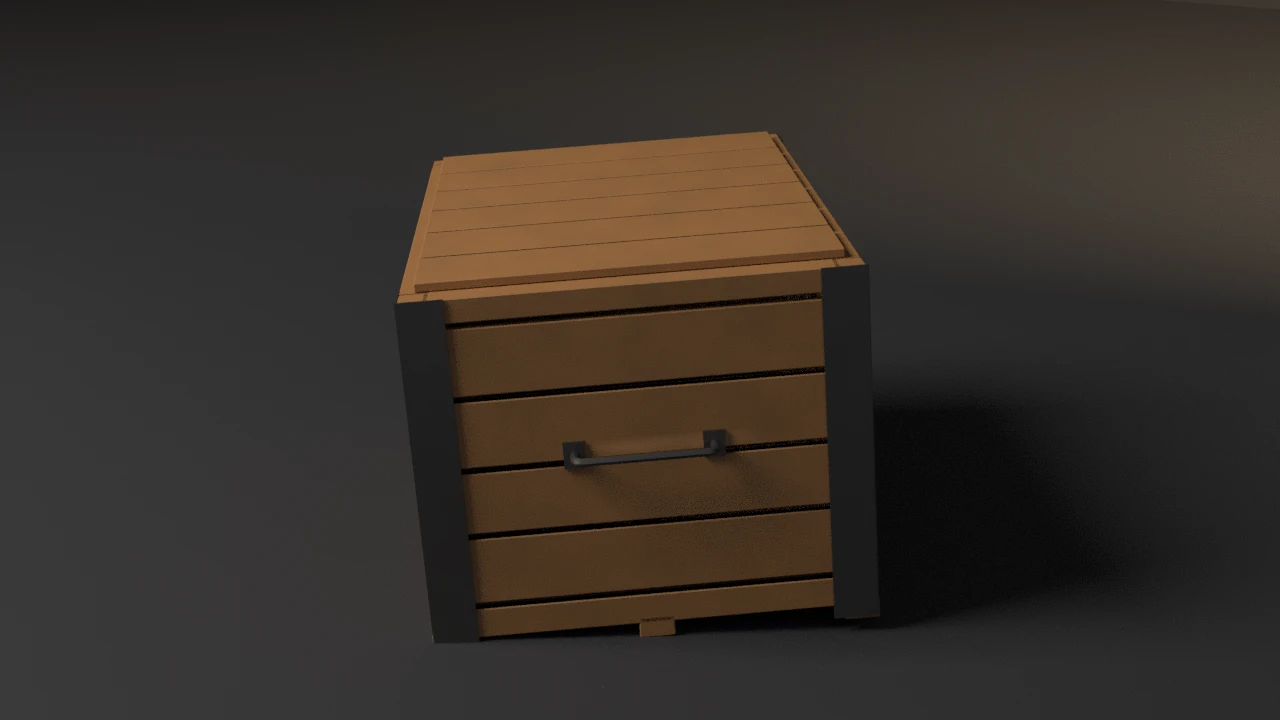
A procedural shipping crate through UVs, bake, LOD, collider, and Unity glTF, asserting recomputed budgets rather than an API contract.
A procedural freestanding 5 × 2 m youth soccer goal — posts and crossbar in one oval aluminium extrusion with a net channel, mitred and welded at the corners, cast corner brackets, foot connectors and rear hubs, sloped supports and a steel ground frame pinned by staples and spikes, and a sagging diamond-mesh net whose red head rope runs through 53 nylon clips — on a turf patch with a painted goal line, through UVs, bake, LOD, collider, and Unity glTF, asserting recomputed budgets rather than an API contract.
Rendered headless by the showcase piece itself — click to zoom.
category Sports
blender --background --python showcase/soccer-goal/soccer_goal.py --
A showcase piece, not an example, and the second in the sports category. It builds a procedural freestanding youth (7-a-side) soccer goal, 5 × 2 m, on a patch of turf:
The layout is solved from named constants. The net's corners are the points where its head ropes meet, and each rope sits at a clip's height off its member: the member's half-depth, plus the saddle less its bite, plus the loop less its bite. Each support's axis is its rope line moved square off the net, so the supports, sockets, clips and panels all follow from the mouth size, the depth and the clip.
Three things the coplanar budget forced:
Shading follows what each part is. The extrusion, tubes and castings are smooth-shaded with sharp edges above 35° and at every material boundary, so the mitres, chamfers and channel stay crisp. The net cords, ropes and clip loops are round in life: their four- and eight-sided sections stay smooth up to 95°. The turf's mown bands, blade mottle and bump are in the material.
It asserts budget conformance of the generated result. It does not witness an API contract. "It rendered without error" is not a check.
Composes skills mesh-editing-and-bmesh, bake-high-to-low, depsgraph-and-evaluated-data, engine-export-presets, and snippets bake_normal_high_to_low.py, setup_bake_target_image.py, lod_chain.py / decimate_to_budget.py, convex_hull_collider.py, export_preset_unity.py (helpers copied inline, not imported).
Intended size: a 5.000 × 2.000 m clear mouth, 1.5 m deep at the ground, on a turf patch 6.22 × 2.64 m. The outer AABB is 6.220 × 2.640 × 2.153 m. The turf sets X and Y; the weld beads on the crossbar's outer corners set the top. The origin is under the goal line's centre, so the turf's underside is the ground.
Every budget is declared as a named constant. Every gate recomputes its value from the mesh, materials, UVs, evaluated LOD, collider, or export file.
| Axis | Declared | Measured (5.2.1) |
|---|---|---|
| Base triangles | 34000–35600 | 34804 |
| LOD1 ratio | 0.32–0.62 of base | 0.5000 |
| LOD2 ratio | 0.10–0.35 of base | 0.2200 |
| Materials | exactly 10 distinct; ≥2300 paint, ≥8300 cord, ≥150 rope, ≥310 steel, ≥1350 cast, ≥3300 nylon, ≥920 galvanised, ≥180 turf, ≥16 line paint, ≥95 soil faces | 10 slots; 2514 / 9028 / 160 / 340 / 1464 / 3604 / 1000 / 196 / 16 / 102 |
| UVs | in 0..1, AABB overlap ≤ 1e-5 | in range, overlap 0 |
| Outer AABB | (6.220, 2.640, 2.153) m ± 0.01 | (6.2200, 2.6400, 2.1527), zmin 0 |
| Collider tris | ≤ 190 | 168 |
| Export | written, size > 0, removed after measuring | 2525996 bytes |
Every falsifier but one leaves the triangle count at 34804: they move or shorten parts, never add or remove them. --wide-mouth measures 34816, because a 30 mm wider back panel holds one more strand.
DECIMATE COLLAPSE triangle counts are not identical across Blender series, so the LOD gate is a ratio band, not an exact count. Bake pixels are stochastic, so the bake gate is has_data plus operator FINISHED, not byte-identity. Construction uses no RNG; two default runs print identical measurements.
Recomputed from the generated mesh, not asserted about the script.
| Axis | Declared | Measured |
|---|---|---|
| Non-manifold edges | 0 | 0 |
| Loose verts / edges | 0 / 0 | 0 / 0 |
| Doubles merged at 1e-5 | 0 | 0 |
| Zero-area faces | 0 | 0 |
| N-gons | 0 | 0 |
| Coplanar cross-shell face pairs (KD range 0.05 m, plane ε 1e-4) | 0 | 0 |
Grounded: zmin | within 1e-4 of 0 | 0.0000 |
| Ground frame: each of the 3 steel bars bedded into the turf top read off the turf shell | 0.0015–0.0040 m | 0.0025, 0.0025, 0.0025 |
| Axis | Declared | Measured |
|---|---|---|
| Supports seated: for each end of the 2 sloped supports (axis and radius by PCA), how far the tube runs inside a cast socket, sampled round its section at 5 mm stations | ≥ 0.040 m at every end | 0.065 (bracket), 0.080 (hub), both supports |
| Head rope on its clips: each clip loop's centre against the nearest head-rope axis (by PCA); every loop overlapping a saddle, every saddle overlapping a frame member, bar or support | 53 clips; axis offset ≤ 0.0012 m (the rope passes through the loop without touching it) | 53 loops, 53 saddles, 8 ropes; 0.000000 m; 0 loose |
| Mouth: clear width between the inner post faces and clear height from the turf top to the crossbar underside, read off the extrusion | 5.000 × 2.000 m ± 0.003 | 5.00019 × 2.00010 |
| Posts plumb (XY centroid of a low slab against a high one) and crossbar level (underside at both ends) | ≤ 0.10° and ≤ 1 mm | 0.000°, 0.000°; 0 mm |
| Net sag: the deepest back-panel cord below the chord from the crossbar rope to the back-bar rope, in a 0.2 m strip down the middle | 0.110–0.180 m | 0.14752 |
A goal is a size before it is anything else: the laws fix the mouth, and a goal that is a few centimetres wide is a different goal to every keeper who stands in it. The mouth budget reads it off the inner faces, not off the bounding box: the turf sets the box, and the frame could drift to any width underneath it. The sag budget is the other half of the read. A taut net lies flat as a fence; a net hung on clips falls between its supports, and the ball that hits it has to be caught, not bounced.
Each falsifier violates one named budget. Every one was run on 5.2.1 and exited its declared code. None moves the envelope: every run measured the same outer AABB as the default.
| Flag | Budget violated | Exit |
|---|---|---|
--skip-decimate | LOD1 ratio band (measured 1.0000) | 9 |
--stray-vert | loose vertex count is 0 (measured 1, placed inside the envelope) | 15 |
--lift-z | bounding box zmin is 0 (measured 0.05000) | 16 |
--float-bar | every ground bar bedded in the turf (back bar lifted 8 mm: bed −0.0055 m, the two side bars 0.0025) | 16 |
--short-support | supports seated in their sockets (left support stops 90 mm short of its hub: insertion 0.000 m at that end, 0.080 at the bracket) | 17 |
--unclip-net | head rope on its clips (crossbar rope dropped 20 mm out of its loops: axis offset 0.0200 m) | 18 |
--wide-mouth | mouth size (posts 15 mm further out each: clear width 5.03019 m) | 19 |
--taut-net | net sag (no sag: deepest cord 0.00772 m below the chord) | 20 |
--float-bar lifts the back bar inside its hub sockets, so the frame stays whole and the turf still grounds the box. --short-support leaves a 20 mm gap between the tube's end and the hub socket, in the air, where a support that has slipped shows. --unclip-net moves only the crossbar rope; the net's strands still end at the old rope line and the sag, read against the dropped rope, stays in band (0.13771 m). --wide-mouth rebuilds the whole goal 30 mm wider, net and clips included, so every other budget still holds, and the turf still sets the envelope.
blender --background --python soccer_goal.py --
blender --background --python soccer_goal.py -- --skip-decimate
blender --background --python soccer_goal.py -- --stray-vert
blender --background --python soccer_goal.py -- --lift-z
blender --background --python soccer_goal.py -- --float-bar
blender --background --python soccer_goal.py -- --short-support
blender --background --python soccer_goal.py -- --unclip-net
blender --background --python soccer_goal.py -- --wide-mouth
blender --background --python soccer_goal.py -- --taut-net
blender --background --python soccer_goal.py -- --output goal.png
Smoke passes no flags.
The hero turns the piece HERO_YAW_DEG (12°) against a camera raised above the crossbar, so the mouth reads at three-quarter, the left side panel shows its sloped support, and the back panel's sag is seen through the mouth against the turf.
File-local. 9 is a valid check code. 10 is reserved for gallery_framing.check_framing on the --output path. 15–19 are the hygiene and joint-fit family. 20 is file-local. 21 is the asset-quality floor on the render path: check_asset_quality returns 11, which this piece already spends on the collider ceiling, so the call site remaps it.
| Code | Meaning |
|---|---|
| 0 | Success |
| 1 | Uncaught exception (FATAL wrapper) |
| 2 | argparse / usage |
| 3 | Mesh did not build / no UV layer |
| 4 | Base triangle count outside range |
| 5 | Material count ≠ 10 distinct slots, or a face-count floor missed |
| 6 | UVs outside 0..1 |
| 7 | UV AABB overlap above tolerance |
| 8 | World AABB off declared outer size |
| 9 | LOD ratio band (--skip-decimate lands here) |
| 10 | Framing gate (render path only) |
| 11 | Collider triangle count above ceiling |
| 12 | Bake did not finish or image has no data |
| 13 | Export file missing or empty |
| 14 | --output produced no file |
| 15 | Mesh hygiene: loose, non-manifold, zero-area, doubles, n-gons, coplanar cross-shell pairs |
| 16 | Not grounded: bounding box zmin off 0, or a ground bar outside its bed band, or not 3 bars (--lift-z, --float-bar) |
| 17 | Supports: an end less than 40 mm inside a cast socket, or not 2 supports (--short-support) |
| 18 | Clips: not 53 clips, a loop's centre off the head rope's axis, a loop off its saddle or a saddle off its member (--unclip-net) |
| 19 | Mouth: clear width or height off 5 × 2 m, a post out of plumb, or the crossbar out of level (--wide-mouth) |
| 20 | Net sag at mid-panel outside its band (--taut-net) |
| 21 | Asset-quality floor (render path only; remapped from 11) |
"""Game-ready freestanding youth soccer goal — a showcase piece, not an example. Asserts budget conformance of a procedural 5 x 2 m freestanding goal after composing shipped pipeline pieces: bmesh construction, UVs, ten materials, high-to-low normal bake, LOD chain, convex collider, Unity glTF export. The goal stands on a patch of turf with a painted goal line. Two posts and a crossbar are one white-painted aluminium extrusion: an oval section with a net channel down its back, mitred and welded at the two top corners, a weld bead standing round each mitre. A cast corner bracket bolted behind each mitre carries a socket for a sloped rear net support, which runs down to a cast corner hub on the ground. Each post stands in a cast foot connector: a foot plate, a collar round the post and a socket for a side ground bar. Two side bars and a back bar, dark powder-coated steel, close the ground frame between the foot connectors and the hubs. The ground frame is pinned down by four galvanised U-staples over the bars and a spike through each hub and each foot plate. The net is a woven diamond mesh of 120 mm cells, one back panel and two side panels. Each panel is edged with a red head rope, and each head rope is threaded through black nylon clips, a saddle on the member and a loop standing off it, along the crossbar, the posts, the supports and the ground bars. The back panel sags between its supports as a catenary in both directions; the side panels belly outward and droop. Budgets are declared below and recomputed from the generated result. They are not API-contract witnesses. Each falsifier violates one named budget: ``--skip-decimate`` the LOD-ratio band, ``--stray-vert`` mesh hygiene, ``--lift-z`` grounded zmin, ``--float-bar`` every ground bar bedded in the turf, ``--short-support`` every support seated in its sockets, ``--unclip-net`` the head rope threaded through every clip, ``--wide-mouth`` the goal mouth's clear size, ``--taut-net`` the back panel's sag. No RNG. Construction is closed-form. DECIMATE COLLAPSE triangle counts are not byte-identical across Blender versions — the LOD gate is a ratio band, not an exact count. blender --background --python soccer_goal.py -- blender --background --python soccer_goal.py -- --skip-decimate blender --background --python soccer_goal.py -- --output goal.png """ import argparse import math import os import sys import tempfile import traceback import bmesh import bpy import numpy as np from mathutils import Matrix, Vector from mathutils.bvhtree import BVHTree from mathutils.kdtree import KDTree # Showcase lives at repo-root/showcase/, not under examples/. The framing # helper is the repo's only shared import and lives next to the examples; # resolve the repo root so we do not move gallery_framing.py. _REPO = os.path.abspath( os.path.join(os.path.dirname(os.path.abspath(__file__)), os.pardir, os.pardir) ) sys.path.insert(0, os.path.join(_REPO, "examples")) sys.dont_write_bytecode = True import gallery_framing # noqa: E402 import gallery_asset_quality # noqa: E402 # --- Declared size: a 5 x 2 m youth (7-a-side) goal ------------------------- MOUTH_W = 5.000 # clear width, inner post face to inner post face MOUTH_H = 2.000 # clear height, turf to crossbar underside WIDE_MOUTH = 0.030 # --wide-mouth: the posts stand 15 mm further out each DEPTH = 1.500 # goal line to the back bar's axis # --- Turf patch -------------------------------------------------------------- TURF_T = 0.050 # turf top; its underside is the ground (z = 0) TURF_X = 3.100 TURF_Y0 = -0.720 TURF_Y1 = 1.900 TURF_EDGE = 0.010 # rolled edge of the cut turf LINE_HALF = 0.060 # goal line: as wide as the posts are deep # --- Frame extrusion --------------------------------------------------------- POST_HA = 0.050 # in the frame's plane POST_HB = 0.060 # front to back SEC_P = 2.3 # section superellipse exponent SEC_N = 44 SLOT_HW = 0.009 # net channel down the back SLOT_D = 0.011 POST_FOOT = 0.020 # post bottom above the turf, inside its collar POST_STEP = 0.21 BAR_STEP = 0.26 BEAD_R = 0.0028 # --- Ground frame and supports ----------------------------------------------- BAR_R = 0.020 BAR_BITE = 0.0025 # the bars bed this far into the turf SUPPORT_R = 0.022 SUPPORT_TOP = 0.009 # the support runs this far past its rope corner into the bracket # (the socket boss starts 5 mm past it: caps never share a plane) TUBE_SIDES = 24 FLOAT_BAR = 0.008 # --float-bar lifts the back bar SHORT_SUPPORT = 0.090 # --short-support stops the left support short of its hub # --- Clips, rope and net ----------------------------------------------------- SADDLE_HL = 0.016 SADDLE_HW = 0.010 SADDLE_T = 0.009 SADDLE_BITE = 0.003 HOOK_R = 0.0095 HOOK_MINOR = 0.0022 HOOK_BITE = 0.001 ROPE_R = 0.0060 ROPE_SIDES = 8 CORD_R = 0.0032 CORD_SIDES = 4 CORD_LIFT = 0.4 # the two families pass over and under at each knot MESH = 0.120 # diamond cell side CLIP_PITCH = 0.42 SAG = 0.140 # back panel, vertical, at mid-panel SAG_K = 1.5 # catenary shape factor SIDE_BULGE = 0.050 SIDE_DROOP = 0.025 UNCLIP = 0.020 # --unclip-net drops the crossbar's head rope BBOX_TOL = 0.01 # Fitted after locking geometry. Recomputed from bound_box. OUTER_SIZE = (6.220, 2.640, 2.153) BASE_TRIS_MIN = 34000 BASE_TRIS_MAX = 35600 LOD1_RATIO_MIN = 0.32 LOD1_RATIO_MAX = 0.62 LOD2_RATIO_MIN = 0.10 LOD2_RATIO_MAX = 0.35 LOD1_TARGET = 0.50 LOD2_TARGET = 0.22 MATERIAL_COUNT = 10 UV_EPS = 1e-4 UV_OVERLAP_MAX = 1e-5 COLLIDER_TRIS_MAX = 190 BAKE_RES = 1024 CAGE_EXTRUSION = 0.004 PAINT_FACES_MIN = 2300 CORD_FACES_MIN = 8300 ROPE_FACES_MIN = 150 STEEL_FACES_MIN = 310 CAST_FACES_MIN = 1350 NYLON_FACES_MIN = 3300 GALV_FACES_MIN = 920 TURF_FACES_MIN = 180 CHALK_FACES_MIN = 16 SOIL_FACES_MIN = 95 ZMIN_EPS = 1e-4 DOUBLES_EPS = 1e-5 AREA_EPS = 1e-10 COPLANAR_NORMAL_EPS = 1e-4 COPLANAR_PLANE_EPS = 1e-4 COPLANAR_CENTRE_MAX = 0.05 LIFT_Z = 0.05 # Ground frame: every bar bedded into the turf top read off the mesh. BAR_COUNT = 3 BED_MIN = 0.0015 BED_MAX = 0.0040 # Supports: both ends run this far inside a cast socket. SUPPORT_COUNT = 2 INSERT_MIN = 0.040 # Clips: the head rope's axis passes through every loop without touching it. CLIP_COUNT = 53 SEAT_MAX = 0.0012 # Mouth: clear opening, posts plumb, crossbar level. SIZE_TOL = 0.003 PLUMB_MAX_DEG = 0.10 LEVEL_TOL = 0.001 # Sag: the back panel's deepest cord below the chord from crossbar rope to # back-bar rope, in a 0.2 m strip down the middle. SAG_STRIP = 0.10 SAG_MIN = 0.110 SAG_MAX = 0.180 HERO_YAW_DEG = 12.0 WALL_Y = 6.0 PAINT_IDX = 0 CORD_IDX = 1 ROPE_IDX = 2 STEEL_IDX = 3 CAST_IDX = 4 NYLON_IDX = 5 GALV_IDX = 6 TURF_IDX = 7 CHALK_IDX = 8 SOIL_IDX = 9 XAX = Vector((1.0, 0.0, 0.0)) YAX = Vector((0.0, 1.0, 0.0)) ZAX = Vector((0.0, 0.0, 1.0)) def eevee_engine_id(): return "BLENDER_EEVEE" if bpy.app.version >= (5, 0, 0) else "BLENDER_EEVEE_NEXT" def fail(msg, code): print(f"ERROR: {msg}", file=sys.stderr) return code def triangle_count(mesh): mesh.calc_loop_triangles() return len(mesh.loop_triangles) def evaluated_triangle_count(obj): # Duplicated from snippets/lod_chain.py / decimate_to_budget.py (not a package). depsgraph = bpy.context.evaluated_depsgraph_get() eval_obj = obj.evaluated_get(depsgraph) eval_mesh = eval_obj.to_mesh() try: eval_mesh.calc_loop_triangles() return len(eval_mesh.loop_triangles) finally: eval_obj.to_mesh_clear() # -------------------------------------------------------------------------- # Construction helpers # -------------------------------------------------------------------------- def _mark(faces, mat_idx): for f in faces: f.material_index = mat_idx def frame(ez, ex_hint): """Rotation whose local Z is ``ez`` and local X is ``ex_hint`` made orthogonal to it (columns ex, ey, ez; right-handed).""" ez = Vector(ez).normalized() ex = Vector(ex_hint) ex = (ex - ez * ex.dot(ez)).normalized() ey = ez.cross(ex) return Matrix((ex, ey, ez)).transposed() def add_lathe(bm, profile, segs, mat_idx, center=(0.0, 0.0, 0.0), rot=None, phase=0.0): """Revolve an open profile [(r, z), ...] about local Z, closed by n-gon caps at its two ends.""" c = Vector(center) m = rot if rot is not None else Matrix.Identity(3) rings = [] for i in range(segs): a = phase + 2.0 * math.pi * i / segs ca, sa = math.cos(a), math.sin(a) rings.append([bm.verts.new(c + m @ Vector((r * ca, r * sa, z))) for r, z in profile]) n = len(profile) faces = [] for i in range(segs): r0, r1 = rings[i], rings[(i + 1) % segs] for j in range(n - 1): faces.append(bm.faces.new((r0[j], r1[j], r1[j + 1], r0[j + 1]))) faces.append(bm.faces.new([rings[i][0] for i in reversed(range(segs))])) faces.append(bm.faces.new([rings[i][n - 1] for i in range(segs)])) _mark(faces, mat_idx) return [v for ring in rings for v in ring] def add_tube(bm, pts, radius, sides, mat_idx, phase=0.0): """Capped round bar swept along a polyline (parallel-transport frames).""" pts = [Vector(p) for p in pts] tans = [] for i in range(len(pts)): a = pts[max(i - 1, 0)] b = pts[min(i + 1, len(pts) - 1)] tans.append((b - a).normalized()) ref = Vector((0.0, 0.0, 1.0)) if abs(tans[0].z) < 0.9 else Vector((1.0, 0.0, 0.0)) nrm = (ref - tans[0] * ref.dot(tans[0])).normalized() rings = [] for p, t in zip(pts, tans): nrm = (nrm - t * nrm.dot(t)).normalized() bi = t.cross(nrm) rings.append([ bm.verts.new(p + radius * (nrm * math.cos(phase + 2.0 * math.pi * k / sides) + bi * math.sin(phase + 2.0 * math.pi * k / sides))) for k in range(sides) ]) faces = [] for r0, r1 in zip(rings, rings[1:]): for k in range(sides): m = (k + 1) % sides faces.append(bm.faces.new((r0[k], r0[m], r1[m], r1[k]))) faces.append(bm.faces.new(tuple(reversed(rings[0])))) faces.append(bm.faces.new(tuple(rings[-1]))) _mark(faces, mat_idx) return [v for ring in rings for v in ring] def add_ring(bm, center, axis, r_major, r_minor, segs, sides, mat_idx, phase=0.0): """Closed torus about ``axis`` through ``center``.""" center = Vector(center) axis = Vector(axis).normalized() ref = Vector((0.0, 0.0, 1.0)) if abs(axis.z) < 0.9 else Vector((1.0, 0.0, 0.0)) u = axis.cross(ref).normalized() w = axis.cross(u) rings = [] for i in range(segs): a = phase + 2.0 * math.pi * i / segs radial = u * math.cos(a) + w * math.sin(a) c = center + radial * r_major rings.append([ bm.verts.new(c + r_minor * (radial * math.cos(2.0 * math.pi * (k + 0.5) / sides) + axis * math.sin(2.0 * math.pi * (k + 0.5) / sides))) for k in range(sides) ]) faces = [] for i in range(segs): r0, r1 = rings[i], rings[(i + 1) % segs] for k in range(sides): m = (k + 1) % sides faces.append(bm.faces.new((r0[k], r0[m], r1[m], r1[k]))) _mark(faces, mat_idx) return [v for ring in rings for v in ring] def rrect(ha, hb, rc, n_corner=4): """Rounded rectangle loop (counter-clockwise).""" rc = max(min(rc, ha - 1e-4, hb - 1e-4), 0.0006) pts = [] for k, (sx, sy) in enumerate(((1, 1), (-1, 1), (-1, -1), (1, -1))): cx, cy = sx * (ha - rc), sy * (hb - rc) a0 = 0.5 * math.pi * k for s in range(n_corner + 1): a = a0 + 0.5 * math.pi * s / n_corner pts.append((cx + rc * math.cos(a), cy + rc * math.sin(a))) return pts def add_rbox(bm, ha, hb, rc, profile, origin, rot, mat_idx, n_corner=4): """Loft of rounded rectangles along local Z: profile [(inset, z)], each loop inset from (ha, hb, rc); n-gon caps at both ends.""" o = Vector(origin) rings = [] for inset, z in profile: loop = rrect(ha - inset, hb - inset, rc - inset, n_corner) rings.append([bm.verts.new(o + rot @ Vector((x, y, z))) for x, y in loop]) n = len(rings[0]) faces = [] for r0, r1 in zip(rings, rings[1:]): for k in range(n): m = (k + 1) % n faces.append(bm.faces.new((r0[k], r0[m], r1[m], r1[k]))) faces.append(bm.faces.new(tuple(reversed(rings[0])))) faces.append(bm.faces.new(tuple(rings[-1]))) _mark(faces, mat_idx) return [v for ring in rings for v in ring] def add_loft(bm, loops, mat_idx): """Loft closed loops of world points (equal counts), capped.""" rings = [[bm.verts.new(Vector(p)) for p in loop] for loop in loops] n = len(rings[0]) faces = [] for r0, r1 in zip(rings, rings[1:]): for k in range(n): m = (k + 1) % n faces.append(bm.faces.new((r0[k], r0[m], r1[m], r1[k]))) faces.append(bm.faces.new(tuple(reversed(rings[0])))) faces.append(bm.faces.new(tuple(rings[-1]))) _mark(faces, mat_idx) return [v for ring in rings for v in ring] def superellipse(ha, hb, p, n, phase=0.0): pts = [] for i in range(n): t = phase + 2.0 * math.pi * i / n c, s = math.cos(t), math.sin(t) pts.append((ha * math.copysign(abs(c) ** (2.0 / p), c), hb * math.copysign(abs(s) ** (2.0 / p), s))) return pts def frame_section(): """The extrusion's section (a in the frame's plane, positive toward the mouth; b front to back, positive to the rear), counter-clockwise, with the net channel notched into the back.""" ts = math.acos((SLOT_HW / POST_HA) ** (SEC_P / 2.0)) t0, t1 = math.pi - ts, 2.0 * math.pi + ts pts = [] for i in range(SEC_N + 1): t = t0 + (t1 - t0) * i / SEC_N c, s = math.cos(t), math.sin(t) pts.append((POST_HA * math.copysign(abs(c) ** (2.0 / SEC_P), c), POST_HB * math.copysign(abs(s) ** (2.0 / SEC_P), s))) b_s = pts[-1][1] pts += [(SLOT_HW, b_s - SLOT_D), (-SLOT_HW, b_s - SLOT_D)] return pts def triangulate_ngons(bm): faces = [f for f in bm.faces if len(f.verts) > 4] if faces: bmesh.ops.triangulate(bm, faces=faces) def pack_uvs(bm, margin=0.08): uv = bm.loops.layers.uv.new("UVMap") faces = list(bm.faces) n = len(faces) cols = max(1, math.ceil(math.sqrt(n))) rows = max(1, math.ceil(n / cols)) cell_w = 1.0 / cols cell_h = 1.0 / rows pad_u = margin * cell_w * 0.5 pad_v = margin * cell_h * 0.5 usable_w = cell_w - 2.0 * pad_u usable_h = cell_h - 2.0 * pad_v for i, face in enumerate(faces): col = i % cols row = i // cols nrm = face.normal ax, ay, az = abs(nrm.x), abs(nrm.y), abs(nrm.z) coords = [] for loop in face.loops: co = loop.vert.co if az >= ax and az >= ay: coords.append((co.x, co.y)) elif ax >= ay: coords.append((co.y, co.z)) else: coords.append((co.x, co.z)) xs = [c[0] for c in coords] ys = [c[1] for c in coords] minx, maxx = min(xs), max(xs) miny, maxy = min(ys), max(ys) dx = max(maxx - minx, 1e-8) dy = max(maxy - miny, 1e-8) origin_u = col * cell_w + pad_u origin_v = row * cell_h + pad_v for loop, (x, y) in zip(face.loops, coords): loop[uv].uv = ( origin_u + (x - minx) / dx * usable_w, origin_v + (y - miny) / dy * usable_h, ) def spaced(length, pitch, m0, m1): """Stations along a run of ``length``, ``m0``/``m1`` in from its ends, about ``pitch`` apart.""" span = length - m0 - m1 n = max(1, int(round(span / pitch))) return [m0 + span * i / n for i in range(n + 1)] # -------------------------------------------------------------------------- # Layout, solved from the named constants # -------------------------------------------------------------------------- def rope_offset(h): """Member axis to head-rope axis: the member's half-depth, the saddle (less its bite), and the loop standing on it (less its bite).""" return h - SADDLE_BITE + SADDLE_T + HOOK_R + HOOK_MINOR - HOOK_BITE def layout(wide_mouth=False): L = {} w = MOUTH_W + (WIDE_MOUTH if wide_mouth else 0.0) x0 = 0.5 * w + POST_HA # post axis zc = TURF_T + MOUTH_H + POST_HA # crossbar axis zg = TURF_T + BAR_R - BAR_BITE # ground-bar axis yr = rope_offset(POST_HB) # rope behind the posts and crossbar zb = zg + rope_offset(BAR_R) # rope over the ground bars L.update(x0=x0, zc=zc, zg=zg, yr=yr, zb=zb) # Net corners (right side; the left mirrors in X) L["A"] = Vector((x0, yr, zc)) # top front: crossbar, post and support ropes L["C"] = Vector((x0, yr, zb)) # bottom front: post and side-bar ropes L["B"] = Vector((x0, DEPTH, zb)) # bottom rear: support, side-bar and back ropes s = (L["B"] - L["A"]).normalized() # support direction, down and back n_s = Vector((0.0, -s.z, s.y)) # perpendicular in the side plane if n_s.z > 0.0: n_s = -n_s # toward the net: down and forward L["s"], L["n_s"] = s, n_s off_s = rope_offset(SUPPORT_R) L["off_s"] = off_s # support axis: the rope line moved off the net side L["F"] = L["A"] - n_s * off_s # top end, in the corner bracket base = L["B"] - n_s * off_s lam = (base.z - (TURF_T + 0.030)) / -s.z L["E"] = base + s * lam # bottom end, in the corner hub return L def mirror(p, sx): return Vector((sx * p.x, p.y, p.z)) # -------------------------------------------------------------------------- # Parts # -------------------------------------------------------------------------- def add_turf(bm): """Turf slab: a gridded top (goal-line strip painted), a rolled edge, and cut soil walls down to the ground.""" xs = [-TURF_X + 2.0 * TURF_X * i / 16 for i in range(17)] ys = sorted({TURF_Y0, -LINE_HALF, LINE_HALF, TURF_Y1} | {TURF_Y0 + (-LINE_HALF - TURF_Y0) * i / 3 for i in range(1, 3)} | {LINE_HALF + (TURF_Y1 - LINE_HALF) * i / 6 for i in range(1, 6)}) grid = [[bm.verts.new((x, y, TURF_T)) for x in xs] for y in ys] faces = [] for j in range(len(ys) - 1): for i in range(len(xs) - 1): f = bm.faces.new((grid[j][i], grid[j][i + 1], grid[j + 1][i + 1], grid[j + 1][i])) yc = 0.5 * (ys[j] + ys[j + 1]) f.material_index = CHALK_IDX if abs(yc) < LINE_HALF else TURF_IDX faces.append(f) nx, ny = len(xs), len(ys) border = ([grid[0][i] for i in range(nx)] + [grid[j][nx - 1] for j in range(1, ny)] + [grid[ny - 1][i] for i in reversed(range(nx - 1))] + [grid[j][0] for j in reversed(range(1, ny - 1))]) def outward(v): d = Vector((0.0, 0.0, 0.0)) if abs(v.co.x - xs[0]) < 1e-6: d.x -= 1.0 if abs(v.co.x - xs[-1]) < 1e-6: d.x += 1.0 if abs(v.co.y - ys[0]) < 1e-6: d.y -= 1.0 if abs(v.co.y - ys[-1]) < 1e-6: d.y += 1.0 return d edge = [bm.verts.new(v.co + outward(v) * TURF_EDGE - ZAX * TURF_EDGE) for v in border] foot = [bm.verts.new(Vector((e.co.x, e.co.y, 0.0))) for e in edge] n = len(border) for k in range(n): m = (k + 1) % n f = bm.faces.new((border[k], edge[k], edge[m], border[m])) f.material_index = TURF_IDX f = bm.faces.new((edge[k], foot[k], foot[m], edge[m])) f.material_index = SOIL_IDX f = bm.faces.new(tuple(foot)) f.material_index = SOIL_IDX def add_frame(bm, L, bevel_verts): """Posts and crossbar: one extrusion with mitred top corners.""" sec = frame_section() x0, zc = L["x0"], L["zc"] zb = TURF_T + POST_FOOT stations = [] n_up = max(2, math.ceil((zc - zb) / POST_STEP)) for i in range(n_up): stations.append((Vector((-x0, 0.0, zb + (zc - zb) * i / n_up)), XAX, 1.0)) # a mitre ring: the section spread along the corner's bisector by sqrt 2 stations.append((Vector((-x0, 0.0, zc)), (XAX - ZAX).normalized(), math.sqrt(2.0))) n_x = max(2, math.ceil(2.0 * x0 / BAR_STEP)) for i in range(1, n_x): stations.append((Vector((-x0 + 2.0 * x0 * i / n_x, 0.0, zc)), -ZAX, 1.0)) stations.append((Vector((x0, 0.0, zc)), (-ZAX - XAX).normalized(), math.sqrt(2.0))) for i in range(1, n_up + 1): stations.append((Vector((x0, 0.0, zc - (zc - zb) * i / n_up)), -XAX, 1.0)) rings = [[bm.verts.new(p + da * (a * sc) + YAX * b) for a, b in sec] for p, da, sc in stations] n = len(sec) faces = [] for r0, r1 in zip(rings, rings[1:]): for k in range(n): m = (k + 1) % n faces.append(bm.faces.new((r0[k], r0[m], r1[m], r1[k]))) faces.append(bm.faces.new(tuple(reversed(rings[0])))) faces.append(bm.faces.new(tuple(rings[-1]))) _mark(faces, PAINT_IDX) bevel_verts.extend(v for ring in rings for v in ring) # weld bead round the outside of each mitre (the bracket hides the back) for idx in (n_up, n_up + n_x): p, da, sc = stations[idx] arc = [p + da * (a * sc) + YAX * b for a, b in sec[:SEC_N + 1]] add_tube(bm, arc, BEAD_R, 6, PAINT_IDX, phase=0.3) def add_clip(bm, axis_pt, a, n, h, spin=0.0): """A nylon clip on a member: saddle on the member's net side, loop standing off it; returns the loop centre (the head rope's axis).""" a = a.normalized() n = n.normalized() rot = frame(n, a) base = axis_pt + n * (h - SADDLE_BITE) prof = [(0.0015, 0.0), (0.0, 0.0015), (0.0, SADDLE_T - 0.0015), (0.0015, SADDLE_T)] add_rbox(bm, SADDLE_HL, SADDLE_HW, 0.004, prof, base, rot, NYLON_IDX, n_corner=1) c = base + n * (SADDLE_T + HOOK_R + HOOK_MINOR - HOOK_BITE) add_ring(bm, c, a, HOOK_R, HOOK_MINOR, 8, 4, NYLON_IDX, phase=spin) return c def add_bracket(bm, L, sx, bevel_verts): """Cast corner bracket behind the mitre, carrying the support socket.""" x0, zc = L["x0"], L["zc"] prof = [(0.004, 0.0), (0.0, 0.004), (0.0, 0.074), (0.004, 0.078)] bevel_verts += add_rbox(bm, 0.045, 0.047, 0.012, prof, (sx * x0, 0.052, zc - 0.002), frame(YAX, XAX), CAST_IDX, n_corner=3) s = L["s"] f = mirror(L["F"], sx) boss = [(0.030, 0.0), (0.030, 0.074), (0.027, 0.080)] bevel_verts += add_lathe(bm, boss, 20, CAST_IDX, center=f - s * 0.005, rot=frame(s, XAX), phase=0.08) # two bolts through the bracket's inboard face # set 1.5 mm apart in depth, or their heads share a cap plane for dz, dy, bite in ((0.024, 0.092, 0.002), (-0.026, 0.088, 0.0035)): head = [(0.0085, 0.0), (0.0085, 0.0055), (0.0068, 0.0068)] c = Vector((sx * (x0 - 0.045 + bite), dy, zc + dz)) add_lathe(bm, head, 6, GALV_IDX, center=c, rot=frame(-sx * XAX, YAX), phase=0.2) def add_foot(bm, L, sx, bevel_verts): """Cast foot connector: plate, collar round the post, bar socket.""" x0, zg = L["x0"], L["zg"] prof = [(0.0, -0.003), (0.0, 0.009), (0.003, 0.012)] bevel_verts += add_rbox(bm, 0.070, 0.110, 0.022, prof, (sx * x0, 0.035, TURF_T), Matrix.Identity(3), CAST_IDX, n_corner=3) loops = [] for inset, z in ((0.0, TURF_T + 0.008), (0.0, TURF_T + 0.144), (0.004, TURF_T + 0.150)): loops.append([Vector((sx * x0 + a, b, z)) for a, b in superellipse(POST_HA + 0.008 - inset, POST_HB + 0.008 - inset, SEC_P, 40, phase=0.04)]) bevel_verts += add_loft(bm, loops, CAST_IDX) boss = [(0.027, 0.0), (0.027, 0.112), (0.024, 0.118)] bevel_verts += add_lathe(bm, boss, 20, CAST_IDX, center=(sx * x0, 0.032, zg), rot=frame(YAX, XAX), phase=0.05) # clamp bolt through the collar's outboard side head = [(0.0085, 0.0), (0.0085, 0.0055), (0.0068, 0.0068)] add_lathe(bm, head, 6, GALV_IDX, center=(sx * (x0 + POST_HA + 0.004), 0.0, TURF_T + 0.095), rot=frame(sx * XAX, YAX), phase=0.1) add_spike(bm, Vector((sx * (x0 + 0.050), 0.105, TURF_T + 0.012))) def add_spike(bm, top): """Ground spike: domed head on the part, shank into the turf.""" head = [(0.0130, 0.0), (0.0130, 0.0035), (0.0095, 0.0060), (0.0040, 0.0070)] add_lathe(bm, head, 16, GALV_IDX, center=top - ZAX * 0.001, phase=0.11) shank = [(0.0045, -(top.z - 0.012)), (0.0045, 0.002)] add_lathe(bm, shank, 8, GALV_IDX, center=top - ZAX * 0.001, phase=0.2) def add_hub(bm, L, sx, bevel_verts): """Cast rear corner hub: block, three sockets, a spike.""" x0, zg = L["x0"], L["zg"] prof = [(0.0, -0.004), (0.0, 0.050), (0.005, 0.055)] bevel_verts += add_rbox(bm, 0.065, 0.072, 0.016, prof, (sx * (x0 + 0.015), DEPTH + 0.020, TURF_T), Matrix.Identity(3), CAST_IDX, n_corner=3) s = L["s"] e = mirror(L["E"], sx) boss = [(0.030, 0.0), (0.030, 0.070), (0.027, 0.076)] bevel_verts += add_lathe(bm, boss, 20, CAST_IDX, center=e + s * 0.006, rot=frame(-s, XAX), phase=0.07) bb = [(0.027, 0.0), (0.027, 0.070), (0.024, 0.076)] bevel_verts += add_lathe(bm, bb, 20, CAST_IDX, center=(sx * x0, DEPTH - 0.030, zg), rot=frame(-YAX, XAX), phase=0.06) bevel_verts += add_lathe(bm, bb, 20, CAST_IDX, center=(sx * (x0 - 0.030), DEPTH, zg), rot=frame(-sx * XAX, YAX), phase=0.09) add_spike(bm, Vector((sx * (x0 + 0.055), DEPTH + 0.020, TURF_T + 0.055))) def add_staple(bm, axis_pt, a, r_host): """Galvanised U-staple over a ground bar, legs into the turf.""" a = a.normalized() side = ZAX.cross(a).normalized() rr = r_host + 0.0045 - 0.0008 pts = [axis_pt + side * rr + ZAX * (TURF_T - 0.030 - axis_pt.z)] pts.append(axis_pt + side * rr) for k in range(1, 12): t = math.pi * k / 12 pts.append(axis_pt + side * (rr * math.cos(t)) + ZAX * (rr * math.sin(t))) pts.append(axis_pt - side * rr) pts.append(axis_pt - side * rr + ZAX * (TURF_T - 0.030 - axis_pt.z)) add_tube(bm, pts, 0.0045, 8, GALV_IDX, phase=0.2) def sag_c(t): k = SAG_K return (math.cosh(0.5 * k) - math.cosh(k * (t - 0.5))) / (math.cosh(0.5 * k) - 1.0) def clip_line(p0, d, poly): """Parameter interval of the line p0 + lam d inside a convex CCW polygon.""" lo, hi = -1e9, 1e9 n = len(poly) for i in range(n): ax, ay = poly[i] bx, by = poly[(i + 1) % n] nx_, ny_ = -(by - ay), bx - ax # inward normal (CCW) num = nx_ * (p0[0] - ax) + ny_ * (p0[1] - ay) den = nx_ * d[0] + ny_ * d[1] if abs(den) < 1e-12: if num < 0.0: return None continue lam = -num / den if den > 0.0: lo = max(lo, lam) else: hi = min(hi, lam) return (lo, hi) if hi - lo > 1e-9 else None def diamond_strands(poly): """Strands of a diamond mesh over a convex (s, t) domain: two families at +-45 degrees, sampled at every knot and at both ends.""" step = MESH * math.sqrt(2.0) r2 = 1.0 / math.sqrt(2.0) fams = (((r2, -r2), 1.0), ((r2, r2), -1.0)) # s + t = c, s - t = c cs = {} for f, (_d, sg) in enumerate(fams): vals = [p[0] + sg * p[1] for p in poly] k0 = math.floor(min(vals) / step - 0.5) k1 = math.ceil(max(vals) / step + 0.5) cs[f] = [(k + 0.5) * step for k in range(k0, k1 + 1) if min(vals) + 0.02 < (k + 0.5) * step < max(vals) - 0.02] out = [] for f, (d, sg) in enumerate(fams): for c in cs[f]: p0 = (0.5 * c, 0.5 * c * sg) iv = clip_line(p0, d, poly) if iv is None or iv[1] - iv[0] < 0.04: continue lo, hi = iv lams = [lo] for c2 in cs[1 - f]: # knot with the other family's line if f == 0: s_, t_ = 0.5 * (c + c2), 0.5 * (c - c2) else: s_, t_ = 0.5 * (c2 + c), 0.5 * (c2 - c) lam = (s_ - p0[0]) * d[0] + (t_ - p0[1]) * d[1] if lo + 0.012 < lam < hi - 0.012: lams.append(lam) lams.append(hi) lams.sort() out.append((f, [(p0[0] + lam * d[0], p0[1] + lam * d[1]) for lam in lams])) return out def add_net(bm, L, taut): sag = 0.0 if taut else SAG A, B, C = L["A"], L["B"], L["C"] Am, Bm = mirror(A, -1), mirror(B, -1) # back panel: bilinear between the four rope corners, sagging in -Z lu = (B - Bm).length lv = (Am - Bm).length e_u = (B - Bm) / lu e_v = (Am - Bm) / lv nb = e_u.cross(e_v).normalized() poly = [(0.0, 0.0), (lu, 0.0), (lu, lv), (0.0, lv)] for f, pts in diamond_strands(poly): lift = (1.0 if f == 0 else -1.0) * CORD_LIFT * CORD_R path = [] for s_, t_ in pts: u, v = s_ / lu, t_ / lv p = Bm + e_u * s_ + e_v * t_ + nb * lift p.z -= sag * sag_c(u) * sag_c(v) path.append(p) add_tube(bm, path, CORD_R, CORD_SIDES, CORD_IDX, phase=0.25 * math.pi) # side panels: right triangle C (front bottom), B (rear bottom), A (top) ls = B.y - C.y lt = A.z - C.z tri = [(0.0, 0.0), (ls, 0.0), (0.0, lt)] for sx in (-1.0, 1.0): for f, pts in diamond_strands(tri): lift = (1.0 if f == 0 else -1.0) * CORD_LIFT * CORD_R path = [] for s_, t_ in pts: lb, la = s_ / ls, t_ / lt bub = 27.0 * lb * la * max(0.0, 1.0 - lb - la) path.append(Vector((sx * (C.x + SIDE_BULGE * bub + lift), C.y + s_, C.z + t_ - SIDE_DROOP * bub))) add_tube(bm, path, CORD_R, CORD_SIDES, CORD_IDX, phase=0.25 * math.pi) def build_goal_mesh(name, bevel_offset, bevel_segments, wide_mouth=False, taut_net=False, unclip_net=False, float_bar=False, short_support=False): L = layout(wide_mouth) x0, zc, zg = L["x0"], L["zc"], L["zg"] A, B, C = L["A"], L["B"], L["C"] s, n_s = L["s"], L["n_s"] bm = bmesh.new() try: bevel_verts = [] add_turf(bm) add_frame(bm, L, bevel_verts) for sx in (-1.0, 1.0): add_bracket(bm, L, sx, bevel_verts) add_foot(bm, L, sx, bevel_verts) add_hub(bm, L, sx, bevel_verts) # sloped rear support # the tube starts 5 mm up its own axis past F: F is the rope's # corner moved square off it, so a cap at F shares the rope cap's plane f, e = mirror(L["F"], sx) - s * SUPPORT_TOP, mirror(L["E"], sx) if short_support and sx < 0.0: e = e - s * SHORT_SUPPORT bevel_verts += add_tube(bm, [f, e], SUPPORT_R, TUBE_SIDES, STEEL_IDX) # side ground bar bevel_verts += add_tube(bm, [Vector((sx * x0, 0.070, zg)), Vector((sx * x0, DEPTH, zg))], BAR_R, TUBE_SIDES, STEEL_IDX) back = add_tube(bm, [Vector((-(x0 - 0.005), DEPTH, zg)), Vector((x0 - 0.005, DEPTH, zg))], BAR_R, TUBE_SIDES, STEEL_IDX) bevel_verts += back if float_bar: for v in back: v.co.z += FLOAT_BAR # head ropes and their clips: (start, end, member offset dir, member # half-depth, extend at start, extend at end) runs = [] top = [mirror(A, -1), A] runs.append(("crossbar", top[0], top[1], YAX, POST_HB, 0.12, 0.12, 0.0, 0.0)) for sx in (-1.0, 1.0): a_, b_, c_ = mirror(A, sx), mirror(B, sx), mirror(C, sx) runs.append(("post", c_, a_, YAX, POST_HB, 0.20, 0.12, 0.012, 0.0)) runs.append(("support", a_, b_, n_s, SUPPORT_R, 0.20, 0.26, 0.0, 0.006)) runs.append(("side", c_, b_, ZAX, BAR_R, 0.22, 0.22, 0.006, 0.006)) runs.append(("back", mirror(B, -1), B, ZAX, BAR_R, 0.22, 0.22, 0.006, 0.006)) staples = [] for k, (kind, p0, p1, n, h, m0, m1, x_a, x_b) in enumerate(runs): d = (p1 - p0) length = d.length d = d / length ya = p0 - d * x_a yb = p1 + d * x_b if unclip_net and kind == "crossbar": ya = ya - ZAX * UNCLIP yb = yb - ZAX * UNCLIP add_tube(bm, [ya, yb], ROPE_R, ROPE_SIDES, ROPE_IDX, phase=0.1 + 0.07 * k) off = rope_offset(h) st = spaced(length, CLIP_PITCH, m0, m1) for j, t in enumerate(st): c = p0 + d * t add_clip(bm, c - n * off, d, n, h, spin=0.05 * ((k + j) % 3)) if kind in ("side", "back"): # staples between the two middle clips mid = len(st) // 2 t = 0.5 * (st[mid - 1] + st[mid]) if len(st) > 1 else 0.5 * length if kind == "back": for tt in (0.5 * (st[1] + st[2]), 0.5 * (st[-2] + st[-3])): staples.append((p0 + d * tt - n * off, d, BAR_R)) else: staples.append((p0 + d * t - n * off, d, BAR_R)) for pt, a_, r_ in staples: add_staple(bm, pt, a_, r_) add_net(bm, L, taut_net) if bevel_offset > 0.0: # Chamfer the frame, castings and tube ends: one pass per # material with material= set, over sorted edges. for mat_idx in (PAINT_IDX, CAST_IDX, STEEL_IDX): bm.edges.index_update() edges = sorted( {e for v in bevel_verts if v.is_valid for e in v.link_edges if len(e.link_faces) == 2 and all(f.material_index == mat_idx for f in e.link_faces) and e.calc_face_angle() > math.radians(60.0)}, key=lambda e: e.index, ) if edges: bmesh.ops.bevel(bm, geom=edges, offset=bevel_offset, segments=bevel_segments, profile=0.5, affect="EDGES", clamp_overlap=True, material=mat_idx) bmesh.ops.remove_doubles(bm, verts=list(bm.verts), dist=1e-5) bmesh.ops.dissolve_degenerate(bm, dist=1e-6) triangulate_ngons(bm) zmin = min(v.co.z for v in bm.verts) for v in bm.verts: v.co.z -= zmin if v.co.z < 0.0: v.co.z = 0.0 pack_uvs(bm) bmesh.ops.recalc_face_normals(bm, faces=list(bm.faces)) # Extrusion, tubes, cords and castings smooth; chamfers, the mitre # and the channel crisp through sharp edges; the cords and ropes # are round, so their four- and eight-sided sections stay smooth. soft = {CORD_IDX, ROPE_IDX, NYLON_IDX} for face in bm.faces: face.smooth = True for edge in bm.edges: mats = {f.material_index for f in edge.link_faces} if len(mats) > 1 or not edge.is_manifold or len(edge.link_faces) != 2: edge.smooth = False elif mats <= soft: edge.smooth = edge.calc_face_angle() < math.radians(95.0) else: edge.smooth = edge.calc_face_angle() < math.radians(35.0) me = bpy.data.meshes.new(name) bm.to_mesh(me) me.update() finally: bm.free() obj = bpy.data.objects.new(name, me) bpy.context.collection.objects.link(obj) return obj # -------------------------------------------------------------------------- # Materials # -------------------------------------------------------------------------- def principled(name, color, metallic, roughness, roughness_var=0.0, mottle=0.0, noise_scale=14.0, coat=0.0): mat = bpy.data.materials.new(name) mat.use_nodes = True nt = mat.node_tree bsdf = nt.nodes["Principled BSDF"] bsdf.inputs["Base Color"].default_value = color bsdf.inputs["Metallic"].default_value = metallic bsdf.inputs["Roughness"].default_value = roughness if coat > 0.0 and "Coat Weight" in bsdf.inputs: bsdf.inputs["Coat Weight"].default_value = coat bsdf.inputs["Coat Roughness"].default_value = 0.08 if roughness_var > 0.0 or mottle > 0.0: coord = nt.nodes.new("ShaderNodeTexCoord") noise = nt.nodes.new("ShaderNodeTexNoise") noise.inputs["Scale"].default_value = noise_scale noise.inputs["Detail"].default_value = 6.0 nt.links.new(coord.outputs["Object"], noise.inputs["Vector"]) if roughness_var > 0.0: ramp = nt.nodes.new("ShaderNodeValToRGB") lo = max(0.03, roughness - roughness_var) hi = min(0.95, roughness + roughness_var) ramp.color_ramp.elements[0].position = 0.30 ramp.color_ramp.elements[0].color = (lo, lo, lo, 1.0) ramp.color_ramp.elements[1].position = 0.70 ramp.color_ramp.elements[1].color = (hi, hi, hi, 1.0) nt.links.new(noise.outputs["Fac"], ramp.inputs["Fac"]) nt.links.new(ramp.outputs["Color"], bsdf.inputs["Roughness"]) if mottle > 0.0: cramp = nt.nodes.new("ShaderNodeValToRGB") dark = tuple(c * (1.0 - mottle) for c in color[:3]) + (1.0,) cramp.color_ramp.elements[0].position = 0.35 cramp.color_ramp.elements[0].color = dark cramp.color_ramp.elements[1].position = 0.75 cramp.color_ramp.elements[1].color = color nt.links.new(noise.outputs["Fac"], cramp.inputs["Fac"]) nt.links.new(cramp.outputs["Color"], bsdf.inputs["Base Color"]) return mat def turf_material(): """Mown turf: bands parallel to the goal line, light and dark, with a fine blade mottle and a bump.""" mat = bpy.data.materials.new("GoalTurf") mat.use_nodes = True nt = mat.node_tree bsdf = nt.nodes["Principled BSDF"] bsdf.inputs["Roughness"].default_value = 0.88 coord = nt.nodes.new("ShaderNodeTexCoord") sep = nt.nodes.new("ShaderNodeSeparateXYZ") nt.links.new(coord.outputs["Object"], sep.inputs["Vector"]) band = nt.nodes.new("ShaderNodeMath") band.operation = "SINE" scale = nt.nodes.new("ShaderNodeMath") scale.operation = "MULTIPLY" scale.inputs[1].default_value = math.pi / 0.9 nt.links.new(sep.outputs["Y"], scale.inputs[0]) nt.links.new(scale.outputs["Value"], band.inputs[0]) stripe = nt.nodes.new("ShaderNodeMapRange") stripe.inputs["From Min"].default_value = -0.15 stripe.inputs["From Max"].default_value = 0.15 nt.links.new(band.outputs["Value"], stripe.inputs["Value"]) noise = nt.nodes.new("ShaderNodeTexNoise") noise.inputs["Scale"].default_value = 90.0 noise.inputs["Detail"].default_value = 8.0 nt.links.new(coord.outputs["Object"], noise.inputs["Vector"]) ramp = nt.nodes.new("ShaderNodeValToRGB") ramp.color_ramp.elements[0].position = 0.30 ramp.color_ramp.elements[0].color = (0.020, 0.075, 0.014, 1.0) ramp.color_ramp.elements[1].position = 0.75 ramp.color_ramp.elements[1].color = (0.055, 0.170, 0.030, 1.0) nt.links.new(noise.outputs["Fac"], ramp.inputs["Fac"]) # the lighter mown band: the same grass scaled up light = nt.nodes.new("ShaderNodeMix") light.data_type = "RGBA" light.blend_type = "MULTIPLY" light.inputs[0].default_value = 1.0 nt.links.new(ramp.outputs["Color"], light.inputs[6]) light.inputs[7].default_value = (1.45, 1.40, 1.30, 1.0) # stripe = 0: plain band; stripe = 1: mown band mix = nt.nodes.new("ShaderNodeMix") mix.data_type = "RGBA" mix.blend_type = "MIX" nt.links.new(stripe.outputs["Result"], mix.inputs[0]) nt.links.new(ramp.outputs["Color"], mix.inputs[6]) nt.links.new(light.outputs[2], mix.inputs[7]) nt.links.new(mix.outputs[2], bsdf.inputs["Base Color"]) bump = nt.nodes.new("ShaderNodeBump") bump.inputs["Strength"].default_value = 0.35 bump.inputs["Distance"].default_value = 0.004 nt.links.new(noise.outputs["Fac"], bump.inputs["Height"]) nt.links.new(bump.outputs["Normal"], bsdf.inputs["Normal"]) return mat def goal_materials(): """(paint, cord, rope, steel, cast, nylon, galv, turf, chalk, soil): shared by the check and the render.""" paint = principled("GoalPaint", (0.80, 0.80, 0.78, 1.0), 0.0, 0.30, roughness_var=0.05, mottle=0.03, noise_scale=12.0, coat=0.35) cord = principled("GoalNetCord", (0.70, 0.70, 0.67, 1.0), 0.0, 0.70, roughness_var=0.06, mottle=0.08, noise_scale=40.0) rope = principled("GoalHeadRope", (0.52, 0.035, 0.028, 1.0), 0.0, 0.62, roughness_var=0.08, mottle=0.18, noise_scale=220.0) steel = principled("GoalSteel", (0.032, 0.036, 0.040, 1.0), 0.55, 0.48, roughness_var=0.08, mottle=0.12, noise_scale=30.0) cast = principled("GoalCastAlu", (0.58, 0.59, 0.60, 1.0), 1.0, 0.40, roughness_var=0.10, mottle=0.12, noise_scale=120.0) nylon = principled("GoalNylonClip", (0.020, 0.020, 0.022, 1.0), 0.0, 0.45, roughness_var=0.05, noise_scale=80.0) galv = principled("GoalGalv", (0.50, 0.51, 0.53, 1.0), 1.0, 0.32, roughness_var=0.12, mottle=0.15, noise_scale=150.0) turf = turf_material() chalk = principled("GoalLinePaint", (0.86, 0.86, 0.83, 1.0), 0.0, 0.92, roughness_var=0.04, mottle=0.10, noise_scale=60.0) soil = principled("GoalSoil", (0.095, 0.060, 0.035, 1.0), 0.0, 0.95, mottle=0.35, noise_scale=45.0) return paint, cord, rope, steel, cast, nylon, galv, turf, chalk, soil def assign_slots(obj, wanted): # Do not materials.clear() — that resets polygon material_index to 0. mats = obj.data.materials for i, mat in enumerate(wanted): if i < len(mats): mats[i] = mat else: mats.append(mat) # -------------------------------------------------------------------------- # Audits # -------------------------------------------------------------------------- def world_bbox(obj): corners = [obj.matrix_world @ Vector(c) for c in obj.bound_box] xs = [c.x for c in corners] ys = [c.y for c in corners] zs = [c.z for c in corners] return (min(xs), min(ys), min(zs), max(xs), max(ys), max(zs)) def uv_stats(mesh): uv = mesh.uv_layers.active if uv is None: return 0.0, 0.0, 1.0, 1.0, 0, 1.0 data = uv.data us = [loop.uv[0] for loop in data] vs = [loop.uv[1] for loop in data] aabbs = [] for poly in mesh.polygons: pu = [data[i].uv[0] for i in poly.loop_indices] pv = [data[i].uv[1] for i in poly.loop_indices] aabbs.append((min(pu), min(pv), max(pu), max(pv))) aabbs.sort() overlap = 0.0 for i, a in enumerate(aabbs): for j in range(i + 1, len(aabbs)): b = aabbs[j] if b[0] >= a[2]: break x0 = max(a[0], b[0]) y0 = max(a[1], b[1]) x1 = min(a[2], b[2]) y1 = min(a[3], b[3]) overlap += max(0.0, x1 - x0) * max(0.0, y1 - y0) return min(us), min(vs), max(us), max(vs), overlap, len(aabbs) def face_area(me, poly): vs = [me.vertices[i].co for i in poly.vertices] if len(vs) < 3: return 0.0 v0 = vs[0] area = 0.0 for i in range(1, len(vs) - 1): area += (vs[i] - v0).cross(vs[i + 1] - v0).length * 0.5 return area def hygiene_audit(me): # Combinatorics match examples/mesh-hygiene-audit.audit (copied, not imported). ngons = sum(1 for p in me.polygons if len(p.vertices) > 4) zero_area = sum(1 for p in me.polygons if face_area(me, p) <= AREA_EPS) bm = bmesh.new() try: bm.from_mesh(me) loose_v = sum(1 for v in bm.verts if len(v.link_edges) == 0) loose_e = sum(1 for e in bm.edges if len(e.link_faces) == 0) nonman = sum(1 for e in bm.edges if not e.is_manifold) ret = bmesh.ops.find_doubles(bm, verts=list(bm.verts), dist=DOUBLES_EPS) doubles = len(ret.get("targetmap") or {}) finally: bm.free() return {"ngons": ngons, "loose_v": loose_v, "loose_e": loose_e, "nonman": nonman, "zero_area": zero_area, "doubles": doubles} def shells(me): neighbors = [[] for _ in range(len(me.vertices))] for edge in me.edges: a, b = edge.vertices neighbors[a].append(b) neighbors[b].append(a) seen = [False] * len(me.vertices) groups = [] for start in range(len(me.vertices)): if seen[start]: continue seen[start] = True stack = [start] group = [] while stack: cur = stack.pop() group.append(cur) for nxt in neighbors[cur]: if not seen[nxt]: seen[nxt] = True stack.append(nxt) groups.append(group) return groups def zfight_pairs(me, groups): """Coplanar face pairs from *different shells* (copied from showcase/grindstone).""" owner = {} for si, g in enumerate(groups): for vi in g: owner[vi] = si faces = [(p.normal.copy(), p.center.copy(), owner.get(p.vertices[0], -1)) for p in me.polygons] kd = KDTree(len(faces)) for i, (_n, c, _s) in enumerate(faces): kd.insert(c, i) kd.balance() hits = 0 for i, (ni, ci, si) in enumerate(faces): for _co, j, _d in kd.find_range(ci, COPLANAR_CENTRE_MAX): if j <= i: continue nj, cj, sj = faces[j] if si == sj: continue if abs(abs(ni.dot(nj)) - 1.0) > COPLANAR_NORMAL_EPS: continue if abs(ni.dot(cj - ci)) > COPLANAR_PLANE_EPS: continue hits += 1 return hits def shell_polys(me, groups): owner = [0] * len(me.vertices) for si, g in enumerate(groups): for vi in g: owner[vi] = si polys = [[] for _ in groups] for p in me.polygons: polys[owner[p.vertices[0]]].append(p) return polys class Shell: def __init__(self, me, idx, verts, polys): self.idx = idx self.verts = verts pts = [me.vertices[i].co.copy() for i in verts] self.pts = pts self.lo = Vector((min(p.x for p in pts), min(p.y for p in pts), min(p.z for p in pts))) self.hi = Vector((max(p.x for p in pts), max(p.y for p in pts), max(p.z for p in pts))) self.size = self.hi - self.lo self.centre = (self.lo + self.hi) * 0.5 self.mean = sum(pts, Vector()) / len(pts) mats = {} for p in polys: mats[p.material_index] = mats.get(p.material_index, 0) + 1 self.mat = max(mats, key=mats.get) if mats else None self.mats = set(mats) remap = {vi: n for n, vi in enumerate(verts)} self.tri_idx = [[remap[v] for v in p.vertices] for p in polys] self.tree = BVHTree.FromPolygons([tuple(p) for p in pts], self.tri_idx) self.polys = polys def pca_axis(pts, largest=True): p = np.array([tuple(v) for v in pts], dtype=np.float64) c = p.mean(axis=0) q = p - c _w, vecs = np.linalg.eigh(q.T @ q) axis = vecs[:, -1] if largest else vecs[:, 0] return Vector(c), Vector(axis).normalized() def classify(me): groups = shells(me) polys = shell_polys(me, groups) parts = [Shell(me, i, g, polys[i]) for i, g in enumerate(groups)] out = {"all": parts, "groups": groups} turfs = [s for s in parts if TURF_IDX in s.mats] out["turf"] = max(turfs, key=lambda s: len(s.verts)) if turfs else None out["turf_top"] = max(p.z for p in out["turf"].pts) if out["turf"] else 0.0 paints = [s for s in parts if s.mat == PAINT_IDX] out["frame"] = max(paints, key=lambda s: len(s.verts)) if paints else None steel = [s for s in parts if s.mat == STEEL_IDX] out["bars"] = [s for s in steel if s.hi.z < out["turf_top"] + 0.10] out["supports"] = [s for s in steel if s.size.z > 1.0] out["casts"] = [s for s in parts if s.mat == CAST_IDX] nylon = [s for s in parts if s.mat == NYLON_IDX] out["hooks"] = [s for s in nylon if max(s.size) < 0.026] out["saddles"] = [s for s in nylon if max(s.size) >= 0.026] out["ropes"] = [s for s in parts if s.mat == ROPE_IDX] out["cords"] = [s for s in parts if s.mat == CORD_IDX] return out def ground_audit(cls): """Every ground bar bedded into the turf top read off the turf.""" top = cls["turf_top"] return [top - b.lo.z for b in cls["bars"]] def _inside(tree, p): hit = tree.find_nearest(p) if hit[0] is None: return False loc, nrm, _i, _d = hit return (p - loc).dot(nrm) < 0.0 def support_audit(cls): """For each end of each support: how far the tube runs inside a cast socket, sampled round its own section at 5 mm stations.""" res = [] trees = [c.tree for c in cls["casts"]] for s in cls["supports"]: c, ax = pca_axis(s.pts) lams = [(p - c).dot(ax) for p in s.pts] rad = sum(((p - c) - ax * lam).length for p, lam in zip(s.pts, lams)) / len(lams) u = ax.orthogonal().normalized() w = ax.cross(u) ends = [] for lam_end, sign in ((min(lams), 1.0), (max(lams), -1.0)): ins = 0.0 k = 1 while k * 0.005 < 0.25: st = lam_end + sign * k * 0.005 q = c + ax * st ok = True for j in range(6): a = 2.0 * math.pi * j / 6 p = q + (u * math.cos(a) + w * math.sin(a)) * (rad * 0.9) if not any(_inside(t, p) for t in trees): ok = False break if not ok: break ins = k * 0.005 k += 1 ends.append(ins) res.append(ends) return res def clip_audit(cls): """Each clip loop's centre against the nearest head-rope axis; each loop on a saddle; each saddle on a member.""" axes = [pca_axis(r.pts) for r in cls["ropes"]] worst = 0.0 for h in cls["hooks"]: best = 9.0 for c, ax in axes: d = h.mean - c best = min(best, (d - ax * d.dot(ax)).length) worst = max(worst, best) members = [cls["frame"]] + cls["bars"] + cls["supports"] members = [m for m in members if m is not None] loose_hooks = sum(1 for h in cls["hooks"] if not any(h.tree.overlap(s.tree) for s in cls["saddles"])) loose_saddles = sum(1 for s in cls["saddles"] if not any(s.tree.overlap(m.tree) for m in members)) return {"hooks": len(cls["hooks"]), "saddles": len(cls["saddles"]), "ropes": len(cls["ropes"]), "seat": worst, "loose_hooks": loose_hooks, "loose_saddles": loose_saddles} def mouth_audit(cls): """Clear opening from the inner post faces and the crossbar underside; each post's tilt from two slabs; the crossbar's level.""" fr = cls["frame"] top = cls["turf_top"] res = {"width": 0.0, "height": 0.0, "tilt": [9.0, 9.0], "level": 9.0} if fr is None: return res z_lo, z_hi = top + 0.30, top + MOUTH_H - 0.30 left = [p for p in fr.pts if p.x < 0.0 and z_lo < p.z < z_hi] right = [p for p in fr.pts if p.x > 0.0 and z_lo < p.z < z_hi] xmax = max(p.x for p in fr.pts) under = [p for p in fr.pts if abs(p.x) < xmax - 0.40] if not (left and right and under): return res res["width"] = min(p.x for p in right) - max(p.x for p in left) res["height"] = min(p.z for p in under) - top tilts = [] for side in (left, right): lo = [p for p in fr.pts if (p.x < 0.0) == (side is left) and top + 0.25 < p.z < top + 0.50] hi = [p for p in fr.pts if (p.x < 0.0) == (side is left) and top + MOUTH_H - 0.50 < p.z < top + MOUTH_H - 0.25] if not lo or not hi: tilts.append(9.0) continue a = sum(lo, Vector()) / len(lo) b = sum(hi, Vector()) / len(hi) tilts.append(math.degrees(math.atan2(math.hypot(b.x - a.x, b.y - a.y), b.z - a.z))) res["tilt"] = tilts ul = [p.z for p in under if -xmax + 0.40 < p.x < -xmax + 0.90] ur = [p.z for p in under if xmax - 0.90 < p.x < xmax - 0.40] if ul and ur: res["level"] = abs(min(ul) - min(ur)) return res def sag_audit(cls): """Deepest back-panel cord below the chord from the crossbar rope to the back-bar rope, in a strip down the middle.""" ropes = [r for r in cls["ropes"] if r.size.x > 4.0] if len(ropes) != 2: return {"sag": 0.0, "n": 0} hi_r = max(ropes, key=lambda r: r.mean.z) lo_r = min(ropes, key=lambda r: r.mean.z) y0, z0 = hi_r.mean.y, hi_r.mean.z y1, z1 = lo_r.mean.y, lo_r.mean.z sag = 0.0 n = 0 for c in cls["cords"]: if c.lo.x > SAG_STRIP or c.hi.x < -SAG_STRIP: continue for p in c.pts: if abs(p.x) < SAG_STRIP and y0 + 0.05 < p.y < y1 - 0.05: zc = z0 + (z1 - z0) * (p.y - y0) / (y1 - y0) sag = max(sag, zc - p.z) n += 1 return {"sag": sag, "n": n} def add_stray_vert(me): bm = bmesh.new() try: bm.from_mesh(me) # inside the envelope, so only the hygiene budget can see it bm.verts.new((0.0, 0.6, 1.0)) bm.to_mesh(me) me.update() finally: bm.free() def make_lod(obj, name, ratio, skip_decimate): mesh = obj.data.copy() lod = bpy.data.objects.new(name, mesh) lod.matrix_world = obj.matrix_world.copy() bpy.context.scene.collection.objects.link(lod) if not skip_decimate and 0.0 < ratio < 1.0: mod = lod.modifiers.new("DecimateBudget", "DECIMATE") mod.decimate_type = "COLLAPSE" mod.ratio = ratio return lod def convex_hull_collider(obj, name): # Duplicated from snippets/convex_hull_collider.py (not a package). mesh = bpy.data.meshes.new(name) bm = bmesh.new() try: bm.from_mesh(obj.data) result = bmesh.ops.convex_hull(bm, input=list(bm.verts)) interior = result.get("geom_interior") or [] unused = result.get("geom_unused") or [] if interior: bmesh.ops.delete(bm, geom=interior, context="VERTS") if unused: bmesh.ops.delete(bm, geom=unused, context="VERTS") bm.to_mesh(mesh) mesh.update() finally: bm.free() collider = bpy.data.objects.new(name, mesh) bpy.context.collection.objects.link(collider) collider.matrix_world = obj.matrix_world.copy() return collider def setup_bake_image(obj, target_mat, size=BAKE_RES): # Adapted from snippets/setup_bake_target_image.py — do not replace slots. if not obj.data.uv_layers: return None, None img = bpy.data.images.new("GoalNrm", size, size, alpha=True, float_buffer=False) img.colorspace_settings.name = "Non-Color" nodes = target_mat.node_tree.nodes tex = nodes.new("ShaderNodeTexImage") tex.image = img nodes.active = tex tex.select = True obj.active_material_index = CAST_IDX return img, tex def bake_normal(high, low): # Duplicated from snippets/bake_normal_high_to_low.py (not a package). scene = bpy.context.scene scene.render.engine = "CYCLES" scene.cycles.device = "CPU" scene.cycles.samples = 1 scene.cycles.use_denoising = False for ob in bpy.context.view_layer.objects: ob.select_set(False) high.select_set(True) low.select_set(True) bpy.context.view_layer.objects.active = low return bpy.ops.object.bake( type="NORMAL", use_selected_to_active=True, cage_extrusion=CAGE_EXTRUSION, use_cage=False, normal_space="TANGENT", margin=4, margin_type="ADJACENT_FACES", use_clear=True, target="IMAGE_TEXTURES", ) def export_unity(path, objects): # Duplicated from snippets/export_preset_unity.py (not a package). for ob in bpy.context.view_layer.objects: ob.select_set(False) for ob in objects: ob.select_set(True) bpy.context.view_layer.objects.active = objects[0] bpy.ops.export_scene.gltf( filepath=path, use_selection=True, export_yup=True, export_apply=True, export_draco_mesh_compression_enable=False, export_animations=False, ) def check(skip_decimate, lift_z=False, stray_vert=False, float_bar=False, short_support=False, unclip_net=False, wide_mouth=False, taut_net=False): bpy.ops.wm.read_factory_settings(use_empty=True) flags = dict(wide_mouth=wide_mouth, taut_net=taut_net, unclip_net=unclip_net, float_bar=float_bar, short_support=short_support) low = build_goal_mesh("GoalLow", bevel_offset=0.0015, bevel_segments=1, **flags) high = build_goal_mesh("GoalHigh", bevel_offset=0.0015, bevel_segments=3, **flags) mats = goal_materials() assign_slots(low, mats) assign_slots(high, mats) # The bake targets the castings: brackets, hubs and foot connectors are # where the high mesh's rounder chamfer differs from the low. target = mats[CAST_IDX] if stray_vert: add_stray_vert(low.data) if lift_z: for v in low.data.vertices: v.co.z += LIFT_Z low.data.update() none3 = (None, None, None) if low.data is None or len(low.data.polygons) < 6: return (fail("goal mesh did not build", 3),) + none3 base_tris = triangle_count(low.data) slots = [s for s in low.data.materials if s is not None] nmat = len(slots) distinct_mats = len({id(s) for s in slots}) idx_counts = {} for poly in low.data.polygons: idx_counts[poly.material_index] = idx_counts.get(poly.material_index, 0) + 1 print(f"measured mat_index_counts={dict(sorted(idx_counts.items()))}") u0, v0, u1, v1, overlap, nfaces = uv_stats(low.data) bb = world_bbox(low) size_x, size_y, size_z = bb[3] - bb[0], bb[4] - bb[1], bb[5] - bb[2] hyg = hygiene_audit(low.data) cls = classify(low.data) zf = zfight_pairs(low.data, cls["groups"]) beds = ground_audit(cls) sup = support_audit(cls) clp = clip_audit(cls) mouth = mouth_audit(cls) sg = sag_audit(cls) img, tex = setup_bake_image(low, target) if img is None: return (fail("goal has no UV layer", 3),) + none3 bake_result = bake_normal(high, low) lod1 = make_lod(low, "GoalLOD1", LOD1_TARGET, skip_decimate) lod2 = make_lod(low, "GoalLOD2", LOD2_TARGET, skip_decimate) bpy.context.view_layer.update() lod1_tris = evaluated_triangle_count(lod1) lod2_tris = evaluated_triangle_count(lod2) r1 = lod1_tris / base_tris if base_tris else 0.0 r2 = lod2_tris / base_tris if base_tris else 0.0 collider_src = build_goal_mesh("GoalColSrc", bevel_offset=0.0, bevel_segments=1) collider = convex_hull_collider(collider_src, "GoalCollider") bpy.data.objects.remove(collider_src, do_unlink=True) col_tris = triangle_count(collider.data) export_path = os.path.join(tempfile.gettempdir(), f"bdt_soccer_goal_{os.getpid()}.glb") if os.path.exists(export_path): os.remove(export_path) export_unity(export_path, [low, collider]) export_size = os.path.getsize(export_path) if os.path.isfile(export_path) else 0 if os.path.isfile(export_path): try: os.remove(export_path) except OSError: pass print(f"blender={tuple(bpy.app.version)} skip_decimate={skip_decimate}") print(f"measured base_tris={base_tris} lod1_tris={lod1_tris} " f"lod2_tris={lod2_tris} r1={r1:.4f} r2={r2:.4f}") print(f"measured nmat={nmat} uv=({u0:.4f},{v0:.4f})-({u1:.4f},{v1:.4f}) " f"overlap={overlap:.6f} nfaces={nfaces}") print(f"measured bbox=({size_x:.4f},{size_y:.4f},{size_z:.4f}) " f"outer={OUTER_SIZE} zmin={bb[2]:.4f} min=({bb[0]:.4f},{bb[1]:.4f})") print(f"measured collider_tris={col_tris} bake={bake_result} " f"bake_has_data={img.has_data} export_bytes={export_size}") print(f"measured hygiene loose_v={hyg['loose_v']} loose_e={hyg['loose_e']} " f"nonman={hyg['nonman']} zero_area={hyg['zero_area']} " f"doubles={hyg['doubles']} ngons={hyg['ngons']} zfight={zf}") print(f"measured shells={len(cls['all'])} turf_top={cls['turf_top']:.5f} " f"bars={len(beds)} beds={[round(b, 5) for b in beds]}") print(f"measured supports={len(sup)} insertion={[[round(e, 4) for e in s] for s in sup]}") print(f"measured clips hooks={clp['hooks']} saddles={clp['saddles']} ropes={clp['ropes']} " f"seat={clp['seat']:.6f} loose_hooks={clp['loose_hooks']} " f"loose_saddles={clp['loose_saddles']}") print(f"measured mouth width={mouth['width']:.5f} height={mouth['height']:.5f} " f"tilt={[round(t, 4) for t in mouth['tilt']]} level={mouth['level']:.6f}") print(f"measured sag={sg['sag']:.5f} samples={sg['n']} cords={len(cls['cords'])}") if not (BASE_TRIS_MIN <= base_tris <= BASE_TRIS_MAX): return (fail(f"base tris {base_tris} not in [{BASE_TRIS_MIN}, {BASE_TRIS_MAX}]", 4),) + none3 if nmat != MATERIAL_COUNT or distinct_mats != MATERIAL_COUNT: return (fail(f"material slots {nmat} distinct {distinct_mats} != {MATERIAL_COUNT}", 5),) + none3 floors = ((PAINT_IDX, PAINT_FACES_MIN, "paint"), (CORD_IDX, CORD_FACES_MIN, "cord"), (ROPE_IDX, ROPE_FACES_MIN, "rope"), (STEEL_IDX, STEEL_FACES_MIN, "steel"), (CAST_IDX, CAST_FACES_MIN, "cast"), (NYLON_IDX, NYLON_FACES_MIN, "nylon"), (GALV_IDX, GALV_FACES_MIN, "galv"), (TURF_IDX, TURF_FACES_MIN, "turf"), (CHALK_IDX, CHALK_FACES_MIN, "chalk"), (SOIL_IDX, SOIL_FACES_MIN, "soil")) for idx, floor, label in floors: if idx_counts.get(idx, 0) < floor: return (fail(f"{label} faces {idx_counts.get(idx, 0)} < {floor}", 5),) + none3 if u0 < -UV_EPS or v0 < -UV_EPS or u1 > 1.0 + UV_EPS or v1 > 1.0 + UV_EPS: return (fail(f"UVs outside 0..1: ({u0:.4f},{v0:.4f})-({u1:.4f},{v1:.4f})", 6),) + none3 if overlap > UV_OVERLAP_MAX: return (fail(f"UV AABB overlap {overlap:.6f} > {UV_OVERLAP_MAX}", 7),) + none3 if (abs(size_x - OUTER_SIZE[0]) > BBOX_TOL or abs(size_y - OUTER_SIZE[1]) > BBOX_TOL or abs(size_z - OUTER_SIZE[2]) > BBOX_TOL): return (fail(f"bbox ({size_x:.4f},{size_y:.4f},{size_z:.4f}) off outer {OUTER_SIZE}", 8),) + none3 if not (LOD1_RATIO_MIN <= r1 <= LOD1_RATIO_MAX): return (fail(f"LOD1 ratio {r1:.4f} not in [{LOD1_RATIO_MIN}, {LOD1_RATIO_MAX}] " "(--skip-decimate is the designed fail)", 9),) + none3 if not (LOD2_RATIO_MIN <= r2 <= LOD2_RATIO_MAX): return (fail(f"LOD2 ratio {r2:.4f} not in [{LOD2_RATIO_MIN}, {LOD2_RATIO_MAX}]", 9),) + none3 if col_tris > COLLIDER_TRIS_MAX: return (fail(f"collider tris {col_tris} > {COLLIDER_TRIS_MAX}", 11),) + none3 if bake_result != {"FINISHED"} or not img.has_data: return (fail(f"bake failed result={bake_result} has_data={img.has_data}", 12),) + none3 if export_size <= 0: return (fail("export file missing or empty", 13),) + none3 if (hyg["loose_v"] or hyg["loose_e"] or hyg["nonman"] or hyg["zero_area"] or hyg["doubles"] or hyg["ngons"] or zf): return (fail(f"hygiene {hyg} zfight={zf}", 15),) + none3 if bb[2] > ZMIN_EPS: return (fail(f"grounded zmin={bb[2]:.5f}", 16),) + none3 if len(beds) != BAR_COUNT or any(not (BED_MIN <= b <= BED_MAX) for b in beds): return (fail(f"ground frame: {len(beds)} bars (want {BAR_COUNT}), bedded " f"{[round(b, 5) for b in beds]} (band [{BED_MIN}, {BED_MAX}] " "into the turf top)", 16),) + none3 if len(sup) != SUPPORT_COUNT or any(e < INSERT_MIN for s in sup for e in s): return (fail(f"supports: {len(sup)} (want {SUPPORT_COUNT}), socket insertion " f"{[[round(e, 4) for e in s] for s in sup]} (each end >= {INSERT_MIN})", 17),) + none3 if (clp["hooks"] != CLIP_COUNT or clp["saddles"] != CLIP_COUNT or clp["seat"] > SEAT_MAX or clp["loose_hooks"] or clp["loose_saddles"]): return (fail(f"clips: {clp} (want {CLIP_COUNT} clips, rope axis within {SEAT_MAX} " "of every loop centre, every loop on a saddle, every saddle on a member)", 18),) + none3 if (abs(mouth["width"] - MOUTH_W) > SIZE_TOL or abs(mouth["height"] - MOUTH_H) > SIZE_TOL or max(mouth["tilt"]) > PLUMB_MAX_DEG or mouth["level"] > LEVEL_TOL): return (fail(f"mouth: {mouth} (want {MOUTH_W} x {MOUTH_H} m +- {SIZE_TOL}, posts " f"plumb within {PLUMB_MAX_DEG} deg, crossbar level within {LEVEL_TOL})", 19),) + none3 if not (SAG_MIN <= sg["sag"] <= SAG_MAX): return (fail(f"net sag {sg['sag']:.4f} not in [{SAG_MIN}, {SAG_MAX}]", 20),) + none3 return 0, low, target, tex def wire_normal(mat, tex): nt = mat.node_tree bsdf = nt.nodes["Principled BSDF"] nrm = nt.nodes.new("ShaderNodeNormalMap") nrm.inputs["Strength"].default_value = 1.0 nt.links.new(tex.outputs["Color"], nrm.inputs["Color"]) nt.links.new(nrm.outputs["Normal"], bsdf.inputs["Normal"]) def render_still(low, target, tex, path, engine): scene = bpy.context.scene wire_normal(target, tex) for ob in list(scene.objects): if ob.type == "MESH" and ob != low: ob.hide_render = True ob.hide_viewport = True low.rotation_euler.z = math.radians(HERO_YAW_DEG) bpy.context.view_layer.update() bb = world_bbox(low) centre = Vector((0.5 * (bb[0] + bb[3]), 0.5 * (bb[1] + bb[4]), 0.5 * (bb[2] + bb[5]))) floor_me = bpy.data.meshes.new("Floor") bm = bmesh.new() try: bmesh.ops.create_grid(bm, x_segments=1, y_segments=1, size=60.0) bm.to_mesh(floor_me) finally: bm.free() fmat = bpy.data.materials.new("Floor") fmat.use_nodes = True fb = fmat.node_tree.nodes["Principled BSDF"] fb.inputs["Base Color"].default_value = (0.03, 0.032, 0.037, 1.0) fb.inputs["Roughness"].default_value = 0.7 floor_me.materials.append(fmat) floor = bpy.data.objects.new("Floor", floor_me) scene.collection.objects.link(floor) wall = bpy.data.objects.new("Wall", floor_me.copy()) wall.location = (0.0, centre.y + WALL_Y, 0.0) wall.rotation_euler = (math.radians(90), 0.0, 0.0) scene.collection.objects.link(wall) world = bpy.data.worlds.new("World") world.use_nodes = True world.node_tree.nodes["Background"].inputs["Color"].default_value = (0.02, 0.021, 0.025, 1.0) scene.world = world def light(name, offset, energy, size, col, target=None, spread=None): ld = bpy.data.lights.new(name, "AREA") ld.energy = energy ld.size = size ld.color = col if spread is not None: ld.spread = math.radians(spread) ob = bpy.data.objects.new(name, ld) ob.location = centre + Vector(offset) aim_at = centre if target is None else Vector(target) ob.rotation_euler = (aim_at - ob.location).normalized().to_track_quat("-Z", "Y").to_euler() scene.collection.objects.link(ob) # The house rig scaled to a 6 m prop: warm key upper left, cool fill low # right, cool rim behind to trace the net, warm wedge pooled on the wall. light("Key", (-9.0, -11.0, 9.0), 620.0, 3.0, (1.0, 0.95, 0.90), spread=11.0) light("Fill", (12.0, -8.0, 2.0), 20.0, 16.0, (0.72, 0.82, 1.0)) light("Rim", (-4.0, 6.0, 5.0), 320.0, 4.0, (0.62, 0.78, 1.0)) light("Wedge", (8.0, 3.5, 5.0), 1500.0, 6.0, (1.0, 0.68, 0.38), target=(centre.x + 4.0, centre.y + WALL_Y - 0.8, 0.4)) cam_data = bpy.data.cameras.new("Cam") cam_data.lens = 50.0 cam = bpy.data.objects.new("Cam", cam_data) view = Vector((-0.50, -0.87, 0.0)).normalized() cam.location = centre + view * 10.4 + Vector((0.0, 0.0, 2.5)) scene.collection.objects.link(cam) aim = bpy.data.objects.new("Aim", None) aim.location = centre + Vector((-0.12, 0.07, -0.55)) scene.collection.objects.link(aim) con = cam.constraints.new("TRACK_TO") con.target = aim con.track_axis = "TRACK_NEGATIVE_Z" con.up_axis = "UP_Y" scene.camera = cam scene.render.engine = "CYCLES" if engine == "cycles" else eevee_engine_id() if engine == "cycles": scene.cycles.samples = 32 scene.cycles.device = "CPU" else: try: scene.eevee.taa_render_samples = 64 except AttributeError: pass scene.render.resolution_x = 1280 scene.render.resolution_y = 720 scene.render.image_settings.file_format = "WEBP" if path.lower().endswith(".webp") else "PNG" if path.lower().endswith(".webp"): scene.render.image_settings.quality = 90 scene.render.filepath = path # Standard, not AgX: AgX washes the red head rope and the turf toward pastel scene.view_settings.view_transform = "Standard" fcode = gallery_framing.check_framing(scene, cam, hero=[low], elements=[low], stage=[floor, wall]) if fcode: return fcode # asset-quality floors return 11, which this piece spends on the # collider ceiling; remap at the call site if gallery_asset_quality.check_asset_quality(scene, cam, [low], stage=[floor, wall]): return 21 bpy.ops.render.render(write_still=True) if not (os.path.exists(path) and os.path.getsize(path) > 0): return fail("render produced no file", 14) return 0 def main(): argv = sys.argv[sys.argv.index("--") + 1:] if "--" in sys.argv else [] p = argparse.ArgumentParser() p.add_argument("--output", default=None) p.add_argument("--engine", default="eevee", choices=("eevee", "cycles")) p.add_argument("--skip-decimate", action="store_true") p.add_argument("--stray-vert", action="store_true") p.add_argument("--lift-z", action="store_true") p.add_argument("--float-bar", action="store_true") p.add_argument("--short-support", action="store_true") p.add_argument("--unclip-net", action="store_true") p.add_argument("--wide-mouth", action="store_true") p.add_argument("--taut-net", action="store_true") args = p.parse_args(argv) code, low, target, tex = check( args.skip_decimate, lift_z=args.lift_z, stray_vert=args.stray_vert, float_bar=args.float_bar, short_support=args.short_support, unclip_net=args.unclip_net, wide_mouth=args.wide_mouth, taut_net=args.taut_net, ) if code: return code if args.output: rcode = render_still(low, target, tex, os.path.abspath(args.output), args.engine) if rcode: return rcode print(f"rendered still {args.output}") print("soccer-goal OK") return 0 if __name__ == "__main__": try: sys.exit(main()) except Exception as e: traceback.print_exc() print(f"FATAL: {e}", file=sys.stderr) sys.exit(1)
A procedural shipping crate through UVs, bake, LOD, collider, and Unity glTF, asserting recomputed budgets rather than an API contract.
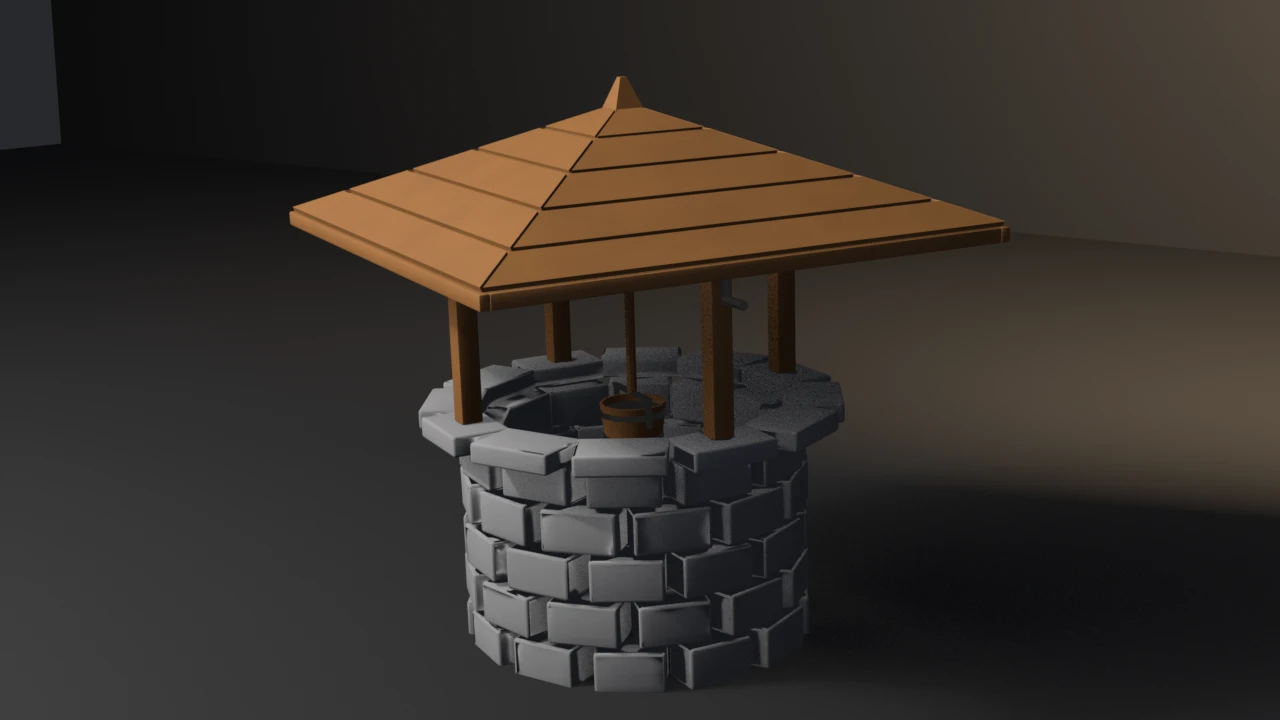
A procedural stone well through UVs, bake, LOD, collider, and Unity glTF, asserting recomputed budgets rather than an API contract.
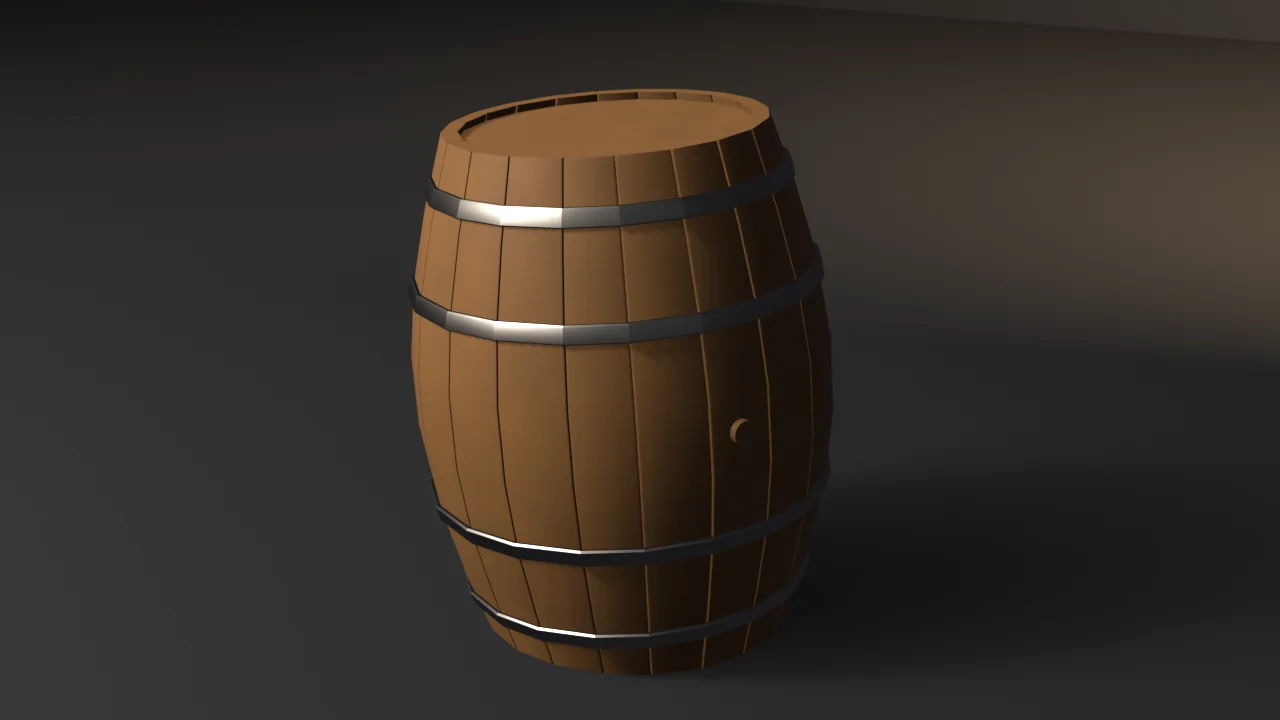
A procedural wine-cask with boarded, croze-seated heads and chord-lofted hoops through UVs, bake, LOD, collider, and Unity glTF, asserting recomputed budgets rather than an API contract.